


The Jewish People Policy Institute (JPPI) on Thursday published disturbing findings from its “Voice of the Jewish People” survey for November 2025, which probed the mood among American Jews in the wake of Zohran Mamdani’s election as New York City mayor and rising antisemitic rhetoric from both radical left‑wing and Republican circles.
The survey finds deep, broad anxiety across the community: 99% of respondents expressed concern about antisemitism. Of them, 62% said they were worried equally about antisemitism coming from both political sides (left and right), 20% were mainly worried about antisemitism from the left, and 17% claimed most concern about antisemitism from the right.
Gallery
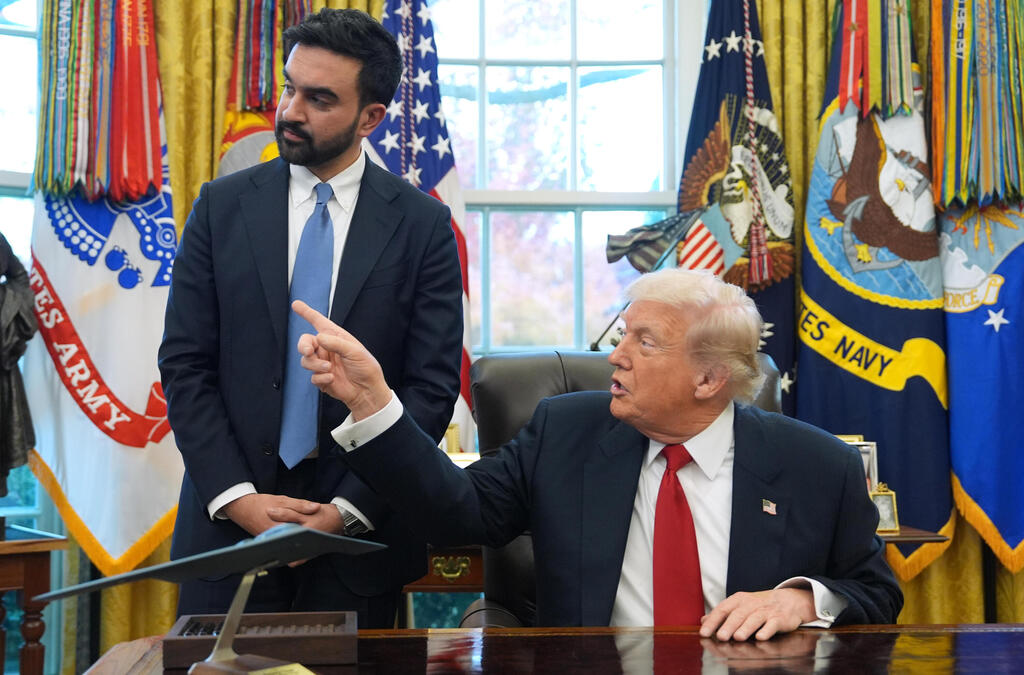
New York City mayor-elect Zohran Mamdani meets with US President Donald Trump at the White House
(Photo: Evan Vucci/AP)
When asked how Mamdani’s election affects their feelings, the dominant sentiment was “concern” (56%). A large majority (67%) believe the election is likely to hurt the security of New York’s Jewish community; only 6% think the community’s security could strengthen.
Most American Jews now view Mamdani as anti‑Israel and antisemitic
Although in recent U.S. election polls about a third of Jewish voters in New York supported Mamdani, the JPPI survey now shows that nearly two‑thirds of U.S. Jews (64%) define him, after the election victory, as both anti‑Israeli and antisemitic — a sharp rise since the survey began last summer. An additional 19% consider him anti‑Israeli but not antisemitic.
The survey also gauged opinions on the connection between anti‑Zionism and antisemitism: 72% of respondents believe that anti‑Zionism is indeed antisemitism, either “definitely” or “usually”; 17% think anti‑Zionism is antisemitic only “sometimes.” Only 11% believe the two are completely separate.
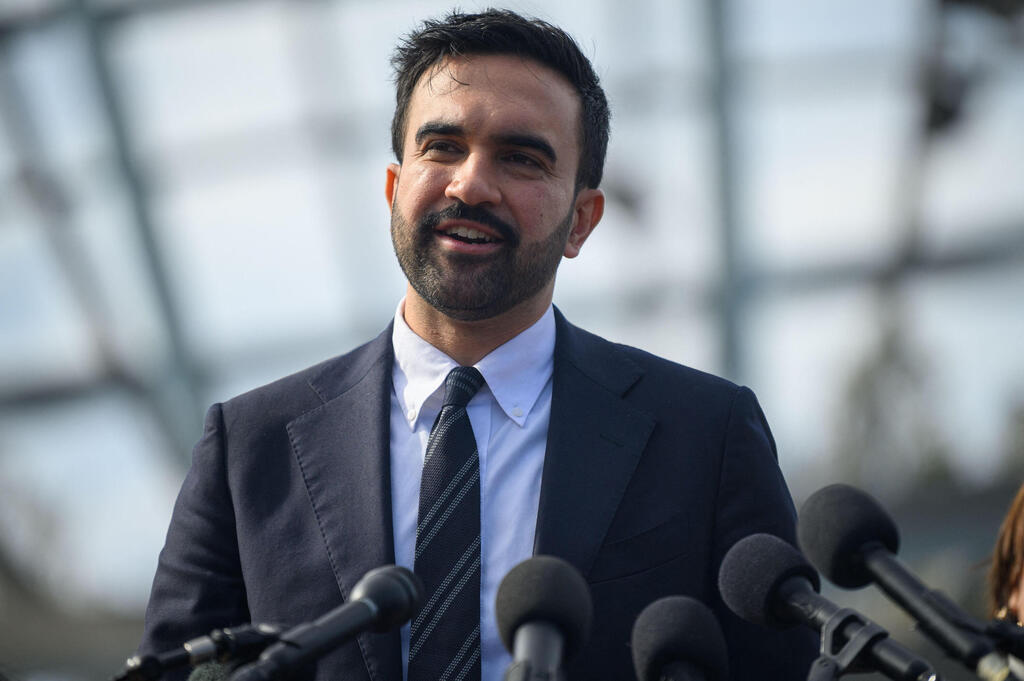
New York City mayor-elect Zohran Mamdani
(Photo: Alexi J. Rosenfeld / Getty Images / AFP)
Importantly, there is a stark divide along ideological lines: among “very liberal” respondents, only 44% see anti‑Zionism as antisemitism — compared with 92% among “very conservative” Jews.
Despite the tension, JPPI finds high support for Zionism among American Jews: 70% of respondents define themselves as Zionists, and another 12% say they are “non‑Zionist but support Zionism.” Only 3% define themselves as anti‑Zionist. Among Jewish Trump voters, Zionism support reaches 81%, compared with 64% among Jews who voted for Kamala Harris.
Zionism is not racism
This month marks 50 years since the 1975 UN decision that declared Zionism “a form of racism” (Resolution 3379). Regarding this legacy, 59% of JPPI respondents say “there is nothing racist about Zionism.” A quarter (28%) say Zionism is not racist, though some interpret it that way. Eight percent see Zionism as mostly non‑racist though containing a few racist elements, and only 4% responded that “Zionism is racism.”
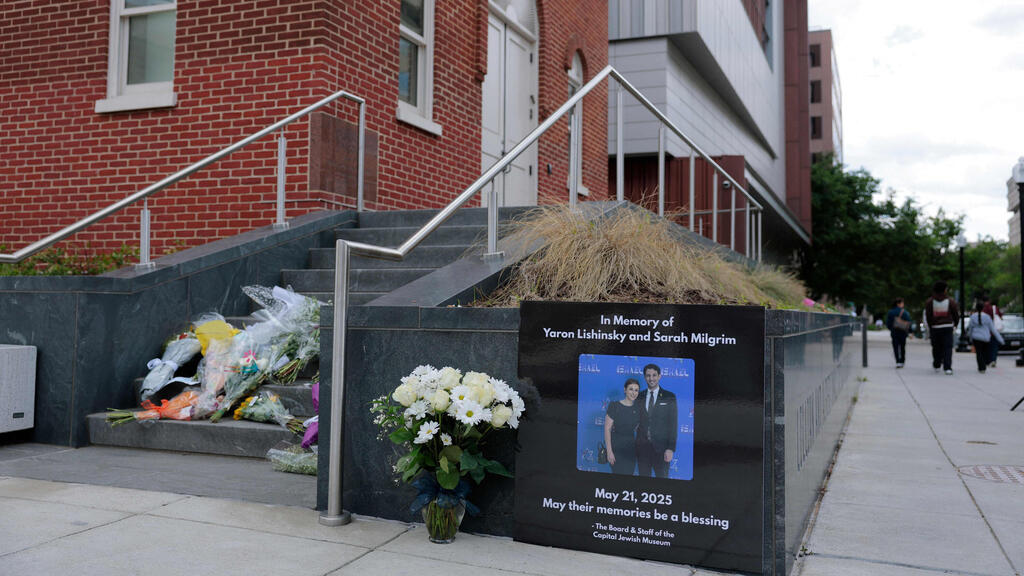
Flowers in memory of the murdered Israeli embassy staffers near the scene of the attack
(Photo: Anna Moneymaker / Getty Images/ AFP)
When asked what they believe “the average American” thinks, only 8% thought the average American sees Zionism as a non‑racist movement. Some 36% believe the average American might view Zionism as potentially interpretable as racist, but not racist per se; 14% thought the average American sees Zionism as racist, and 22% think the average American sees at least some racist elements in it.
With Hanukkah approaching, respondents also showed strong attachment to Jewish tradition: 82% plan to light candles all eight nights of the holiday, and another 11% said they will light at least partially.
The survey polled 745 American Jews registered with JPPI’s “Voice of the Jewish People” panel — a group generally representative of relatively connected Jews with strong ties to the Jewish community, Israel or Jewish identity.