

Parashat Pinchas opens with God praising Pinchas for turning His wrath away from the Israelites. In the previous portion, the Israelites sinned by engaging in illicit relations with Moabite and Midianite women, and by worshipping Ba'al Pe'or. The crisis peaked when Zimri, a prince of Simeon, brazenly copulated with a Midianite princess in the camp, in front of Moses and the weeping congregation. Pinchas took a spear, killed them both, and stopped the plague that had already claimed 24,000 lives.
The Midrash explains Pinchas's action by connecting it to Moses's teachings from Mount Sinai. I would suggest that this was not frontal teaching but rather Pinchas learned how to act by observing Moses's response to the Sin of the Golden Calf. Faced with the people's moral collapse - eating, drinking, and making sexual merry - Moses called out: "Whoever is for the Lord, come to me," leading the Levites to eliminate about three thousand idolaters.
Gallery
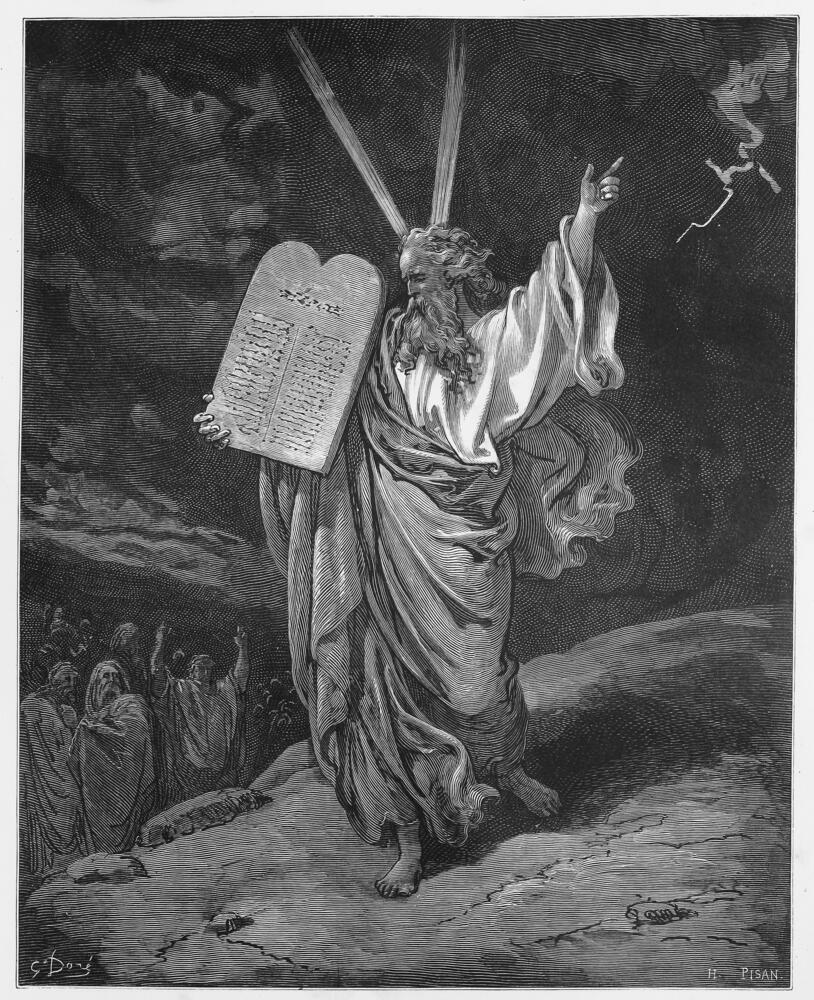
The Midrash explains Pinchas's action by connecting it to Moses's teachings from Mount Sinai
(Photo: Shutterstock)
The fact that only three thousand died out of an entire nation shows that a loud, violent minority had hijacked the public voice. While Aaron ultimately succumbed to the mob's violent demands, Moses refused to let the loudest voices define the nation. Pinchas recognized a similar pattern of eating, drinking, and licentiousness in the incident of Ba'al Pe'or, so he acted in a similar way to the levites.
As Todd Rose explains in his book Collective Illusions, social conformity often makes us act as if we agree with the crowd, even when we internally do not. When people mistakenly interpret the silence of others as agreement, they hide their true beliefs and comply with norms they actually reject. This social pressure creates a fabricated consensus because individuals fear being the first to challenge the status quo. People remain silent in the face of injustice, harsh rulings, or corrupt norms, assuming they are alone, which turns their silence into fake evidence of universal consent.
Unlike at the Golden Calf, Moses remained passive during the Ba'al Pe'or incident. The verse emphasizes that the people of this new generation were displeased with Zimri's action, stating: "...they were weeping in front of the Tent of Meeting". Therefore Moses hoped the silent majority would protest Zimri's attempt to normalize this sinful behavior as an acceptable part of the camp. It was critical that the dissenting voice emerge from the public and not from the formal institutional leadership.
When the people failed to speak up, fearing the potential repercussions because they assumed everyone else had already accepted the new reality, Pinchas rose "from the midst of the congregation". Pinchas acted as an individual but from the general public, who refused to be part of the silence, successfully shattering the collective illusion that the loud minority represented the entire camp.

Today, collective illusions are still prevalent. It is painful to observe how Haredi society in Israel is currently caught in a complex institutional and religious collective illusion
(Photo: Moti Kimchi)
Today, collective illusions are still prevalent. It is painful to observe how Haredi society in Israel is currently caught in a complex institutional and religious collective illusion. Many people are drawn into social norms, prioritizing social approval and conformity over their inner truth. Even those who recognize the distortion, the chaos, and the violence that contradict traditional Jewish values, choose to remain silent out of fear.
The defense that "the Rabbis have ruled, and we must obey" is insufficient. While obeying sages is deeply valued, it does not exempt anyone from being a person of truth. If the Haredi public truly believes their path is the correct Torah way, they must state it openly, without ignoring the moral, social, and national costs. However, a corrupt public norm has seemingly taken over the sector, disguising fear, nepotism, and convenience as holiness. Accepting authority does not require a person to falsify their internal beliefs; they can follow a ruling in practice while honestly expressing their discomfort with it. Blind obedience is not always the answer, and a scholar who knows a court has erred cannot simply hide behind a ruling. That is how collective illusions persist.

he defense that 'the Rabbis have ruled, and we must obey' is insufficient
(Photo: Moti Kimchi)
This is a call to the silent majority within the Haredi public. They cannot continue to hide in a diasporic mindset while living in Israel, acting as though they can avoid responsibility for the nation's destiny. Their duty is not to abandon the Torah, but to truthfully declare that loyalty to Torah is not an excuse to escape national responsibility. If a culture of fear keeps them in a state of exile, the people of truth and peace, the Pinchases,must bring the Haredi sector back to the original Israeli covenant.
As Todd Rose notes, our daily choices to refuse to live a lie have the power to change a whole society. Young haredim possess a strong moral compass and are simply waiting for someone to take the first step. We are waiting for a young, resolute individual to rise from within the Haredi society and shatter this collective illusion for the future of the entire nation. Just as Pinchas's individual act led to a massive mobilization of twelve thousand men for the army to fight against Midian, the current silence can end at any moment. The Midrash teaches that Pinchas is Elijah, and therefore, he will surely arrive.