

At a time when Israel is grappling with both security and social challenges, and as the IDF faces a manpower shortage, some young people are choosing a different path. From all over the globe, they leave everything behind, family, careers, a familiar language, to make aliyah and and then they enlist in the IDF. They come not because they have to, but because they want to and feel committed to.
These lone immigrant soldiers are restoring meaning to words like “purpose” and “mission” through their very decision to be here, offering a powerful lesson in what it means to live Zionism through action.
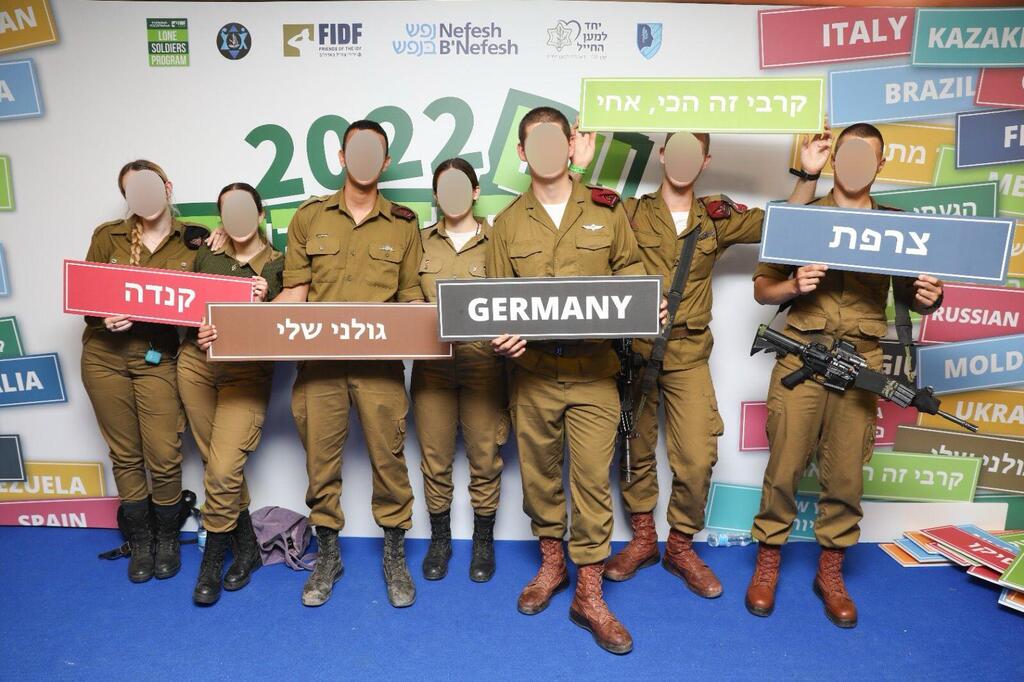
Lone soldiers
(Photo: Yonit Schiller)
Since the Iron Swords war began, there has been a significant increase in the number of young people choosing to make aliyah, particularly now, driven by a desire to contribute, to belong, and to be part of something larger than themselves.
According to data from the Lone Soldiers Program run by Nefesh B’Nefesh and Friends of the IDF (FIDF), there were about 3,400 lone soldiers in active service in the years before the war. Since the October 7 Hamas surprise terror attack, that number has risen by about 10%, with more than 3,700 lone immigrant soldiers currently serving in the IDF.
Each year, roughly 1,300 new lone soldiers join the ranks, mostly from the U.S., Russia, Ukraine and France, but also from more distant countries such as Guatemala, Hong Kong, South Korea and others. Their immigration is a brave step, rooted not only in identity but in belief in the cause.
These soldiers serve in every branch of the military: in infantry brigades like Paratroopers, Givati, Kfir, Nahal, and Golani; in combat engineering, armored corps, medical units, the search and rescue brigade, and air defense.
They come from diverse backgrounds, speak different languages, yet all share a deep sense of mission. About 2,390 are men and 1,319 are women, young people ages 18 to 24 who have paused their lives, left everything behind, and chosen to serve a country that, for some, they are setting foot in for the very first time.
But behind the numbers and ceremonies, there are individuals. An Israeli soldier coming home for the weekend can usually expect a Shabbat meal, clean laundry and a listening ear. For a lone soldier from abroad, the reality is often different. They face emotional, mental and physical challenges, coping with homesickness, cultural and language gaps, and the absence of family support. These are young people who left entire lives behind just to be here and serve in the IDF.
Behind the scenes, a variety of programs support lone soldiers throughout the year, offering places to turn to, someone to talk to, and help navigating both military service and civilian life in Israel. Recently, following the war, a new resilience center was launched in partnership with Sheba Medical Center to provide mental health support to discharged lone soldiers and help them process their experiences.
Especially now, as many seek hope and belonging, we should look to these young people who choose Israel every single day.
On Thursday, Tel Aviv is hosting “Yom Siddurim,” (one-stop errands day) a special appreciation day organized by the Lone Soldiers Program of Nefesh B’Nefesh and FIDF, along with the IDF’s Lone Soldiers Center.
More than 5,000 lone soldiers are participating. Dozens of government ministries, agencies and organizations are gathering in one location to offer services, ease bureaucratic burdens and help soldiers access their rights. The event embodies the principle of mutual responsibility: they enlisted for the country and the people, and now we show up for them.
I believe it is our obligation as a society to reach out, support them, and be a warm and responsive address. As a mother of soldiers who served in meaningful roles in the IDF, I deeply relate to the parents of lone soldiers, those watching from afar, worrying for their children, and trying to make sense of the complexities of Israeli military life from the other side of the world.
Their decision to be here, especially now, may be the most important lesson we Israelis can learn. They remind us what it truly means to be Israeli, not just by birth, but by heartfelt choice.
Noya Govrin is Vice President of IDF Partnerships and Lone Soldiers Program at the Nefesh B'Nefesh-FIDF Lone Soldiers Program, which has served lone immigrant soldiers for more than a decade