


This week, we read the portion of Vayeshev, which means, ‘He sat.' The portion is a deeply tragic one with the story of Joseph and how his brothers sold him into slavery due to their jealousy over how much their father Jacob loved him.
I have to say, I’ve never quite been able to wrap my head around this story. I never quite understood how the brothers, the tribes, were able to do something so cruel. Furthermore, like we always ask, what is the lesson for us? What is our takeaway from this story?
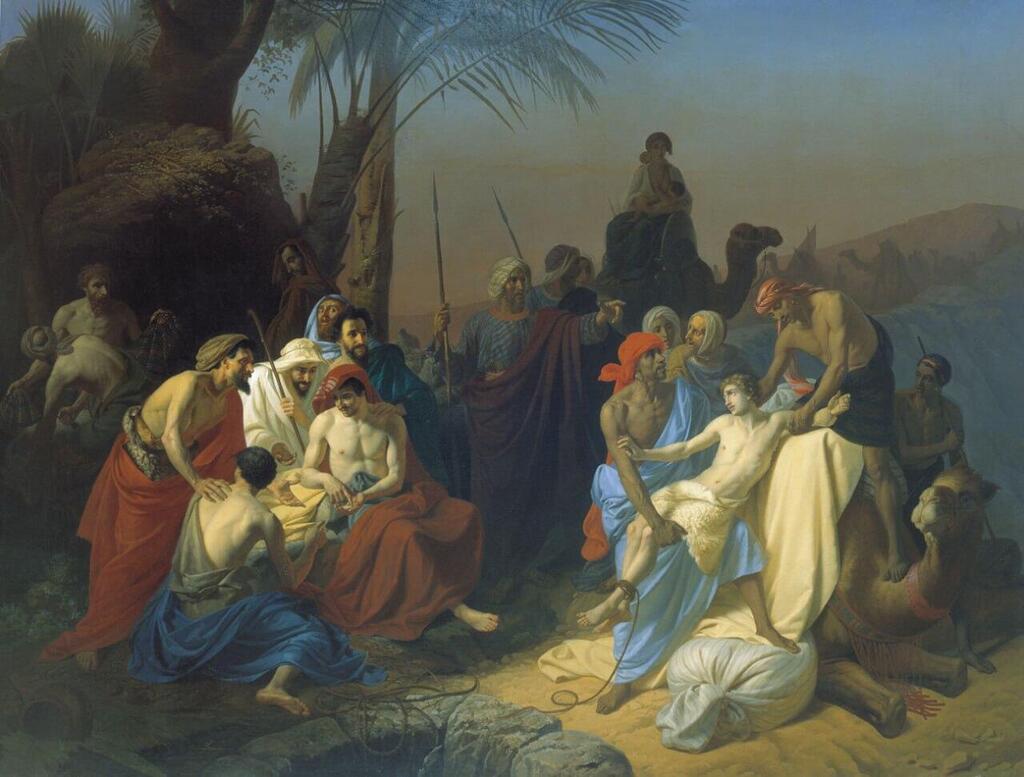
First of all, it’s important to remember that the story of Egypt, the enslavement, and eventual redemption of the Israelites after 210 years of slavery begin in this portion. The Egypt story is perhaps one of the most central stories in our history making this portion a very important one.
So what exactly is so important about this story and does it teach us anything about the Jewish people?
I’d like to suggest something a bit out there. I never saw this anywhere so it’s my own idea, but reading the portion, this really jumped out at me. I think Joseph represents the Jewish people and all of his suffering represents the persecution the Jews endured and continue to endure to this day.
Let’s examine this idea further.
The portion begins by telling us that Jacob loved Joseph more than his brothers. Joseph was ‘the chosen one’. There was a special bond between Joseph and his father Jacob just like there is a special bond between Hashem and His children, the Jewish people.
How do the ‘Nations’ or in this case the brothers react to that special bond? They ridicule it and eventually become consumed with jealousy that their father favored Joseph. And one of the recurring themes throughout the generations is how antisemites resent the idea that the Jewish people are the chosen people who share this deep connection with their father in the heavens.
The brothers are so consumed with jealousy, they are unable to even speak to their brother Joseph, they simply can’t see past Jacob’s love of Joseph. This reminds me of the way Jew haters are unable to see the incredible contributions of the Jewish people despite those contributions being so obvious. Their jealousy is all consuming.
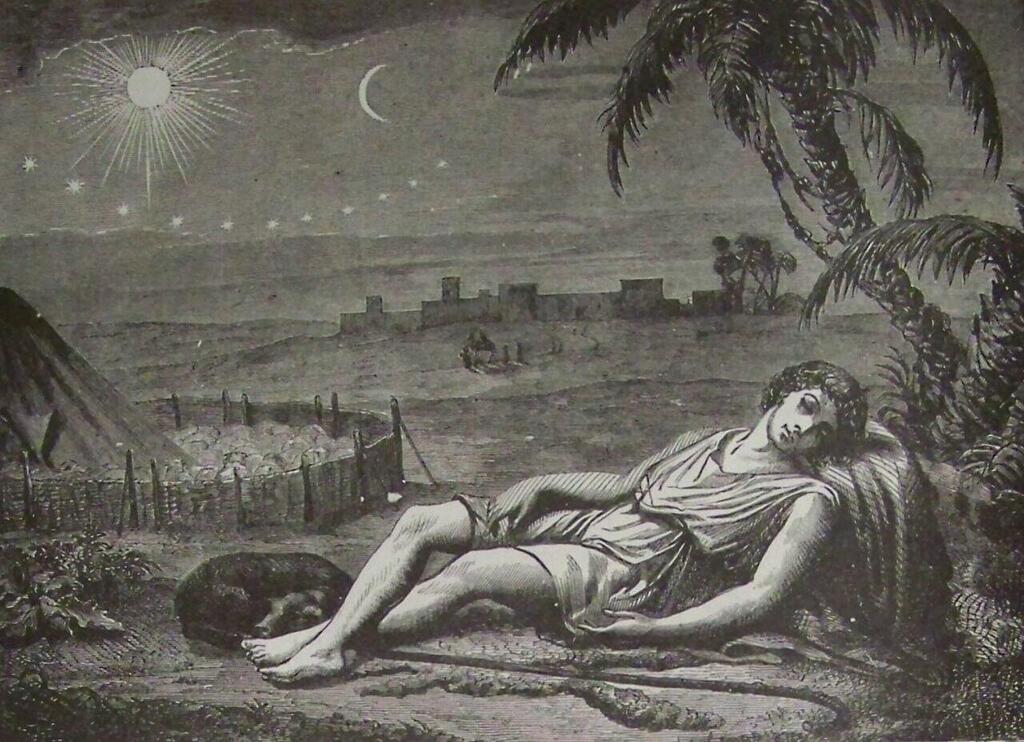
'Joseph's Dream' - illustration from the 1890 Holman Bible
Joseph then dreams and, when hearing about those dreams, the brothers continue to hate Joseph.
The Jewish nation is a nation of dreamers, specifically the dream to return to our land, something that hits a nerve among our adversaries. They use those dreams to vilify us and paint us as disloyal to their country. Our dreams activate our enemies much like Joseph. But that doesn’t stop us from continuing to dream just like the hatred of the brothers doesn’t stop Joseph from continuing to dream again.
Why do the brothers despise those dreams so much? They say it clearly: “His brothers answered, "Do you mean to reign over us? Do you mean to rule over us?" And they hated him even more for his talk about his dreams.”
Today they say the same thing: “The Jews want to control us. They control the media, they control the White House, they even control the weather. We can’t have that.”
Of course both Joseph and the Jewish people want no such thing, but that doesn’t stop our enemies from conspiring against us and spreading lies about our aspirations to rule over them. Additionally, the Jewish people know the phenomenon of being told by other Jews to keep quiet about the whole light unto the nations thing.
Joseph is told by his father to keep his dreams to himself because after all, what will the brothers say? This is very similar to what Jews experience: “As Jews, we don’t…”; “Maybe keep that thought to yourself. It’s not a good look."; “No need to make them jealous. Just try to stay under the radar. Keep a low profile. We don’t want to anger our hosts…”
Joseph’s brothers then proceed to look after their sheep, something that represents economic prosperity or capitalism. Joseph tries to join them. He wants to be just like them. He doesn’t want the special status, he just wants a relationship with his brothers. He wants to assimilate.
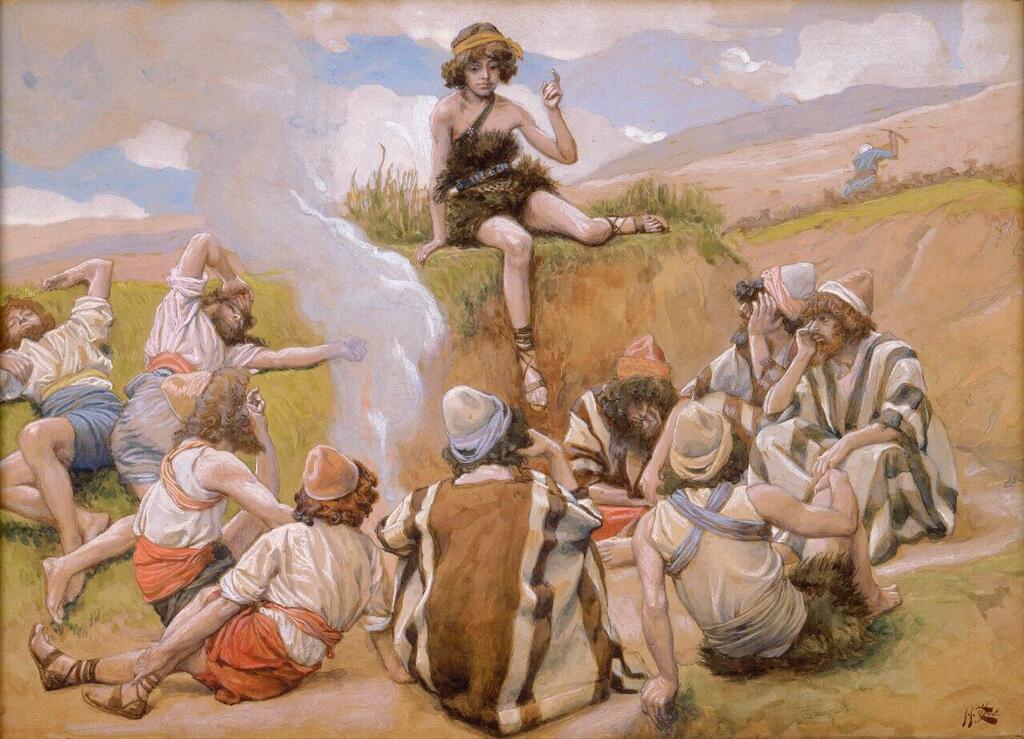
'Joseph Reveals His Dream to His Brethren', a watercolor circa 1896–1902 by James Tissot
Joseph then sets out on a journey to join his brothers and begins to lose his way, his uniqueness, much like Jews throughout the generations who lost their way when trying to assimilate.
The portion describes Joseph’s journey: “A man came upon him wandering in the fields. The man asked him, "What are you looking for?"
In other words, Joseph had lost his way: “He answered, "I am looking for my brothers. Could you tell me where they are pasturing?"
Where, Joseph asks, are my brothers? I’d like to join them and forget all this favoritism.
But like assimilation, Joseph finds that this only makes the hatred more extreme: “They saw him from afar, and before he came close to them they conspired to kill him.”
We see a direct correlation between assimilation and antisemitism. The more the Jews try to be like their hosts, the more those hosts despise the Jews.
It’s as if the Jews represent a lighthouse and the nations represent the ships trying to navigate the seas. When the Jews try to extinguish their light so they can be like everyone else, the nations demand they turn their light back on or else.

A human swastika: There is a direct correlation between assimilation and antisemitism seen in this week's Torah portion
(Photo: From social media)
“They said to one another, "Here comes that dreamer! Come now, let us kill him and throw him into one of the pits; and we can say, 'A savage beast devoured him. We shall see what comes of his dreams!"
This was the first type of persecution, the violent type. Through violence, the nations always attempted to solve the “Jewish problem.” Pogroms, inquisitions, terror, the Holocaust, the nations have always come after the Jews by means of violence.
But then, Reuven steps in and suggests that the brothers not kill Joseph but rather, he says, they would throw him into a pit and let someone else do the killing. In other words, he suggested to eliminate Joseph by bringing him down and disguising their desire to kill him by other means.
Again, something we see with the enemies of the Jewish people is the pattern of violence and the eventual realization that the Jews can’t be defeated and annihilated by physical means. They then turn to propaganda, political persecution and the scapegoating of the Jew.
What happens next? The brothers try to strip Joseph of his uniqueness, quite literally: “When Joseph came up to his brothers, they stripped Joseph of his tunic, the ornamented tunic that he was wearing.” Or, his coat of many colors, as it is popularly known.
Our enemies try to strip us of our unity, our closeness to Hashem and our dignity. They yearn to show us that, under the surface, we are no more special than they are.
The brothers then throw him into the pit and the Torah describes that the pit is empty, much like the accusations against Jews.
Emptiness. Lies. Blood libels. Conspiracy theories.
All empty.
After they throw Joseph into the pit, the brothers go on with life and sit down to eat. The nations of the world throughout the generations persecute and abuse the Jews then go on as if nothing is amiss.
The brothers then conspire to sell Joseph to the Ishmaelites who they saw approaching in the distance. Today, the West sells out the Jew to the Ishmaelites, represented today by radical Islam.
The plan works and Joseph is sold into slavery. The Torah then describes how Reuben returns to the pit to extract Joseph and when he sees that Joseph is no longer there, he tears his clothing in mourning. There is much discussion about Reuven’s reaction but it seems to be a dishonest one. After all, they just agreed to sell their brother into slavery. It’s not like they had a deep love or affection for him.

New York City mayor-elect Zohran Mamdani
(Photo: Alexi J. Rosenfeld / Getty Images )
Reminds me of the world’s charade as if they care about antisemitism while they try to sell out the Jews. They’ll hold conferences, legislate laws, and make speeches about the dangers of antisemitism and, once they are elected, their mask comes off and the Jew hatred begins to seep out.
It’s all one big charade.
The brothers then continue their deception, all to avoid accountability for their hatred. They dip Joseph’s coat in blood and bring it to their father Jacob in order to trick him into believing that Joseph fell prey to a wild animal. In the same way, the nations vilify the Jews, then pretend they are shocked when Jews are bullied and attacked. Then they play the game as if the violence against Jews is not their fault.
Jacob, upon recognizing Joseph’s garment feels deep devastation for the loss of his beloved son, but refuses to give up on the dream that, one day, they will be reunited. That is why the Torah says that Jacob refuses to be comforted; because he refuses to lose hope: “Jacob rent his clothes, put sackcloth on his loins, and observed mourning for his son many days. All his sons and daughters sought to comfort him; but he refused to be comforted, saying, "No, I will go down mourning to my son in Sheol." Thus his father bewailed him.”
The Jews, throughout the generations, despite the constant persecution, never lost hope of one day being reunited with their homeland. The Jews refused to give up on that dream much like Jacob refuses to give up on his dream that Joseph is still alive. No amount of blood will change his mind just like no amount of Jew hatred will make us forget who we are, where we came from, and where we’re going.
The nations try to make us forget, like the brothers tried to get Jacob to forget Joseph, but they are unsuccessful because of the deep connection between Joseph and Jacob. The nations try to disconnect the Jewish people from their homeland, but they too, like the brothers will always be unsuccessful.
So now Joseph is exiled to Egypt where he is a minority and faces the threat of more persecution. What happens next is again very reminiscent of the Jewish story.
Joseph rises to power and makes the lives of Egyptians infinitely better, just like the Jews, despite the constant threat of antisemitism, contribute endlessly to the world. Joseph is then accused of crimes he did not commit in the ongoing effort to delegitimize his role in society. It was the first blood libel in history.
The parsha says: “When Joseph was taken down to Egypt, Potiphar, a courtier of Pharaoh and his prefect —a [type of] Egyptian official —bought him from the Ishmaelites who had brought him there. Hashem was with Joseph, and he was a successful man; and he stayed in the house of his Egyptian master. And his master saw that Hashem was with him and that man lent success to everything he undertook. He took a liking to Joseph. He made him his personal attendant and put him in charge of his household placing in his hands all that he owned.
"After a time, his master's wife cast her eyes upon Joseph and said, 'Lie with me.' But he refused. He said to his master's wife, "Look, with me here, my master gives no thought to anything in this house, and all that he owns he has placed in my hands.”
Potifar’s wife continues to try and seduce Joseph but to no avail. She then lies about him in an attempt to destroy him.
"And much as she coaxed Joseph day after day, he did not yield to her request to lie beside her, to be with her. One such day, he came into the house to do his work. None of the household being there inside, she caught hold of him by his garment and said, 'Lie with me!' But he left his garment in her hand and got away and fled outside.
"When she saw that he had left it in her hand and had fled outside, she called out to her servants and said to them, "Look he had to bring us a Hebrew to dally with us! This one came to lie with me; but I screamed loud. When his master heard the story that his wife told him, namely, 'Thus and so your slave did to me," he was furious.'"
The blood libel works and Joseph is imprisoned. There too, much like the Jewish people, irrelevant of their difficult circumstances, he continues to succeed and help those around him, which ultimately leads to Joseph becoming the second in command to Pharaoh. Joseph, just like the Jewish people, brings light to a dark Egypt and ends up becoming tremendously successful despite his impossible persecution.
There are many more similarities between Joseph and the Jewish people but, suffice to say, the story here is not only about Joseph. It is a story for generations and the lesson for us is to remember that, just like Joseph and his terrible persecution, so too the Jews will continue to flourish, make the world a better place and shine our light into an increasingly dark world full of deception and hatred.
Joseph overcomes his many challenges and eventually achieves greatness. The Jews have and continue to flourish in the face of constant hatred and persecution. And no matter what they throw at us, we won’t forget our connection to our land and the yearning to return. We also won’t forget who we are and how it is our role, as the chosen people, to enhance the world Hashem has given us.
Whether we do that through technology, medicine or countless other areas in which the Jews punch above their weight, Israel, and by extension the Jewish people, are alive, now and forever.
Shabbat shalom.