

The share of Jewish undergraduate students at Harvard University fell to just 7% over the past year — the lowest level recorded by the institution since before World War II. The figure comes from a new report by the Harvard Jewish Alumni Alliance, which analyzed historical and current data over an extended period.
According to the findings of the study, titled "Jewish Enrollment at Harvard and Its Peers, 1967–2025: A Narrowing Gate", the proportion of Jewish students on campus has been cut in half over the past decade. Today, their share is less than a third of the historical academic average, which stood at around 25% in the late 20th century. In fact, this is the lowest rate among all Ivy League universities for which reliable data is currently available.
While the figure is still relatively high compared to the Jewish share of the U.S. population (about 2.4%), some within the campus community see echoes of the “numerus clausus” era of the 1920s, which placed quotas on the number of Jewish students that could be admitted. This is despite the fact that admission mechanisms operate differently today, and that the university’s president, Professor Alan Garber, is himself Jewish.
During that earlier period, Harvard president Abbott Lawrence Lowell led efforts to limit the number of Jewish students after their share rose to more than one-fifth of the student body. The administration at the time introduced new admissions policies designed to quietly filter out Jewish applicants in order not to “discourage” Christian students.
The current report is based on data analysis from 1967 to 2025. The research team drew on data from Hillel, historical surveys by the Harvard Crimson student newspaper, and official reports from peer institutions. The analysis compared trends at Harvard with those at eight other elite U.S. universities, aiming to test common explanations for the decline and rule out external factors. The authors state that Harvard’s recent trend deviates from the norm and constitutes a “statistical anomaly.”
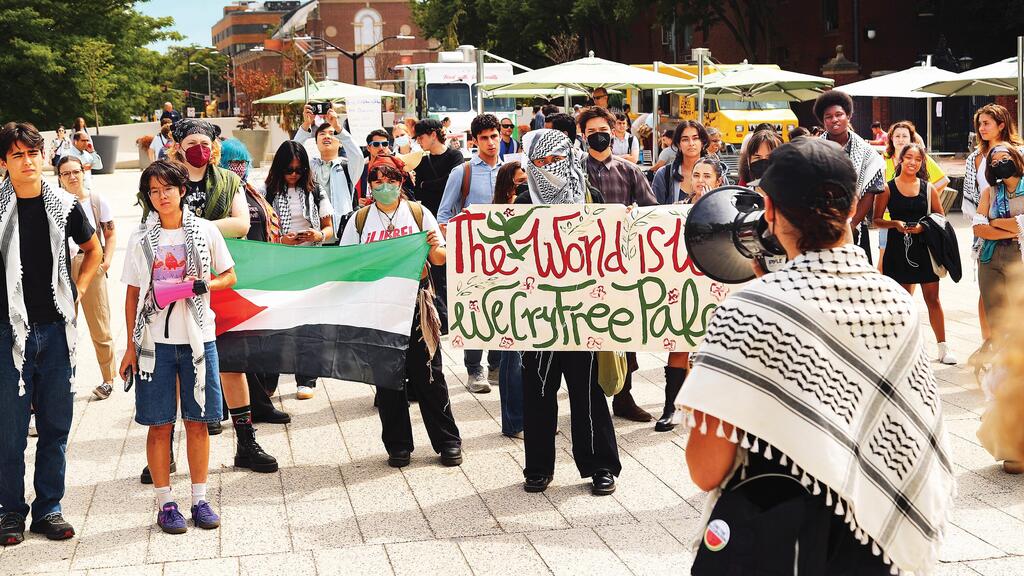
Pro-Palestinian demonstration at Harvard University in March 2025
(Photo: Boston Globe/Getty Images)
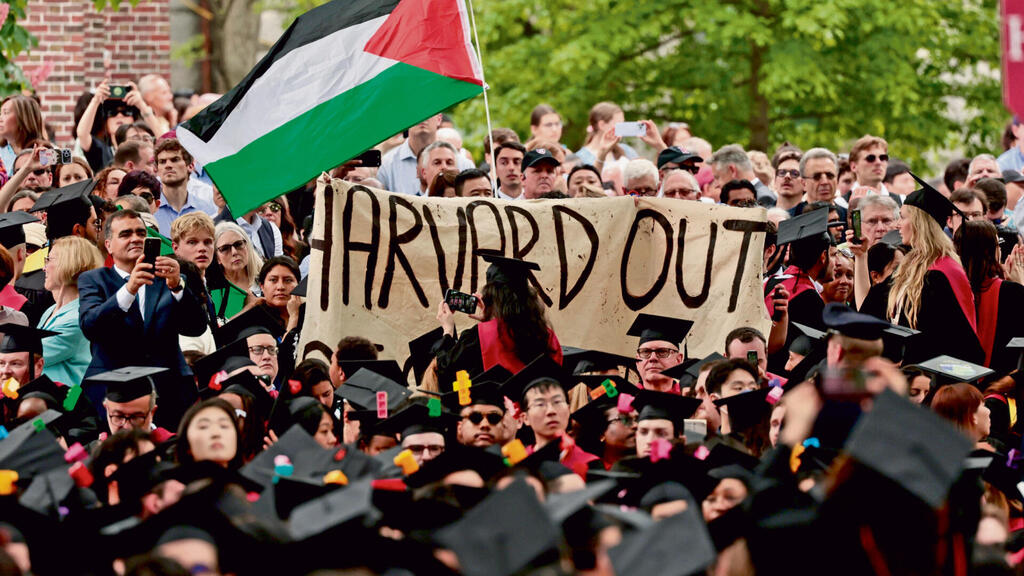
They examined seven possible structural explanations for the drop in enrollment, including geographic diversification, expanded financial aid, a significant rise in international students, rapid growth in Asian enrollment, and the impact of athletic recruitment programs. The researchers also assessed the direct impact of campus dynamics following the October 7 massacre. In the wake of widespread pro-Palestinian protests, many Jewish students reported feeling unsafe, while Jewish high school students and their parents said they were avoiding applying to the university.
However, the report concludes that neither the effects of the war nor the hostile campus climate — like the other factors examined — fully explain the sharp decline at Harvard compared to other institutions, particularly given that the trend began before the current war.
Harvard collects and publicly publishes detailed demographic data on various groups, including breakdowns by race, gender and income level. However, the university does not systematically track religion or Jewish identity in its admissions processes, even though Jews are explicitly defined as a protected group under federal anti-discrimination law.
Organizers behind the report are calling on Harvard to begin collecting voluntary self-identification data on Jewish students
(Photo: Shutterstock)
The organization behind the report is calling on Harvard to begin collecting voluntary self-identification data on Jewish students. It is also demanding the establishment of an independent external review committee to examine admissions processes in depth, and to take immediate corrective action if it is found that current policies disadvantage Jewish applicants.
The report’s authors stop short of formally accusing the university of institutional antisemitism, instead presenting the data as evidence of a failure that requires internal investigation, transparency and opening Harvard’s admissions records to thorough external scrutiny.
Some politicians, however, were more direct. “There is no doubt that antisemitism is not only affecting students on Harvard’s campus — it is shaping admissions,” said New York Republican Congresswoman Elise Stefanik in response to the findings. She argued that there is built-in bias or covert discrimination in admissions committees that prevents Jews from being accepted, reinforcing concerns she previously raised during congressional hearings on antisemitism on campuses — hearings that contributed to the resignation of then-Harvard president Claudine Gay.