


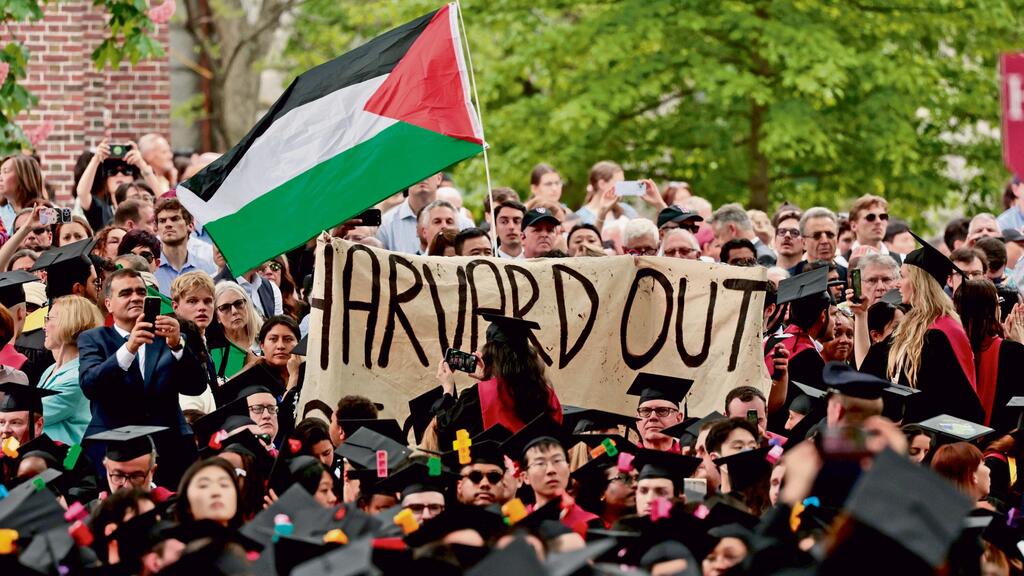
The wave of pro-Palestinian protests on U.S. campuses has left its mark: since the start of the war in Gaza, fewer Jewish students are enrolling at America’s most prestigious universities. Data from Hillel, the only organization that tracks Jewish enrollment, show that between 2023 and 2025 the proportion of Jewish students at Harvard, Columbia, Cornell and the University of Pennsylvania fell by 3 to 5 percentage points — a drop translating to nearly 100 fewer students per class.
At first glance, the decline appears modest. These institutions enroll tens of thousands of students each year. But historically, it represents a sharp shift. For decades, Jewish students made up a far larger share of the Ivy League student body compared with their percentage of the U.S. population.
At the University of Pennsylvania, for example, Jews accounted for about 20% of students in 2010. By 2016, the figure had dropped to 13%. Now, against the backdrop of tensions since Oct. 7, enrollment has fallen further at the alma mater of Ronald Lauder, Steven Spielberg, Michael Bloomberg and President Donald Trump.
Hillel says the trend stems less from students themselves than from their parents. A representative survey last year of 427 Jewish parents found that nearly two-thirds admitted removing at least one university from their children’s application lists due to concerns about antisemitism.
At Ramaz, an elite Manhattan Jewish day school with alumni such as Jared Kushner and Rabbi Meir Soloveichik, the senior class typically sends more than a dozen graduates to Columbia. Last year, for the first time in school history, not a single student enrolled there.
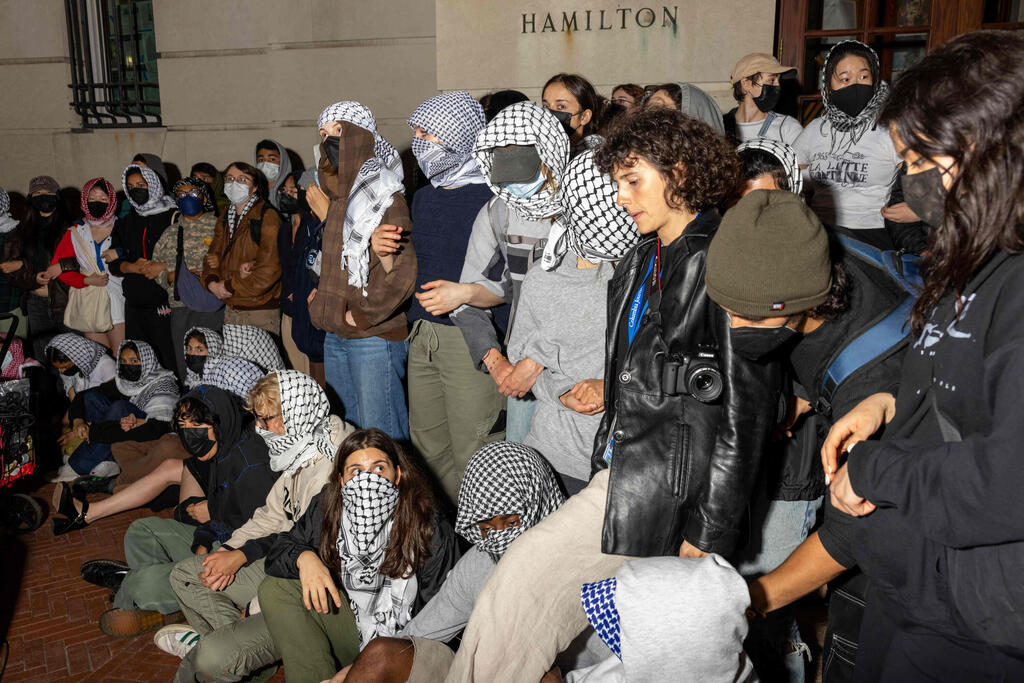
Pro-Palestinian students protest in front of Hamilton Hall at Columbia University
(Photo: Alex Kent / Getty Images North America / AFP)
Jewish presence in the Ivy League has long been complicated. In the 1920s and 1930s, schools like Harvard and Yale enforced unofficial quotas to curb Jewish admissions, fearing they would “take over” campuses. Harvard president Lawrence Lowell even wrote that “antisemitism increases in proportion to the number of Jews,” justifying the restriction. Only in the 1960s and 1970s did doors fully open, and Jewish students quickly became a dominant force in American academia — sometimes representing 10 times their share of the U.S. population.
Since October 2023, however, elite Northeastern campuses have seen an uptick in pro-Palestinian demonstrations and antisemitic incidents. At Harvard, an Israeli-American student was physically attacked, while at Columbia, Jewish students filed lawsuits against the university following harassment just days after the Hamas massacre. Surveys found that the percentage of Jewish Ivy League students who said they censor themselves out of safety concerns jumped from 13% in 2023 to 35% the following year.
Anti-Palestinian protesters barricade themselves at Barnard College
(Video: Eliana Goldin)


Other schools have seized the opportunity. Universities in the South and Southwest are investing in kosher dining, Jewish centers and academic programs to attract Jewish students. Vanderbilt in Nashville reported a 20% growth in its Jewish community in the past two years. At Tulane in New Orleans, roughly 40% of undergraduates are Jewish. The University of Florida hosts the largest Jewish student population in the country — about 10,000 — with Jewish event attendance up 50% since 2021. At Clemson in South Carolina, participation has quadrupled.
"It's not that they're specifically looking for a pro-Israel place," said Rabbi Zalman Lipskier, head of Chabad at Emery University in Atlanta. "They just want to study without fear of harassment or violence on their way to class."