

Since October 7, antisemitism is no longer a marginal phenomenon. It has become a language, an atmosphere, a troubling routine. For many Israelis and French-Israeli citizens, what is unfolding in France is not a distant political debate but a personal warning sign. Behind the slogans and demonstrations lies a reality: Jews are the target. Behind hostility toward Israel lurks an old hatred that has returned to the world wearing a new mask.
Against this backdrop, the French parliament’s Law Committee last month adopted Bill No. 575, introduced by Member of Parliament Caroline Yadan, who is Jewish, aimed at combating the renewed forms of antisemitism. It marks significant progress, yet there is also a risk that the law will remain on paper, without real legal force.
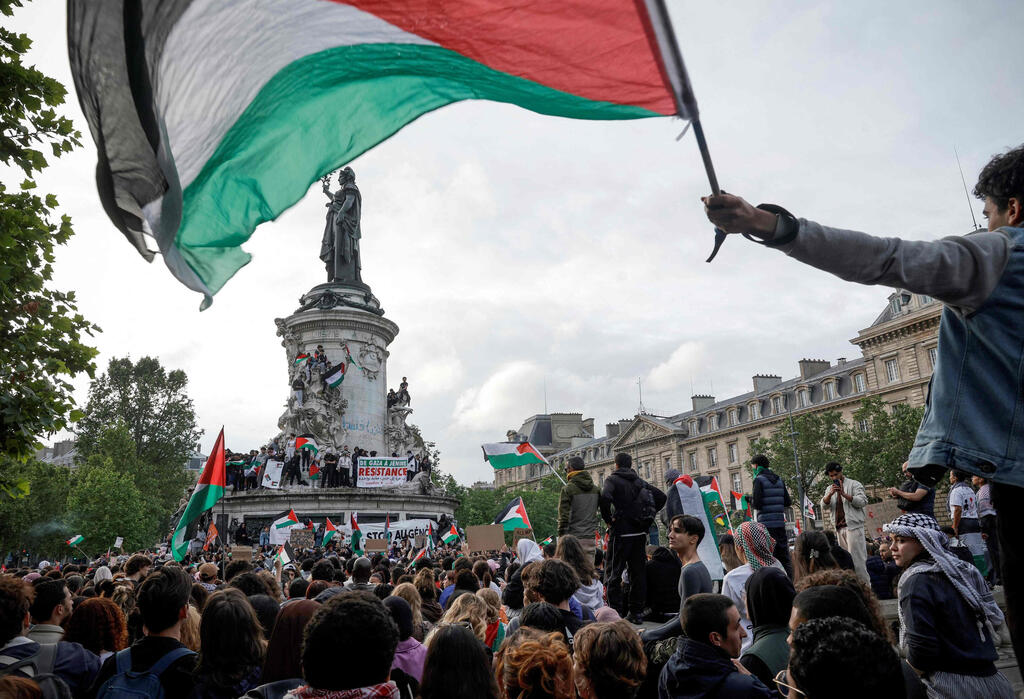
Caroline Yadan did not draft a symbolic or media-driven law. She seeks to confront a real phenomenon that French law often struggles to grasp—antisemitism that does not explicitly declare “I hate Jews,” but instead couches itself in indirect language such as “this is resistance,” “they brought it upon themselves,” “it’s not terrorism,” or “it’s just an opinion.” Yadan’s objective was to equip French law with tools suited to modern hate speech.
On January 26, 2026, the Organization of European Jews (OJE) issued a sharply worded statement. The group is an active legal player, accustomed to filing complaints, conducting proceedings and navigating case dismissals and procedural traps. Its position is that an unenforceable law is worthless. Indeed, in its view, the real danger is not the absence of legislation, but the existence of a law that creates the illusion of action.
The normalization of terror
The glorification of terrorism does not necessarily take the form of direct praise; it often occurs through relativization—justifying the act, reframing it, expressing understanding, normalizing it. Once terror is normalized, the next step is no longer words but deeds. Article 1 of the new law strengthens Article 421-2-5 of the French Penal Code, making punishable the glorification of terrorism even when carried out through “minimization or the blatant construction of normalization of the acts.”
Article 2 creates a new offense: the public call for the destruction of a state recognized by the French Republic. In practice, Israel is the only democratic state whose disappearance is still sometimes presented as a “legitimate” slogan on European streets. The law draws a clear boundary: one may debate, criticize or disagree—but a call for destruction is a criminal offense. Here, however, a legal difficulty emerges: the offense was incorporated not into the Penal Code but into the July 29, 1881 Law on Freedom of the Press.

Swastikas spray painted on a kosher restaurant in Paris
The 1881 law was historically designed to protect freedom of expression and makes criminal proceedings particularly difficult. In practical terms, this means an extremely short statute of limitations, strict procedural formalism, a high risk of dismissal on technical grounds and, above all, sanctions of a largely symbolic nature.
The OJE notes that the penalty was reduced from five years in prison, as initially considered, to just one year, and in practice imprisonment becomes almost theoretical. A paradox thus arises: France defines a serious offense but chooses a legal framework that may render it unenforceable.
Freedom of expression or immunity for hate?
Freedom of expression is a cornerstone of democracy. But democracy was not designed to shield calls for destruction. Modern antisemitism operates precisely in this way: it disguises itself as opinion, cloaks itself in activism, presents itself as moral and demands immunity in the name of free speech. Yet calling for the destruction of a state is not a political stance; it is dangerous incitement.
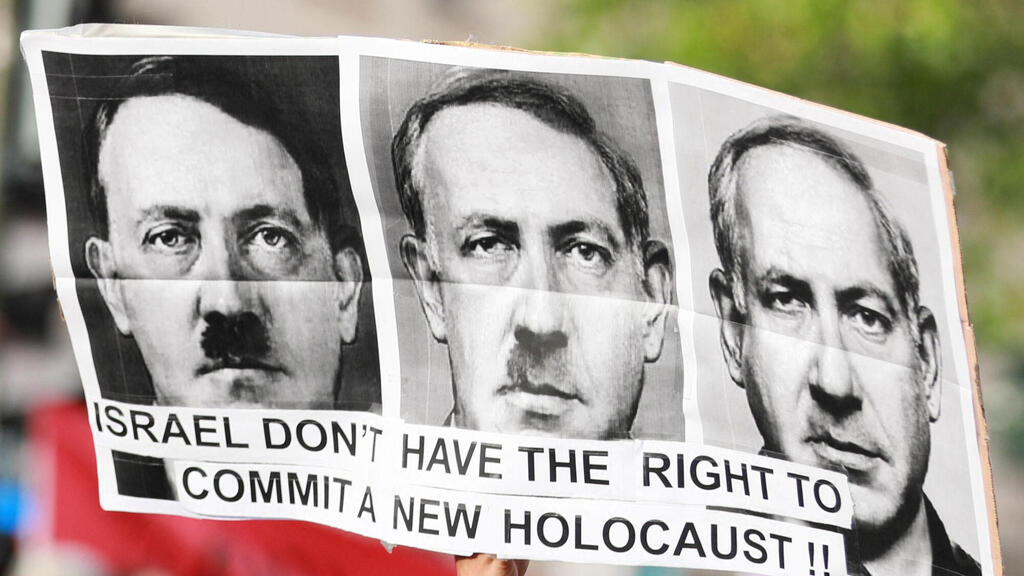
Sign at anti-Israel protest in Paris
(צילום: Sami KaraalI / AFP)
Article 4 of the new law strengthens the offense of denying crimes against humanity and introduces a substantive principle: denial also includes “minimization or blatant normalization.” It is no longer only outright denial, but indirect methods—relativization, minimization, manipulation of terms. For example, the memory of the Holocaust is no longer directly denied, but attacked through minimization. This is not a historical debate; it is a political strategy.
No less important is Article 3, which facilitates the participation of anti-racist organizations as civil parties in criminal proceedings. In France, many victims of antisemitism withdraw due to fear, exhaustion, isolation and the slow pace of legal processes.
Why the law matters to Israelis
The law directly concerns Israelis and French-Israelis because contemporary European antisemitism often manifests under the guise of extreme anti-Israel sentiment. When Israel is attacked in words, Jews are attacked in reality.
The law is significant for three reasons: it draws a legal boundary between political criticism and calls for erasure; France influences European discourse, and its decision may resonate across the continent; and the Jewish community in France is closely tied to Israel through family, citizenship, culture and constant movement between the two countries.
 Attorney Julie Daniel
France now stands at a crossroads. Caroline Yadan’s bill seeks to give legal form to a phenomenon that many recognize but hesitate to name.
Yet if the law is neutralized by a weak procedural framework, it will remain merely declarative. And in the context of antisemitism, legal failure may send the opposite message: “You may continue.” The Republic cannot content itself with condemnation; it must enforce the law and impose real penalties.
First published: 11:26, 02.19.26