


The Western Wall plaza is now widely seen and effectively run as an Orthodox synagogue. Visitors must follow the site’s rules, including “modest dress,” while a long partition separates men and women in the prayer area. Today, that may seem like a given, but the reality was once very different. After Jerusalem was reunified in 1967, a fierce dispute erupted over the Wall’s character.
Gallery
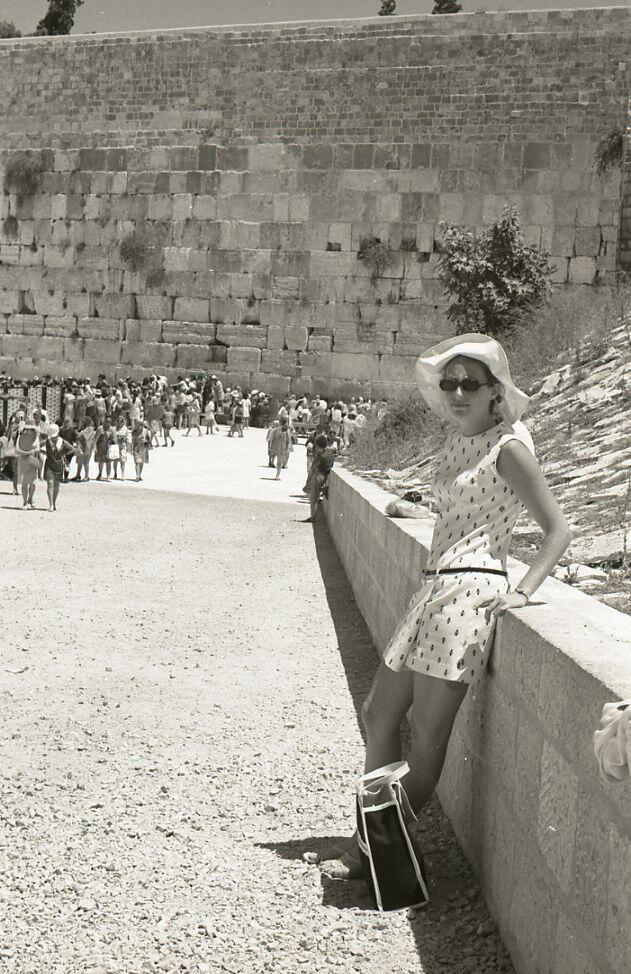
A woman at the Western Wall, Jerusalem, 1968
(Photo: Boris Carmi. Meitar Collection, The Pritzker Family National Photography Collection, National Library of Israel)
“After the Six-Day War, most Israelis felt a deep sense of connection to the Western Wall. Everyone felt it belonged to them,” says Prof. Doron Bar, a historical geographer and lecturer of Land of Israel studies at the Schechter Institute of Jewish Studies in Jerusalem. “Even if you were not a regular synagogue-goer, standing at the Wall stirred something in you; It symbolized something that was not necessarily religious, but national, historical, formative and deeply rooted in who we are as Jews and Israelis. That is why, remarkably, Israel’s Memorial Day ceremonies for fallen soldiers begin there.”
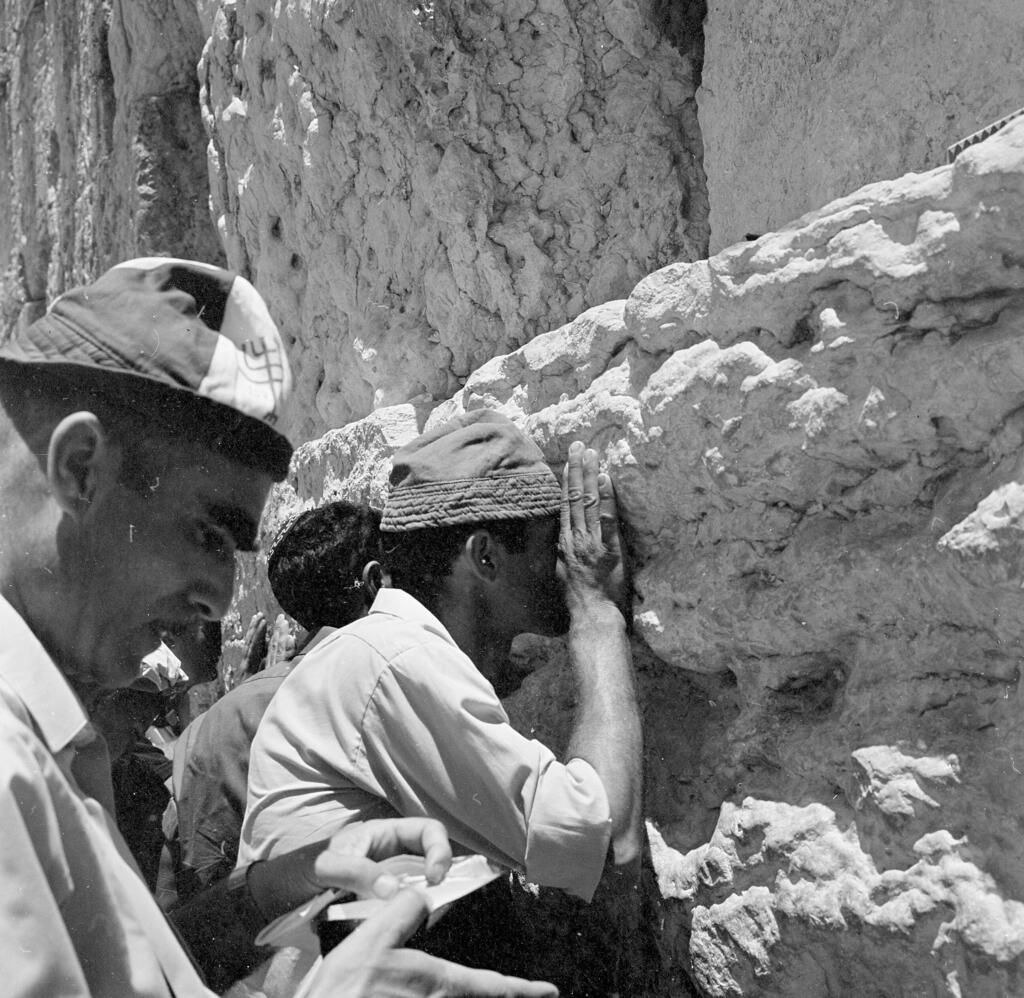
Visitors at the Western Wall in 1967, after the Six-Day War
(Photo: Beno Rothenberg. Meitar Collection, The Pritzker Family National Photography Collection, National Library of Israel)
In archival photos from the euphoria that followed Israel’s capture of the Western Wall, one can see a mixed crowd of men and women, including many secular Israelis, from men wearing the iconic Israeli “tembel” hats to women in sleeveless shirts. Today, if a woman arrives at the Western Wall in a tank top, she will quickly be asked to cover up.
“Sadly, the Wall’s Israeli symbolism has been fading,” Bar says. “The Western Wall has become not only increasingly religious, but increasingly ultra-Orthodox. The site is still very popular, but it has taken on a distinctly Orthodox, and even ultra-Orthodox, character. Some Israelis now avoid it altogether. I can say that for myself, for example, as a secular person.”
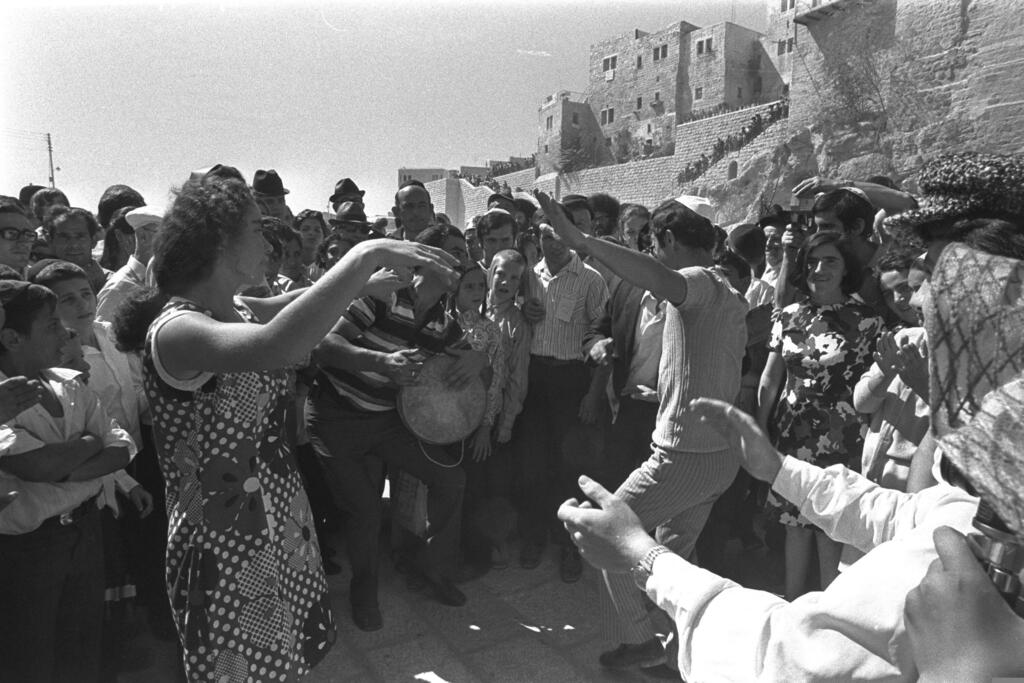
Celebrations at the Western Wall during Sukkot, 1972
(Photo: Moshe Milner, National Photo Collection)
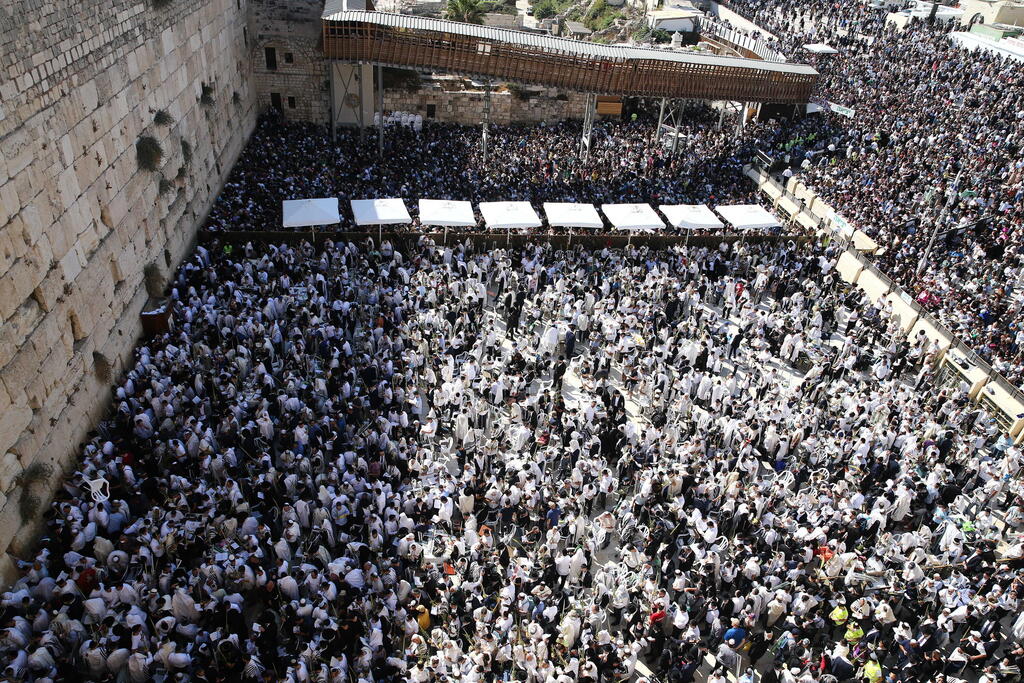
Worshippers at the Western Wall during Sukkot, 2022. “Jerusalem is supposed to serve everyone”
(Photo: Alex Kolomoisky)
In a reality in which most regular visitors to the Western Wall are Orthodox Jews, could the fact that it is run as an Orthodox synagogue be the most democratic option? Or is this a chicken-and-egg situation, and if the Wall were more welcoming to secular Israelis, would things look different?
“This goes to the question of who the Western Wall belongs to. And the question can be broader still: Who does Jerusalem belong to? As Israel’s capital, Jerusalem is a symbol for everyone and should serve everyone. The Western Wall is not just another site, and it does not belong to any one sector of Israeli society. That is how I see it. I am not naïve, and I do not think everyone should be able to do whatever they want there. But the argument that ‘we are the majority, we are the ones who pray there all the time, so it belongs to us’ strikes me as deeply problematic.”
“The Western Wall also has a major influence on other parts of the country, including at holy sites. Look at photos from Rachel’s Tomb before 1948. There was no partition, nothing. Look at King David’s Tomb; there certainly was no partition. Look at the tomb of Rabbi Shimon bar Yochai or Elijah’s Cave, there was no partition either. We see how the partition introduced at the Western Wall in 1967 spread to other places.”
The dispute over the partition
In the first days after the Old City was captured, responsibility for the site lay with the IDF. Prime Minister Levi Eshkol and Defense Minister Moshe Dayan considered transferring responsibility for all religious and historical sites in East Jerusalem and the West Bank to the National Parks Authority. But that option was blocked after Religious Affairs Minister Zerah Warhaftig and the chief rabbis at the time, Rabbi Isser Yehuda Unterman and Rabbi Yitzhak Nissim, opposed the involvement of secular officials in developing and managing the Western Wall.
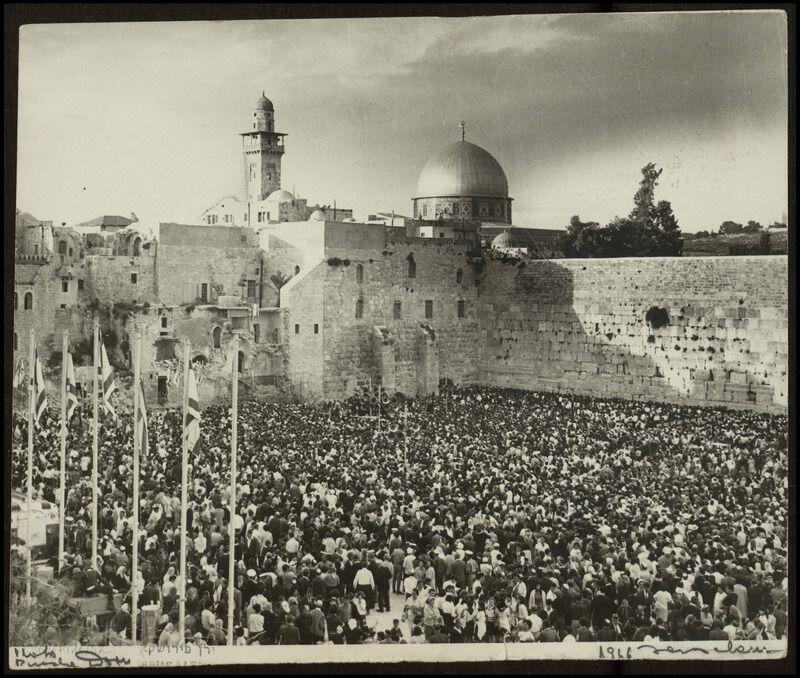
A large crowd at the Western Wall plaza in 1967, after the Six-Day War, likely during Shavuot
(Photo: Dorn Piroska. The Pritzker Family National Photography Collection, National Library of Israel)
Ultimately, oversight and responsibility for the Western Wall were transferred to the Religious Affairs Ministry, based on the 1967 Protection of Holy Places Law. The law, which prohibits the desecration or violation of holy sites, was originally intended first and foremost to make clear to the world that the State of Israel would protect Christian and Muslim holy places.
According to the wording of the law, “The minister of religions is responsible for implementing this law, and he may, after consulting representatives of the relevant religions or at their proposal, and with the consent of the justice minister, issue regulations concerning its implementation.” The law did not explicitly define who the representatives of the religions were, but the Religious Affairs Ministry interpreted it as transferring authority to the chief rabbis to determine procedures and arrangements at the Western Wall.
With the approval of the ministerial committee responsible for protecting holy sites, a partition separating men and women was installed at the Western Wall plaza a few weeks after the Six-Day War. The move drew some public opposition. The Religious Affairs Ministry defended the decision by citing a Chief Rabbinate ruling that, because the Wall is a holy site and a place of prayer, men and women must be separated there. The men’s section was given more space than the women’s section.
One of those angered by the developments was Yaakov Yanai, who directed the National Parks and Historical Sites Authority (which later merged with the Nature Reserves Authority to form the Israel Nature and Parks Authority).
In a report published in Yedioth Ahronoth on July 23, 1967, under the headline “The Wall has been hijacked,” Yanai was quoted sharply criticizing the Religious Affairs Ministry. “The greatest desecration of holiness today is the management of the Western Wall by Religious Affairs Ministry officials,” he said.
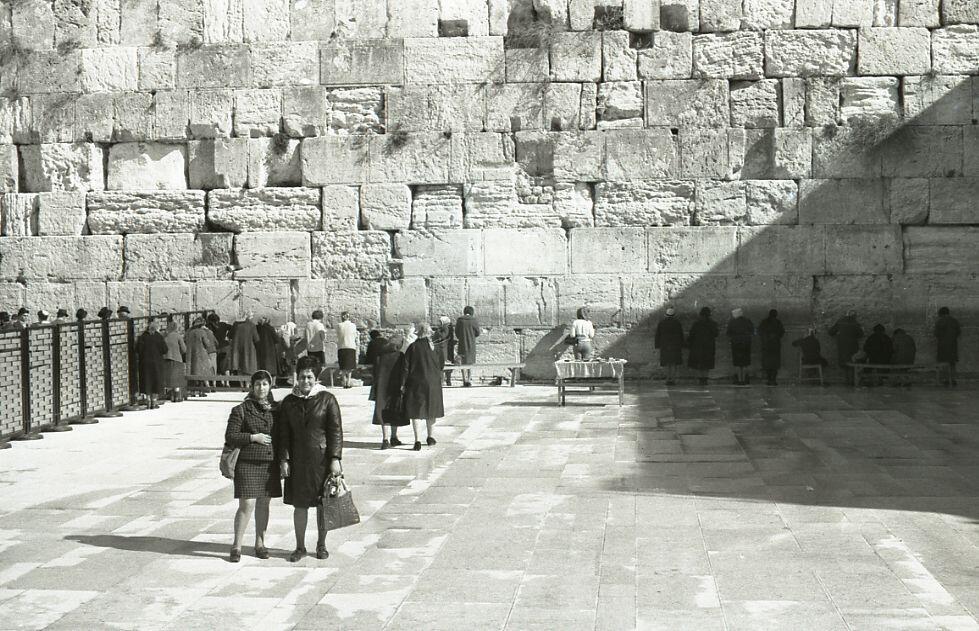
The women’s section at the Western Wall in 1968, after the partition was installed
(Photo: Boris Carmi. Meitar Collection, The Pritzker Family National Photography Collection, National Library of Israel)
Among other things, Yanai asked: “Since when did the Wall become a place visited only by religious people? Why do they think Jews come to the Wall to pray? Does American Jewry see the Wall only as a synagogue? And as for secular Israelis, why should they be forced to stand at the Wall without their wives? And what is a person supposed to do if he wants to stand before the Wall and reflect quietly, without prayer?”
Yanai, a former IDF colonel, described the chain of events and claimed it amounted to a takeover. “One day, about six weeks ago, I read in the newspaper that Rabbi Goren was ceremonially handing the Wall over to the religious affairs minister. As simple as that, from the military rabbinate to the civilian rabbinate. A gift for all eternity. As if the Wall belongs only to the rabbinate.”
Yanai added painfully: “I am not saying the Wall is not a holy place. But the Wall is not only a religious symbol. In my view, it is first and foremost a symbol of Israel’s independence, and it should be treated as such.” He warned that “responsibility for matters concerning the Wall must be taken, and quickly, out of the hands of the Religious Affairs Ministry,” and stressed: “The Wall belongs to the entire Jewish people, which is not made up only of religious people.” Yanai also argued that the national parks authority could protect the Western Wall better than the Religious Affairs Ministry, while complaining about the heavy dirt at the site.
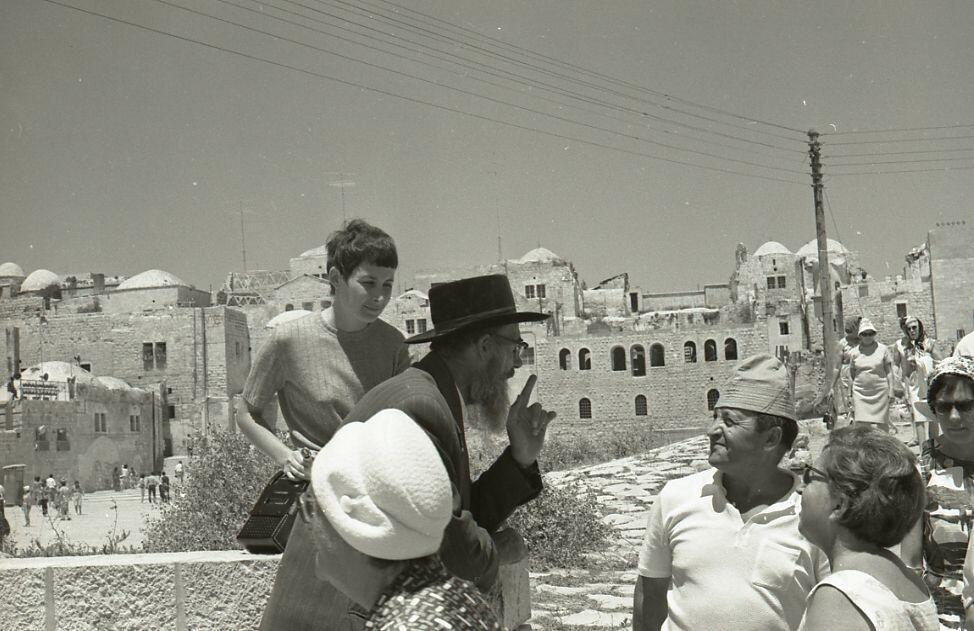
An orthodox speaks with secular Israelis near the Western Wall, 1968
(Boris Carmi. Meitar Collection, The Pritzker Family National Photography Collection, National Library of Israel)
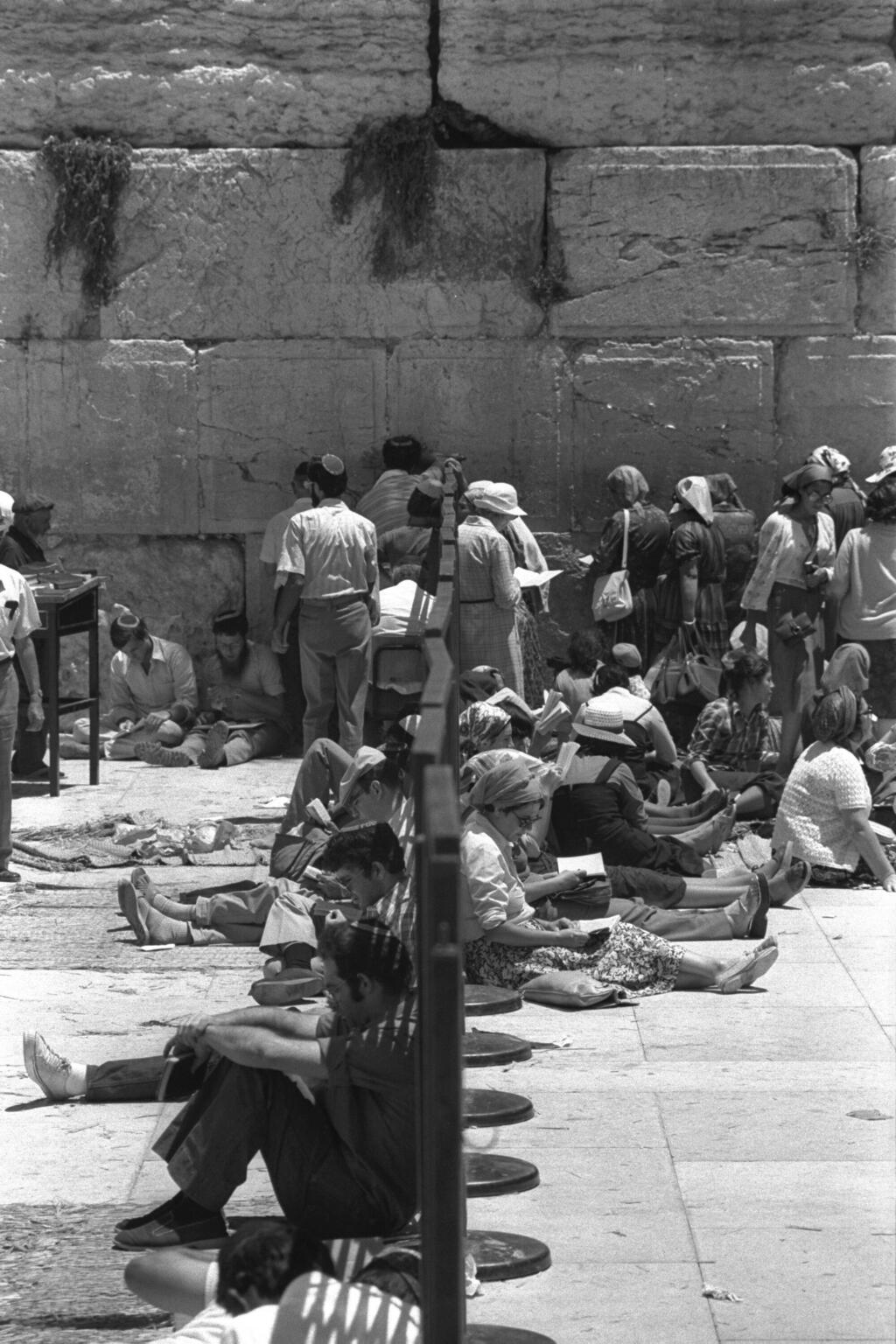
Worshippers at the Western Wall on Tisha B’Av, 1979
(Photo: Hanania “Nino” Herman, National Photo Collection)
Warhaftig, for his part, said at the time: “There are those who want the Wall to be a museum or a monument. That will not happen. The Wall will not be a historical site like other historical sites.” Responding to the claim that there is nothing holy about the Western Wall and that the Religious Affairs Ministry was effectively hiding from the public the fact that it is not truly a remnant of the Temple itself but only a retaining wall for the Temple Mount plaza, the religious affairs minister said: “No force in the world will take the Wall from the sacred to the secular.”
Bar explains that at the time, “the question arose: What is the Wall more than anything else, a historical site or a holy place? The National Parks Authority said it was a historical site, and with all due respect to the holiness of the place, it was the expert in handling historical sites. Yanai was a fairly close friend of Jerusalem Mayor Teddy Kollek and apparently also fairly close to Prime Minister Eshkol.
But very quickly, the religious establishment took control of the place. Eshkol understood that the solution to the complexity surrounding the Wall was to leave it as a place with a religious agenda. Warhaftig was a very smart and levelheaded man.”
On the question of the Western Wall’s sanctity, he notes: “Jews have always viewed this place as a remnant of the Temple, without getting caught up in archaeological technicalities.”
Religious Affairs Ministry officials issued regulations governing permissible conduct at the Western Wall plaza. The regulations banned Shabbat desecration, eating and drinking, holding gatherings and walking bareheaded at the site, and required “appropriate dress.” Ministry officials stopped weddings and circumcision ceremonies from being held at the Western Wall plaza, but encouraged bar mitzvah ceremonies at the site.
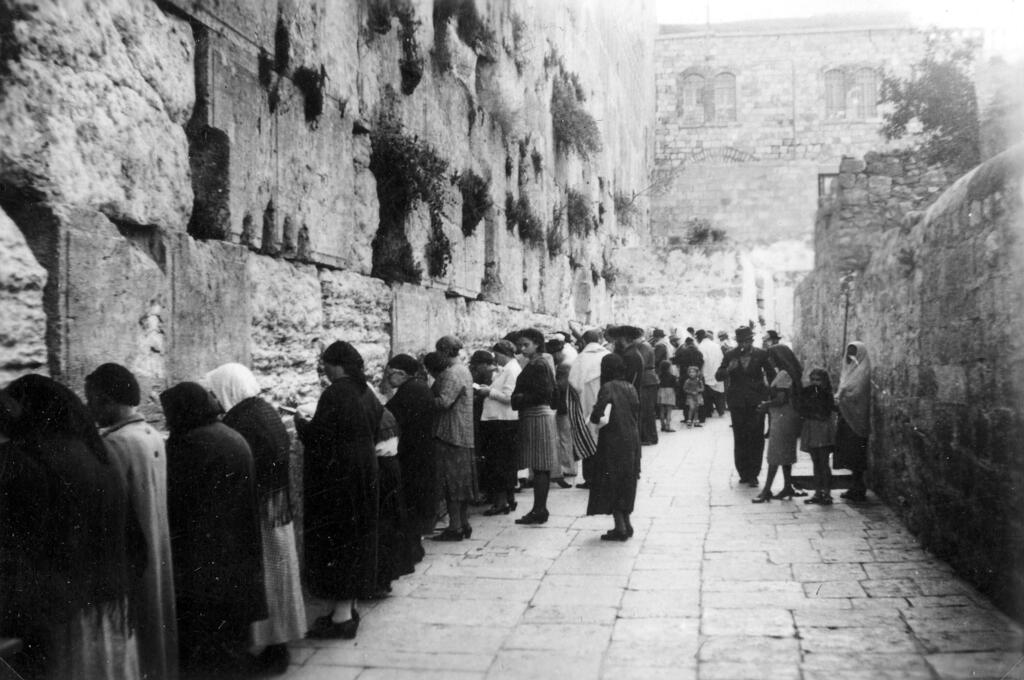
The Western Wall in 1946, when there was no separation between men and women. Some worshippers wanted a partition even then, but the British did not allow it
(Photo: Raanan Galili. Courtesy of Nadav Mann, Bitmuna. The Pritzker Family National Photography Collection, National Library of Israel)
Most Cabinet ministers showed little interest in the debate over the Western Wall, but there was some opposition. “One opponent of the partition was Tourism Minister Moshe Kol, a centrist who was deeply troubled by the division of the Wall into separate men’s and women’s sections,” Bar says. “Already then, protest among North American Jews was beginning to grow. In 1968, during a conference of the World Union for Progressive Judaism, Reform Jews sought to pray at the Wall with men and women together, sparking an enormous uproar. It is very similar to what we are seeing today.”
Before 1948, there was no separation between men and women at the Western Wall.
“There wasn’t, but let’s be honest: Some worshippers wanted separation. It is also worth remembering that on holidays and festivals, men dominated the space, and women stood off to the side, if there was room for them at all. So I think that if Jews had been allowed to put up a partition during the British Mandate period, they would have separated men and women.”
The struggle of Women of the Wall
In 1988, the Western Wall was transferred to the responsibility of the Western Wall Heritage Foundation, a move that, in retrospect, was another step toward tightening Orthodox control over the site. Late that year, the Women of the Wall group began its activity and petitioned the High Court of Justice. While the petition was still being considered, a new regulation was added at the Western Wall banning “the holding of a religious ceremony at the Western Wall not in accordance with local custom, which offends the feelings of the worshipping public toward the place.”
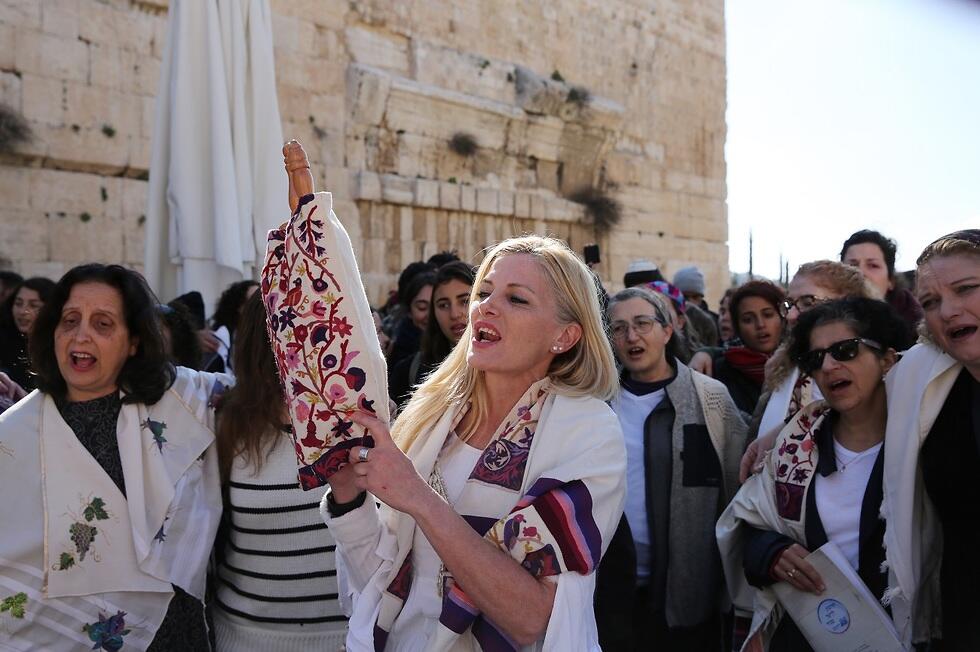
Women of the Wall
(Archive photo: Alex Kolomoisky)
The women tried to pray at the Western Wall plaza while wearing prayer shawls and reading aloud from a Torah scroll, but this was not welcomed by those who saw it as a provocative attempt to undermine “local custom.”
Since the first day of the Hebrew month of Tevet 5749, in December 1988, Women of the Wall have held a prayer service every Rosh Chodesh, the start of the Hebrew month. Already in the early years, they faced violent opposition, including curses, insults, blows and objects thrown by male and female worshippers at the site. Following the incidents, the Western Wall rabbi at the time, Rabbi Meir Yehuda Getz, banned the women from praying near the Wall while wearing prayer shawls and reading from the Torah.
In 1994, a petition by Women of the Wall to the High Court of Justice was rejected. Deputy Supreme Court President Menachem Elon, an Orthodox Jew, ruled that the Western Wall plaza had the status of an Orthodox synagogue and argued that this was consistent with the “status quo” that had existed for generations.
Justice Shlomo Levin, who held a liberal secular worldview, disagreed and ruled that the Western Wall should not be viewed as a synagogue in every respect, operating only according to Jewish law. Supreme Court President Meir Shamgar wrote that ways should be sought to allow every person to pray in his or her own style and manner, provided there was no “substantial harm to the prayers of others.”
The legal battle continued for years. In 2013, Jerusalem District Court Judge Moshe Sobel ruled that Women of the Wall’s prayer was not forbidden and did not constitute a legal offense, but rather fell under the definition of local custom. Attorney General Yehuda Weinstein did not appeal the decision.
At Robinson’s Arch, part of the archaeological area near the Western Wall, a mixed-gender prayer area was partially prepared. It was supposed to allow Women of the Wall to pray in their way, as well as allow prayer without gender separation. But they continued to demand a foothold in the main plaza, arguing that the area designated for them had never been properly prepared and that its management authority had not been regulated.
At the same time, harassment by Orthodox worshippers continued. The Western Wall compromise was meant to formalize and expand the mixed-gender prayer area, known as Ezrat Yisrael, but the plan was shelved under pressure from ultra-Orthodox politicians.
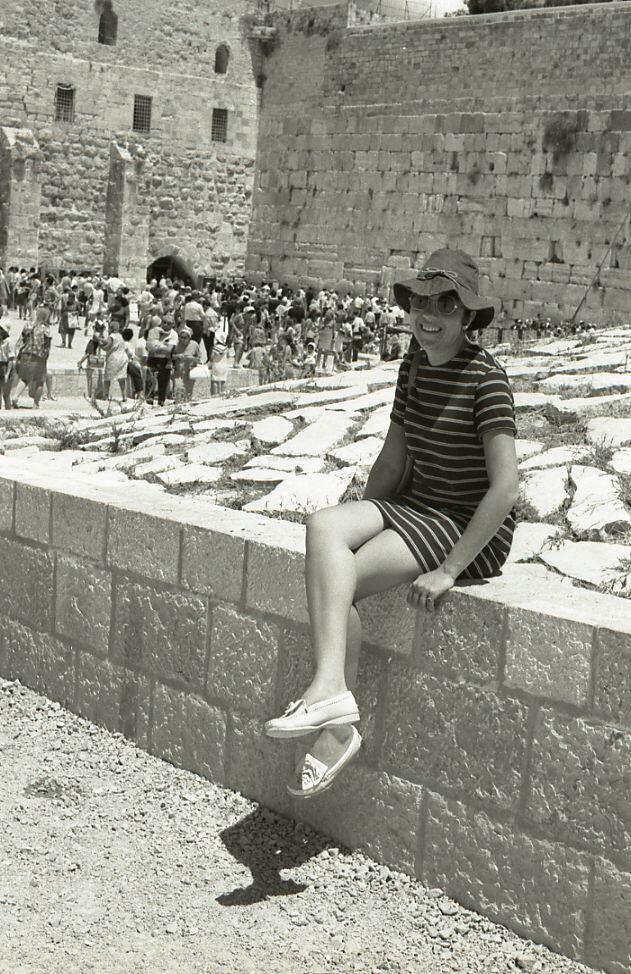
A woman at the Western Wall plaza in Jerusalem, 1968
(Photo: Boris Carmi. Meitar Collection, The Pritzker Family National Photography Collection, National Library of Israel)
An amendment to the Protection of Holy Places Law, initiated by Knesset member Avi Maoz, effectively seeks to abolish the mixed-gender prayer area as well. It would give the chief rabbis exclusive authority to set procedures at the site and define any activity that contradicts Chief Rabbinate rulings as desecration of the holy place. The bill has already passed a preliminary reading in the Knesset.
“I thought it was a mistake by Women of the Wall and the liberal Jewish movements to agree to the compromise of ‘Ezrat Yisrael’ proposed by Naftali Bennett,” Bar says. “I think it was a colossal mistake, because in effect they agreed to a third-tier Wall. Not the main Wall, not the women’s section, but a third Wall.”
And now, even that limited concession is under threat.
“Exactly. It is foolish and infuriating. Prime Minister Benjamin Netanyahu made promises on the Western Wall compromise, then walked them back. In recent years, with all the turmoil in this country, the issue has been pushed completely to the sidelines.”
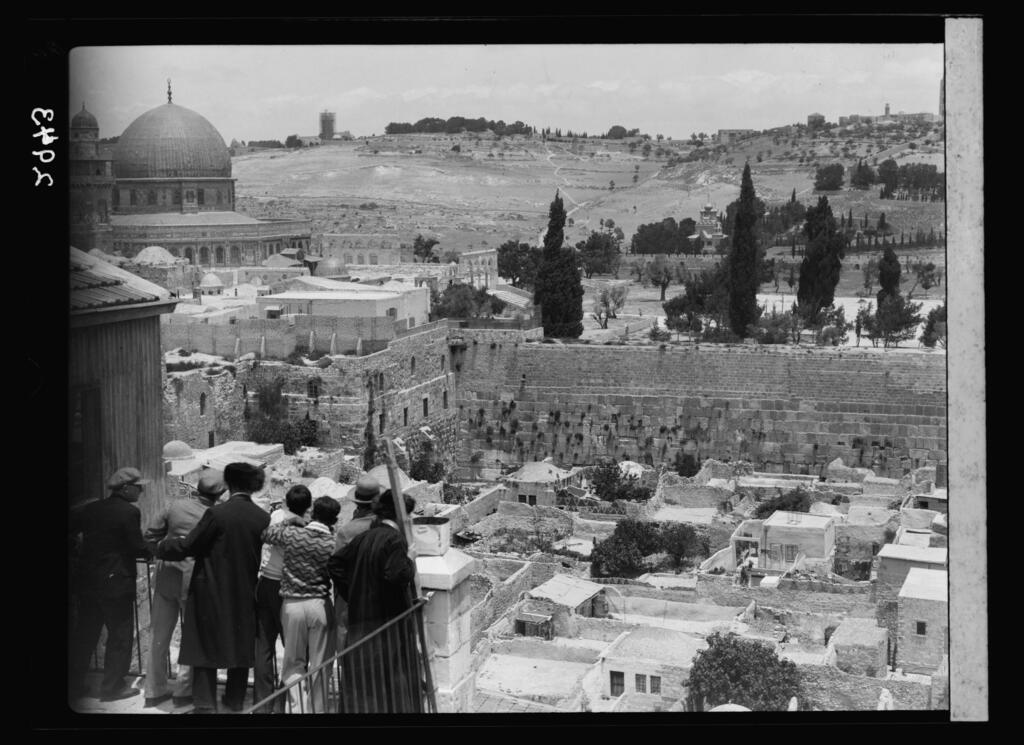
The Western Wall and the Mughrabi Quarter during the British Mandate
(Photo: American Colony Collection, Library of Congress)
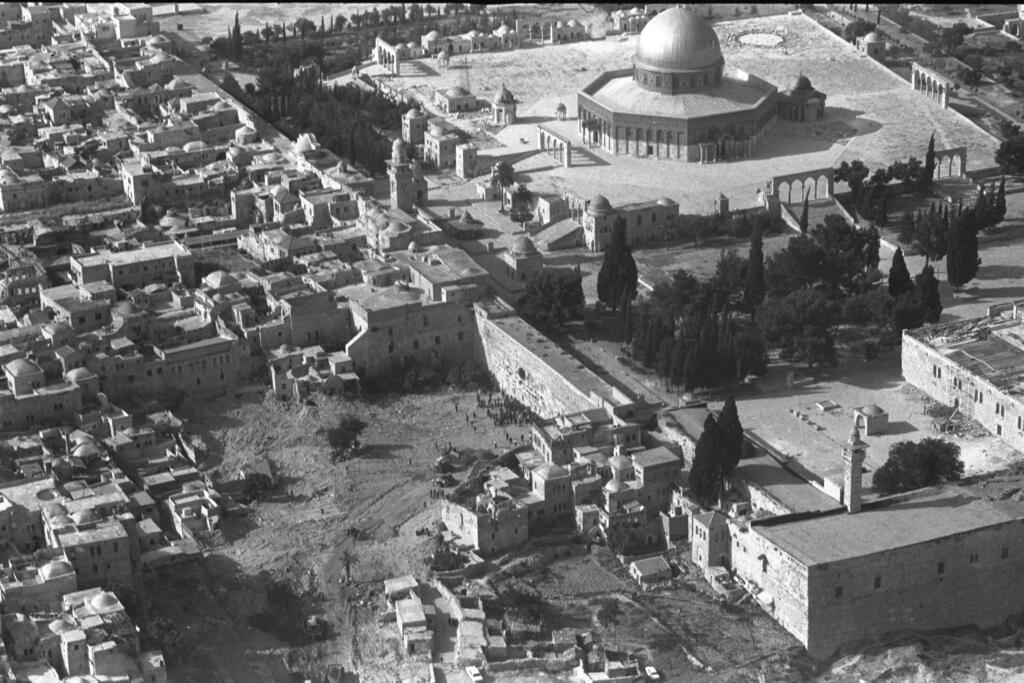
The Temple Mount and Western Wall after the demolition of the Mughrabi Quarter, shortly after the Six-Day War
(Photo: Ilan Bruner, National Photo Collection)
There is also an absurd regulation at the Wall that forbids bringing in a Torah scroll from outside. There was even a stage in which security guards searched bags to make sure the women were not hiding a small Torah scroll inside.
“In recent years, there has been a process of policing the Western Wall,” Bar says. “In the past, it was much more possible and normal to behave according to communal and family customs. In recent years, as part of the site’s ultra-Orthodoxization, those forms of expression have disappeared.
In the context of Women of the Wall, this policing is exploited to prevent phenomena they see as dangerous. By the way, the job of Western Wall rabbi has become one of the most stable jobs in the country. “Presidents come and go, prime ministers come and go, everyone comes and goes, and only Rabbi Shmuel Rabinowitz (who has been in charge of the Western Wall since 2000) seems to remain forever.”
Women of the Wall said in a statement: “Women of the Wall is a group of believing women from all streams of Judaism. Some have tried for years to cast doubt on the purity of our intentions and accuse us of attempts at ‘provocation.’ This stems solely from the effort to exclude and silence women and preserve separatist, extreme ultra-Orthodox control over the site.
"These days, Knesset member Avi Maoz is advancing an amendment to the law that would mean those who do not pray at the site according to the Chief Rabbinate’s position, those who do not dress or behave there according to the rabbinate’s worldview, would be exposed to a punishment of seven years in prison! The public should know and understand who is running the Western Wall, the holiest place to the Jewish people, and what the true face of the place is, to our great sorrow.”
Maoz, chairman of the Noam party, responded: “The Western Wall, the remnant of our Temple, is holy along its entire length, and we have a duty to preserve its sanctity and character for generations, for the millions of worshippers and visitors who come there every year. That is the purpose of my bill. The law will also protect the real women of the Wall, the righteous women who come to pray there in reverence every day, and will not allow the women of provocation to turn this holy site into a battleground against the tradition and Jewish identity of the State of Israel.”
Between the Western Wall and the Temple Mount
Bar is the son of two long-established Jerusalem families. He is a seventh-generation Jerusalemite. “Since I was a child, these alleyways have been part of my life,” he says. “I remember going to the Wall with my father and mother, both of whom came from ultra-Orthodox families of the Old Yishuv,” he adds. “I remember my excitement over the archaeological excavations in the area. But to my great sorrow, today the Wall does not mean much to me, it even puts me off, because of its ultra-Orthodox identity, the politics surrounding it and the separation between men and women.”
Prof. Doron Bar
(Photo: Itai Nadav)
You describe how visitors who knew the Western Wall before the war stood stunned by the loss of its romantic character.
“One of the greatest disappointments for people who began coming to the Wall after 1967 was that the place had, in effect, lost some of its magic. Before 1948, people would describe walking through the alleyways of the Mughrabi homes and suddenly standing before this enormous wall. With that giant plaza, people would say all the romance had been destroyed.”
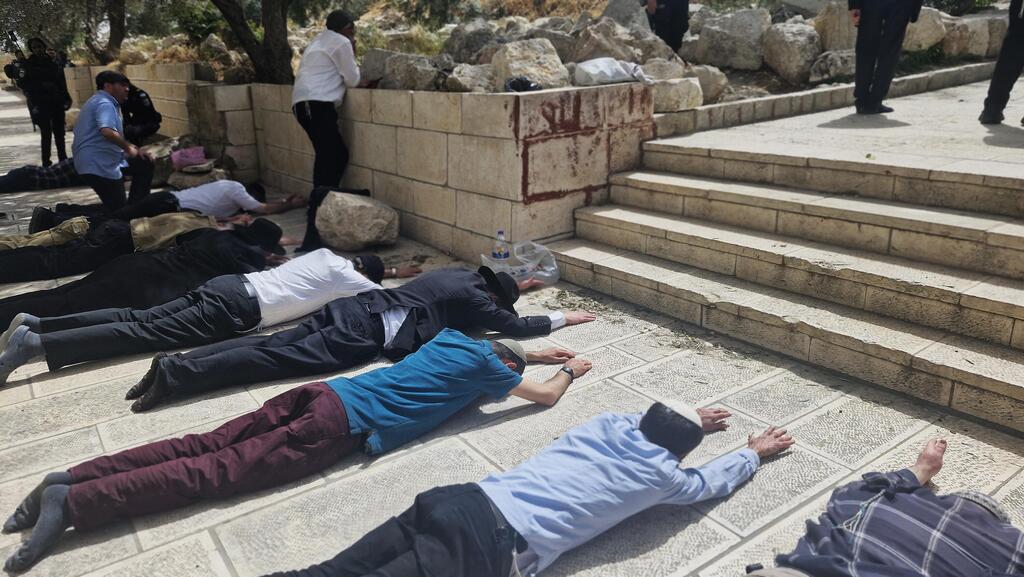
Worshippers bow on the ground at the Temple Mount, a change of recent years
(Photo: Mordechai Yurevetsky)
When Motta (Mordechai) Gur spoke over the radio network during the Six-Day War, he declared, “The Temple Mount is in our hands,” not “The Western Wall is in our hands.” There was an understanding that the Temple Mount was the site of the ancient Jewish Temple, while the Western Wall was secondary to it.
“You are absolutely right. This is where politics enters the picture. For a brief moment, an Israeli flag was raised over the Dome of the Rock on the Temple Mount. It was no accident that Moshe Dayan ordered it removed, said it was inappropriate and pulled the soldiers out.
“It is a mistake to view this story through the reality of 2026. You have to see it through the reality of 1967, after a war in which Israel had felt on the brink of destruction, then emerged victorious, while still feeling surrounded by enemies. The thinking was: Let’s not wake sleeping demons.”
Jewish Temple Mount activists see that as a historic missed opportunity.
“That is a very common argument today. People say, ‘What an idiot Moshe Dayan was.’ In 1967, Israel had won a great victory, but it still saw itself as a small, besieged state dependent on the United States and other powers. The thinking was that Israel had enough problems without adding this one. After all, the Temple Mount is also Haram al-Sharif, the third-holiest site in Islam. They did not want to upend that reality and ignite a crisis.”
Opposition to changes in the status quo on the Temple Mount, of course, rests on security arguments. Supporters of the status quo fear that any step could lead to false reports that Israel supposedly wants to take over the site, and could even become a pretext for a wave of terrorism, as happened around the Western Wall tunnel events in 1996, Ariel Sharon’s visit to the Temple Mount in 2000 or the metal detector crisis in 2017.
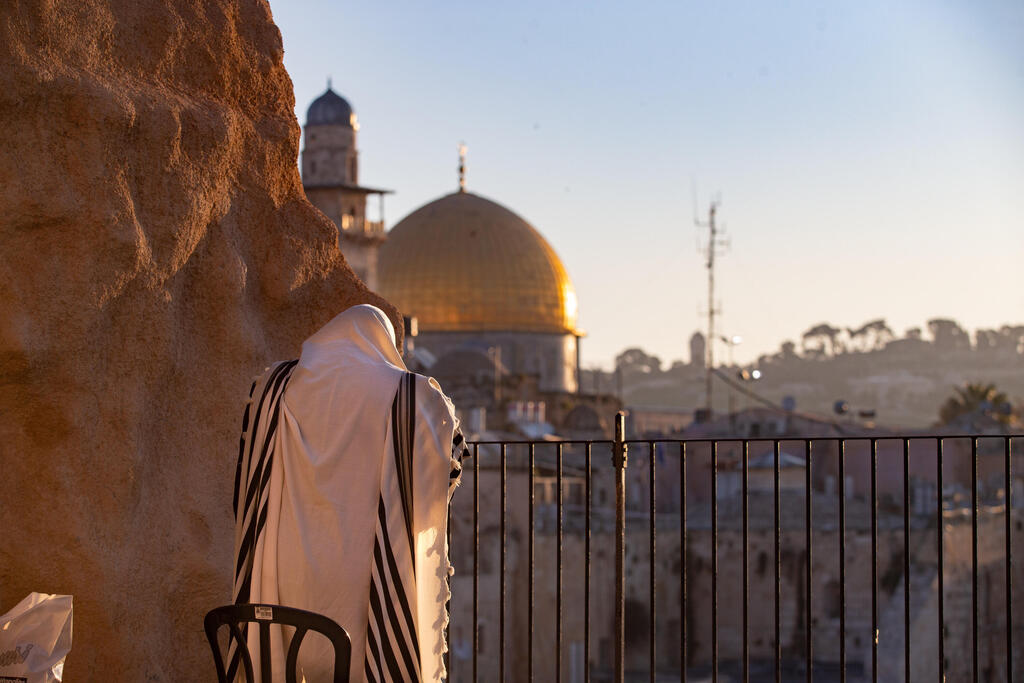
A worshipper at a point overlooking the Temple Mount
(Photo: Alex Kolomoisky)
Before the well-known crises surrounding the Temple Mount, there was a shocking incident in 1969. “An eccentric Australian Christian named Michael Rohan took advantage of lax Waqf security and set fire to Al-Aqsa Mosque. It was a critical test for Israeli authorities,” Bar says. “It was a test for Prime Minister Golda Meir and others: how to make clear that Israel was not responsible, after Muslims accused the state of causing the fire.”
Over the years, there was a strict insistence that Jews not pray on the Temple Mount, at least not openly. It appears that Israeli governments were also comfortable with the arrangement under which Jews prayed at the Western Wall and Muslims on the Temple Mount.
In recent years, that has changed, and Jewish visitors have begun holding group prayers on the Temple Mount aloud and in public. The number of Jews visiting the Temple Mount has risen over the years, but the Western Wall has remained, and still is, the Jewish site that draws the highest number of visitors.