


Sixty-seven years after Jewish entrepreneur Ruth Handler introduced Barbie to the world, Mattel has released its first official Barbie dedicated to Hanukkah. The doll comes dressed in blue, with a menorah on her sweater that lights up at the push of a button.
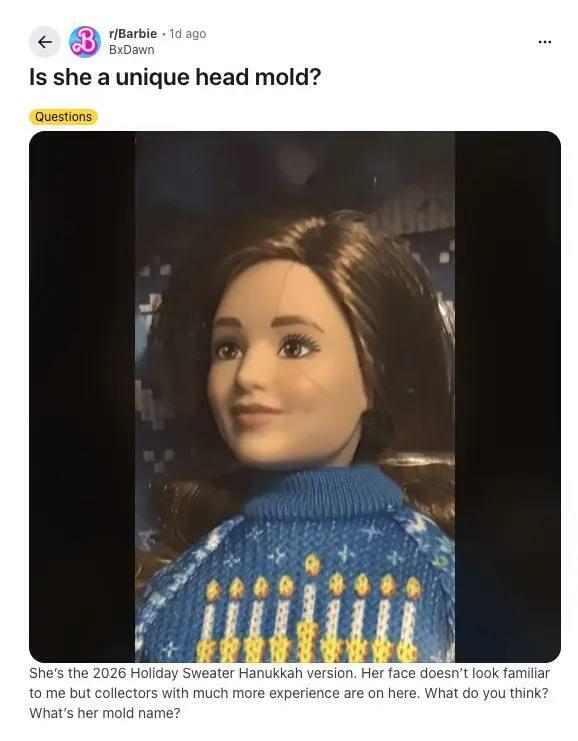
But since photos of the doll began circulating online, much of the conversation has focused not on the menorah but on her nose. Some collectors say it appears more prominent than those of other Barbies, prompting debate over whether Mattel deliberately gave the doll what some have described as a “Jewish nose” — and whether that should be viewed as stereotyping or representation.
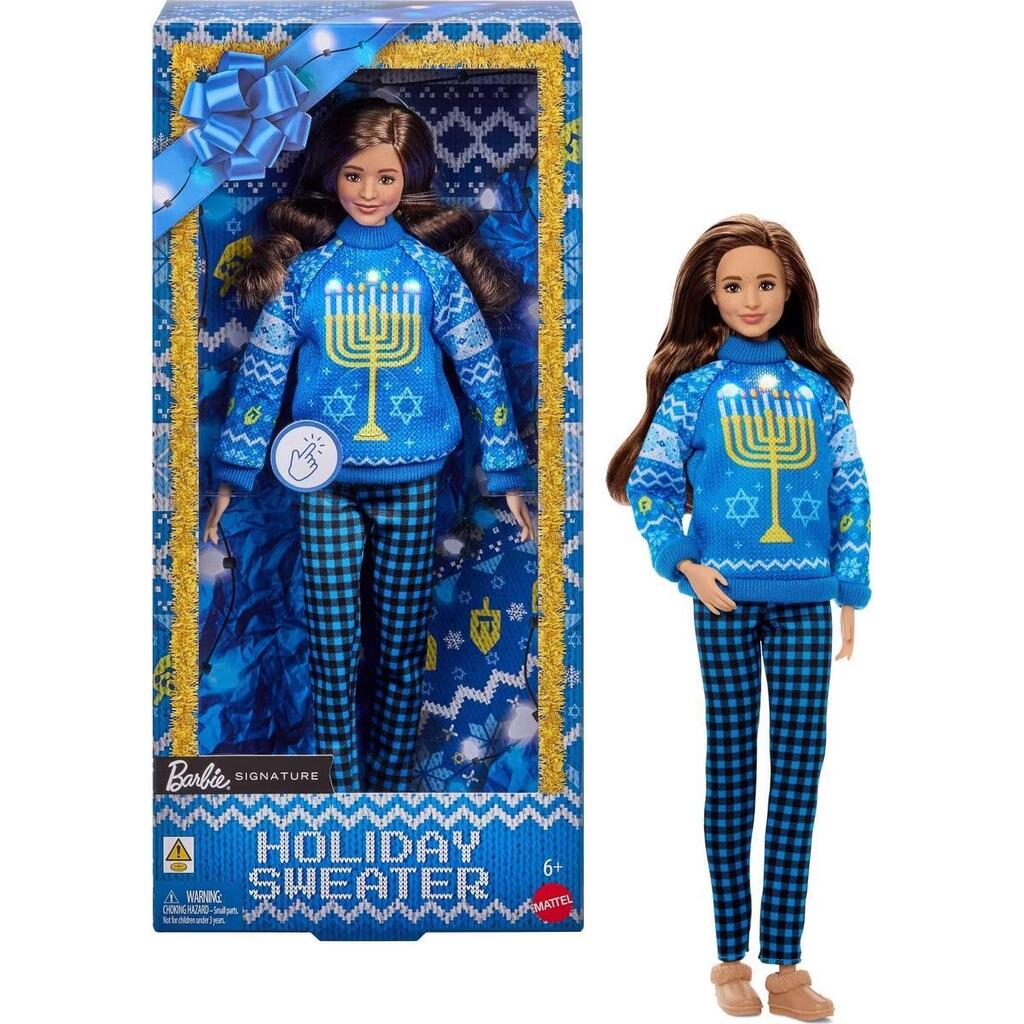
Hanukkah Barbie is one of three dolls in Mattel’s holiday “ugly sweater” collection, a reference to the American tradition of wearing intentionally loud and over-the-top sweaters to end-of-year parties. The other two dolls have Christmas-themed outfits, while Hanukkah Barbie wears a blue sweater decorated with a menorah, dreidels, snowflakes and Stars of David, along with plaid pants and miniature boots. Target lists the doll at $27.49, about 84 shekels at Friday’s exchange rate.
The new Barbie has wavy brown hair, an olive complexion and a small closed-mouth smile. Some collectors also believe her facial features differ from those of the other dolls in the series. “The nose seems to have a bigger bump, perhaps to mimic Jewish facial features,” one Reddit user wrote. Another said the doll “looks different” and that her nose appeared more prominent. The discussion has also extended to the face mold used for the doll, though Mattel has not said whether it created a new mold or modified an existing one.
‘Jewish girls shouldn’t be ashamed’
The sensitivity surrounding the debate is rooted in the long history of exaggerated depictions of the supposed “Jewish nose” in antisemitic caricatures, including Nazi propaganda. Several Jewish shoppers in New York said they welcomed a Barbie celebrating Hanukkah but found it difficult to ignore what they saw as a noticeably different nose. Mattel declined to comment on the criticism.
Others saw the same feature very differently. “I’ve been crying for a few minutes because there is finally a Barbie with a curved nose like mine,” one user wrote after seeing an early image of the doll. Another said she was considering buying it precisely because dolls with noses like hers were so rare. Dafna Michaelson Jenet, who heads a foundation combating antisemitism, said the nose looked larger to her as well but added: “The doll has a beautiful face, and there is nothing about it Jewish girls should be ashamed of.”
Some collectors were less concerned with the face than with the clothes. One complained that the Jewish Barbie had been given an outfit that looked “cheap and printed,” adding that “she deserved better.” Others were disappointed that the designs appeared printed on the sweater rather than knitted into the fabric.
The debate comes as Mattel continues to broaden the identities and communities represented by Barbie, even as sales of the brand have weakened. The company reported $169 million in worldwide Barbie product sales in the second quarter, down 16% from a year earlier. Recent releases have included a blind Barbie developed with the American Foundation for the Blind, an autistic Barbie designed with an organization led by autistic advocates, and a Diwali Barbie created with Indian fashion designer Anita Dongre.
The Hanukkah doll also marks a symbolic milestone for a company now led by Israeli chairman and CEO Ynon Kreiz. As early as 2010, a Jewish user on a Mattel collectors’ forum called for a Hanukkah Barbie dressed in blue and silver and accompanied by a miniature menorah and dreidels. Another participant predicted at the time that such a doll would prove controversial.
Sixteen years later, the idea has become reality, though the imagined evening gown has been replaced by an “ugly sweater.” Mattel has previously created Barbie dolls modeled on Jewish women, including Olympic gymnast Aly Raisman, but this is its first official Barbie specifically dedicated to Hanukkah.
Jewish-American rapper Kosha Dillz, whose real name is Rami Even-Esh, weighed in on Instagram: “I’m standing with Hanukkah Barbie. There’s nothing wrong with a giant nose or a giant menorah.” One commenter said she immediately bought the doll, while Dillz suggested he could sell signed Hanukkah Barbies at upcoming performances to raise money for charity.