


Only a few weeks ago they made aliyah and began building new lives in the country. Now, in Jewish Agency absorption centers, they are practicing how to reach shelters and learning the hard way the difference between an early warning and a real siren, and what to do when hostile aircraft or missiles from Iran and Lebanon fill the skies.
In between, they try to study Hebrew and calm the fears of relatives they left behind, family members who call and plead with them to return to the safer countries they departed.
The group of olim in the northern city of Karmiel, about 200 people in total, looks like Bad Bunny’s Super Bowl playlist: Panama, Uruguay, Brazil, Cuba, Argentina and even Russia. All of them crowd together inside a modest shelter in Karmiel.
Prof. Juan Bender, 75, was supposed to be enjoying a quiet retirement in Havana or the U.S. by now. As a senior neurologist, he has seen a great deal during his long career, but nothing prepared him for practicing runs to a bomb shelter in Karmiel.
Bender immigrated from Cuba with his small family two months ago. By the time Operation Roaring Lion began last week, reshaping the security reality in northern Israel as Hezbollah joined the fighting, he already felt like a local.
“I’m Israeli now, not Cuban,” he says proudly. “I’m happy to be Israeli at a time like this. I want to help people here and work in areas of expertise. My family in Cuba and the U.S. call me very worried, but I tell them not to worry, that I’m doing well. I prefer living here. This is my home.”
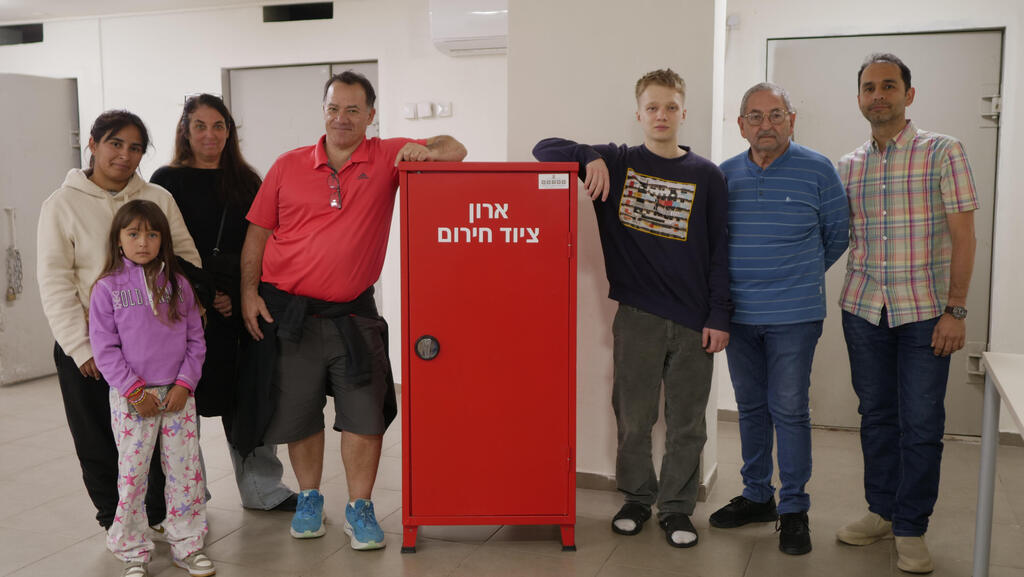
More than 200 new olim currently live at the Jewish Agency absorption center in Karmiel. While in many parts of the world war is a reason to flee, data from the Aliyah and Integration Ministry and the Jewish Agency show the opposite trend. Since the start of Operation Rising Lion, about 16,000 new olim have arrived in Israel.
The Lipovsky family, Julian, Paula and their 12-year-old daughter Leslie, arrived a month ago from Argentina. Before that they spent 25 years living the classic American dream in California. Julian ran a company that filmed soccer matches, while Paula worked as a graphic designer.
They traded the quiet of suburban life for nights in the bomb shelter of the absorption center. “We are Jews, and this is the best time for us to be here, to be part of everything happening,” Julian told Yedioth Ahronoth. “After October 7, 2023, I was watching the news constantly. I realized that if something so terrible can happen to Jews in the State of Israel, then something bad can happen anywhere, and this is our place.
“It’s a difficult decision to leave everything behind, but I’m sure all of this will end and things here will be better for everyone.”

Young olim at the absorption center in Karmiel
(Photo: Yaron Sharon)
Their daughter Leslie is happy about the move to Israel but does not hide how much she misses some of the small comforts she left behind across the ocean, especially something cold and comforting to eat during tense moments. “The food in Argentina is much better,” she says firmly. “I miss Nicolo ice cream so much. It’s the best ice cream in the world,” she adds with a sad expression.
“I’ve already spent many nights sleeping in the shelter here, and I don’t like it. But what I like even less is waking up to sirens while I’m asleep. I’m not afraid. I don’t think they would target an absorption center. We’re not really interesting to them. They want to fire at hospitals or government institutions.”
Her mother, Paula, says that she "speaks with friends in Argentina, and some of them try to convince us to come back,” she says. “I tell them we’re fine. This was our dream for years, and finally we’re home. At the absorption center we feel like we’re with family. Everyone helps each other, even when we don’t always understand one another’s language.”
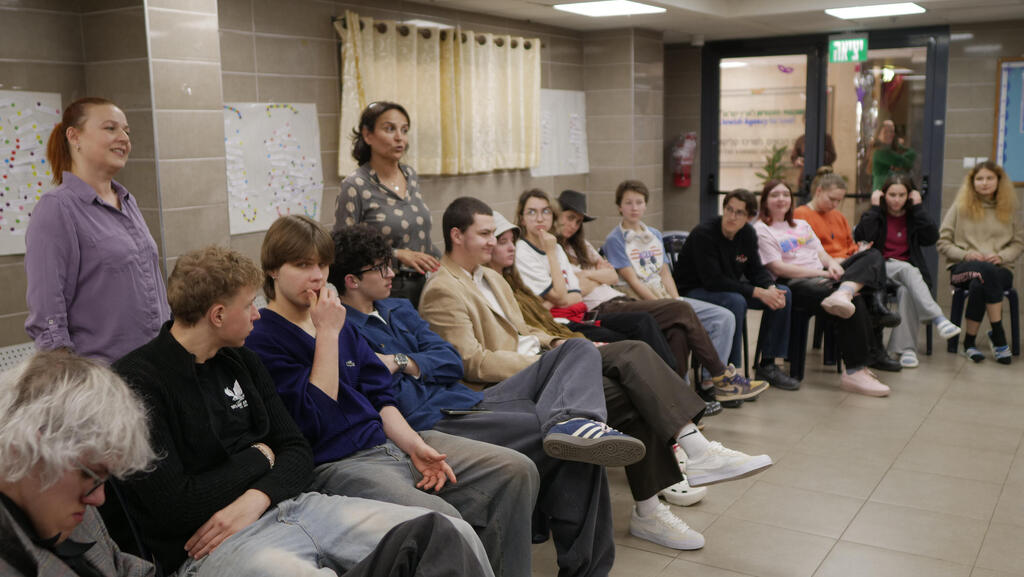
Activities for olim at the Jewish Agency absorption center in Karmiel
(Photo: Yaron Sharon)

New olim at an absorption center
(Photo: Yaron Sharon)
Vitaly Korkin, 19, made aliyah four months ago from Astrakhan, a city on the Caspian Sea in Russia. He holds a bachelor’s degree in marine engineering, but his focus is already elsewhere.
“In my city in Russia there was only one synagogue and the Jewish community was small,” he says. “Here, it’s amazing to see so many Jews. I feel safe in Israel and in Karmiel. People smile here.”
When his worried parents call from Russia, his answer is always the same: “Everything is fine. I’m not afraid because we have shelters, the U.S. army helps us and we have a strong army,” he says.
Korkin adds, “When I finish my Hebrew studies here, I plan to enlist in the IDF, maybe in the Border Police.”
These personal stories are backed by figures that are drawing the attention of aliyah and Integration Minister Ofir Sofer and his staff.
Since the start of Operation Roaring Lion, more than 330 new olim files have been opened. In March alone, 552 new olim are expected to arrive in Israel from countries including the U.S., France, the UK, South Africa and even Moldova and Italy.
Officials at the Ministry stress that despite the security situation, none of the olim who were scheduled to arrive have asked to cancel their plans.
Over the weekend, Sofer visited the new olim at the absorption center in Karmiel and asked to hear about their experiences adjusting to life in Israel during wartime. He said he left the meeting deeply moved. “They chose to come to Israel precisely during a time of war, out of a deep desire to be part of this country,” he said. “Their aliyah strengthens the State of Israel in every aspect.”
The ministry is currently operating a program called “Otef Olim,” which provides psychological support and information hotlines in six languages and assistance for thousands of olim living under rocket fire.
Jewish Agency Chairman Maj. Gen. (res.) Doron Almog sees these olim as a decisive Zionist answer to the threats facing Israel from the north and east. “Precisely in days of war and uncertainty, we are witnessing a moving phenomenon that tells the true story of the Jewish people. It is a story of unconditional love,” Almog says.
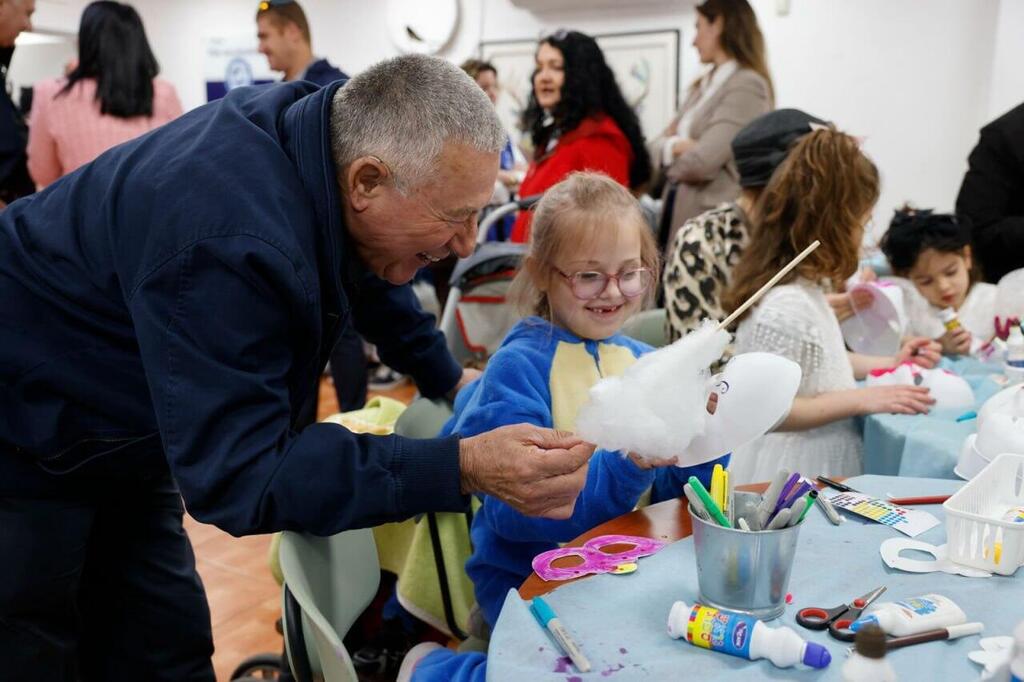
Jewish Agency Chairman Doron Almog during an activity with olim in the shelter at the Yeelim absorption center in Be'er Sheva
(Photo: Guy Yechieli for the Jewish Agency)
“Aliyah is the engine of Israel's growth. It is not an obvious decision, but a choice that sharpens the essence of life here. Aliyah is an anchor of hope for all of us.”