

Long before Finance Minister Bezalel Smotrich declared that “the outcome will be that we will run him over,” referring metaphorically, as he later clarified, to Supreme Court President Yitzhak Amit, and even before the judicial overhaul that fueled public anger against them, Israeli judges already felt threatened.
Retired judge Ruth Lorach recalls how, one night, defamatory flyers were distributed on cars in the town where she lived during the Duma case she presided over. In that case, Amiram Ben-Uliel was convicted of murdering three members of the Dawabshe family, including a baby.
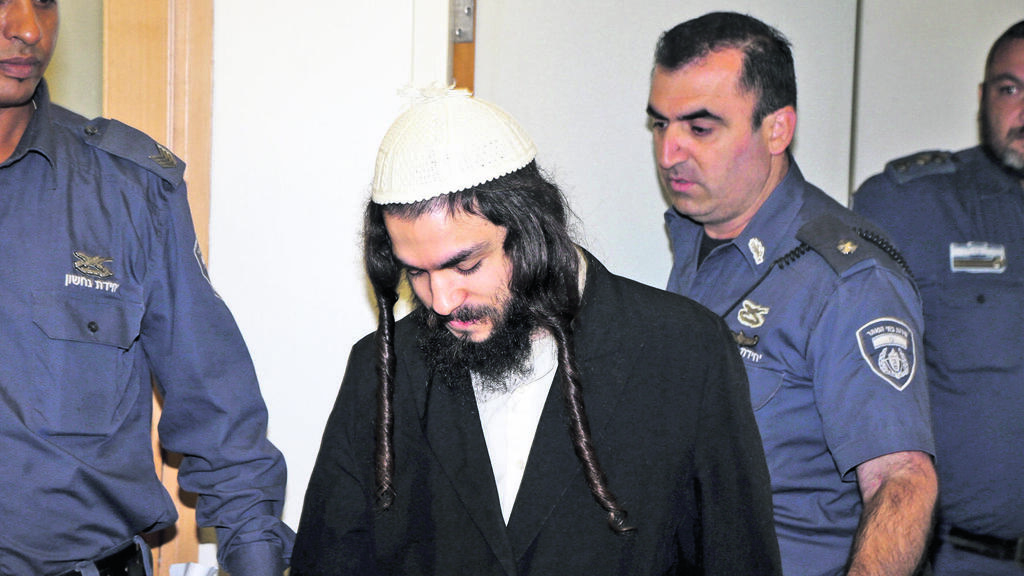
With 28 years on the bench, Lorach’s résumé includes presiding over some of Israel’s most serious murder trials — among them the Oshrenko family murder case and the murder trial of businessman Eldad Perry. She also headed the panel that convicted Yonatan Heilo of murdering Yaron Ayalin, a released prisoner who had sexually assaulted and extorted him.
“I was threatened,” she now admits. “But I wasn't protected, and I also said I didn’t need protection. I remember feeling uncomfortable, but hurt? No. It was ugly, but part of the thick skin you develop over the years. It’s not something you learn in judicial training. If you are confident in your decision, everything is fine.”
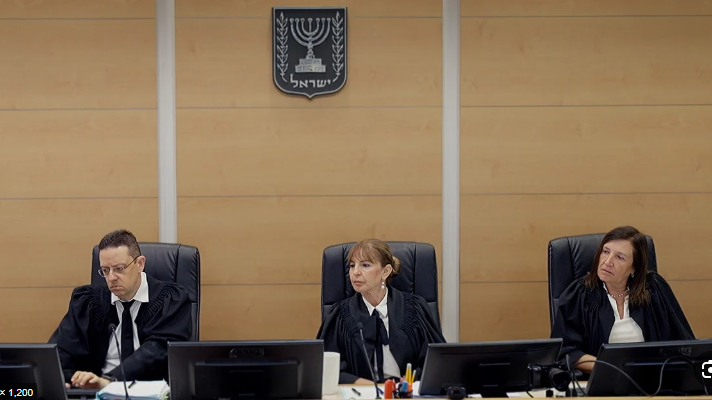
From the series 'The Judges'
(Photo: Courtesy of Kan 11)
When asked about comments by lawmaker Limor Son Har-Melech, who called Amiram Ben-Uliel “a holy righteous man suffering for the Jewish people,” Lorach responds cautiously.
“I don’t know what makes a person ‘holy,’” she says. “Our panel made its ruling, which was later upheld by the Supreme Court, and I have no doubt the evidence proved beyond reasonable doubt that he committed the offense. Anyone who commits a brutal murder should receive a life sentence, which is what he received.”
There is a broader sense among critics of the government that Israel’s judiciary is being delegitimized. Do judges feel that in the courtroom?
“There is a top-down erosion that filters into the courtrooms, and it is sad because it also affects how people feel when their cases are heard. What are they supposed to think if a member of Knesset speaks that way? A judge sits under the symbol and flag of the State of Israel and represents its laws, so there is no choice but to behave accordingly.”
Lorach, 69, is married, a mother of three and grandmother of seven. She recently retired. Four years ago, while still serving, she joined five other judges in a documentary series filmed by director Eyal Bichler, which follows them inside court proceedings and offers a glimpse into their private lives and decision-making.
This week, three of the six judges sat down for a rare joint interview: Lorach; Mira Palai-Rom, a family court judge in Rishon LeZion who retired a year ago and now works as a mediator; and David Shaul Gabbai-Richter, a Jerusalem magistrate’s court judge dealing with politically sensitive cases in the capital.
All three are careful not to directly address the political controversy surrounding the judicial overhaul launched by Justice Minister Yariv Levin more than three years ago. But they are united in their assessment of its impact: a decline in the status of judges and an increase in personal risk.
And this is not limited to politically charged cases. “All judges suffer greatly from harassment and interference,” says Palai-Rom, 57, who now works in family mediation. “Especially family court judges. There was a period, not involving me, when judges had photoshopped nude images circulated online. When you are a judge, you are not on social media, so you don’t even know about it unless someone tells you.”
She recalls a disturbing phone call during a particularly difficult custody case involving parental alienation: “One Friday evening, someone called, I was polite, and then I realized he was talking about that case. I told him I cannot discuss court proceedings and wished him a good Sabbath. He kept calling and sending messages on WhatsApp. I blocked him and the information about the case came from somewhere else.”
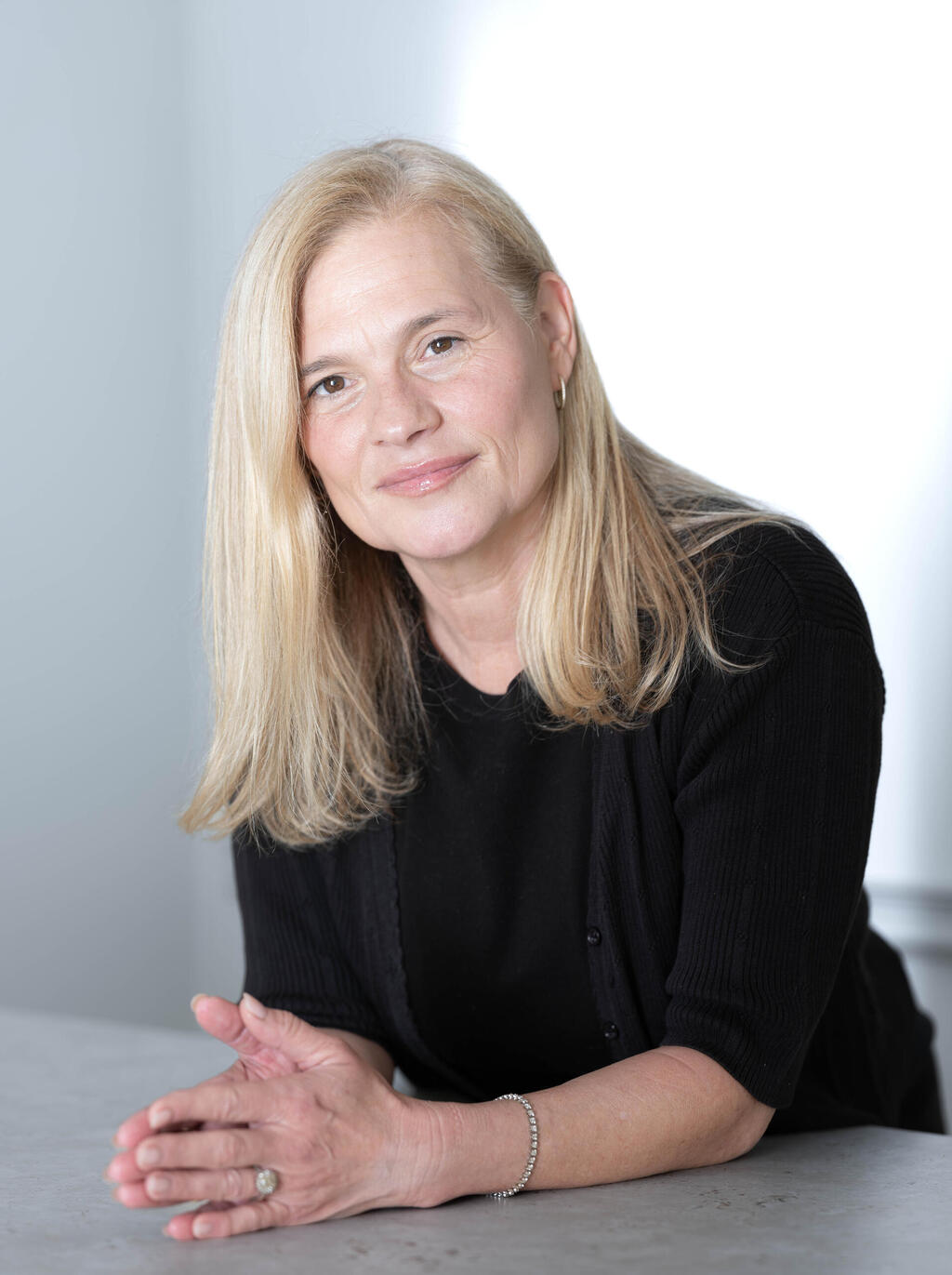
Mira Palai-Rom
(Photo: Yuval Chen)
Stressful.
Another time, she says, court security called her with a warning that a detainee had threatened to kill her.
“What do you do with that information?” she says. “They told me, ‘Just be careful.’ I jog every morning — am I supposed to look over my shoulder? They suggested I file a police complaint, but I refused. I said I am being threatened as a judge, so I will not file a personal complaint. The feeling is that you are completely alone.”
What do you think makes the field of family law so emotional?
“It’s what I call early childhood pain. In inheritance disputes, you think people are fighting over a will, but it is often about childhood — who their mother loved more. Highly educated people become completely different when it comes to family.”
In recent years, she notes, even former judges are being targeted. She points to harassment of former Supreme Court President Professor Aharon Barak.
“As a judge and as a person, I feel immense pain and anger,” Lorach says. “You can criticize rulings, but not a person. What is being done to him is a terrible injustice.”
Palai-Rom adds: “The fixation on Aharon Barak is incomprehensible. He is a jurist of international standing. He did not invent judicial activism — it existed before him. Thanks to people like him, Israel’s legal system was respected worldwide. The IDF is considered the most moral army in the world thanks to that solid legal system and its high morality".
Even the argument made by supporters of the judicial overhaul — that Israel’s judges are a closed, homogenous clique operating as a “cabal” based on connections — manages to get under their skin.
“That’s an urban myth,” says Judge Palai-Rom. “I was never especially social, and when I decided to go into judging I told myself: now I’ll really test this claim that everything is about connections. People were already talking about it back then. Not exactly in those terms, but it was in the air. And I said to myself: I’ll be a test case. If I succeed, it means it’s possible without connections. And if not, I can always say that’s why. I don’t believe it’s completely false, in an absolute sense. We have about 900 judges today, I think, so maybe there is one or two cases where someone got a helping hand — I hope not. But I do know the system is very focused on ensuring everything appears proper and that there is no discrimination, bias or favoritism.”
“I am living proof there are no cliques,” says Judge Lorach. “My father may have been educated, but my mother wasn’t. I came from a home without financial means, without connections, and still I advanced — and look where I reached. There are many people like me, so I don’t think that claim is true. And anyway, politicians have always sat on the Judicial Selection Committee. They sat, they voted, they chose. I think I am exactly the example — I am Moroccan, from a modest socioeconomic background, with no connections.”
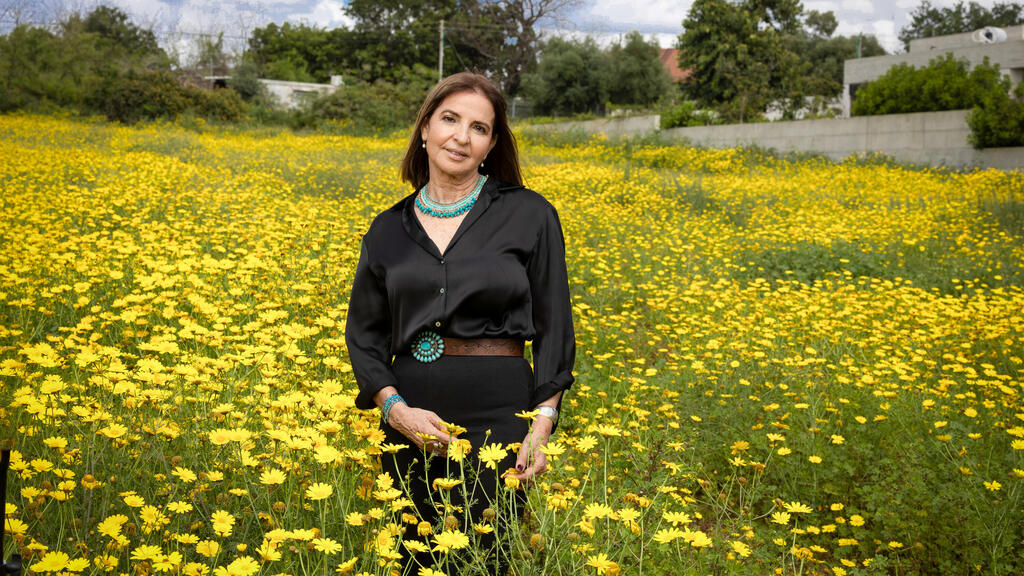
Ruth Lorach
(Photo: Avigail Uzi)
So if politicians have always been on the committee, why do critics say it is suddenly illegitimate?
“The whole idea was to remove the Bar Association as well and simply give full power to politicians. I think the Bar Association is a very important body on the committee. They know the lawyers who appear in court very well.”
And what about diversity?
“The judicial system is very diverse. For example, I am not counted as a Mizrahi judge. I am considered Ashkenazi because of my married name. My original surname is Amar, and it’s a shame I didn’t keep it, but in the past that wasn’t an option after marriage. Within the judges’ circle, it really doesn’t matter whether you are Mizrahi or Ashkenazi. Maybe the food is better, but that’s about it. We even hold a Mimouna celebration in court because many judges come from Mizrahi backgrounds. Everything else is not an issue.”
In the series, Lorach tearfully recalls that as a young law student she searched for a room to rent in Tel Aviv to save money. “We went, a friend and I, to an apartment on Shenkin Street, and the landlord asked where my parents were from. I said Jerusalem. She asked: no, where did they come from before Jerusalem? When I said Morocco, she told me: I don’t rent rooms to Moroccans.”
“In the very distant past, there were a few cases of judges’ children doing internships with other judges, which is not necessarily something to rule out outright, but it may have created that perception,” she says now. “Today there are many restrictions. My own son, for example, cannot even work as a security guard in a courthouse. What does that have to do with anything? But these restrictions exist because of that concern.”
“So to say the judiciary is a clique or based on ‘friends bringing friends’ is simply not true — it is offensive and disconnected from reality.”
“The selection process for judges is far more rigorous than it used to be, and rightly so. This is a position with enormous power. You must be certain that whoever is appointed is both a good person and has sound judgment, is open to decision-making and willing to reconsider positions, and is truly suited for the role.”
Judge Gabbai-Richter, 55, married and father of a teenage daughter, is the youngest of the group. He took his wife’s surname, Richter, after she immigrated from Switzerland. “The debate on social media is aimed at the top, but I can tell you what happens on the ground,” he says. “There you see judges from all backgrounds — ultra-Orthodox, national-religious, secular. Fifty-three percent of judges are women. We have an Ethiopian judge, a Haredi judge and an Arab deputy president. Personally, each of us has our own views, but we are colleagues, we work together and help one another. There is a huge gap between the rhetoric in the media and daily reality.”
“When I applied to become a judge, I went through the full process. Later, someone ‘well-meaning’ said I was appointed because I had been a judicial assistant. Yes, I was a judicial assistant for a while, but a decade passed between that and my appointment. No favoritism — nothing like that.”
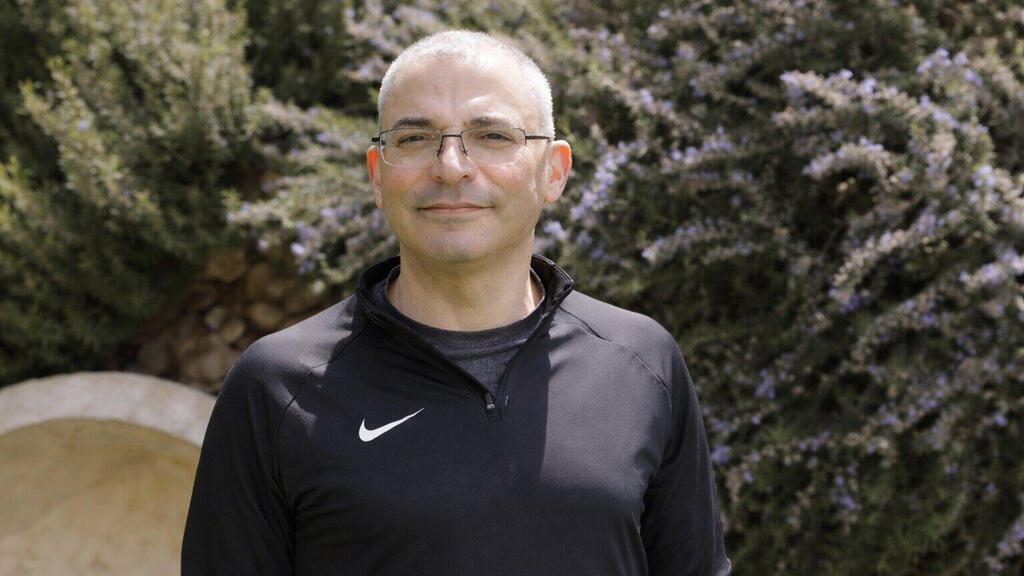
David Shaul Gabbai-Richter
(Photo: Alex Gamburg)
Palai-Rom adds: “That’s exactly the point. It is very frustrating. The fact is there are many Mizrahi, religious, right-wing judges in the system — from all backgrounds — and that has been true since the time of Ayelet Shaked.”
So why doesn’t anyone simply say: this is already the case?
“Because judges are not allowed to speak. That’s part of the problem in the system.”
And is the political leadership exploiting that?
“I don’t want to talk about political leadership, but I can say that various actors can indeed exploit this situation. Meanwhile, anyone can say whatever they want, and the judiciary remains silent. It cannot respond.”
And what about Justice Minister Yariv Levin?
“I cannot get into that. I served during the time of Ayelet Shaked and Gideon Sa’ar. They also made changes, but together with the system, not against it. During Shaked’s time, many judges who were considered conservative or right-wing were appointed. Nothing is sterile, but the system tried to remain neutral, objective and nonpolitical. The system has not changed — the same people are there, and the desire to remain neutral and objective is the same. Perhaps those making accusations have lost their restraint. They didn’t used to speak this way. I think it is being used for political purposes.”
First published: 10:56, 04.28.26