

Under the weak glow of a flickering bulb, deep in a Gaza tunnel, Omer Wenkert sat in the dark, the air turning thick with smoke. The claustrophobic space — concrete, heat, the taste of dust in his mouth — pulled him back to the roadside shelter in southern Israel where he had fled the Nova music festival on Oct. 7, 2023. Then, as now, panic rose in his chest.
Beside him, Tal Shoham, the eldest of the four captives, reached for his hand. “Let’s lie down under the smoke,” he told him, “it’ll be easier to breathe.” For hours, they lay close, Shoham’s grip steady, while Evyatar David and Guy Gilboa-Dalal spoke softly to keep him calm. “Suddenly, everyone was focused on me,” Wenkert remembers. “They set aside their own pain to be there for me. That’s when I understood our strength together — the importance of support.”
The smoke had been lit by a guard — scraps of paper set aflame at the tunnel entrance. Perhaps it was to cast light. Perhaps it was to torment them. By then, Wenkert had already endured 197 days alone in what he calls “conditions that calling ‘subhuman’ would be generous.” A corridor less than a meter wide, eight meters long, with a single bulb overhead and a waste pit beside a thin mattress. Each day, a guard would appear for barely a minute, never meeting his eyes, dropping a little food on the floor before leaving.
“I told myself to be grateful for anything,” he says. “If I could stand — thank you. If the lamp worked — thank you. If I wasn’t being beaten all day — thank you. I was alive after Oct. 7 in a place where life meant constant danger. Thank you.”
Still, he broke. On June 10, 2024, after weeks of starvation, humiliation and neglect — punishment that began when Israeli forces entered Rafah and ceasefire talks collapsed — “they had slaughtered my soul and nothing was left,” he says. Out loud, he said goodbye to himself, to his parents, to his siblings Ran and Maya, apologizing for failing them. Three days later, his isolation ended.
A shared ecosystem of support
The arrival of Shoham, David and Gilboa-Dalal was a rush of oxygen. “I didn’t have to be alone anymore. I had someone to lean on and someone to support. It was pure ecstasy. I didn’t stop talking for three weeks.” For the newcomers, the shock of being underground for the first time was eased by seeing him. “They looked at me and it gave them hope,” he says, even though inside, “I felt shattered.”

Guy Gilboa-Dalal, Tal Shoham, Omer Wenkert and Evyatar David in Hamas tunnel
The four built what he calls “a shared ecosystem” — a fragile balance in a place designed to strip them of humanity. Mornings began with a question: How are you feeling? They checked in again later in the day, speaking for hours without filters. “That muscle got stronger,” he says. “Being open. Being aware.” Conflicts arose — over food, water, the less uncomfortable mattress, the spot furthest from the waste pit. They rotated everything. “When we fought, we’d say, ‘This isn’t ours, it’s something external that got into us,’ and it would lose its power.”
Before that, survival had been solitary. He spoke to himself and to God. When he was starved for a week, he prayed for a single bite. “Not a meal, not to be full, just one bite,” he says. The guard brought him a single date. “It was everything. Maybe even a message.” He exercised in the narrow space, forcing his mind to live in the future — imagining even the small choices of retirement — because forward meant home.
But some wounds still grip him. “For me, Oct. 7 lasted 505 days,” he says, ending only when he walked free on Feb. 22, 2025. “I came back still living it.” In the first 50 days, he believed only he, fellow former hostage Liam Or and the foreign workers captured with them were captive. Meeting the others revealed more; returning to Israel showed him the scale was far greater.

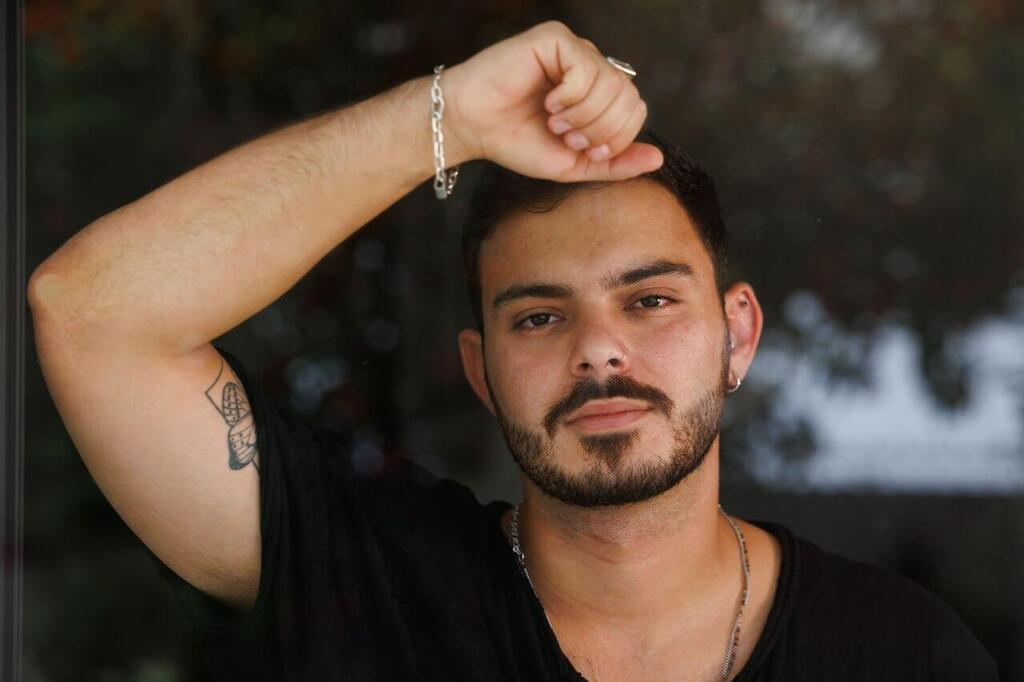
Omer Wenkert
(Photo: Ziv Koren)
He avoided thinking about his family’s suffering because it hurt too much. “I accept my fate, maybe I even deserve it — but what did they do?” Alone in the tunnel, that thought cracked him open. Singing the line, “And Dad is always here to hug you and keep you safe” from the song A Father’s Child would leave him in tears.
The morning of Oct. 7 had begun with music and dancing at Nova. When the rockets came, he ran to a shelter with about 40 others; only 12 survived. Terrorists threw in grenades, then fuel. Hiding beneath bodies, he escaped through flames, was stripped, bound and loaded into a truck bound for Gaza.
Now, back in Gedera, he carries the weight of it — and, unexpectedly, a kind of pride. “If you took me back to the night I bought my Nova ticket, I’d buy it again and go,” he says. “It’s crazy, I know. But I’m happy with who I am now — the resilience, the strength, the changes. The pain is always there, sometimes too heavy, but I weigh the positives heavier than the negatives.”

Wenkert with his parents Shai and Niva
(Photo: Ziv Koren)
After his release, his partner told him he wasn’t giving his friends space to share their own pain. He took it to heart. “I didn’t come back just for me — I came back for you too, to support you. So talk to me,” he told them. “I’m one side of the coin, they’re the other.” It’s part of why he leads R U OK? Day for mental health nonprofit Enosh. “It’s not just about asking if someone’s okay — it’s about responsibility, solidarity, awareness.”
Are you okay now?
“I’m more than okay,” he says. “Can I say everything is fine? Of course not. As long as there are hostages there, everything is complicated. My mission is to do whatever I can to bring them home.” To those still captive, he sends a message: “I trust you. Remember everything we did together. My spirit is still there with you. Just keep going.”
'Omer reminds us there are many others struggling too'
R U OK? is a program, originally founded in Australia as a grassroots social initiative, that encourages open dialogue and genuine care to help create a world where people feel connected and safe. It promotes making the question “Are you okay?” part of everyday life, using simple tools to check in, listen, encourage action, and stay in touch.
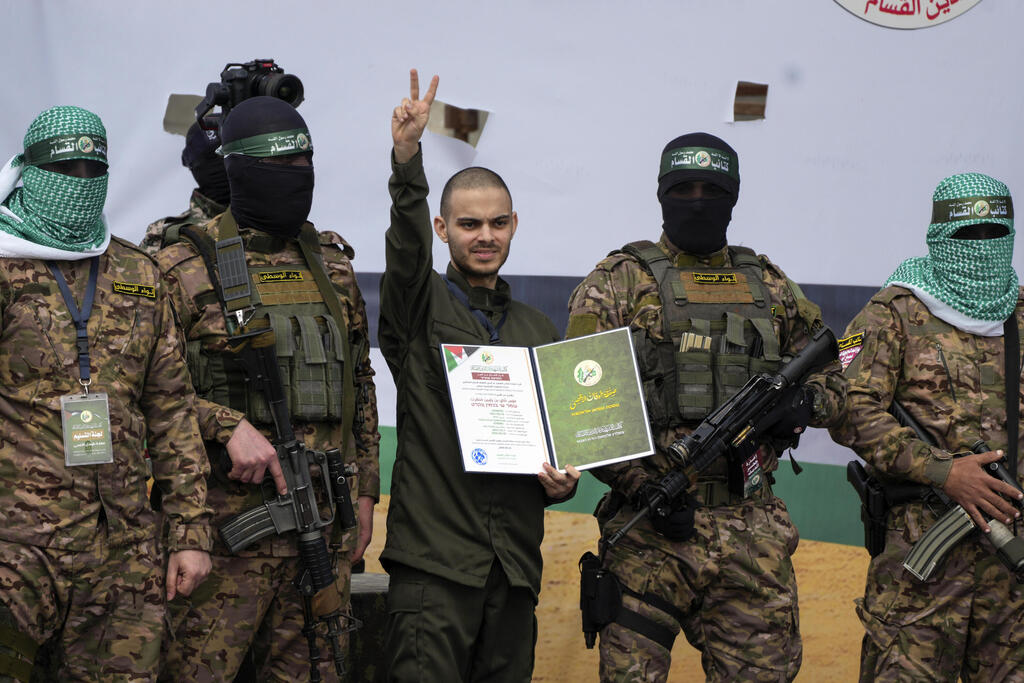
Wenkert released from Hamas captivity
(Photo: AP Photo/Abdel Kareem Han)
By fostering supportive networks among friends, family, and colleagues, R U OK? helps identify signs of distress or difficulty early and offer the right kind of support — long before a crisis escalates. Its mission is to connect individuals and communities, combat loneliness, prevent mental decline and reduce the risk of self-harm.
Dr. Hilla Hadas is the CEO of Enosh, which helps implement the R U OK? initiative in Israel.
This is the fourth year you’ve led the R U OK? project in Israel. Why is it important now?
"Especially in the current period, when so many of us are experiencing anxiety and stress, it’s crucial to notice the people around us, genuinely check in on them, and help them get through difficult times and crises."
What should people keep in mind when reaching out?
"We need to remember there are people who have experienced extreme events — such as captivity or complex bereavement — and, alongside them, countless others facing emotional challenges of varying intensity. Some of these struggles are invisible, and it’s very important to be attentive."
Why did you choose Omer Wenkert to lead this year’s campaign?
"We chose Omer because of his extraordinary personal story and because he embodies the deep insight behind the campaign. Having endured an extreme ordeal himself, he reminds us there are many others struggling too, and calls on all of us to notice them and engage."
What’s the broader message?
"We are all in circles of influence and closeness. That’s why genuine care and listening can be so meaningful — and even life-saving."