


From personal assistants and house managers to cooks, cleaners and maintenance workers at the prime minister’s residences, former employees have for more than 25 years filed lawsuits, affidavits and complaints describing what they alleged was humiliating and abusive treatment by Sara Netanyahu.
Some of the cases ended with court judgments and compensation. Others were settled, dismissed or never resulted in factual findings. In many of the proceedings, Sara Netanyahu herself was not personally named as a defendant, and in several cases the state or an employment agency was ordered to pay compensation.
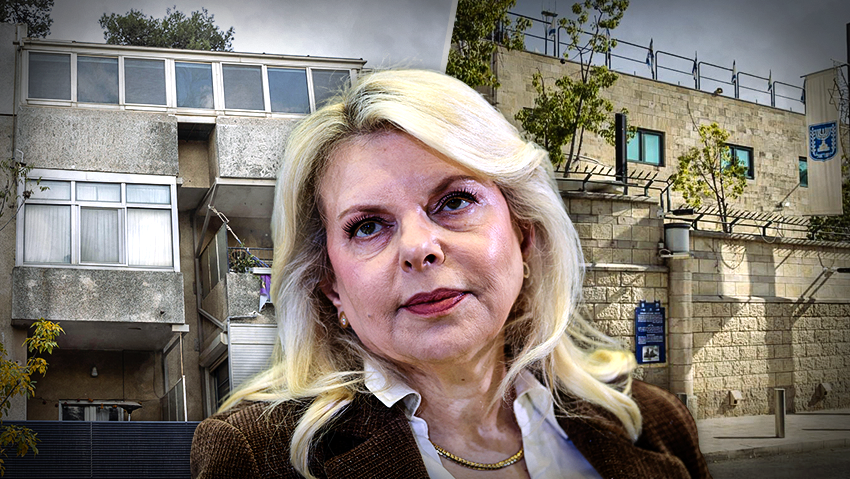
Netanyahu and her attorneys have consistently denied the allegations, describing them as part of a media campaign, attempts to extract money from the state and false testimony motivated by political or financial considerations.
The latest case emerged last week. The plaintiff, Yehiel Ohev Ami, worked at the residence during the past year and alleges that he was subjected on several occasions to humiliating treatment before eventually being fired.
Among the incidents described in his lawsuit are an alleged demand that he clean the kitchen floor while crawling, what he called a “torrent of screams and curses,” and even wishes that he develop cancer and die. According to the suit, Ohev Ami, 61 and the father of a child on the autism spectrum, also was told by the prime minister’s wife last December that she had “diagnosed” him as being on the spectrum. “I am the No. 1 psychologist in the country. I have no competition,” she allegedly told him, according to the lawsuit.
The Prime Minister’s Office rejected the allegations, saying they were “another attempt by the industry of extorting money from the state through baseless smears by employees against the prime minister’s wife, which has been going on for many years.”
Sara Netanyahu filed a countersuit alleging that Ohev Ami had acted improperly from his earliest days at the residence and secretly photographed inside the home. Her lawsuit describes what it calls a “brutal intrusion into her intimate living space, clandestine and prohibited filming inside a secured government facility, theft of information and its use as a tool for attack and extortion.”
Ohev Ami is only the latest in a long line of workers in various positions who have made allegations of workplace mistreatment. Not every claim was proven. Not every proceeding named Sara Netanyahu personally. In some cases, the state or employment agencies were held liable instead. These are the major cases and what happened in each.
Exploitation, humiliation and shouting
The first case to attract broad public attention was filed by Lilian Peretz, who worked at the Netanyahu family home in Caesarea from January 2004 until July 2009.
In early 2010, she filed a lawsuit against Sara Netanyahu seeking about 370,000 shekels, alleging exploitation, humiliating treatment and violations of her employment rights.
Peretz said she was paid less than minimum wage and did not receive social benefits as required by law. She also alleged that she was forced to work on Shabbat despite being observant, was required to address her employer by the full title “Mrs. Sara Netanyahu,” was not allowed to drink from the home’s water dispenser and was subjected to unusually strict cleaning demands.

Lilian Peretz
(avishag shaar-yashuv)
One of the most striking allegations involved her work clothes. Peretz claimed she had to bring four separate sets of clothing for each workday: one for laundry duties, one for cleaning toilets and showers, one for bedrooms and another for the kitchen. Failure to follow the rules, she alleged, would result in shouting and angry outbursts.
Sara Netanyahu denied the account and called it “lies, slander and fabrications.” Her defense argued that Peretz worked half-time, without supervision and at hours convenient to her, and that she was not required to work on Shabbat.
The defense did acknowledge that Peretz’s payslips did not properly reflect her compensation and working conditions, attributing responsibility to the accountant. Netanyahu filed a countersuit for about 600,000 shekels, alleging breach of confidentiality, invasion of privacy and defamation.
In September 2012, the sides reached a settlement. Peretz withdrew her lawsuit and Netanyahu withdrew her countersuit. The terms were not disclosed, and no judgment determined whether Peretz’s allegations were true or whether any payment was made.
Several days after Peretz’s suit became public, it was reported that another former employee of the Netanyahu family had also filed a lawsuit. That proceeding had apparently been filed earlier, but a gag order prevented publication of the woman’s identity or detailed allegations. Because of the restrictions, no substantial account of her claims became public, nor was the outcome of the case widely reported.
The house manager who became an enemy of the family
Meni Naftali worked as house manager at the prime minister’s residence. In a lawsuit against the Prime Minister’s Office and other parties, he sought compensation over what he said was a promise of a permanent position, unpaid overtime and abusive employment conditions.
Naftali described a workplace in which employees feared Sara Netanyahu’s reactions, were exposed to shouting and changing demands and were required to work irregular hours. He claimed many employees had experienced difficult treatment but were afraid to testify because they depended on their jobs or feared damage to their professional futures.

Meni Naftali
(Photo: Gil Yohanan)
Affidavits filed on his behalf said one employee had “suffered bitterly” but declined to testify after another job was arranged for her.
Naftali also described another worker whom Sara Netanyahu allegedly called “Meni’s poodle,” and who also refused to testify. According to the affidavit, that observant employee was required to report for work almost every Saturday night.
Testimony in the case included descriptions of late-night calls, demands involving food service, contradictory instructions and outbursts over cleaning and hosting.
The Netanyahu family denied the allegations, calling them a wave of false smears intended to harm the prime minister and his wife during an election period and to extract money from the state. They also stressed that Sara Netanyahu herself was not a defendant.
In February 2016, the Jerusalem Regional Labor Court partially accepted Naftali’s claims and awarded him 170,000 shekels.
The court fully accepted his claim that he had been subjected to abusive employment conditions and found that numerous testimonies described such conditions at the residence because of Sara Netanyahu’s behavior and treatment of employees.
Not all of Naftali’s claims were accepted. The judgment was issued against the state and other defendants, not against Sara Netanyahu personally. She sought to appeal findings concerning her conduct, but the National Labor Court ruled that she could not file a separate appeal because she had not been a party to the case.
In July 2017, the High Court of Justice rejected her petition and ordered her to pay 2,500 shekels in legal costs.
‘It damaged my health’
One of the witnesses in Naftali’s case was Emanuel Sela, who worked at the residence from September to November 2013 and was responsible for household operations and staff.
Sela did not file an independent abuse lawsuit against Sara Netanyahu, but his testimony formed part of the evidence presented in Naftali’s case. He said that before taking the job he had been healthy and physically active.
According to Sela, he was told before starting that he would be required to carry out any task assigned to him, including shopping, setting tables, serving food and arranging flowers. He said he sometimes worked more than 12 hours a day and, on certain occasions, as many as 18. He described “shouting, attacks and relentless pressure,” as well as contradictory instructions from the prime minister and his wife.
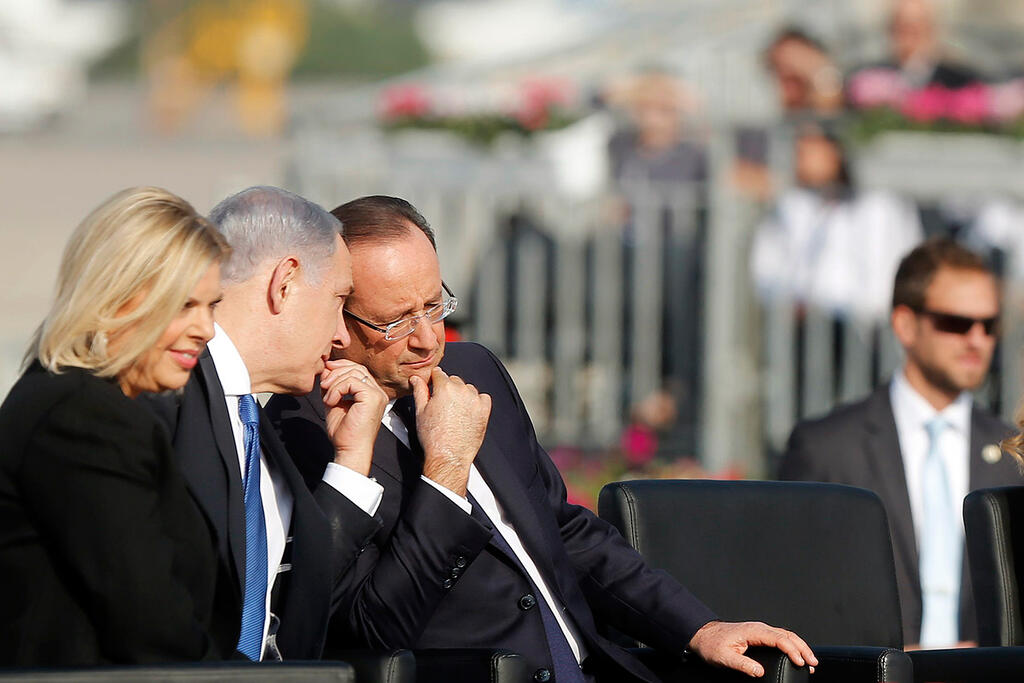
French President Francois Hollande visits Israel
(Photo: Reuters)
Sela linked his working conditions to a cardiac episode he suffered during a visit to Israel by then-French president Francois Hollande. He said that in the days leading up to and during the visit he was placed under intense pressure and began experiencing chest and shoulder pain but continued working.
Several days later, he arrived at an emergency room, collapsed at the entrance and underwent two catheterization procedures.
Sela also alleged that after his hospitalization no one inquired about his condition, he stopped being assigned to the residence and was later asked to sign a letter stating that he had no claims against his workplace. He applied to the National Insurance Institute to have the connection between his work and his medical condition recognized.
Called back after midnight to heat soup
Guy Eliyahu worked as a maintenance employee at the prime minister’s residence in 2011 and 2012. In 2014, he filed a lawsuit seeking about half a million shekels from the Prime Minister’s Office and the staffing company that employed him, alleging violations of working-hours law, workplace harassment and abusive employment.
Eliyahu said that although he was formally employed as a maintenance worker, he was also required to serve food and wait on the family in their private quarters. He alleged that Sara Netanyahu routinely sent workers on unnecessary errands. As one example, he said she would ask him to bring her food and then accuse him of making her gain weight after he delivered it.
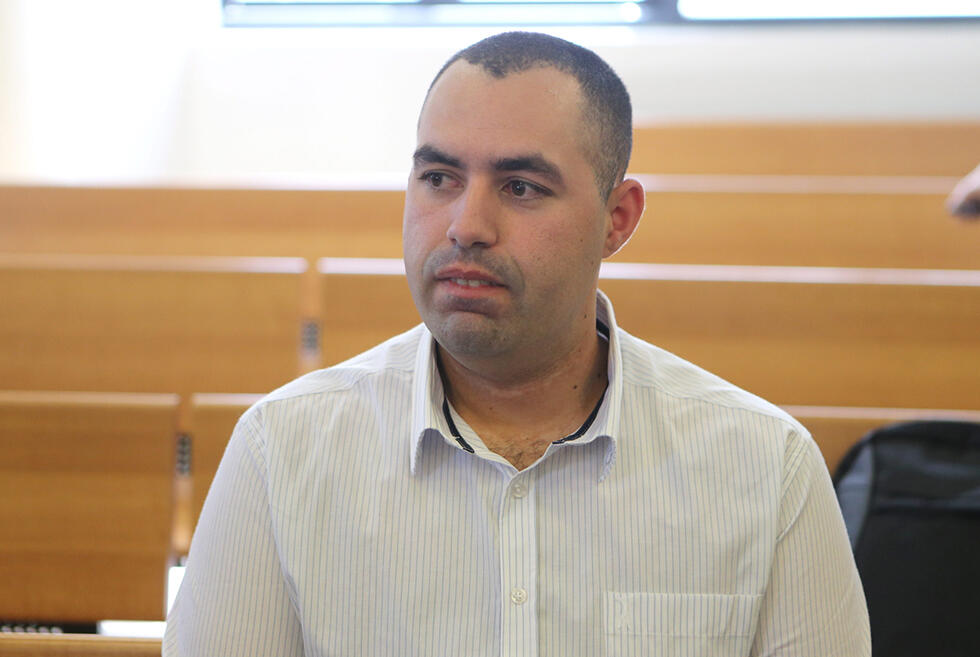
Guy Eliyahu
(Photo: Alex Kolomoisky)
One of the best-known allegations from his case was that he was required to return from home to the residence after midnight to heat a bowl of soup for Sara Netanyahu. On another occasion, he claimed, he was called back late at night simply to wish her good night. According to his lawsuit, employees were required to remain until the couple went to bed, and Eliyahu sometimes worked as many as 19 hours a day.
He also described “cleanliness inspections” accompanied by shouting, insults and humiliation. He alleged that minor incidents escalated into outbursts, dishes were thrown to the floor and Sara Netanyahu mocked him in front of employees because, in her view, he was not “elegant” enough when serving.
In another affidavit, Eliyahu described a meal on the patio during which there were concerns that dust had fallen from an overhead covering onto the table. He said that after it became clear that the prime minister himself had ordered the covering opened, Sara Netanyahu demanded that the table be reset, despite family members attempting to calm her.
“Angry and agitated, the prime minister’s wife grabbed the tablecloth and angrily pulled it toward herself together with all the dishes, causing some of them to fall and smash on the floor,” he said. Testifying in court, Sara Netanyahu called claims that she humiliated employees a “despicable lie” and denied the tablecloth incident, calling it a “crazy fabrication.”
In May 2016, the Labor Court accepted a substantial portion of Eliyahu’s claims. It found that he had been exposed to an atmosphere of fear and repeated abusive behavior, including shouting, reprimands and humiliation. The state was ordered to pay him 65,000 shekels for emotional distress and 7,500 shekels in legal costs.
A further 25,000 shekels was jointly imposed on the state and staffing company, while the staffing company was separately ordered to pay about 30,000 shekels for additional employment-related components.
Sara Netanyahu sought to appeal findings about her conduct, but, as in the Naftali case, the court ruled that she was not a party to the proceeding and therefore could not personally appeal the judgment.
The cook who said: ‘She hit my hand’
Eti Haim, who worked as a cook at the prime minister’s residence, did not file an independent abuse lawsuit that resulted in a judgment. Her testimony in Guy Eliyahu’s case, however, was among the most striking heard during the proceeding.
Haim described an incident in which she opened a cupboard before washing her hands. She alleged that Sara Netanyahu struck her hand and told her not to touch the cabinet with dirty hands. “She gave me a whack on the hand,” Haim testified.
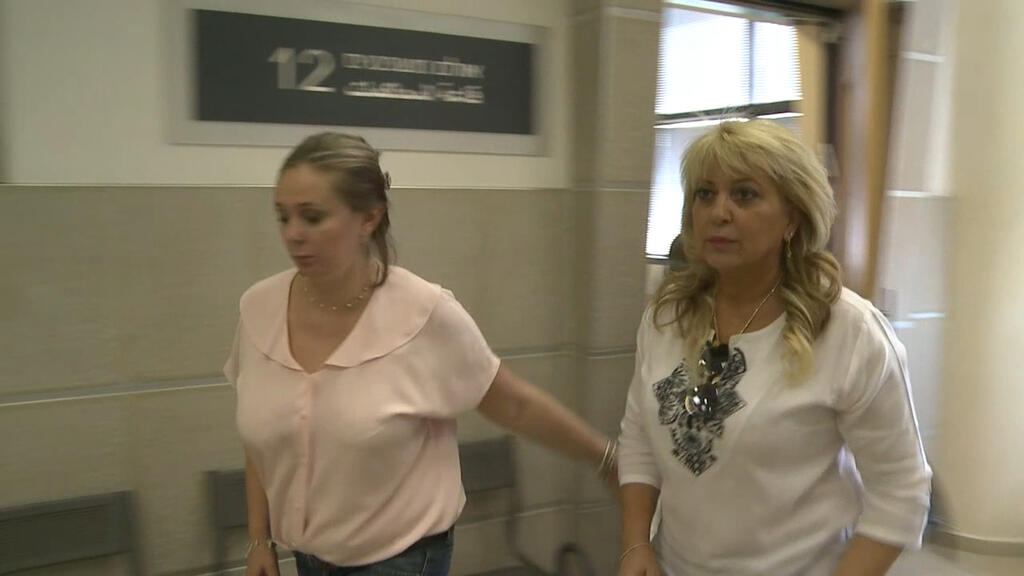
Eti Haim
(Photo: Ofer Meir)
In another incident, Haim said employees had arranged a table with dishes and food. She alleged that Sara Netanyahu pulled the tablecloth, shouted and ordered workers to reset the table within five minutes. Haim also testified that Netanyahu would have outbursts after drinking alcohol.
Another incident she described occurred after Haim collapsed at the residence. According to Haim, after she fainted Sara Netanyahu said that an ambulance would not be allowed to come to the residence. “She said, ‘No ambulance is coming here. Call one of her children to come and get her out of here,’” Haim testified.
“My children were called. My son came and they let him drive all the way inside. That is not customary at the prime minister’s residence. I left. They escorted me to my son’s car and that was my last day at work. She never called and never asked.” Sara Netanyahu denied the incident in her testimony.
Because Haim appeared as a witness rather than a plaintiff, she received no compensation. Her testimony was considered as part of Eliyahu’s case, in which the court ultimately found that an abusive working environment had existed and awarded him damages.
The young ultra-Orthodox cleaner who said: ‘I was a slave’
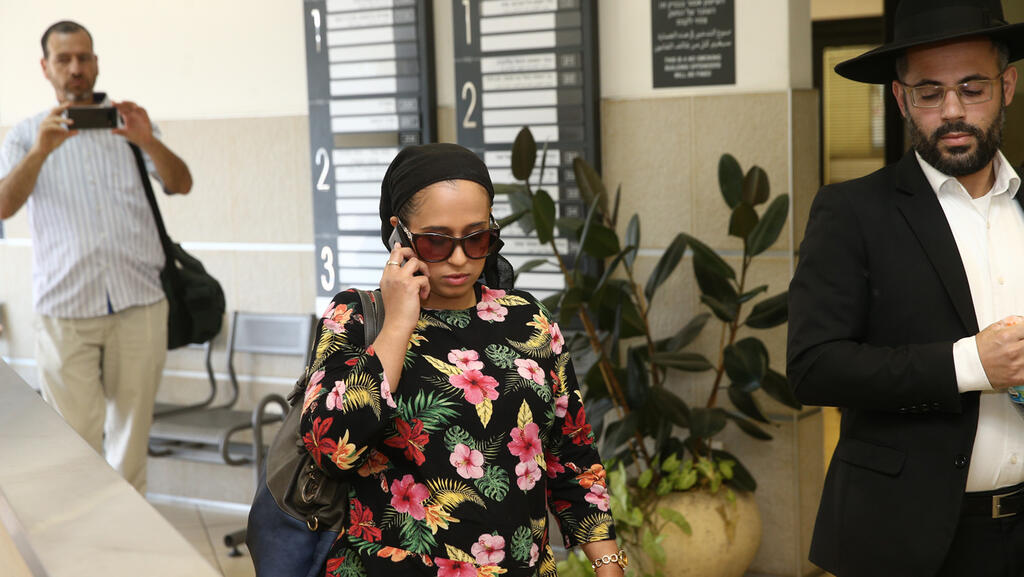
Shira Raban, a 24-year-old ultra-Orthodox woman, worked for about one month as a cleaner on the second floor of the prime minister’s residence. In 2017, she filed a lawsuit seeking 225,000 shekels from Sara Netanyahu, the Prime Minister’s Office and the staffing company, alleging abusive employment and harassment.
Raban claimed that from the beginning of her employment she was subjected to shouting, humiliation and unusual cleaning requirements. She alleged that Netanyahu called her “a lump of nothing” and said that during one incident she feared Netanyahu might hit her. According to Raban, after Yom Kippur Netanyahu became angry that the employees had not come to work on the eve of the holiday, shouted at her and began approaching her in a way that caused her to flee.
Shira Raban
(Photo: Ohad Zwigenberg)
“She ran toward us, flailing her arms, moving her whole body, threatening, screaming, pulling her hair, biting her lips and saying, ‘What I’ll do, what I’ll do,’” Raban testified. “With her hands in the air, with her fingers like that all the time. Anyone standing in front of her is constantly afraid, ‘Oh no, just don’t let her hit me.’ You take steps backward and move away.”
Raban also claimed that Netanyahu ordered employees not to speak to one another while working. “She says, if you want to say a word to each other, make an appointment with me. Here it’s stealing time, you don’t say a word,” Raban testified. Her lawsuit also described rules concerning changing clothes and shoes between different areas of the house and repeatedly cleaning surfaces.
Among other allegations, the suit said Raban was prohibited from using the bathroom on the second floor and instead had to use guards’ toilets outside the residence. She also alleged that she was required to wash her hands about 100 times a day with hot water and dry them on a separate marked towel designated only for staff, while another towel was reserved for the Netanyahu family.
The lawsuit alleged that she was prohibited from eating or drinking during the workday and that employees were sometimes required to buy, with their own money, clothing items they were accused of damaging.
Raban described herself as having effectively been a “slave.” The use of that term sparked an argument early in the proceedings.
Jerusalem Regional Labor Court President Eyal Avrahami criticized the language of the lawsuit and said he would not allow expressions irrelevant to the legal proceedings. Raban’s attorneys were later required to amend parts of the claim, although the word remained in the revised version.
Sara Netanyahu denied the lawsuit, calling it an extortion attempt and describing the filing as “delusional” and riddled with contradictions. Her defense argued, among other points, that Raban’s account of fleeing the residence was inconsistent with the allegation that she stopped to change clothes before leaving.
In court, Netanyahu said that a “narrative of workers and caregivers” had been constructed against her and that she feared any employee might later make allegations. She said even saying “good morning” could be distorted. Netanyahu denied calling Raban names or mistreating her.
In February 2022, the Labor Court dismissed the lawsuit. The judgment found that Raban had failed to prove abusive treatment and that her account was not credible. Unlike Naftali and Eliyahu, she was awarded no compensation.
The alleged thrown iron, and a lawsuit that was dismissed
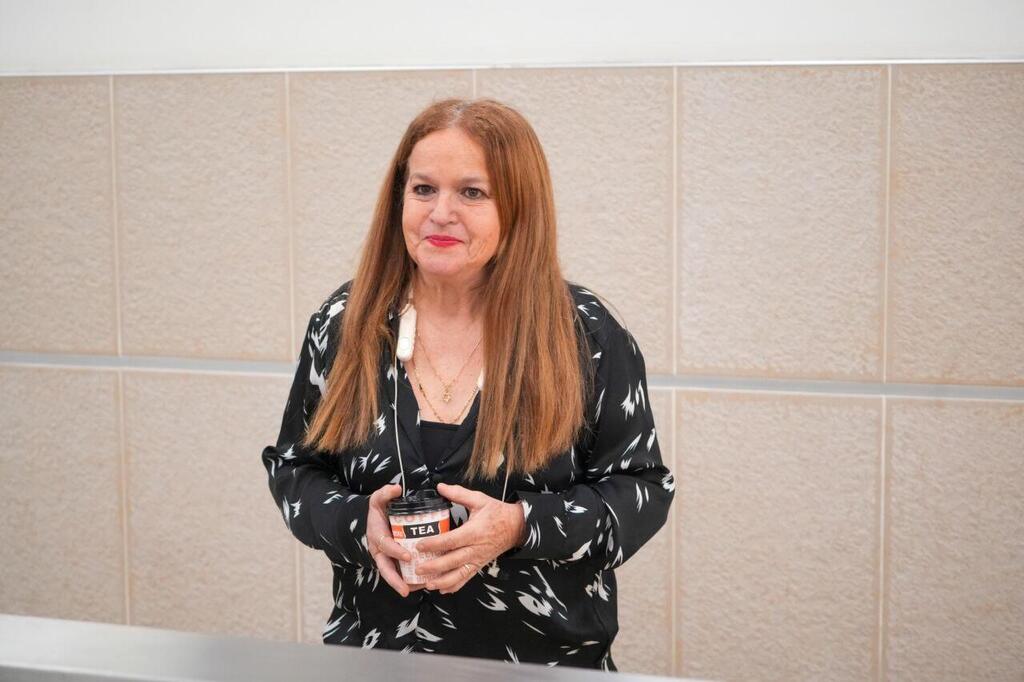
Sylvie Gancia worked as a cleaner at the prime minister’s residence on Balfour Street. In 2020, she filed a lawsuit against Sara Netanyahu and the staffing company that employed her, seeking about 650,000 shekels over alleged workplace abuse.
Gancia claimed that she was subjected to shouting, curses and humiliation, that Netanyahu called her names and that an iron was thrown toward her. She described a working environment involving constantly changing and unreasonable demands.
Sylvie Gancia
(Photo: Shalev Shalom)
Sara Netanyahu denied all the allegations. During testimony in May 2025, she said she had not called Gancia names and described the allegations as lies. She called Gancia a “plant,” said she did not frequently become angry at workers and argued that the lawsuits against her were part of the treatment she had received despite her public activity.
Netanyahu separately filed a civil lawsuit against Gancia seeking 200,000 shekels for alleged defamation, invasion of privacy and breach of a confidentiality agreement. Her suit alleged that Gancia had published falsehoods in an effort to embarrass Netanyahu before an election. Gancia’s employment lawsuit did not end with a factual ruling on whether workplace abuse had occurred.
In November 2025, the Labor Court dismissed the case after Gancia and her attorney failed for months to submit closing arguments or comply with court decisions. The judgment said the court had shown unusual patience before ultimately dismissing the proceeding.
Her attorney said his absence had resulted from extended military reserve duty. In the separate civil case, a judgment was later issued after Gancia failed to submit closing arguments.
In January 2026, the court ordered her to pay Sara Netanyahu about 100,000 shekels for defamation, along with roughly 20,000 shekels in legal fees and court costs. The court clarified that the result did not constitute a substantive finding accepting all of Netanyahu’s allegations, but stemmed from Gancia’s failure to submit closing arguments and from the procedural circumstances.
The ‘modern slaves’ awarded hundreds of thousands
In 2024, a ruling was published in the cases of three former residence employees: Aharon Naor, Yair Yitzhaki and Yosef “Joe” Corson. Naor and Yitzhaki worked at the residence between 2015 and 2021, while Corson served as the residence chef from 2015 to 2020.
The three sued the Prime Minister’s Office over violations of employment rights, alleged abuse, unpaid overtime and failure to pay them for work on Shabbat and holidays.

Benjamin and Sara Netanyahu's residence
Naor and Yitzhaki described themselves as having become “modern slaves.” Naor alleged that he was repeatedly sent to the Netanyahu family’s private home in Caesarea, where he was required to transport food and carry out gardening and swimming-pool maintenance, contrary to procedures governing employees of the official residence.
Yitzhaki said he twice submitted resignation letters but was persuaded to remain. He claimed that the incidents described in the lawsuit represented only “the tip of the iceberg,” because of confidentiality agreements signed by residence employees.
Corson alleged that he was required to cook for private Netanyahu family events held at the residence. He said that even after finishing his work in the kitchen, he was not permitted to leave until Sara Netanyahu gave her approval.
He also claimed he worked six days a week, including Shabbat and holidays, without full overtime compensation, and was required to serve family members meals and clear their dishes.
The Jerusalem Regional Labor Court accepted parts of their claims and ordered the Prime Minister’s Office to pay the three a combined total of about 900,000 shekels. Corson received 380,000 shekels, Yitzhaki 265,000 and Naor 250,000. The obligation was imposed on the Prime Minister’s Office as their employer, not on Sara Netanyahu personally.
‘Tomatoes and olives were thrown in front of the prime minister’
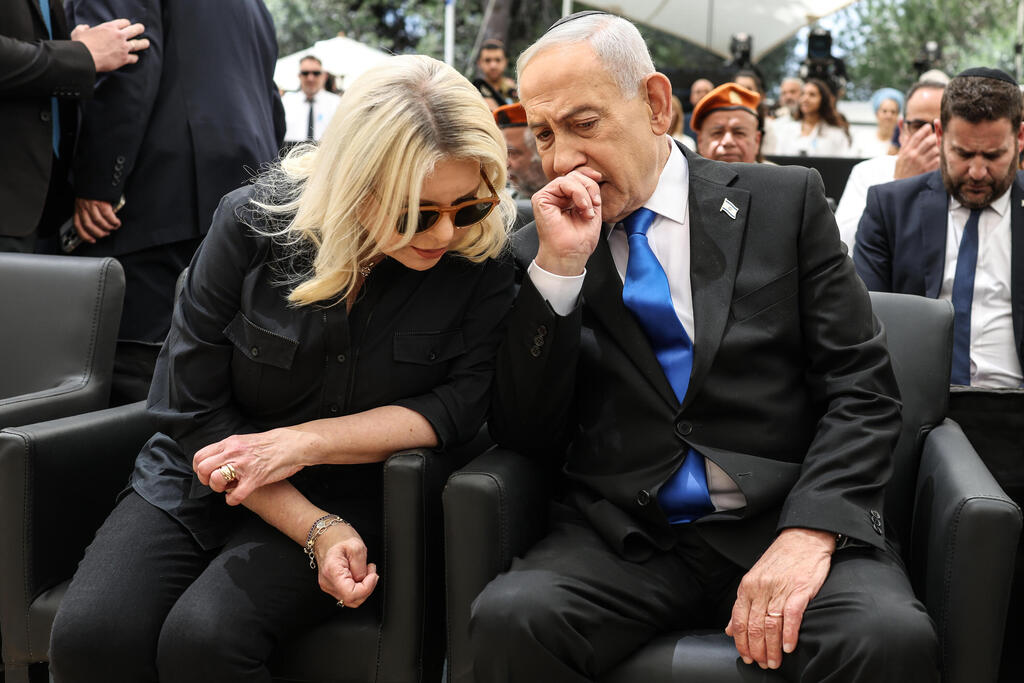
In April, another lawsuit was filed by an employee hired through a staffing company to work in a cafeteria associated with the prime minister’s residence. The employee alleged that while preparing breakfast, Sara Netanyahu looked at a plate, became angry over the amount of onion, tomatoes and olives and threw pieces of tomato and olives toward her.
According to the employee, the vegetables struck her clothing around the chest and stained it. She alleged that the incident took place in front of the prime minister.
(Photo: Ilia Yefimovich/Pool Photo via AP)
The lawsuit also claimed that Sara Netanyahu shouted at the employee and accused her of disliking the couple and attempting to harm them. The employee reported the incident to her supervisors but remained at work after they reassured her. The Prime Minister’s Office denied the claims and said the employee had no contact with the prime minister’s wife.
About a month later, the proceeding ended in a confidential settlement with the staffing company. The employee received tens of thousands of shekels in exchange for withdrawing the lawsuit.
Because the settlement was reached with the staffing company and no judgment was issued, there was no judicial determination that Sara Netanyahu had thrown vegetables or mistreated the employee.
Her father’s caregiver alleged a physical confrontation
In August 2011, Tara Kumari, a Nepalese caregiver who looked after Sara Netanyahu’s father, Shmuel Ben-Artzi, said she was injured during a confrontation with Netanyahu at the prime minister’s home. Kumari said Netanyahu had treated her “not nicely and shouted all the time.”
She alleged that after she did not receive money she believed she was owed for her work, she approached the prime minister’s wife. “She shouted at me and said she would not give me my salary,” Kumari said. During the argument, the caregiver fell, struck a table and injured her hand.
The Prime Minister’s Office said at the time that Sara Netanyahu had indeed reprimanded the caregiver over what it described as poor and negligent treatment of her elderly, ill father. The office said Kumari dislocated a finger after making an incorrect movement and that there had been no physical contact between her and Netanyahu or anyone else.
The office later called Kumari’s allegations “completely baseless” and said they surfaced only after she learned that the agency employing her had been asked to find a replacement. It accused her of fabricating the story after learning that she might be dismissed and potentially forced to leave Israel.
“At no stage was there any physical contact between Mrs. Netanyahu and the foreign worker,” the Prime Minister’s Office said. The statement also cited alleged accounts from two anonymous witnesses accusing Kumari of neglecting Ben-Artzi.
It claimed that Kumari herself suffered from angry outbursts and had injured herself during the incident. “Mrs. Netanyahu reprimanded the caregiver, who responded with an uncontrollable outburst of rage, throwing herself to the floor and striking herself against the floors and furniture,” the statement said.
Likud response
The Likud Party led by Prime Minister Benjamin Netanyahu said in response to this article that Sara Netanyahu had devoted 26 years of her life to public service as a psychologist for the Jerusalem Municipality, including 22 years as an expert child psychologist in Jerusalem schools, while simultaneously carrying out public duties as the prime minister’s wife.
“Against decades of dedicated and professional treatment of children, their families and educational teams, as a psychologist in public service, a malicious and systematic media smear campaign was conducted against her, but the truth defeated the lies in court,” the party said.
Likud said that in every case in which Sara Netanyahu herself was a party to the proceeding, she prevailed. It stressed that she had never personally been ordered to compensate an employee over such claims. The party noted that Shira Raban’s lawsuit and another case involving Tania Shaw were dismissed.
It said Shaw later gave a 2009 interview in South Africa in which she spoke positively about Netanyahu and withdrew previous allegations.
Likud also noted that Silvia Gancia’s lawsuit was dismissed and that she was later ordered to pay Sara Netanyahu 100,000 shekels.
It said the proceeding involving Lilian Peretz ended without any judicial finding against Netanyahu and that Peretz withdrew her claim.
“Meni Naftali, Guy Eliyahu and the three additional employees did not sue Sara Netanyahu at all, but rather the state or their employers over salary and employment conditions,” Likud said. “Sara Netanyahu was not ordered to pay them a single shekel and was not part of their legal proceedings.”
Likud added that dozens of people had worked around the prime minister and at the official residence over the past 30 years and said many had expressed appreciation and affection for Sara Netanyahu.
It further alleged that some employees had told colleagues that they were repeatedly pressured, including through offers of significant financial compensation from what the party called “left-wing media figures,” to make false accusations against her.
“For decades, Sara Netanyahu devoted her life with endless dedication and professionalism to the children of Jerusalem, their families and educational teams in her professional work as an expert child psychologist in public service,” Likud said.
“At the same time, she touched the hearts of many Israeli citizens whom she met and accompanied in difficult and happy moments as the prime minister’s wife.”