

Nearly three years after October 7, as entire communities continue making their way home, a striking pattern is emerging across the Gaza border region: kibbutzim devastated in the massacre are choosing to invest part of their rehabilitation budgets in swimming pools, sometimes even before residents have permanently returned.
The money comes from the Tkuma Directorate’s flexible community fund, an 800 million shekel rehabilitation program that allows communities to decide how to spend part of their reconstruction budgets.
Although the funding can be used for housing and infrastructure, swimming pools repeatedly appear in local rehabilitation plans. The choice reflects something larger than recreation. For these communities, the pool has become a form of social infrastructure, a place where residents can gradually rebuild the habits and relationships of communal life.
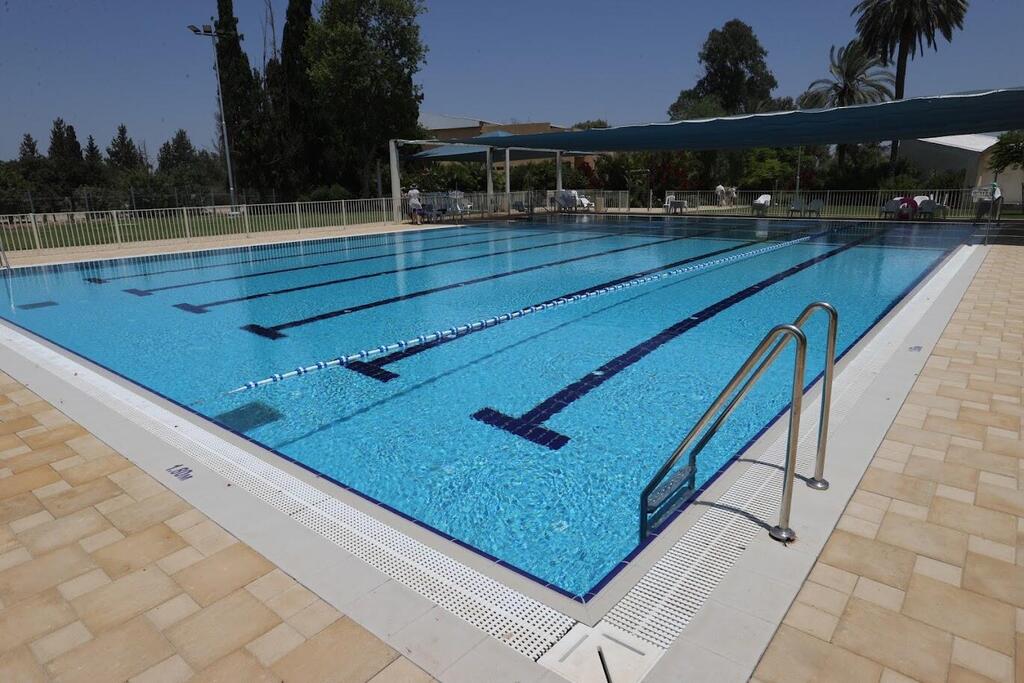
Unlike the traditional kibbutz dining hall, which requires people to gather, sit together and interact under what can sometimes feel like a watchful or judgmental gaze, the pool allows a softer form of togetherness. Residents can swim, sit on the grass, bring their children or simply be around others without being required to participate.
Evacuation, compensation and a swimming pool
At Kibbutz Sufa in the southern Gaza border region, residents tell a story that no one has ever quite verified. According to the local legend, the kibbutz’s first swimming pool was built by the state as a kind of compensation after the original Sufa, established as a Nahal outpost in Sinai in the mid-1970s, was evacuated under the Camp David Accords (signed by Egyptian President Anwar Sadat and Israeli Prime Minister Menachem Begin at the White House) and relocated to its present site.
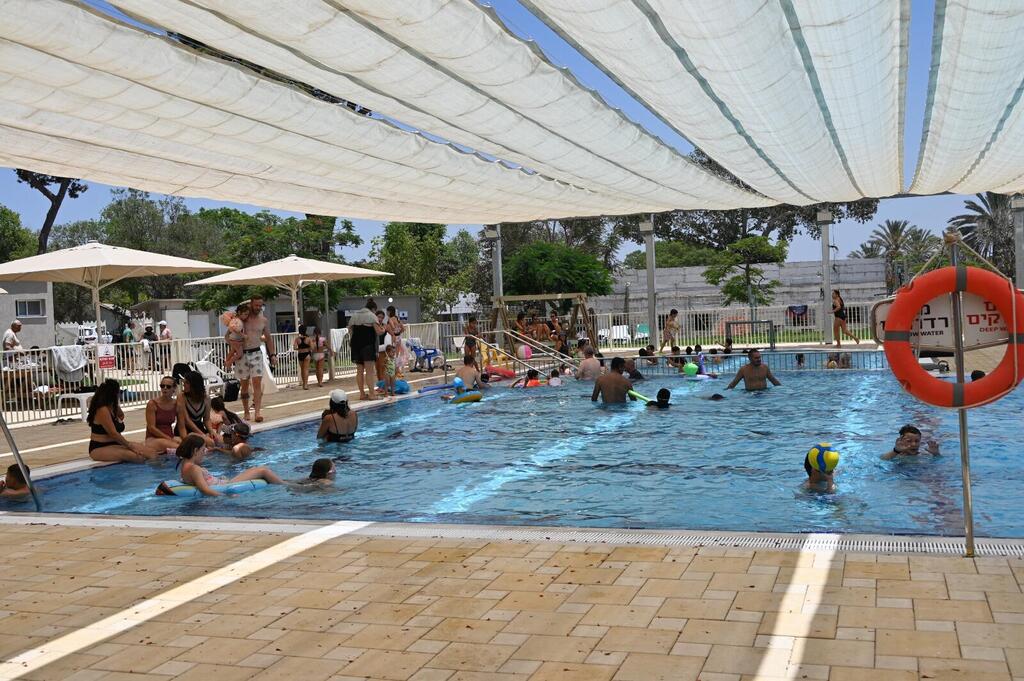
The restored pool at Kibbutz Kfar Aza
(Photo: Zohar Shpak)
A quick examination suggests it is probably more kibbutz folklore than documented history. Yet the story now carries an almost unsettling logic: a pool supposedly born as compensation for one evacuation became, after an entirely different evacuation decades later, one of the first things families sought when trying to feel that they had truly come home.
Sufa is far from alone. When Gaza border communities were given the freedom to decide how to use rehabilitation money, swimming pools appeared again and again. “A swimming pool is something much bigger than the water people splash around in,” said Boaz Barzilay, head of construction, housing and infrastructure at the Tkuma Directorate.
A place where you can simply be
Dr. Idit Ran-Shachnai, an architect and researcher at the Technion, has spent years studying the connection between physical space and kibbutz society. When she asked kibbutz members where people meet today, after the communal dining hall lost its central role, the answers were telling: “At the clinic, or at the grocery store.” There was little else left.
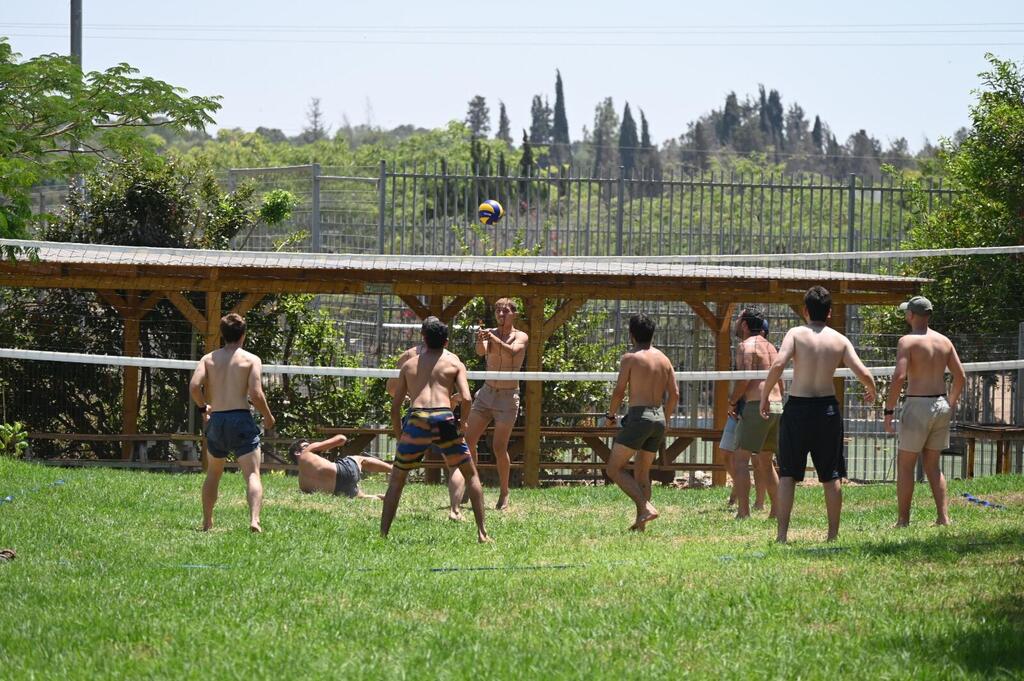
A nonjudgmental space. Kibbutz Kfar Aza
(Photo: Zohar Shpak)
Swimming pools were not originally designed to fill that gap. Kibbutz master plans from the 1940s and 1950s generally did not include them. Pools became common in the 1960s and 1970s as living standards rose, around the same time television sets entered private homes.
But while television strengthened the private household and reduced the need to leave home, the pool moved in the opposite direction, creating a new center of public life. “It remained something through which you can return to and examine the collective, resilience and community through the simplest, most everyday things,” Ran-Shachnai said.
That informality is precisely what distinguishes the pool from the historic institutions of kibbutz life. People do not have to eat together, attend a meeting or even get into the water. They can sit on the lawn, come with their children or simply spend time near others. It is a public space that permits presence without demanding participation.
The dining hall carries a much heavier history. In a 2009 exhibition involving Ran-Shachnai, kibbutz members were asked what the dining hall represented to them. Some described it as a “temple” or the “heart of the kibbutz.” Others called it a “nightmare” or “horrific.”
“It is a very, very charged place,” she said. The pool is younger, less formal and relatively free of the historical baggage surrounding the collective.
After a trauma that shattered not only homes but also the continuity of community life, a place where people can be together without being required to be together takes on a different meaning.
In her 2023 book on space and architecture in the kibbutz, Ran-Shachnai also traces social change through what she calls the “lawn index.” At the height of kibbutz collectivism, the central lawn was a continuous shared space.
From the 1970s onward, hedges, flowerbeds and private lawns increasingly appeared around individual homes, physically reflecting the shift from collective life toward family, privacy and the “country villa,” even before formal privatization.
She said even the condition of the grass could offer clues about the strength of a community. “The more yellow the lawn, the more it can indicate that the social fabric is weaker, because people simply stop investing resources in the appearance of shared public spaces.”
Five decades later, reconstruction may represent a partial movement in the opposite direction. Ran-Shachnai said there is now “an understanding that they neglected the public sphere for a very long time.”
Investment in lawns, landscaping and swimming pools, she argues, is therefore more than maintenance. It reflects a renewed willingness to invest in communal space. Not a country club, she stressed, and not a luxury, but a place to meet.
Connecting concrete to spirit
Gur Katz, Head of the municipality Liaison Team at the Tkuma Directorate and a native of Kibbutz Nahal Oz, was already serving in the reserves when the directorate was established eight days after October 7.
He asked to move into the civilian rehabilitation effort after realizing he could help connect residents on the ground with government officials. Barzilay arrived from the Transportation Ministry and was already working by October 20, 2023, to find housing that would allow evacuated communities to remain together rather than being scattered among hotels.
Out of that experience emerged one of the principles guiding the directorate: “Build Back Better.” “The central challenge is how to connect concrete to spirit,” Katz said. For Barzilay, that means rehabilitation should not simply recreate what existed before the disaster.
“This isn’t property tax,” he said. Communities should also be allowed to improve what they had. One tool is the flexible community fund, totaling about 800 million shekels, or an average of roughly 17.7 million shekels per community over five years.
After public consultation, each community chooses where to direct the money. “Tkuma’s approach is that we are not going to tell communities what they need,” Barzilay said. “We don’t know better than they do.”
Swimming pools repeatedly emerge among those choices. Katz sees them as essential social infrastructure for rebuilding community resilience.
There is no single model. Some communities repaired only filtration systems, while others also invested in lawns, shade structures, kiosks and pathways.
The scale depends partly on the damage. At Kfar Aza, a mortar shell struck the pool directly, and about 5.5 million shekels was allocated to it. At Nahal Oz, the pool sustained two direct hits. At Nir Am, where the pool itself was not directly damaged, residents chose a complementary project of about 240,000 shekels focused on paths and parking.
But perhaps more significant than the amount spent is the timing. In several kibbutzim, the pool reopened before residents had permanently returned home.
Katz described a family returning to visit after evacuation. “The parents want to see what happened to their house and the kibbutz, but they don’t necessarily want to take the children immediately to the house and all the memories waiting there. What do you do? You go to the pool. It’s a kind of getting reacquainted with the kibbutz and the community.”
The pool thus becomes an intermediate space: already inside the kibbutz, but not yet home. It is familiar territory that residents can enter before confronting more emotionally charged places.
A return to community can begin without a ceremony or announcement, but rather simply on the grass beside other people.
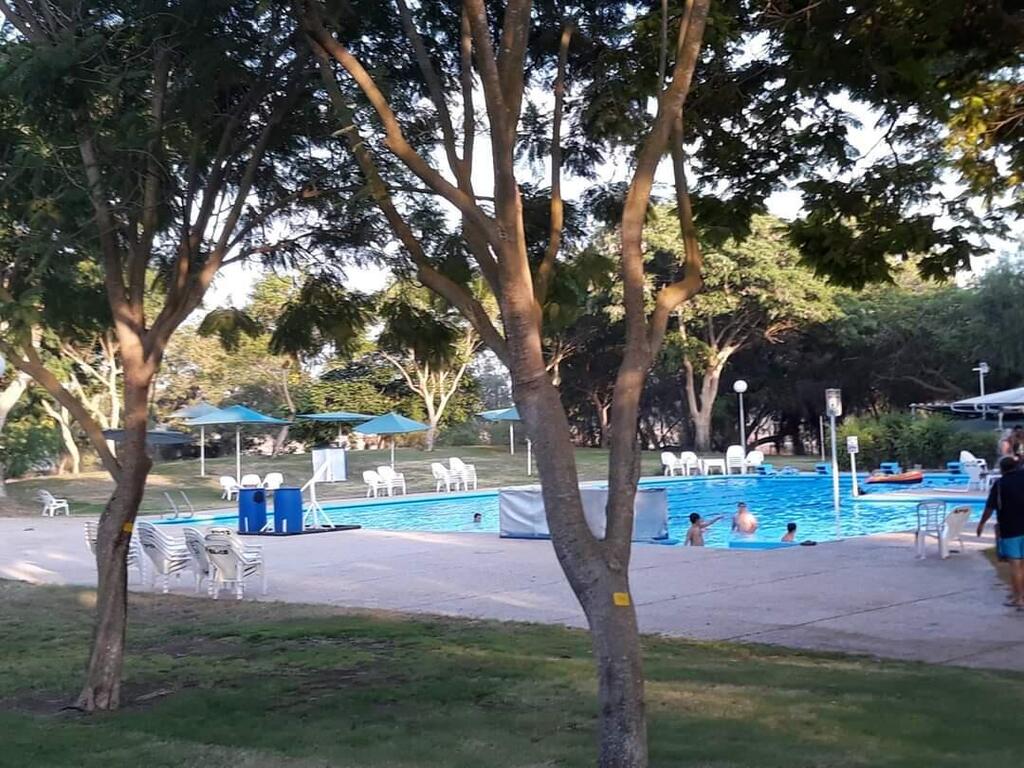
Before the renovation of the swimming pool at Kibbutz Sufa
(Photo: Bar Eilon, courtesy of the kibbutz)
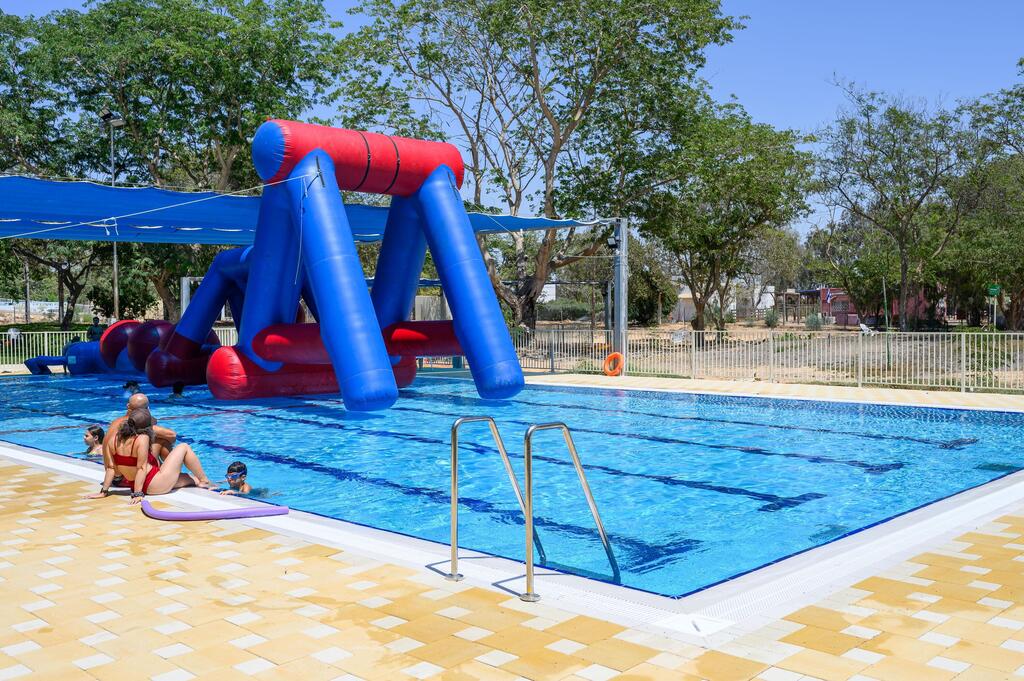
After the renovation of the swimming pool at Kibbutz Sufa
(Photo: Courtesy of the kibbutz)
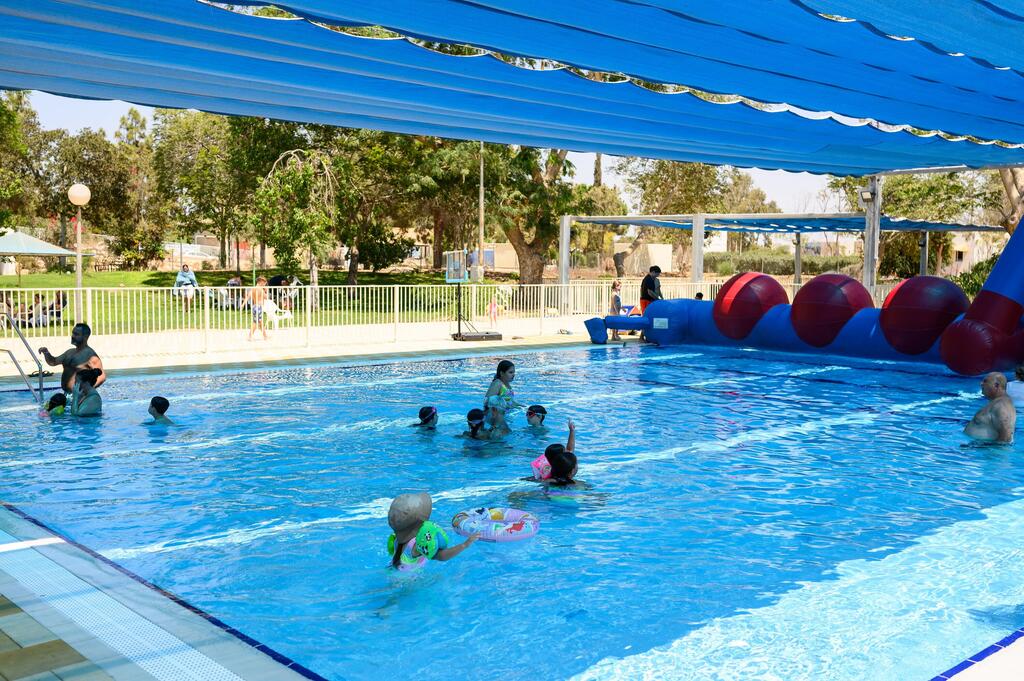
After the renovation of the swimming pool at Kibbutz Sufa
(Photo: Courtesy of the kibbutz)
The pool they dreamed of before October 7
Mika Behar, 34, a Sufa native who oversees new-member absorption at the kibbutz, returned with her family in August 2025, almost two years after they were evacuated with their daughter, then a six-month-old baby.
The pool they returned to had been renovated but not enlarged. Shade structures and, for the first time in its history, a perimeter fence were added.
Previously, the lawn, diving boards and pool formed one continuous space. Today, even the diving boards are separated by the new safety fencing. “It was a change we had to get used to, but we adjusted,” Behar said.
The desire to renovate the pool long predated the massacre. “Even before October 7, there was always talk here about renovating the pool. I took part in meetings about what the renovation would look like. There simply wasn’t a budget.”
October 7 did not create the idea. Instead, under circumstances no one would have chosen, it made the renovation possible. When families returned, preschools and other educational frameworks had still not reopened.
“The kibbutz administration made every effort to open the pool as soon as we came back,” Behar said. “It became our only meeting place. That’s where we talked about internal politics and the security situation, and that’s where the children started playing together again.”
For Behar, the transformation of the space is especially tangible. During the COVID pandemic, she and her husband, Matan, were married at the pool in a wedding attended by about 150 guests, “without a fence, with the diving boards in the background.”
Today the same place must comply with different safety requirements, but she does not feel it has lost its identity. “Even returning to the pool, although it looks different, felt natural,” she said.
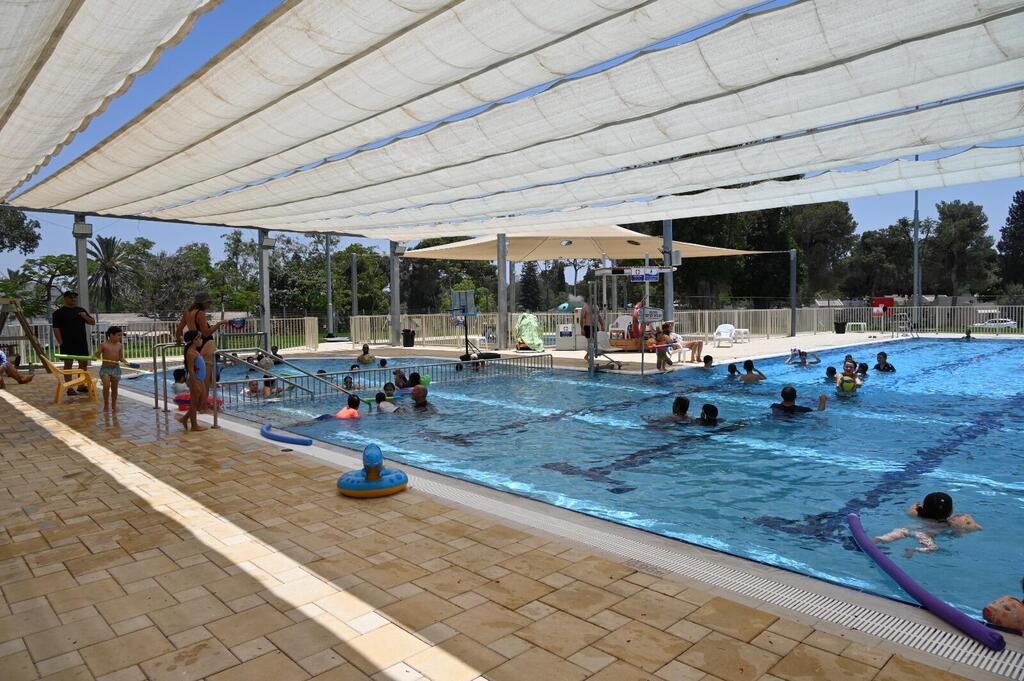
No memorial plaques or monuments to the massacre in the pool area at Kibbutz Kfar Aza
(Photo: Zohar Shpak)
The return to routine exists alongside loss that remains deeply present. Three members of Sufa were killed: two members of the emergency squad, IDF reservists Maj. Ido Hubara, Maj. Ofir Erez, and Bernard Cohen, who was murdered in his home.
The restored pool is not an attempt to return the kibbutz exactly to where it was before October 7, but rather an effort to restore a familiar space to communal life under conditions that have changed physically, socially and emotionally.
No memorial, just life
There is one thing the communities have chosen not to add. Asked whether residents had requested October 7 memorials within the pool complexes, Katz and Barzilay said no. There are no plaques, memorial corners or dates marking the massacre. The space remains, in their words, “free and clean.”
That absence may itself be significant. Unlike a synagogue, dining hall or another public building that may explicitly carry the community’s memory, the pool is not required to represent anything.
In the first months after evacuation, it served some residents as a softer point of entry back into the kibbutz. Later, it once again became a place where children play and adults meet, talking about internal politics, security and everyday life.
It is still too early to know whether October 7 will permanently change the place of the swimming pool in kibbutz planning. Perhaps, eventually, it will return to being exactly what it became in the 1960s and 1970s: an almost accidental byproduct of rising living standards, with no grand ideological purpose.