

“Like hell,” is how one soldier described being in the cemetery in the heart of Gaza during the heroic effort to locate the body of Ran Gvili, the Yasam police officer who was killed on October 7 and whose body was abducted into Gaza. One by one, the soldiers opened dozens of graves and exposed hundreds of bodies. When Gvili’s body was finally found, the circle was completed: 251 hostages, both dead and living had been brought home to Israel.
But at the same moment when the radio announcement was made declaring that Gvili's body had been located — and soldiers on the ground broke into spontaneous songs of relief and pride — another front opened, no less complex: the battle for the mental well‑being of those who had pulled him from the earth. On Tuesday, the day after the operation ended, mental health professionals began processing talks with the soldiers who took part in that difficult and sensitive mission.
Gallery
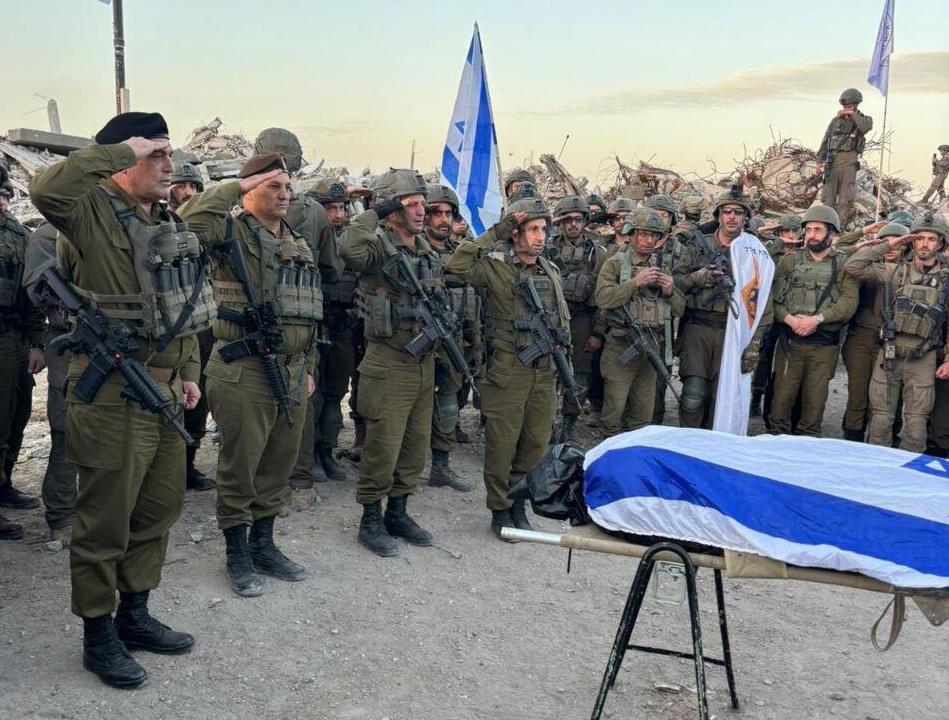
IDF chief of staff salutes the late Ran Gvili
(Photo: According to Section 27A of the Copyright Law)
“Only after we finished the conversation with them did I realize that none of them referred to the element of threat to their lives within the event, even though the operation took place in an area that was still under threat,” says Lt. Col. Meir Rubaha, morale and welfare officer for Reserve Division 252. “That shows how people cope with trauma in ways that go beyond anything we can estimate.”
Preparing young soldiers for a harrowing task
How do you prepare young soldiers for an awful mission like digging among hundreds of bodies?
“We prepared for this mission for a relatively long period, knowing we were going to face smells and sights that could intensify the trauma. The more aware the soldiers are of the challenge they are going to face, the more we can reduce the element of surprise for them. People understood the significance of the mission, that they were doing something national and meaningful. That helps cope with the difficulties of everything that was in the field.”
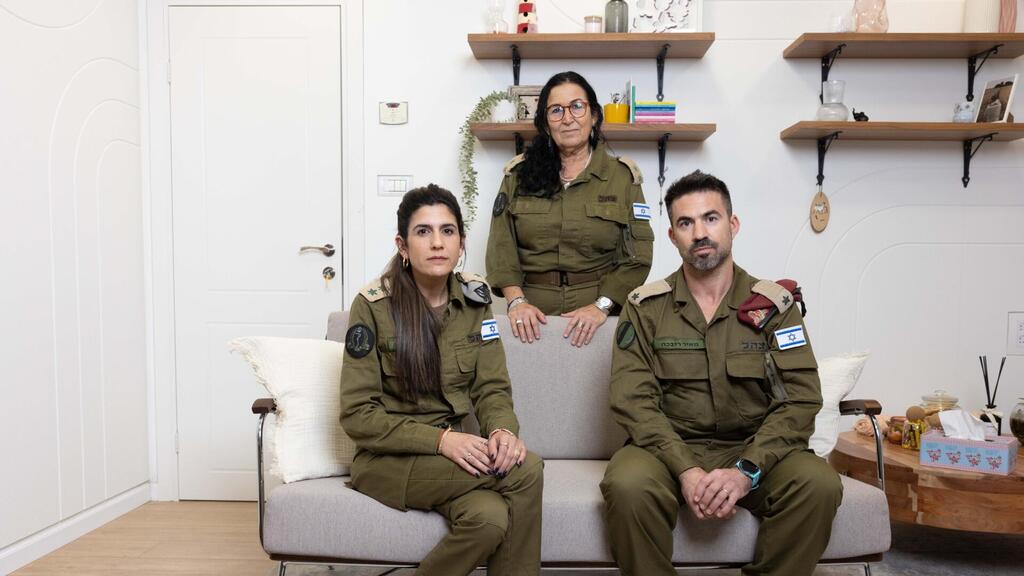
Lt. Col. Meir Rubaha, Lt. Col. (res.) Aliza Dolev and Lt. Col. Tal Ashkenazi: 'He who does not develop post-trauma will grow from experience
(Photo: Oz Moalem)
Despite the importance of the mission, there is still that moment when a soldier or reservist stands over an open mass grave and his body reacts reflexively. How do you deal with that?
“In this operation we didn’t see people who reacted in an extremely extreme way to what was there. I think this was sharpened very much during the period of fighting. People learned how to communicate with their bodies in states of stress and pressure. Therefore, when a soldier feels disgust or cannot be in a certain place at the moment, he knows how to manage his feelings, for example by moving a little aside.”
Like a chocolate chip cookie
Rubaha, a clinical social worker by profession, says that positioning mental health as a central factor in combat has evolved in this war.
“The military mental health system has grown very rapidly in response to the enormous scale of injury thanks to lots of proactivity. The past two years have taught us not to speak from a pulpit but to go into the field and be with the soldiers, especially after difficult events. The morale officers went into combat zones in cold and rain, under fire, and sacrificed a lot of themselves to care for our soldiers.”
Although the brigade’s morale officer was not with the troops on the ground during the excavation, Rubaha says he waited nearby, just over the border.
“The morale officer is called to the field when necessary. There is a very, very important message in that. We believe in the resilience of our people and their ability to cope with the challenges, and that does not diminish our responsibility at all. We prepare the soldiers before every event, we train them so they will know how to provide initial support. If needed, we will be there the second they call us.”
But what looks from the outside like efficient functioning can also be a type of dissociation, a detachment.
“Any mentally healthy person who encounters such a situation reacts. You cannot face such difficult things and remain indifferent," he says. "The criterion is whether the soldier maintains functioning that is appropriate to the mission. There is a natural response that fits the situation. If a person does not function because of what he experienced, that’s the red flag when I step in to help him.”
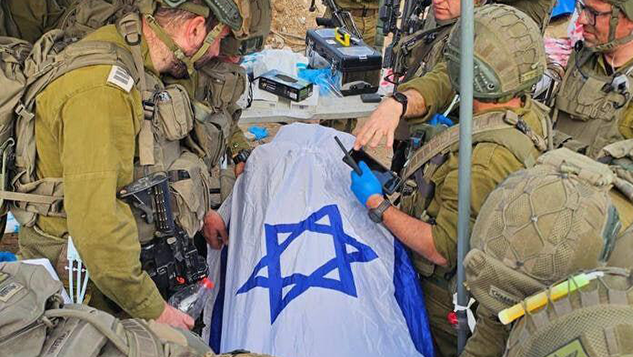
(Photo: According to Section 27A of the Copyright Law )
Processing the experience
After each such event, sessions are held to process the traumatic experience.
“Our desire, the mental health professionals, is to enter right into the depth of the matter knowing that it’s important that our initial intervention be as close as possible,” says Rubaha. “But you have to remember the situation. The soldiers inside the Gaza Strip sometimes haven’t eaten or slept for days on end. I can’t come talk to a soldier who tells me ‘Brother, I’m exhausted from fatigue.’”
The processing takes place in the field, inside the post itself.
“We work with them to create a positive narrative, addressing the fact that the soldier acted well and humanely, and that despite the difficulty he responded to the situation in an appropriate way. Each member of the team lays out his subjective experience, reconstructs what happened, and describes it in the present tense. Often this draws feedback from the peers alongside him: ‘You were there, I was there, I remember you did such and such.’ This completion is important, because part of the characteristics of trauma are black holes. The experience is so difficult that sometimes we fail to remember it. When someone who was there with you helps complete that, it is very significant.
“At the end of the meeting we talk about trauma responses that may develop and explain when a red flag should be raised, because as time goes by it becomes harder to treat.”
How soldiers sescribed the mission
What did the soldiers who uncovered hundreds of bodies at the cemetery where Gvili was found describe?
“Most spoke about the moment they realized they had found Rani. They described how suddenly a sense of relief descended on them. They were completely cut off from the world, focused on the mission, without phones, which further intensified the experience. Someone said: ‘I felt as if I saw a very, very strong beam of light inside the awful thing I was in.’”
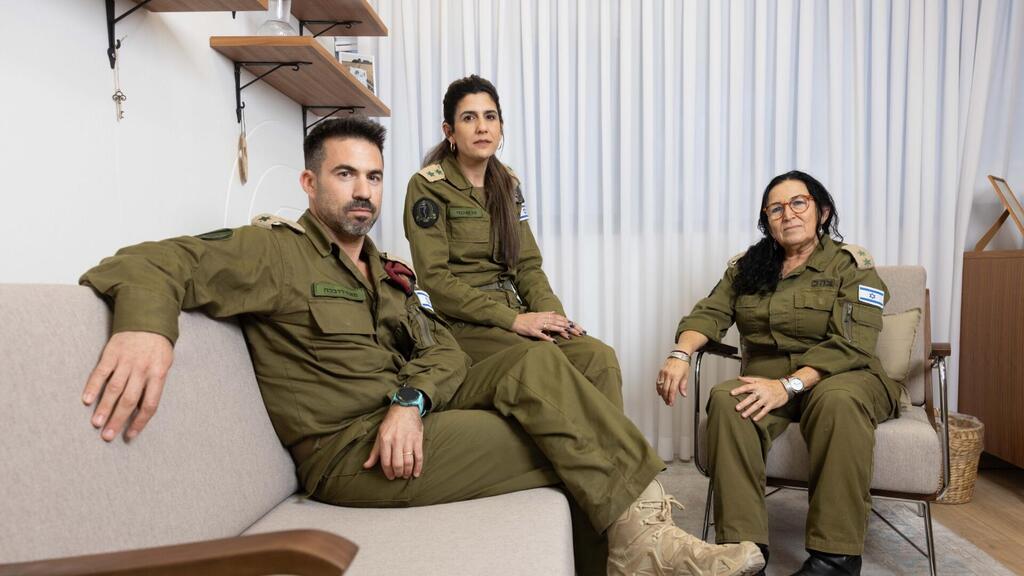
Members of the Mental Health Medical Corps
(Photo: Oz Mualem)
“There were people who said they felt like part of a movie scene, that they weren’t really there. Others described the pieces of bodies scattered in the area like chocolate chip cookies. Only that way could they cope with the terrible environment they were in. There were also voices saying ‘We could have done things differently to reduce the damage to the bodies and our exposure to them.’ That may not align with the reality on the ground, but that place of guilt is part of their ability to process the situation.”
Resilience and struggle
You describe resilience, but from their words you can also hear a lot of psychological difficulty and shock.
“True, and it’s important to say that. We are all glad this important mission succeeded, but we must remember that there were people who found this very difficult. Their ability to cope came from mission, commitment and responsibility.”
How does one lift the unit immediately after the tension falls, after the body is loaded onto the helicopter and there is silence?
“There is a lot of laughter and dark humor in these situations. It’s hard to survive without it.”
Between the Holocaust and the front line
Those accustomed to the difficult scenes like those seen last weekend in the cemetery are members of Unit 6017, the medical identification and forensic death mechanisms unit of the Medical Corps, which collects data in the field, including dental records and DNA samples, to verify the identities of the fallen. On the first day of the war, its members—mostly dentists—were deployed to Camp Shura, where they worked for long weeks identifying massacre victims. With the start of the ground maneuver, its teams entered deep into the Strip, equipped with advanced tools and computing systems that allowed them to compare field findings with the IDF database in real time.
Over the past two years the unit has taken part in hostage recovery operations and helped identify numerous fallen soldiers. In the latest operation more than 20 volunteer dentists worked together for over 24 hours and scanned about 250 bodies until Ran Gvili was identified.
“The dentists went into the pits themselves and searched by hand for matches to the desired profile; no one else in the field knows how to do this work for them,” says Lt. Col. Tal Ashkenazi, commander of the Medical Corps permanent institute, responsible for mental health support for regular personnel and their families. “Nothing in their medical studies prepared them for this mission—identifying a body in enemy territory under conditions of risk and pressure—and there’s no way to practice or prepare for it in advance.”
The understanding that this unit required special and tailored mental health care came following a phone call Ashkenazi received from a former client—a dentist who had been called to identify murdered bodies.
“Immediately I understood that this population of doctors needs unique, ongoing support,” he explains.
The next day, Ashkenazi dispatched the mental health department’s secret weapon to Shura: Col. (res.) Aliza Dolev, 67, a clinical social worker and psychotherapist, former commander of the Combat Reactions Unit and permanent institute, who served for decades in the IDF and in the past two years has escorted dozens of returning hostages on their way to Israel.
“I felt compassion for her, knowing what awaited her there,” Ashkenazi says, “but I knew those working there needed the best professional in the field.”
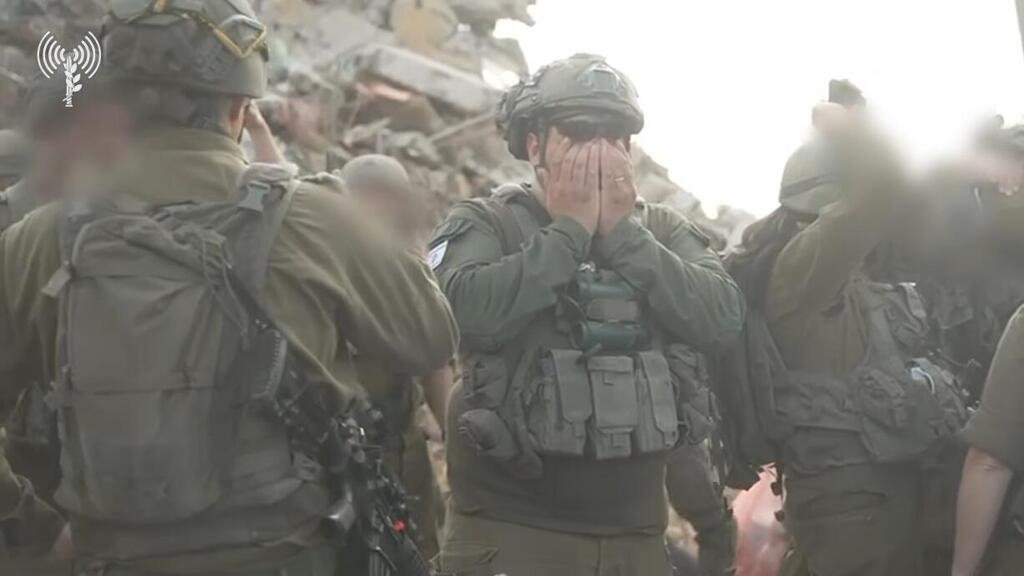
Emotional reaction after the discovery of Ran Gvili's body
(Photo: IDF Spokesperson's Unit)
Since then, Dolev has been the listening ear for the unit’s members, who consult with her not only on military matters but also on issues of relationships and family.
“One of the dentists who worked in Shura, a child of Holocaust survivors, told me that in the Holocaust people came with names and were given numbers, whereas in Shura bodies came with numbers and were given names,” Dolev says. “That tells the story of this unit in one sentence: they resolve doubt.”
Alongside this noble mission, she says, there is much struggle.
“Each of them has things that remind him of the difficult experience he went through. Just as the stomach rises when eating food that’s hard to digest, the psyche also takes time to digest hard things. They know not to panic and not to poison themselves more, for example by exposing themselves to gruesome videos or going to funerals.”
What keeps them in such a difficult and exhausting role?
“Knowing they are doing an act of kindness, out of radical solidarity. You forget who you are and what you need and you’re entirely devoted to this mission—for the fallen, for their families, for the people. Before this war many of them didn’t know how strong they were, and that in itself gives a lot of strength. Also the fact that they are part of a group experiencing the same things, communicating without speaking, strengthens them.”
The moral injury
Against the backdrop of the sacred Israeli value of “leaving no one behind” and the blessed relief of the Gvili family, there is a darker side of it all. Studies on disaster identification teams have shown that rates of post‑trauma symptoms among those who work with bodies are significantly higher than among those who do not come into contact with human remains, and they found that odor is the strongest trigger for post‑traumatic symptoms.
Soldiers in a squad who once searched by hand for remains of comrades killed when their APC hit an IED in the Philadelphi route in 2004 said that the event still haunts them.
“When you pick up a piece of flesh you understand that behind it there's a story, there’s a family. These things never leave you,” one soldier described.
Exposure to the most graphic products of death can produce not only post‑traumatic stress, but also moral injury — a sense of guilt or violation of ethical codes that soldiers were raised to uphold, even when the mission was operationally justified. A soldier who suffers from such injury will feel guilt, shame and disgust.
“Moral injury is something that occupies us greatly today,” says Rubaha. “We see it more in late reactions, and treating it requires deeper engagement.”
Preventing and treating trauma does not end in the field—it continues for weeks and months and extends into the home.
“We talk to them about transitional rites, teach them mindfulness and breathing, how to pause, listen to music before they get home—leave the hard day behind,” says Dolev.
“One thing that develops after trauma is aversion to certain smells, because memory and smell centers are very close in the brain,” says Rubaha. “The natural tendency is to avoid those smells as much as possible, but avoidance is what fuels later mental illness, so we try to expose the patient to the things that challenge him as much as possible. If it’s the smell of grilled meat, we’ll work to bring him to a place where he can eat the steak he once loved.”
Despite the difficult experiences and reactions, experts say most soldiers exposed to traumatic events will be able to move forward in life.
“Not only will they be okay, they will grow from what they went through. Trauma is such a harsh event that you cannot remain where you were before it. If you don’t develop mental illness as a result, you will certainly develop resilience and support. Every team talk should end with those messages,” he says.
Maybe they will be better fighters — the question is whether their civilian lives afterward will be any less difficult.
“Just the fact that you confronted such hard things demands growth; it grows you and forces you to develop and become mentally stronger.”
“There is something called post‑traumatic growth,” says Dolev. “In one of the processing sessions we ask the fighters to write a letter to their grandchild. They are young, far from grandchildren, but they embrace this exercise wholeheartedly because it gives them horizons and a sense of continuity. I’ve done hundreds of processing sessions with dozens of different groups. For everyone two sentences repeat themselves: ‘There’s no way such a thing happened and I wasn’t there,’ and ‘I became a better person.’”