


As commander of the 213th Fire Brigade under the 146th Division, Col. Efrat Kaikov makes a point of moving forward into the field to meet maneuvering forces her units support.
“Our mission as an engineering force is to reach every dominant area and hold it to prevent Hezbollah fire toward communities in the north,” she said after entering deeper into southern Lebanon this week. “There isn’t a visit to the forward defensive line that I return from without becoming a better commander.”
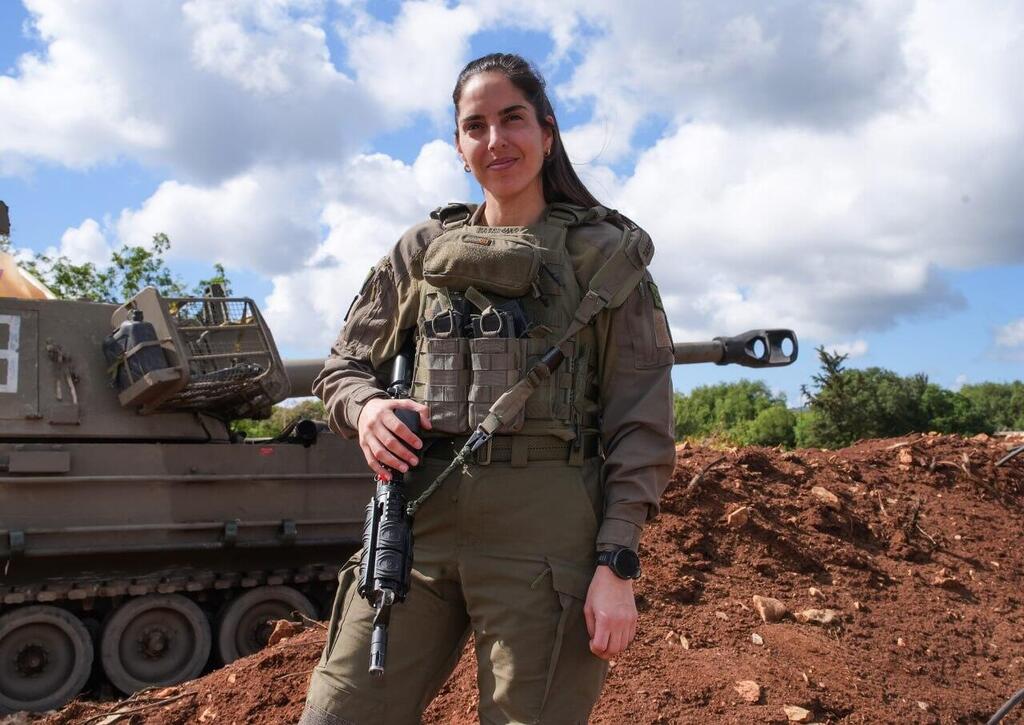
Kaikov said her goal is not symbolic visits, but understanding operational needs firsthand. “I need to be with the maneuvering brigade commander, to see how the actions I take affect his battle,” she said. “If I could bring every soldier to see the fire support they provide protecting those forces, they would become even better.”
Pushing Hezbollah back, destroying infrastructure
Operations in southern Lebanon are divided into two main efforts: pushing Hezbollah operatives beyond the Litani River and outside anti-tank missile range, and systematically destroying infrastructure used for attacks.
“We are dealing with two main types of areas,” Kaikov said. “Open terrain — cave-like systems carved into rock — and village homes along the front lines.”
She said the underground sites can reach depths of up to 100 meters and contain large quantities of weapons, including RPGs, assault rifles, explosives, anti-tank missiles and launchers.
Forces have also found extensive supplies — food, water and equipment — prepared for prolonged stays. “They were ready to remain there for weeks or months,” she said.
In villages, weapons have been found inside homes.
“Just days ago, we entered a house and in a child’s bedroom we found rifles, sniper rifles, vests and magazines,” she said. “In the living room and closets there were large amounts of weapons. These appear to be civilian spaces, but they are not.”
According to the IDF, nearly 500 sites — including homes and underground positions — have been destroyed so far.
Artillery as a central force
Despite advances in precision weapons and drones, Kaikov described artillery as central to the battlefield.
“The Fire Brigade is not just artillery,” she said. “It includes airstrikes, drones, rockets and attack helicopters — everything operating in the division’s area.”
She described how artillery creates a “rolling barrage” that accompanies maneuvering forces.
“When you advance with that kind of fire support, no one will come near you,” she said. “It secures your flank and suppresses threats without sending forces into dangerous areas.”
A deadly error and lessons learned
The intensity of operations has also brought risks. Several weeks ago, an artillery round fired from another sector struck Kibbutz Misgav Am, killing resident Ofer Moskowitz.
“It is a very painful and tragic incident,” Kaikov said. “We studied every detail. We do everything to ensure every shell hits its target.”
She stressed that the focus now is on learning from the incident. “The pain is not a work plan. The mission is to apply lessons and improve,” she said, adding that such incidents are extremely rare.
Kaikov also addressed the complexity of providing fire support during emergencies.
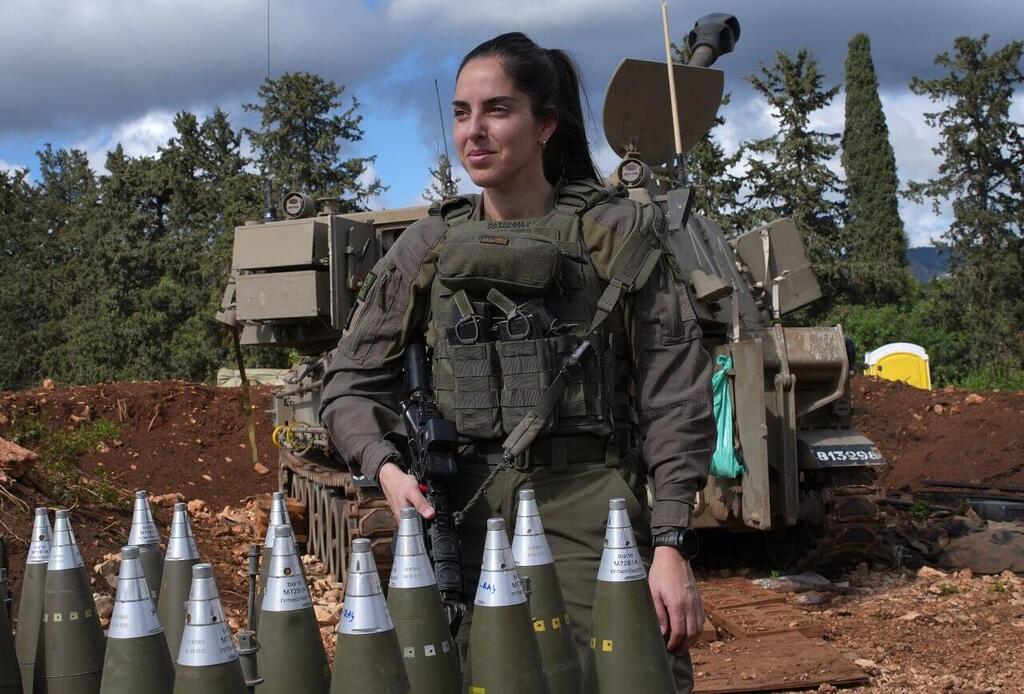
(Photo: Efi Shrir)
“When forces need immediate assistance, it is a complex situation,” she said. “You must verify positions and coordination. Even under pressure, you have to pause and check — the risk of hitting our own forces is not acceptable.”
Reduced resistance, future plans
The IDF says Hezbollah operatives are showing reduced motivation following sustained strikes, with some avoiding engagement and signs of weakened coordination with leadership in Beirut.
Northern Command is expected to present political leaders with a plan to expand control over frontline villages and establish a deeper security zone extending to anti-tank missile range.
The plan includes legal assessments to allow for the demolition of structures deemed a threat, with the goal of creating a buffer where forces maintain control directly or through surveillance and fire.
From headquarters to the battlefield
Kaikov, 38, enlisted in 2006 in the Artillery Corps and became the first woman to command a battalion in the corps. She later served in senior roles, including as military secretary to the chief of staff.
She returned to field command last year, taking over the brigade as the 146th Division prepared for renewed operations in the north.
“I always knew I would return to the field,” she said. “If you ask me today where I want to be, there is nowhere else.”
She was eight months pregnant at the start of the war in October 2023 and gave birth weeks later, missing the initial phase of fighting.
“As a soldier, you prepare your whole life for moments like that,” she said. “Being out of the fighting was very difficult.”
'The mission is to create real security'
Kaikov, one of the few women to command at this level, said she does not focus on gender in her role.
“I don’t deal with how the enemy sees that a woman is commanding,” she said. “I focus on the mission — how to eliminate the threat and learn the enemy as quickly as possible.”
She said her goal is clear: “To complete the mission and create real security.”
Despite ongoing conflict, she expressed a broader outlook.
“We live in a difficult region,” she said. “There will always be threats, but alongside that we will build, live here and put down roots. We will always need to defend this place — so people can live here without fear.”
First published: 10:49, 04.07.26