

On July 4, 1984, the streets of London became the scene of one of the most daring and bizarre kidnapping attempts of the 20th century. At the center of the drama was Umaru Dikko, Nigeria’s former transportation minister, who had served in the government of his brother-in-law, Shehu Shagari.
In 1983, a military coup took place in Nigeria, bringing Gen. Muhammadu Buhari to power. Following the coup and the show trials launched against senior officials from the previous government, Dikko fled into exile in London, where he became a vocal critic of Buhari’s regime.
Gallery
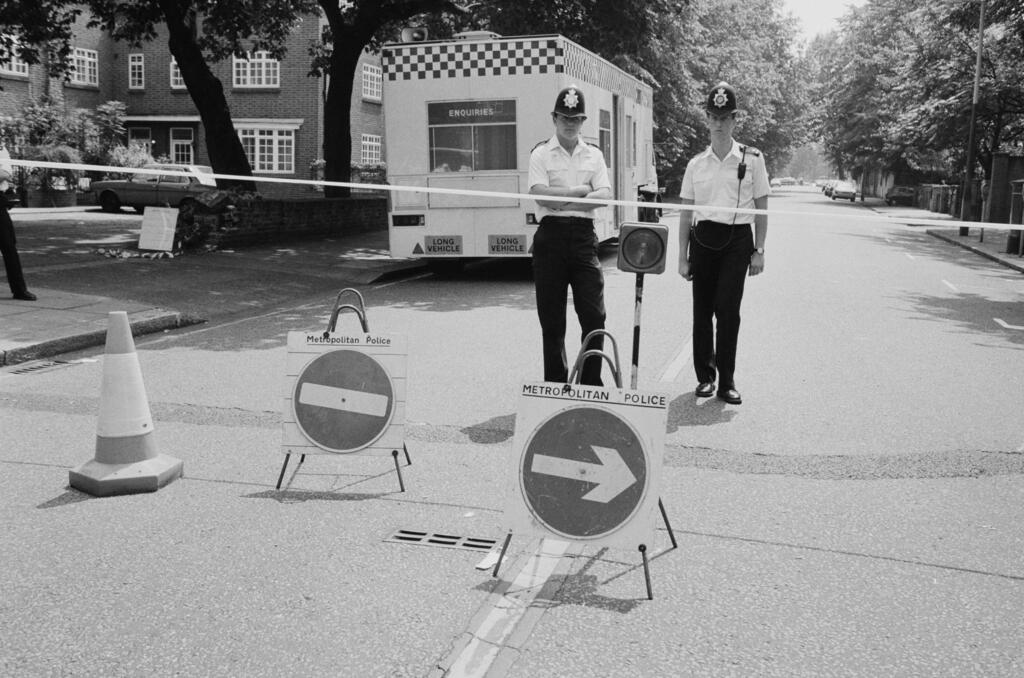
On July 4, 1984, the streets of London became the scene of one of the most daring and bizarre kidnapping attempts of the 20th century
(Photo: Stoddardt/Evening Standard/Hulton Archive/Getty Images)
The Nigerian authorities accused Dikko of embezzling state funds and involvement in corruption. They refused to forgive him and decided that the only way to deal with him was to return him to Nigeria by force.
To carry out the complicated operation, Nigeria’s intelligence services sought outside assistance, creating what became known as the “Israeli connection.” According to one account, the Nigerians approached an intermediary who attempted to obtain help from official Israeli sources. When those sources refused to become officially involved, the Nigerians were told that there were “retirees” from Israel’s security establishment who might take on the assignment.
Eventually, the services of three Israelis were hired: Alexander Barak, who led the team and organized the kidnapping; Dr. Lev-Arie Shapiro, an anesthesiologist recruited for the operation; and Felix Avital (Avotbul), whose involvement was required in part because he held a French passport.
The kidnappers’ plan was bold and ambitious. As part of the preparations, a Nigeria Airways Boeing 707 arrived in London empty of passengers, under the pretext that it was intended to transport diplomatic mail back to Nigeria.

The boxes in which Israelis tried to kidnap Umaru Dikko
(Photo: Rodgers/Evening Standard/Hulton Archive/Getty Images)
On July 4, as Dikko was walking through the streets of London, the kidnappers attacked him. He was forcibly pushed into a commercial vehicle driven by Nigerian national Mohammed Yusufu, with the three Israelis alongside him. The team drugged the former minister and placed him inside a crate intended to be shipped to Lagos under the protection of diplomatic mail immunity.
But the carefully planned plot completely unraveled at the last moment. Dikko’s British secretary, who saw the kidnapping through a window, rushed to report it to Scotland Yard, which immediately launched an investigation and began searching for him.
When the suspicious crate arrived for inspection by British customs officials at the airport, they discovered that it was missing the required documents proving that it was “diplomatic mail” exempt from inspection. As a result, the officials decided to open the crate.
The sight that greeted them appeared to be straight out of a movie: Dikko was found inside, bound and drugged, alongside medical equipment that had been prepared in advance to ensure he continued breathing during the flight in the cargo hold. Dikko was rescued, taken to hospital and found to be safe and sound.
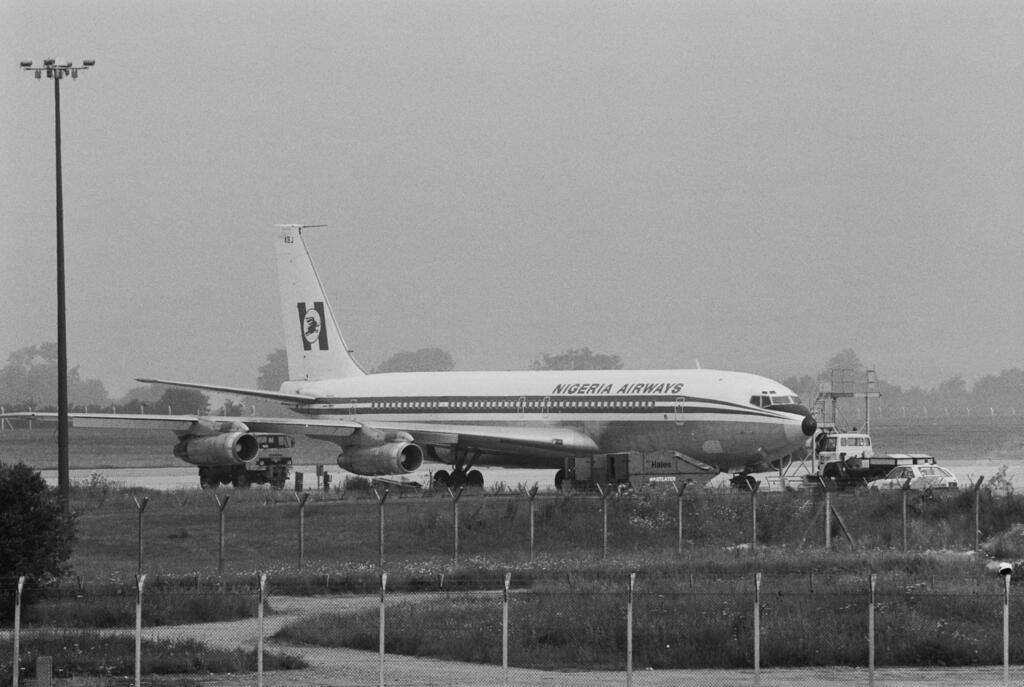
The Nigerian aircraft waiting for the 'mail' was immediately grounded in London
(Photo: Rodgers/Evening Standard/Hulton Archive/Getty Images)
The failed operation sparked an uproar and a severe international crisis between Britain and Nigeria. The Nigerian aircraft waiting for the “mail” was immediately grounded in London until the investigation was completed. In response, Nigerian aviation authorities ordered a British Caledonian aircraft that had already departed Lagos to turn back. The British plane was released only after the Nigerians released their aircraft. The diplomatic crisis also led to the expulsion of two senior Nigerian officials from Britain.
Amid the diplomatic drama, British media began pointing the finger at Israel and attempted to link the kidnapping operation to the Mossad. Israel, however, officially and firmly denied any connection to the affair or to the Israelis involved.
The drama eventually moved to the courtroom. The three Israelis were put on trial in Britain and received heavy sentences: Alexander Barak was sentenced to 14 years in prison, while Shapiro and Avotbul were each sentenced to 10 years. All three served several years in British prisons before being released and deported to Israel, leaving behind one of the most fascinating and controversial espionage and kidnapping affairs in British history.
Dikko himself remained in exile for another decade. In 1995, he returned to Nigeria and even founded a new political party.