


Interviewing Yonathan Bensoussan is no easy task. Every few moments someone stops him to hug him, say hello or simply tell him they love him. Bensoussan is a people person — someone who loves people and is loved in return.
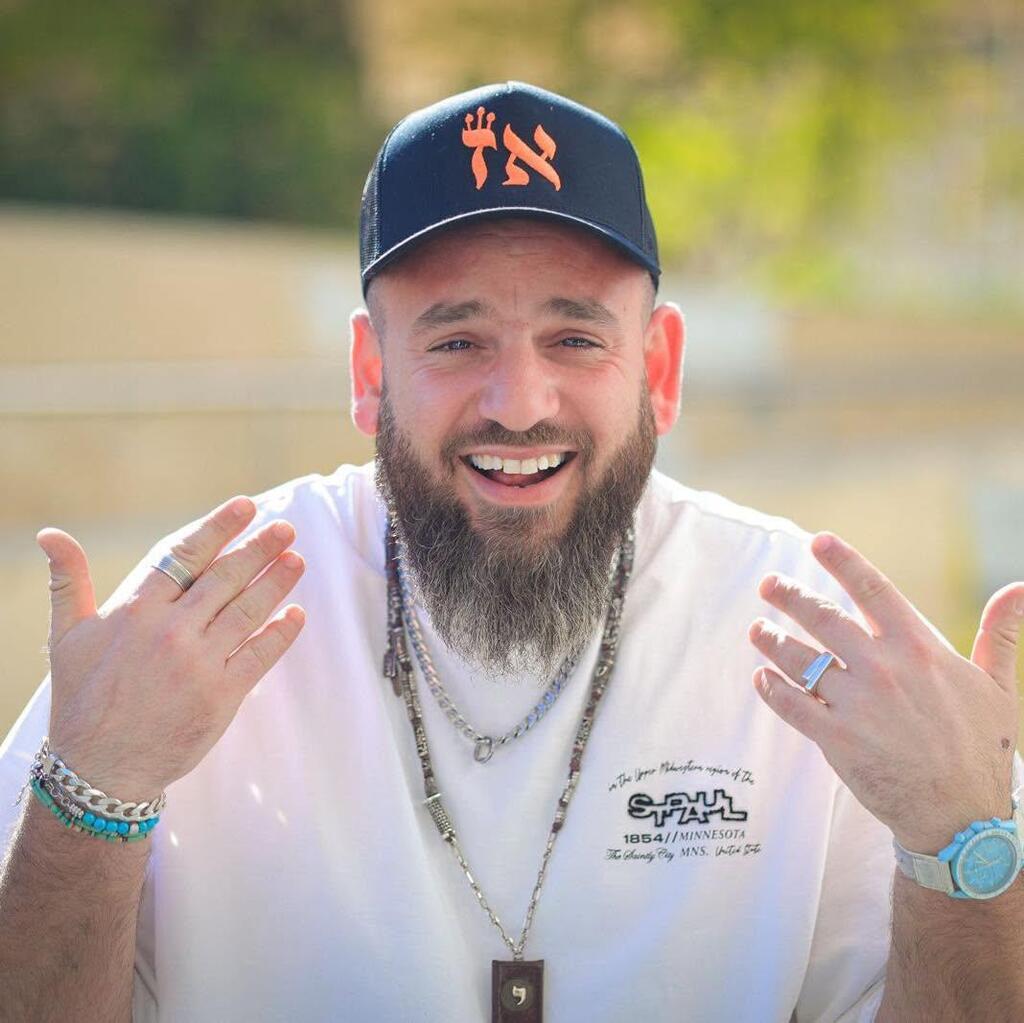
Yonathan Bensoussan. He is a people person — someone who loves people and is loved in return
(Photo: Courtesy of the photographer)
"I wanted to be part of the news instead of watching the news on television," he said.
After serving in the Paratroopers Brigade, he drifted between different jobs.
"I worked in security, at border crossings, in civilian intelligence and mostly tried to make a living and figure out what I wanted to do.
"One day, while vacationing in Eilat, I bent down to pick something up and suddenly heard a click. The pain was unbearable and I realized something was seriously wrong. Doctors found I had a herniated disc. Suddenly I, someone who's hyperactive and never sits still, was lying flat on my back at home, without a job and in a very low emotional state. It was an extremely difficult period because I'm not someone who can stay home and do nothing.
"Gradually I recovered, and someone told me an entrepreneur was opening a housewares store at Jerusalem's First Station complex and needed an employee. I thought it would be a good way to ease back into work, so I started selling pots and pans. That's where I discovered myself — I'm a salesman. People liked me, I liked people and the connection just happened."
Until then, you didn't know you had a talent for selling and engaging people?
"I was always energetic and outgoing, but that specific place made me realize where my strength was. People would come in to buy one frying pan and leave with four pots. I give people my whole heart, and they felt it and liked what I projected.
"For 10 years we worked together in that store and at booths in different locations, and I entered the world of mall and market stalls. It's a tough business. You have to wake up very early, arrive somewhere new, build your 'store' every morning and you never know whether customers will come, how much you'll sell or how the day will go. But I loved it. I traveled all over the country, met people and they started recognizing me.
"One woman suggested filming me while I demonstrated the cookware. The video took off and reached a million views. That's where my social media activity was born and it pushed me to the next level."
In 2013, he decided to go independent and turned his sales booths into a kind of show. Bensoussan would set up in shopping malls and demonstrate kitchen tools using vegetables in a style reminiscent of American home shopping channels, with plenty of enthusiasm, live demonstrations, personal interaction and, above all, entertainment.
"People had already started seeing me on social media and would actually wait for me in the mall in the morning. I made videos, people wanted selfies with me and it kept growing.
"Gradually I also started posting more personal content from home — meals I prepared and especially aperitifs and gourmet foods for kiddush and Shabbat. It wasn't for marketing. It was simply what I love to eat and the flavors I grew up with in France and with my family in Israel: dried fish roe, premium tuna, anchovies, quality cured meats and a small glass of arak or boukha. People loved it and kept asking where they could buy it and how to eat it."
Just as the business was gaining momentum and he was preparing for the next stage, the coronavirus pandemic hit.
"It was a huge blow. Suddenly there were no booths and no sales, but the loans were still there and the debts started piling up. I realized the numbers weren't what I thought they were and that I'd stretched myself too far.
"The income stopped, but you still have to make a living. The advice I got from my rabbi was not to stop. I chose joy. I took advantage of every opportunity, such as open-air malls and shopping centers with fewer restrictions. As I kept moving, things started working out.
"The idea was to keep working, creating and not let reality bring me down. If we work hard and do good work, things will fall into place. Staying home and complaining wouldn't have gotten me anywhere. In the end, hard times lead to good times. Every entrepreneur should know that a business can't succeed before it first falls. It sounds like a paradox, but it's true."
'There's no character here. It's just me'
The pandemic brought not only financial hardship but also a new opportunity. While everyone was stuck at home, his videos gained traction and Bensoussan realized people genuinely enjoyed his content.
"There's no doubt the videos gave me significant financial support. People came to see me at the booths because they wanted the show they'd seen online, and it lifted not only me but all the neighboring booths."
Today he has more than 100,000 followers on TikTok, tens of thousands on Instagram and also posts on Facebook.
"I do everything myself — no editing and no social media team. It's just me. I think that's why it works. It's authentic and unfiltered. This is what I love to eat, this is my positive energy and that's what I project. When people come to see me, they get exactly that. There's no character here. It's just me."
He was recently even parodied in a humorous video by stand-up comedian Daniel Cohen.
Now he wants to become "Israel's aperitif guy."
"I remember my grandfather in France with a small glass of pastis, some nuts, smoked fish, anchovies and olives. That's what I love. Sitting after synagogue with friends, opening a few cans of good food, chatting and simply enjoying life."
At first, Bensoussan brought a small selection of aperitif products to his cookware booths. Over time, customers became more excited about the food than the kitchen gadgets, and he realized there was real potential.
At one of his booths in Beer Mall in Rishon LeZion, he noticed an empty storefront for rent, but decided it wasn't the right time. A year ago, when he saw it was vacant again, he understood the moment had arrived and opened his first delicatessen.
"I received a blessing from my rabbi, whose entire philosophy is based on joy and love of fellow Jews, and I realized this was exactly where I could spread that message. That's the most important thing, and I express it through food and the joy of meeting people, offering samples, raising a glass and making people happy."
Recreating his father's recipe
Now he is ready for the next stage. This week he signed a lease for a second delicatessen, this time in Jerusalem, and is also planning to open in Ashkelon.
"I get a lot of calls from entrepreneurs and people who want to open businesses or franchises, but for now I have only one partner — God. It's hard to find good employees, and even harder to find people who can convey the joy and love I want to give customers. Right now I'm doing it on my own, but we'll see what happens."
At the same time, he has begun developing another venture — a food truck selling his signature product: a merguez sausage sandwich made from a recipe that originated in his father's butcher shop in France.
"It took me a long time to recreate the exact flavor and recipe. Chef Tomer Tomas also helped, but we got there. The sandwich is a huge hit. People come from all over Israel, and anyone who grew up with real, high-quality merguez absolutely loves it. I'm in love with this sandwich."
Most of the responses to his videos are positive, but recently Bensoussan faced criticism after hosting Likud MK Boaz Bismuth at his delicatessen.
"I was honestly surprised. To me, every Jew is sacred, and I deeply respect everyone who walks into my store, no matter where they come from or what their background is. I wasn't trying to bring politics into it. I think we need to focus on what's good and what unites us.
"I'm not living in outer space. I know where the criticism comes from. But we need to understand that without the right there is no left, and without black there is no white. Someone who is your opposite is still part of you. Every one of us carries burdens. No one is free of problems or mistakes. We should always focus on doing good and moving forward with joy.
"It's like a tree growing from the ground and sending branches in every direction. Sometimes the branches grow so far apart that they forget they came from the same root. That's what I feel is happening to us."
Would you post videos with politicians again?
"Absolutely. Anyone who walks into my store is welcome."
As more attention is paid to the percentage of Israelis living below the poverty line and to the high cost of living, delicatessens and gourmet food stores seem to be thriving. How do you explain that paradox?
"I'm not Rami Levy or Osher Ad. I sell gourmet products and special delicacies, and there's no question they cost money. On the other hand, Israelis appreciate quality, love good food and are willing to spend if it's worth it.
"Everyone shops here, even people from less affluent areas. People love life. They're willing to treat themselves for Shabbat and believe there's a blessing in that. Luxury cars also cost a fortune and sell very well because people recognize quality.
"Everyone says, 'It's expensive, expensive, expensive,' and it's true that Israel isn't cheap. But demand for apartments, cars and just about everything else is still high. People want to live well, and they understand that good things cost money."
Bensoussan has built his social media brand around two recurring themes.
Almost every bite he takes, even during the week, is accompanied by the blessing, "In honor of holy Shabbat."
How does he connect Shabbat to a bite of food on a Monday?
"I want every bite not to be based on gluttony but to be connected to Shabbat. Shabbat is delight, and when life is good you should bring God into everything."
The second hallmark is his shout of "Maman!" — "Mom" in French — which appears in many of his videos.
"A mother is life. When you take a great bite and truly appreciate it, you're filled with joy and you call out to your mother, to the longing for her, to the smell of home and the taste of childhood. That shout of 'Maman!' contains all of that."