

Through the rearview mirror, the last glimmers of Israel’s border lights faded into the distance. Lt. R., the first female team commander in the history of elite Unit 504, grips the steering wheel. She is not alone. Beside her sits her female sergeant, and in the back are a case officer and members of the 504 combat team, who are all men.
They are deep inside enemy territory, on their way to meet a group of people. The case officer hopes to recruit them as intelligence sources for Israel. That is the core mission of Unit 504.
Gallery
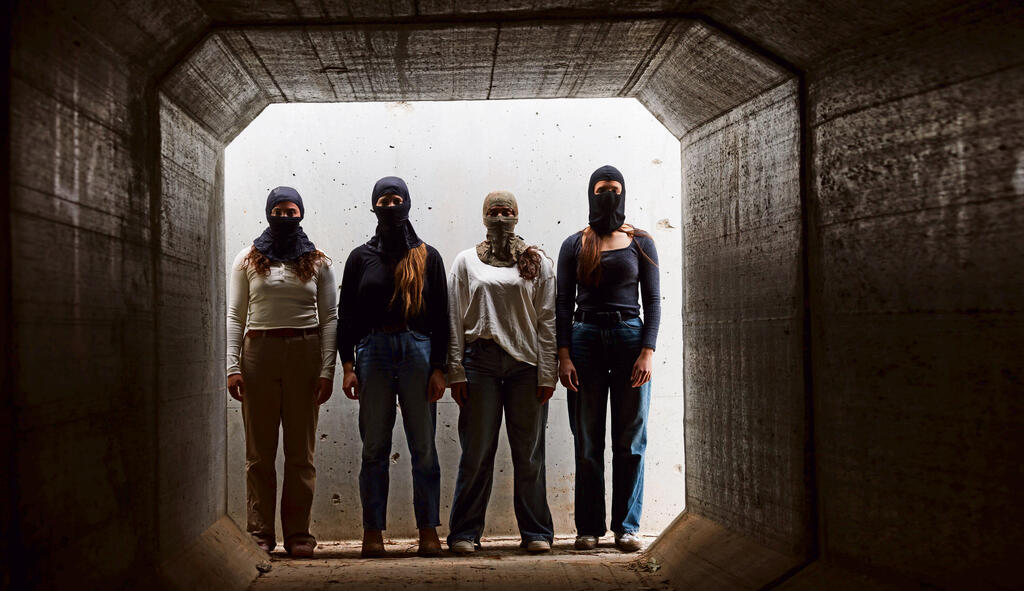
From right to left: “Anat,” “Maya,” Lt. R. and “Orly.” “Friends have already learned not to ask about our service.”
(Photo: Ziv Koren)
Lt. R. and the rest of the team are there to ensure the meeting goes smoothly and is not an ambush. It is the first time female combat soldiers are taking part in such an operation, and her pulse reflects it.
“At the beginning of that week, the unit approached me and said: ‘We have an important mission with critical significance for the State of Israel. You’re taking part in it, and not just any part,’” she recalls. “They told me I would have a meaningful role, ‘by virtue of being both a woman and a combat soldier.’”
What can you tell about what happened there?
“It was the first meeting between the case officer and a group of men and women who had never had contact with Israel. The goal was intelligence gathering. The sergeant and I had to be with the women, separate them from the group, speak with them, and also clear them, meaning conduct searches to make sure they weren’t hiding weapons that could threaten our forces or the meeting.”
How does it feel to be assigned a mission like that for the first time?
"I’m excited, but also concerned, but I don’t let that affect me. I prepare as thoroughly as possible. I understand my boundaries and those of each team member, and I study the people, especially the women we’re about to meet. I know every detail about each of them: background, age, family and more.”
The drive is long. Lt. R. stays alert, following navigation rules in unfamiliar terrain, scanning for potential threats. As they approach the meeting point, her pulse quickens. “We realize it’s about to happen. I have to be at my sharpest and most focused, and not make mistakes.”
Final preparations in the vehicle are intense: checking the pistol and magazines, tightening the ceramic vest, putting on masks. Lt. R. runs through the details in her head and briefs her sergeant. They rehearse scenarios, what the IDF calls “cases and responses,” for anything that could go wrong.
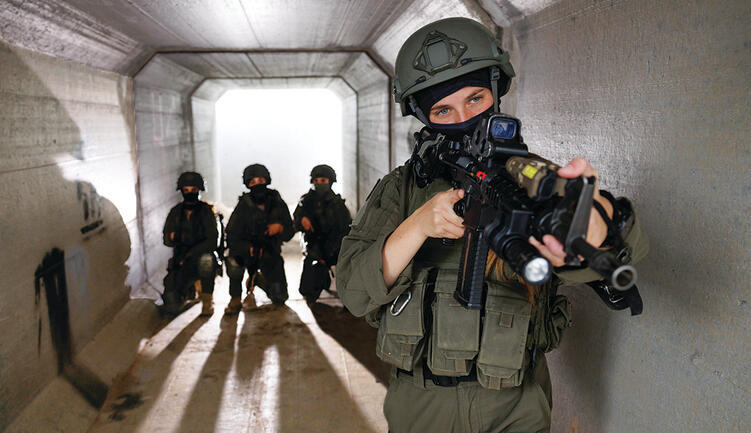
Lt. R., the team commander, and her fighters. “We broke the glass ceiling”
(Photo: Ziv Koren)
They exit the vehicle quickly and quietly. Masked, weapons ready, they advance under observation cover through complex terrain, waiting for the group. Identification is done using night vision.
“We make sure the area is clear, then move on to the complex task: making first contact with people who have never met Israelis,” Lt. R. says. “The sergeant and I approach the women. There’s an initial conversation. We greet them, separate them from the men. After a physical search, the meeting with the case officer takes place under our security.”
Do they agree to be searched?
“Yes. As part of the cooperation, they’re prepared in advance through covert communication. They know they have to go through several steps before the meeting takes place.”
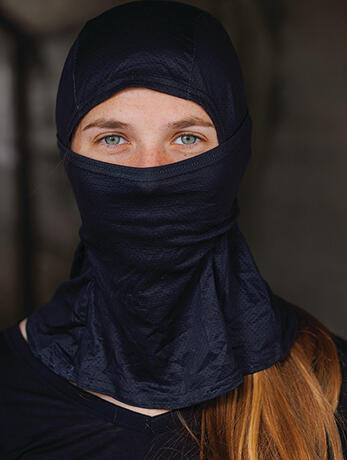
Lt. R., commander of the female fighters
(Photo: Ziv Koren)
They’re supposed to provide intelligence. What do they get in return?
“It can vary: money, protection, and sometimes more ‘emotional’ things, like family visits to Israel or medical assistance.”
After the meeting, the team ensures the group leaves before returning to the vehicle and making the dangerous journey back to the border. Every scenario is possible: a random checkpoint, or someone deciding to report the meeting.
Hours later, they return safely. On the surface, just another covert operation. But for the two women who took part, it marked a bold new chapter in Israeli history.
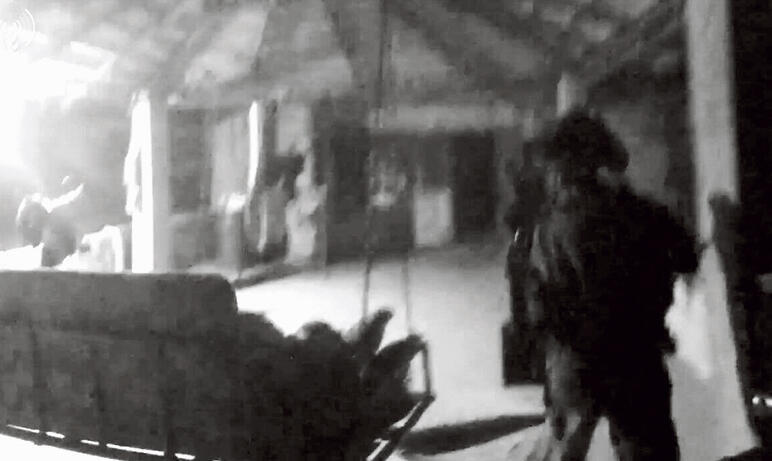
Special forces and Unit 504 operating in Jabaliya. 'They have the ability to blend into the environment'
(Photo: IDF Spokesperson's unit)
They will not remain alone. Within a month, several more female soldiers will complete one of the IDF’s most demanding training courses and join covert missions, most of which will remain known to only a few.
Now, in an exclusive interview with Yedioth Ahronoth, Lt. R. and three Unit 504 female fighters, who are about to shatter what remains of the glass ceiling, describe what it means to be a shadow soldier crossing every possible boundary, in more ways than one.
Unit 504 is one of the Intelligence Directorate’s most secretive units. Its primary role is human intelligence, or HUMINT. In simple terms, its operatives must persuade people, often enemies, to share what they know, sometimes inside enemy territory. The unit operates in Syria, Lebanon, the West Bank and, since October 7, also in Gaza.
It gathers intelligence from two main sources: detainees and agents. Interrogators question prisoners, often at the front lines, to extract real-time intelligence. Agents, meanwhile, are individuals who provide information to Israel, whether by choice or persuasion.
Each agent is handled by a case officer responsible for recruitment, tasking and maintaining the relationship. In many cases, meetings with these agents take place deep in hostile territory.
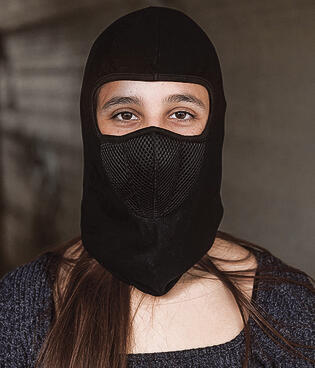
'Anat': “During the selection process, they sent me to meet with a psychologist. She looked at me and said, ‘You seem delicate’”
(Photo: Ziv Koren)
This is where the unit’s combat teams come in. The case officer never operates alone. He is surrounded by a specialized team trained to protect him, prevent ambushes, ensure the agent is not armed, and extract if things go wrong.
Until now, those teams were exclusively male. Now, for the first time, female combat soldiers have joined. The primary reason is operational necessity. Before October 7, the prevailing view in the intelligence community was that human intelligence was becoming less critical, with greater reliance placed on signals intelligence, mainly electronic communications gathered by Unit 8200. The failure proved otherwise.
Unit 504 was deployed in Gaza as well, and its operational scope expanded sharply across other arenas, creating a need for many more combat soldiers.
And then you finally decided to open the combat unit to female soldiers as well.
Lt. Col. Y., commander of the unit’s combat division, explains the shift: “October 7 was a shaking moment for the entire security system, and for us as well. We realized we had to expand our toolkit. Unit 504 entered new arenas and increased operations across multiple fronts. We asked a simple question: why not women?”
“We saw women already operating in complex units across the military and security community. We understood there was untapped operational potential. So we set out to learn from those units how to properly integrate female soldiers, including the challenges and the advantages. This is defined as a pilot, but for us it’s the beginning of a new path.”

Unit 504 insignia
What skills set them apart from other female combat soldiers in the IDF?
"Their training is extremely intensive. They learn to operate with both long and short firearms under cover, incorporate close-quarters combat and work in very small teams. These are fighters who must be capable of operating in both overt and covert missions. One key advantage is their ability to blend into the environment. In many cases, women attract less suspicion and can integrate more naturally. That gives us operational flexibility we didn’t have before."
The first class of female fighters began training last year. It is one of the most demanding courses in the IDF. Only candidates with exceptional qualifications are selected. They undergo cognitive and personality tests, interviews and the highest level of security clearance. Then comes combat training followed by nine months of specialized instruction, during which many drop out.
We meet three of the female soldiers nearing the end of the course, along with Lt. R., their commander.
Lt. R. grew up in a religious home in the West Bank. “I started in the Air Force as a combat soldier,” she says. “Then one day they approached me and said there was a new pilot program for female fighters, something that would break the glass ceiling.”
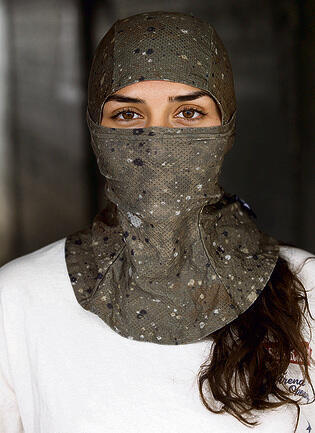
'Maya': 'I say to any girl who feels she has a fighter’s character: follow your heart'
(Photo: Ziv Koren)
That’s also a bit scary.
“It didn’t scare me, it excited me. I was the first to qualify, and the staff joined along the way. We immediately joined the men’s track. Same profession, same physical standards, same requirements.”
What was the selection process for the unit like for you?
“I went through interviews where they wanted to understand who I am, what values I hold, and what my motivation and abilities are. I told them it’s a privilege for me to help open the door for women in combat in this unit, and that I’m here to make history. Absolutely.”
I assume there were also more challenging questions.
“Yes. Because I’m religious, they asked me: ‘What happens in an ethical situation where you’re required to carry out a critical mission on Shabbat? How does that align with your lifestyle?’”
And what did you answer?
“I said that as long as it’s an operational necessity, I have no issue with it. Then they asked: ‘You’re a combat soldier. You may face physical or mental challenges. One day you may have to choose between your life and the state. What would you do?’ And I answered without hesitation: ‘I would choose the state.’”
Did you have concerns, as a woman and especially as someone religious, about how you would be accepted by the men in the unit?
“There were concerns, absolutely, about joining and integrating into an all-male unit. I came in with a clear goal: to open the track for female fighters. They set up separate living quarters for us, and when I arrived, I was welcomed warmly. Of course, I had to prove I could meet the same standards as them.”
What was your first encounter with the male fighters like?
“At first, they didn’t understand. They asked me, ‘Who are you? What are you doing here?’ But I quickly found my footing.”
At first glance, none of the four women looks like they could neutralize a hostile attacker in enemy territory. But that is exactly what they were trained to do.
Anat, alias, 22, has a particularly delicate appearance and was asked about it directly during the selection process. “After the interviews, they sent me to meet with a psychologist,” she recalls. “She looked at me and said, ‘You seem delicate, you project softness. How do you think you’ll fit into a field combat unit?’”
What did you answer?
“I asked back, ‘Why do you think that delicacy would limit me?’”
Anat grew up in a family of combat soldiers. “My mother was an infantry instructor and my father served in the Golani Brigade. At first, I thought I would also become an infantry instructor,” she says. But then October 7 happened.
“I was still in high school and it changed all my plans. It shook me. I felt I had to enlist and contribute. It didn’t matter how, as long as I served the country.”
At her high school teacher’s recommendation, Anat aimed high, setting her sights on the naval officers course. She was accepted, but dropped out after about three months. “In hindsight, it was a blessing,” she says with a smile. “The moment I was dismissed, I got a WhatsApp message: ‘There are interviews for Unit 504, come.’”
What did you know about the unit at the time?
“Unit 504 wasn’t a familiar name, especially not for women. I didn’t know anything about it. I looked it up online to understand where I was heading. I saw it had a cool black-and-green insignia and that it dealt with running agents. That was it.”
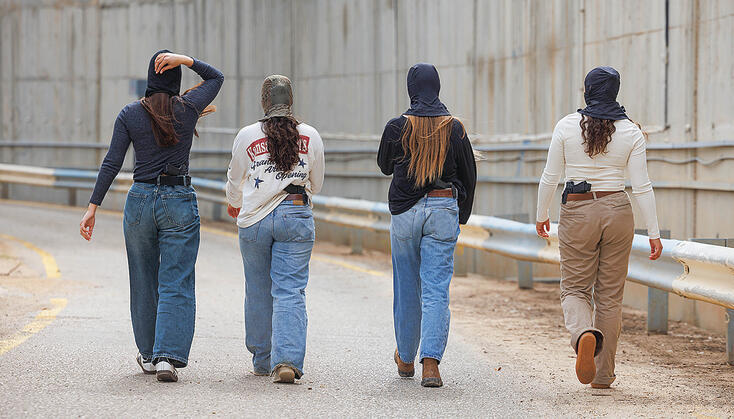
From right to left: 'Orly,' Lt. R., “Maya' and 'Anat.' 'We’re here to make history'
(Photo: Ziv Koren)
Orly, 21, grew up in a religious community in central Israel and wanted a meaningful service from a young age. Although she says she didn’t have exceptional physical fitness, as her enlistment approached she committed to triathlon training for three years, building strong mental resilience.
She, too, was accepted to the naval officers course, one class ahead of Anat, but was dismissed after about a year. That’s when the option to try out for Unit 504 came up. “I had a general idea of what 504 was,” she says. “A close friend of mine served in the unit, but the secrecy around it was total. He didn’t tell me anything, just said it was an interesting, operational and highly classified unit. It sounded like a distant dream.”
What were you asked during the selection process?
“They asked me directly: ‘Why would you now, after a year in the naval officers course, go through another year of training? Your motivation will be at rock bottom.’
"I answered that what drives me is a sense of mission. ‘It’s hard, it’s frustrating, but that’s what motivates me.’ I said: When I go home, I want to see someone sitting and drinking coffee in Tel Aviv, or a mother playing with her child in a park without interruption, and know it’s happening because of us.”
Maya, 20, the third fighter on Lt. R.’s team, also grew up in a home where values were clearly defined. “I was raised in a very patriotic house. My grandfather fought, my father was a paratrooper. Israeli flags are hanging everywhere in our home, and there’s even a large flag on my dad’s car. For him, not enlisting isn’t an option. It’s important to him that all his children serve in meaningful roles. In the end, I found my way into the world of combat.”
She attended the naval officers selection process and planned that if it didn’t work out, she would join the Sky Rider unit in the Artillery Corps. But after she was dropped, a surprising phone call invited her to try out for Unit 504. Like her teammates, Maya knew little about the unit, but decided to go for it.
“After the failure of October 7, the sense of mission only grew stronger. Our goal, of all of us here, is to create change and prevent the next failure.”
Do your parents know what you do on a day-to-day basis in the military?
“Not at all. They don’t know what my role is or what I do on the ground. In fact, all of the fighters’ parents will be reading here for the first time what their daughters actually do.”
And when people ask where you serve?
“I say, ‘an intelligence combat soldier.’ But my friends have already learned not to ask too many questions.”
Throughout most of their training, they did not know exactly what their role would be. It began with basic combat training, followed by advanced instruction in weapons, Arabic, navigation, undercover operations, close combat and securing clandestine meetings.
Along the way, many candidates were filtered out, so they were only told what their actual role would be three months before completing the course. “This unit isn’t for everyone,” says Lt. R., who closely accompanied them throughout the entire specialized training.
“Throughout the course, they go through varying levels of complex material, and some are found unsuitable due to mental resilience or a mismatch with the professional requirements. All of this helps us refine exactly the kind of fighter we’re looking for.”
So the whole time, didn’t you try to figure out what the role would actually be?
Orly: “Of course we had questions, but we didn’t get answers.”
Anat: “We simply didn’t know, so I didn’t try to guess.”
Maya: “I knew I was in intelligence, and that was it.”
Maya, incidentally, faced a significant challenge along the way. During basic training, she was injured, raising serious doubts about whether she could continue in the unit. “I was injured during a drill in basic training. I had a sprain that worsened, and inflammation that got worse.
"Suddenly I had trouble running and with my leg. But I didn’t give up. There wasn’t a single day in my limited free time when I didn’t train my upper body. I held on with everything I had to stay, and now I’m in much better shape and performing at a high level. They asked me during the selection process, ‘How do you handle failure?’ That was the biggest failure I’ve experienced.”
Orly: “The difficulty is daily, especially the uncertainty. You don’t know when you’ll go home or when you’ll be called up at night.”
There was something else they had to learn: not to call each other by name. The rule is that an agent in the field must never hear the real names of the team members he is about to meet. Lt. R.: “The agent doesn’t know the names of his handlers or who the people are he’s meeting. The entire operation is covert, including the identities of those involved.”
What happens if you accidentally call each other by your real names in the field?
Lt. R.: “We train ourselves not to use names with one another. Even during the course, they’re taught not to use names.”
Maya: “We simply learned to communicate with our eyes.”
Now they are nearing the end of their training and about to receive their combat pins. After that, they will be assigned to missions and operations for the remainder of their service, along with an additional year of extended duty they commit to in advance.
Now, as they prepare to receive their combat pins, they acknowledge the risks. “There is fear,” Lt. R. says. “You’re crossing the border, and you know what’s at stake.”
What is your biggest fear?
“A terrorist incident.”
Was there a moment when that fear became reality?
“Yes. A few months ago, we had an incident with one of our agents, someone we’re in constant contact with. He arrived for a meeting, and during a search, two fighters from the unit found that he carried a commando knife.
He claimed he was afraid and confused, which is why he brought it. We stopped him immediately and ended our cooperation. That’s exactly the kind of situation that can put us in danger.”
Orly: “That’s my fear as well, a terrorist incident. If I hadn’t gone through this kind of training, I don’t know if I could stand facing someone who might threaten me. But yes, there is fear.”
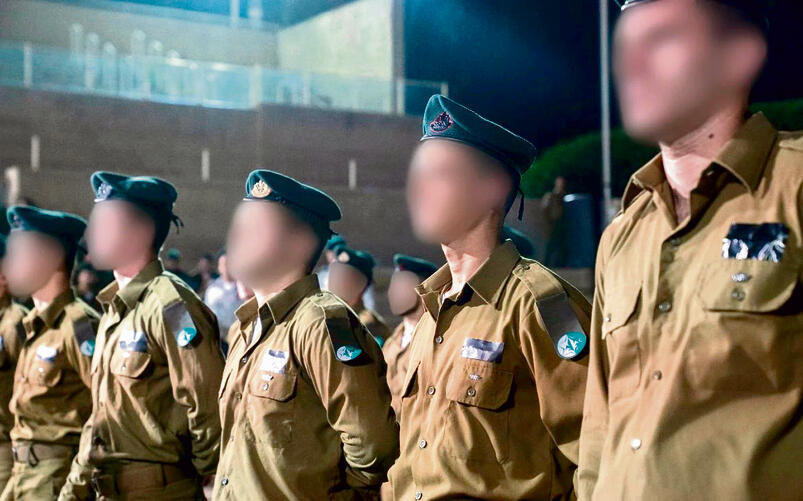
Graduation ceremony for the unit’s fighters. 'The women have to work harder to prove they’re fit'
(IDF Spokesperson's unit)
Anat: “I’m concerned about how we’ll integrate with the men, how we’ll be received and whether we’ll succeed. I also worry about risks to our forces or problems with the operation or the agent.”
Aren’t you afraid of being injured? Captured? Killed during a mission beyond the border?
“I’m not afraid of being hurt. It’s part of the job, and I don’t think about it.”
Orly: “Unlike her, I don’t feel like I’m a superwoman. I’m an ordinary woman who received extensive training, but I still have fears, emotions and even anger, and that’s part of what makes it meaningful. So no, I’m not a superwoman. What do I do with that? I don’t focus on what might happen to me, I focus on how to contribute and be useful.”
“When you go on a mission, you don’t think about what could go wrong,” Maya says. “You have a clear objective.”
But let’s be clear: you operate beyond enemy lines. You could, God forbid, be taken captive, and today more than ever we understand what a woman in captivity may face.
“If I’m captured, God forbid, it will be because of something I did for my country. And if that’s what it takes to ensure my country’s security, then it’s part of my role.”
On the surface, after female pilots carried out strikes in Iran, tank crews fought on October 7, and the stories of heroism by surveillance soldiers and commanders became widely known, the debate over women in the military should have been settled.
But these days, political figures are once again raising questions about women’s service, particularly in combat roles.
Lt. R., for example, comes from a religious community, where many women do not enlist in the IDF. Her path began that way as well. “I started with national service, working as a guide,” she recalls. “I felt I was making a meaningful contribution, but then I would see soldiers on the train and feel envious. I wanted to be like them, equal among equals. I canceled my religious exemption and enlisted in the Air Force. That’s where I understood what it means to be part of a team with a shared mission.”
What do you think about the criticism and campaigns against women serving in combat?
Orly: “As a religious woman, I say that’s their view, not mine. There’s a book called ‘The Soul’ that says every person has a purpose, and I believe this is mine. If my friends from seminary knew what I do in the military, they definitely wouldn’t like it.”
“I don’t agree with it,” Maya says. “We fought to be here. I’m fighting for my country, and my family supports me. The facts speak for themselves, look at how many women are now in the IDF, in the Air Force, in armored units and as combat soldiers in Caracal. And now we’re in Unit 504 as well.”
Orly: “Let’s just say there’s a chance that if people I studied with recognize me in the photo, they won’t be proud of me, to put it mildly. It goes against their worldview. They believe girls shouldn’t be in the military, and certainly not in combat roles. It’s hard for me to accept it.”
Lt. R. adds: “Not agreeing doesn’t mean not loving those who oppose it.”
How does it feel to risk your lives while some people believe you shouldn’t be serving at all?
“It’s frustrating. I’d like to say I understand, but I don't. In the end, being part of this system was my choice.”
Maya: “It brings up a lot of emotion. I say to any girl who feels she has a fighter’s character: if you’re hesitating because people scare you into thinking it won’t ‘develop’ you or because of the risks, get up and focus on your goal. Follow your heart. In this unit, I’m developing intellectually, physically and in terms of values. I’m not the same person I was before.”
Do you feel the weight of it? This is the first pilot, what if it fails?
Maya: “We understand how significant this is. We’re the ones who opened a new door for the fighters who will come after us. We broke the glass ceiling.”
Anat: “The very fact that I chose to be a combat soldier means I carry responsibility on my shoulders.”
Orly: “If no more girls are recruited after us, I’ll know we didn’t do our job properly.”
What would count as personal failure for you?
Maya: “Giving up.”
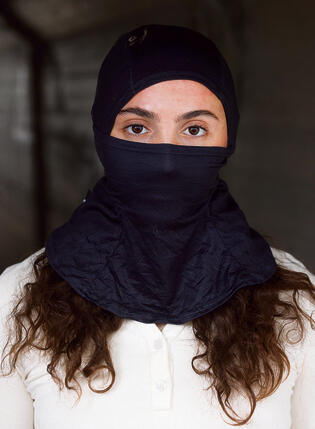
Orly: 'I'm not a superwoman'
(Photo: Ziv Koren)
Compared to other intelligence units, particularly Unit 8200 and the Research Division, Unit 504 was not implicated in the failures of October 7. The reason is simple: several years ago, it was decided that human intelligence gathering in the Gaza Strip would be the exclusive responsibility of the Shin Bet.
One of the key lessons drawn after that day was to direct Unit 504 to resume operating agents inside Gaza. “After the failure of October 7, the unit entered new arenas,” says Lt. Col. Y., commander of the unit’s combat division. “The unit reassessed its capabilities, and it was decided to significantly expand it and operate agents on additional fronts.
"Following the war, the unit doubled in size, and it now operates in Lebanon, Syria, the West Bank and, in the wake of the failure, we are also running agents inside Gaza.”
And you're operating there?
Lt. R. confirms. “We are already in Gaza, operating there regularly. The unit played a significant role in the war.”
“There were screening operations, meaning filtering the civilian population and assessing who was involved in October 7, who is a Hamas operative and who is not involved. We also took part in intelligence efforts related to the hostages.”
Maya: “The failures of October 7 belong to October 7. Intelligence is a much bigger field. It has existed throughout history, and we’re here. We came to make history.”
The women know the change will not come easily. “The girls have to work harder to prove themselves,” Lt. R. says. Until that happens, until every male fighter in the unit sees them as equals, they at least have one another. Special units also forge unique bonds, the kind of camaraderie that is hard to find elsewhere. That is true, perhaps even more so, among female combat soldiers.
Anat: “We’re like sisters in arms, always there for each other. Even on weekends at home, we’re in touch and meet up. We share each other’s secrets. When you spend almost a full year together, all day, going through everything side by side, you become one big family. You learn to live with one another and support each other.”
Orly: “Every weekend we sit together with face masks on, talking, doing our eyebrows, just hanging out. We’re a strong family.”
Anat: “My closest friends from back home don’t know me as well as the friends I have here.”
Maya: “It’s important to us to show girls back home who are about to enlist that this is an empowering experience. We’re a group of strong women who strengthen each other physically and mentally. The level of closeness we have isn’t something you find everywhere. We argue like sisters and move on just as quickly. We’re truly one big family.”
Lt. R., you’re about to complete the course. What’s next for you? Will you receive a new group of female fighters to train?
“This is my team,” she smiles. “I don’t have another one. “I’m staying with them as we move into operations.”