

It is 9:30 a.m., last week.
The assault company of the 932nd Nahal Battalion is already packed. On the truck are mattresses, a refrigerator, white plastic chairs, tables, tears and mixed emotions.
They have just finished painting, lightly, the walls of the living containers, washing the interiors and now scrubbing the area around them. One more sweep, one more pass with a trash bag near the concrete post overlooking northern Khan Younis.
There is a feeling of an ending. That everything you do is for the last time, one of the soldiers says. ‘You want to finish well, because maybe the way you finish is the way you will remember it.’
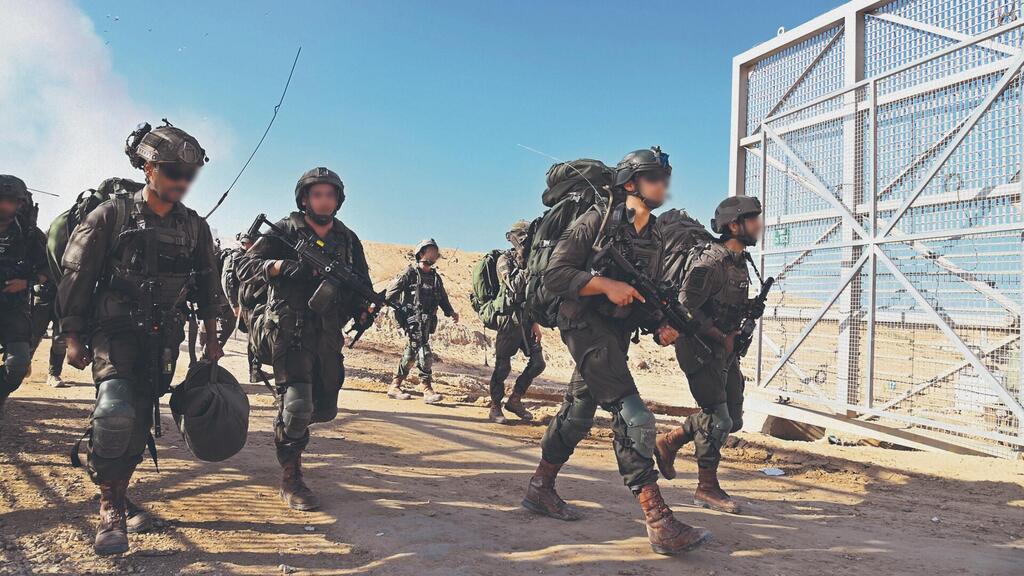
In two hours, with backpacks on their shoulders and hearts vibrating beneath tactical vests and ceramic plates, they will begin moving on foot, roughly a kilometer and a half, from Yair outpost in Khan Younis toward another country. Israel. Officially, they belong to it, but over the past two years, they have barely known it.
Returning on foot is a statement. First of all, it is possible, says Battalion Commander Lt. Col. Almog. When the maneuver in Gaza began two years ago, some of them entered on foot.
For Staff Sergeant David, a sniper in the company, that moment is etched more than anything else. It felt like a movie, he says. Scorched earth, grenades being thrown, leaping between tanks, adrenaline and above all, fear. In hindsight, I ask, was the fear justified? Yes, he replies.
And now, home. More sober, short-handed, with fewer fighters and commanders. Moving in intervals. Of distance and of thought.
"The walking is exhausting, but there is no substitute for the ground," Platoon Commander Lieutenant Yechiel says.
Then they will reach the fence. He will look back at the cursed land, perhaps for the last time. In front of him, finally, a complete picture. And in his head, he says, the past two years. The frustration, the grief, the breaking point and also the sense of achievement.
"Everything runs through your mind. The hostages, the fallen. What you did. What you insisted on. What you did not give up."
Welcome home, Nahal children. Children who are a little old. As many people as possible should know your chapter in Gaza.
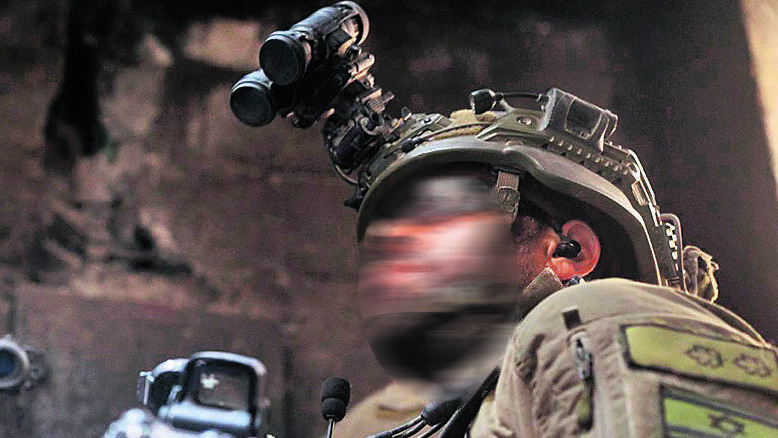
Battalion Commander Lieutenant Colonel Almog
(Photo: IDF)
‘A closing conversation in a container’
July 2024
An UNRWA building in the Shabura neighborhood of Rafah. Piles of trash at the entrance, shards of glass, discarded medication. The force that first seized the building found Kalashnikov rifles and RPGs here.
They climb the stairs. The assault company of the 932nd is here. This is my first meeting with them. We introduce ourselves and talk. In one corner, a soldier is praying the morning prayer with devotion, as if no one else exists around him. Not even the soundtrack of artillery fire.
Sgt. Roner is his name. Twenty-four years old, from Peduel in the West Bank, a reservist, son of immigrants from the United States and Canada. His brother also fought in Gaza and was wounded.
Next to him stands Company Commander Maj. Dvir Revah. Upright, bearded, serious gaze, full combat gear. Click. A photo with additional soldiers.
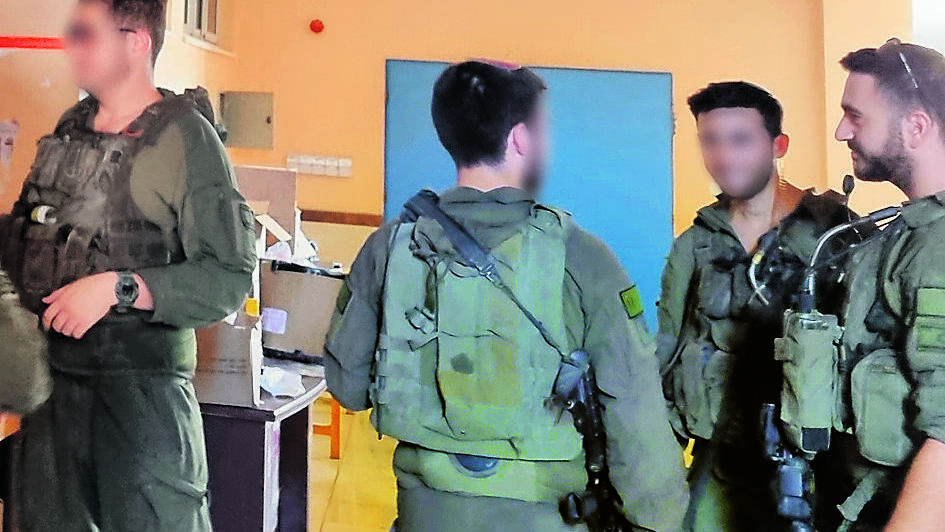
Company Commander Maj. Dvir Revah in the right
(Photo: Lior Ben Ami)
What did you ask for in your prayer, I ask Roner then.
"That we return home safely," he replies.
Not everyone would.
Months later, Maj. Revah would be killed in battle along with his deputy, Cpt. Eitan Shiknazi. In October of this year, Revah’s replacement, Maj. Yaniv Kula, would also fall in battle, together with Lt. Itay Yavetz, a fighter in the Erez program attached to the battalion.
"We do not have answers for everything," Roner says this week about that prayer. "But I am grateful for those who did return safely."
Now, a year and a half later, a day before the Nahal leaves Gaza, we are back at Yair outpost in Khan Younis. Inside a container used as a makeshift office, while there is an agreement yet fighting continues, they gather for a closing conversation.
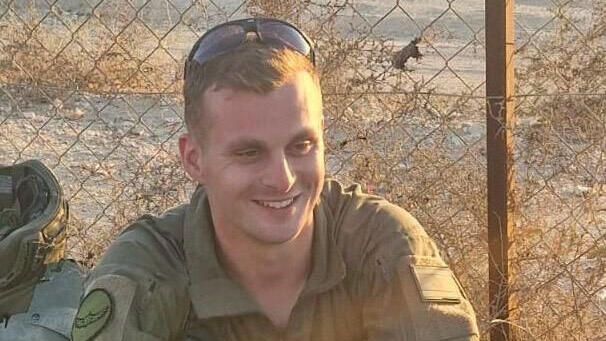
Lt. Itay Yavetz
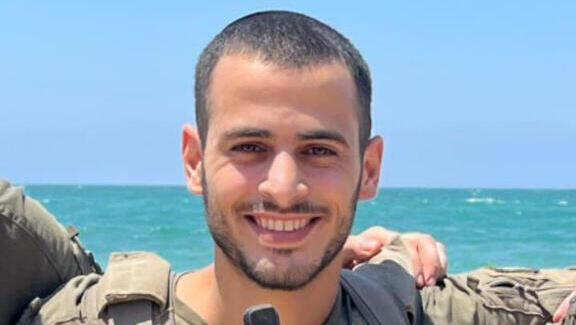
Cpt. Eitan Shiknazi
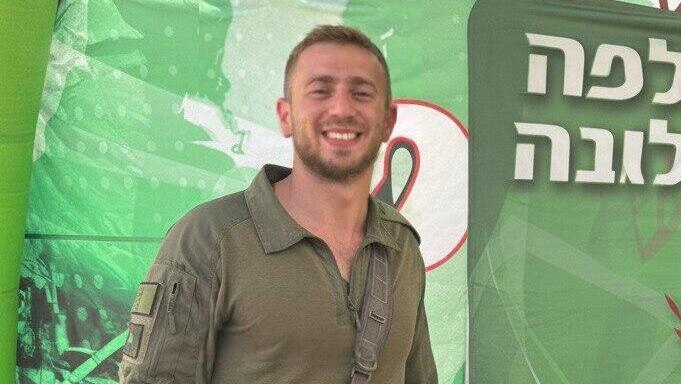
Maj. Yaniv Kula
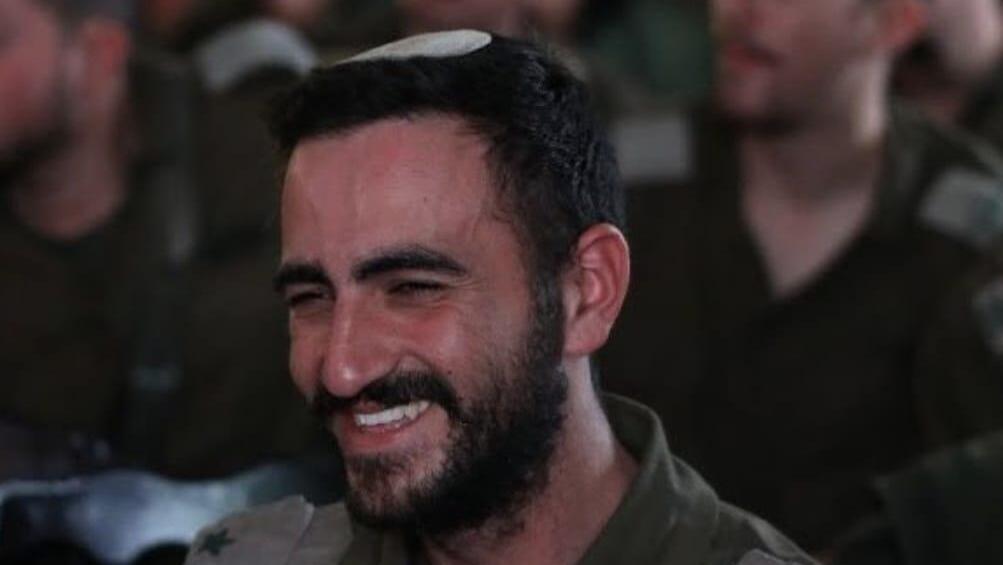
Maj. Dvir Revah
Present are Deputy Company Commander Lt. Nativ, 23, from Hod Hasharon; Platoon Commander Lt. Yechiel, 25, from Kfar Adumim; Sgt. David, 20, from Haifa, a sniper; Sgt. Ben, 21, from Herzliya, an immigrant from Atlanta, also a sniper; and Cpl. Alex, 20, from Hadera, a fighter in the combat engineering squad.
There is black coffee on the table and a sense of a new chapter.
"I am shocked that I am still here. I was sure we would finish a long time ago," Ben says. A year and a half in Gaza has not erased his Atlanta accent. "Not many people have seen what I have seen or done what I have done. It is not easy. A year and a half eating kabanos sausages. You have no idea what that does to your stomach. If there is a reason to suffer, I will suffer happily. But now I just want to get out."
David, after a year and eight months in Gaza, feels the same. "Every day feels the same," he explains the loss of time. "There is no difference between Sunday, Thursday or Saturday."
"I am already used to being here," Alex adds. "There is no real schedule, but there is a routine. Dawn readiness, guard duty, missions. So I do not know, it is strange and emotional."
This is a company that will leave Gaza different from how it entered.
Inside the container are soldiers who lost two company commanders.
Alex participated in both battles in which they were killed. He saw what he saw and cried what he cried. What remains in his mind is the image of the stretcher carrying Shkenazi.
‘The stretcher never leaves you’
It happened in Beit Hanoun. Almost noon. Rain, mud. Not pleasant, he recalls.
They had finished an operation and began moving back. In a narrow alley, just before reaching the route, an encounter. Anti-tank fire.
Alex, a point man, was serving as platoon radio operator that day. But when the report of wounded came and the order "point to me" was given, he moved instinctively.
"I arrive at the scene and see what is happening."
What is happening, I ask.
He says the sights were difficult. He does not want to go into it. He crosses his arms, then uncrosses them. Shifts uncomfortably. Eyes downcast.
It is heavy, I say.
"Yes. But I know how to contain it now. I could not do anything else at the scene. I did what I was told, followed procedures. I do not ask myself the hard questions at night anymore."
What questions?
"I will not go into that. It does not really matter."
During the incident, he says, he was like a robot. No emotions. They would come later. He did what he was told. Prepared to evacuate the wounded. Took cover by a building while under fire.
"Is this the bathroom?" Someone with a lost look opens the container door in the middle of Alex’s description. A Kfir Brigade fighter, what do you expect, they laugh. A brief pause, and then Alex is back in Beit Hanoun.
Holding the stretcher. Carrying the deputy company commander. Running. And running. And running. Doing everything to get there as fast as possible. It felt like five kilometers, he says, even though it was only 15 meters to a nearby building.
The deputy commander could not be saved.
Later, from time to time, Alex would still feel the weight of the stretcher on his shoulders. And keep running after lives that would not return.
Alex stops. He shows a necklace pendant. On one side, the name Eitan. On the other, an outline of Israel. The country they will return to tomorrow. Without the deputy commander.
‘Silence on the radio is never good’
After Alex finishes telling the story, he says he has already wiped his tears.
A sentence for a tattoo, if not a billboard, I say, trying to lighten the mood.
The assault company agrees there is material for a sign. Everyone throws out a slogan. Something to sum up Gaza. After all, it is the last day.
"Finished but not complete," says Deputy Commander Nativ. "Stand on the embankment and you will understand. You see the enemy every day. And if you do not see them, you know they are there, watching us, studying our changes."
More slogans follow.
"The work is great and time is short," says Lt. Yechiel.
"Damn it," Alex offers.
Not just any damn it. One drawn out from deep within the soul, carrying frustration, doubt and questions meant to remain unanswered.
Alex’s damn it refers to the next encounter. The next commander the company lost. Maj. Kula and Lt. Yavetz.
‘Why them, again’
It happened last October, after the agreement, in eastern Rafah, in the station compound.
The 932nd Battalion was operating to destroy tunnels along the Yellow Line. Many terrorists were still hiding underground. Using bulldozers, they excavated.
Then, out of nowhere, a combined attack. RPG fire, sniper fire, terrorists emerging from shafts and firing at close range.
Two bulldozer operators were wounded.
The assault company prepared to charge in order to create a barrier against the enemy, who was expected to raid after the opening fire.
The incident began around 10:30 a.m. and lasted until about 10 p.m.
Kula and Yavetz were the first to charge.
"Kula comes up on the radio," Almog recalls. "He tells me, 'Everything is under control, I am going out.'"
Lt. Yechiel was about to breach with four fighters, but Kula told him to stop.
Wait, I am flanking, he instructed.
"I am about to answer him," Yechiel says, "and I already see him running."
Moments later, Yechiel watched Kula and Yavetz leap forward, drop behind an embankment about 10 meters away. He saw them hit and killed on the spot.
"The feeling is that it was supposed to be me," Yechiel says. "Then you run to them, you shout orders, and you understand that if you do not function, it will be worse. This is what is expected of you. To take command and finish what he started, to stop the raid, so no one else is hurt."‘A war that never really paused’
Earlier, riding in the back seat of the Humvee that took us to Khan Younis, the operations officer Yaeli described how the encounter sounded from the operations room.
She was alone there when it happened. Reports coming in from all directions. And then, when the disaster became clear, the radio fell silent for several minutes.
"Silence in an incident like that is never good," she says. "Your heart is racing. There is pressure and confusion. There will always be a gap between those in the field and those in the operations room."
Back at the outpost, the fighters speak of those who are gone.
Yavetz, who had just joined the company and already felt like he had always been part of it. Shkenazi, a golden-hearted man who wrapped those around him in warmth.
Revah, whose family later discovered a handwritten prayer he left behind.
"May it be Your will, Lord my God and God of my ancestors, to bless my actions, grant me the ability to sanctify Your name in the world, succeed in my deeds and protect Your holy state."
And Kula, who shortened his studies at the Tactical Command College by three months in order to take command sooner.
Half an hour before the encounter, Yechiel asked him about it.
Kula answered: “What a privilege it was for me to command a company in combat for three months and operate in three different arenas.”
‘Faith gives strength’
Lt. Yechiel, one of seven siblings, all fighters, is a slight, smiling officer who wears a kippah.
Does being a believer make it easier to accept the moment when Kula runs past you into battle, a wordless act of bravery, I ask.
He pauses.
"As a believer, my relationship with death is different," he says. "I understand that everyone has a role and everyone has their time. In that time, we must do the best we can. Some things are not in our hands. The understanding that there is order in the world and a way it is guided gives strength."
‘A hero like dad’
Another flashback to July 2024.
Fighters of the 932nd drip sweat onto the endless desert ground of Rafah. Their legs sink into the sand. Above us, a sun pressing the accelerator.
At one location, inside a dark, suffocating room where three wheezing fans fail to move the air even a centimeter, the battalion commander at the time, Lt. Col. Dotan, speaks to one of the companies.
It is a conversation about meaning.
He tells them about his 4-year-old son, who jumped on him when he came to pick him up from kindergarten, removed his dog tag and declared, "I am a hero like dad."
"We need to finish so that he and the other children will not have to come here," he tells the sweat-soaked fighters. Then he adds, "They are on the ground. There are signs of surrender. I need you with your foot on the gas."
‘No shortcuts in the Middle East’
That was then.
This morning, as droplets gathered on the windshield and fog stood on the horizon, the news reported that the Nahal reconnaissance unit killed the eastern Rafah brigade commander and other senior terrorists.
Now, sitting with Lt. Col. Almog, who replaced Dotan as commander of the 932nd, he says he has just updated the families of Kula and Yavetz about the closure of the circle. He admits frustration that it was not his battalion that carried out the strike.
"This is not just another mission," he says. "It is personal."
We sit in an operations tent that tomorrow will already be occupied by another battalion, from Golani, on one of the ridges overlooking Khan Younis.
The fact that there is an agreement and Trump, he says, does not mean the 932nd stopped fighting, mainly in eastern Rafah, pressuring the terrorists underground.
"At some point, the country forgot that we are at war. It became normalized," Almog says. "But for me as a battalion commander, nothing changed from October 7 in how I operate. On the day the agreement was signed, I went on the radio and told the fighters, agreement or not, there are terrorists here."
Do you leave Gaza tomorrow with a full heart, I ask.
"It is not that the heart is not full. What we did, we did as best we could. But there is still work to be done. They are reorganizing. They never stopped. Another force will come and continue. And do not worry, we will return here. There are no magic solutions in the Middle East. Until some knight on a white horse comes, we will fight."
Trump is not that knight, I ask.
"Trump’s solution came because we enabled it. What happened in the corridors of the White House and Jerusalem interests me less. I know what we put on the table as an army and what we continue to do. The fact that fallen soldiers continued to return was part of the pressure we applied. At every stage they could have stopped."
‘Leaving Gaza, carrying it with them’
"They thought it would help free the terrorists underground," Almog says. "It is not that they suddenly became Zionists."
He describes how, together with Yahalom, they searched for Goldin and monitored Hamas activity during the operation.
"You see everything with drones. You contain it. A complex event."
They were also in Rafah when 20 living hostages returned, including Bar Kupershtein, a battalion soldier kidnapped from the Nova festival.
"We see it with our own eyes. We talk among ourselves. What if we see him through the window. Do we wave. Do we stop the vehicle. Of course you cannot. But you want to go there. You want to touch it."
"The war meets you in peaks," he says. "Most of the time you are in grinding, routine missions. And then you realize that actions you carried out for a very long time led to this. It is insane."
‘An old new country’
Outside, the air feels different. Less suffocating than the Red Line, but still not home oxygen.
At the entrance to the outpost, abandoned dogs and cats wander.
Almog, 31, scrolls through photos on his phone. His family. A family from another country he barely knows. His wife says the children resemble their father.
His eldest was 4 months old on October 7, when Almog fought at Kerem Shalom and then entered Gaza. His youngest is 2 months old.
Have you met them, I ask.
"About four times," he says, counting the birth itself.
Tomorrow, he will change his address. Meet his family. A house awaits him in Timrat. And if he listens to his personnel officer, the soul he set aside for two years also needs care.
Life is waiting.
The Nahal troops of the 932nd Battalion are returning home to Israel.
Earlier, at Yair outpost, after each assault company fighter described which part of their soul they were bringing back, except for Nativ who said he was keeping that to himself, personnel officer Roni stood up.
She had something to say.
"People outside Gaza expect them to leave with a sense of relief. Civilians feel relief. Parents feel relief. Mothers feel relief. These fighters will not feel relief. No one here will say a weight has lifted from my heart. The weight will move to their backpacks. We will help them process, return to the outside world. They were cut off. And we will guard them closely."
That is it.
With those words, and the story of the assault company fighters, the Nahal finishes its chapter in Gaza.
Tomorrow, mattresses, white chairs, tables, tears and mixed emotions will again be stacked on a truck. They will walk with their backpacks. The endless chaos, the shattered remains of civilization, will be replaced in an instant by green winter fields, tractors and traffic.
An old new country will be revealed before them. They will become old-new civilians.
And although they will cross a fence, the journey of the green beret fighters, the journey inward, will be far longer than the kilometer and a half from the Yellow Line to Israel.
It has not even begun.