

This is exactly the scenario everyone feared.
The senior state witness had already been transferred abroad, accompanied by overt and covert security personnel from the Witness Protection Authority. Inside the authority, such a complex operation — transferring a threatened witness under a false identity with a full security package for a life abroad — is called a “launch.”
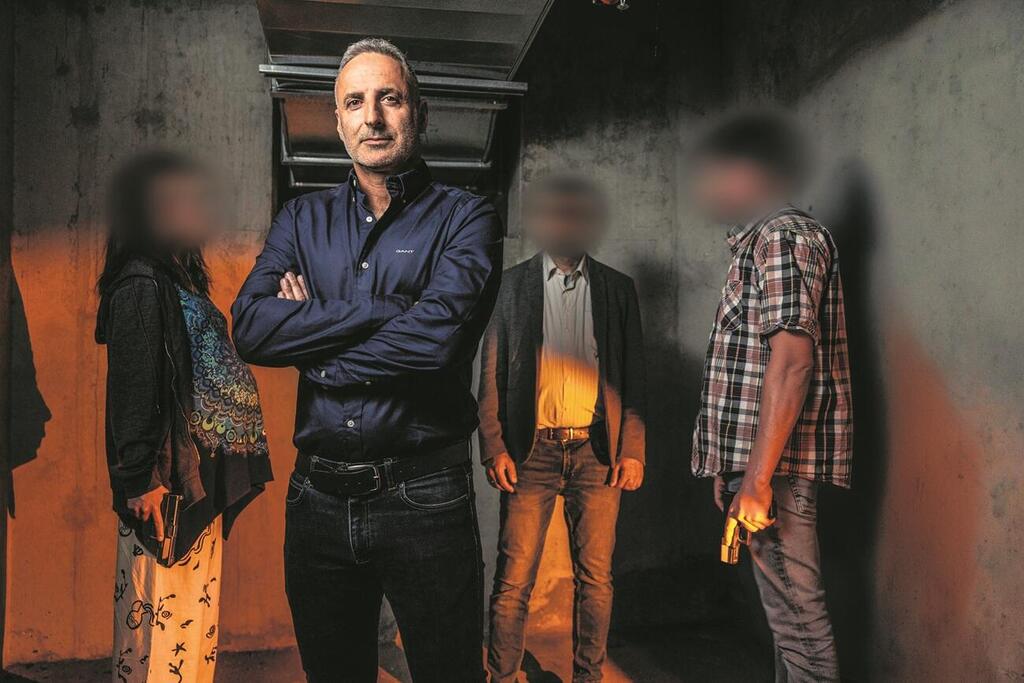
But just before the final step, as one was entering the destination country, an Israeli criminal happened to pass by completely by chance, recognized the witness and continued on his way.
At the intelligence command center of the Witness Protection Authority — operating from a secret location in central Israel — intelligence began arriving about the incident. It quickly became clear that the criminal had indeed recognized the witness and that he had ties to the crime organization the witness had turned against.
The entire launch operation was suddenly at risk of collapsing. In the destination country, housing, employment, complex security arrangements and countless details had been prepared over months. But if he was identified, his life would be in danger.
Meanwhile, reports continued to arrive. It became clear that the criminal had already contacted members of the organization and told them where the man they would most want to see in one condition — dead — was located.
Danny Capuya, head of the Witness Protection Authority, was forced to make a rapid and decisive decision and order an emergency extraction of the witness from the country where he had been identified. That meant restarting the entire launch operation from scratch.
Capuya: “From the moment we received intelligence indication, we decided to move him immediately to another country.”
Was there an indication they were trying to assassinate him?
“Yes, because an intent to eliminate him had begun to develop in the field.”
This is exactly the scenario the authority does not want to see: one of the witnesses in the program — they call each such witness a “protected” or an “asset” — being assassinated. Each “protected” person in the program — the exact number is classified — is at Threat Level 6, the highest level, meaning a concrete and real threat to their life, an “open contract” on their head. If they are identified and located, it is not a question of if they will be assassinated, but when.
The case of the witness identified abroad ended without harm. He was transferred to another country and received a new identity and a new life. Just another routine day of work in this secret security organization, whose methods remain largely unknown.
But this week, in a rare step, the authority agreed to open a window into the war it fights 24/7 against the most powerful crime organizations in the country. One mistake and the witness loses his life, but that is not all. The only people capable of testifying and sending Israel’s crime godfathers to prison would be too afraid and choose silence — and when people remain silent, there is no law and no justice. It is that simple and that complex.
The Witness Protection Authority was born out of a wave of bloodshed. In the late 1990s and early 2000s crime organizations in Israel grow, professionalize and become more sophisticated and brutal.
The law enforcement system struggles to find answers, and one of the main solutions is focusing on turning criminals into state witnesses. They are usually hardened offenders — many deeply involved in serious crime themselves — but only they can testify in court and describe what their bosses did.
The problem is that crime organizations quickly understood the system had a new weapon against them, and witnesses began to be eliminated. Nissim Yamin, a witness against Yossi Harari, was killed in 2004; Yoni Elzam was poisoned in his prison cell in 2005 before testifying against Shimon Zrihan; Eyal Selahov was murdered in an orchard in 2006 after serving as an informant inside Avi Ruahan’s organization. There were more.
To protect the most threatened witnesses, the Witness Protection Authority was established in 2008, then under the Ministry of Public Security, today the Ministry of National Security. The authority protects witnesses from the moment they enter the program — usually after agreeing to become state witnesses — through the sensitive period of testimony in court, and into their new lives abroad.
Dozens of witnesses have joined since. “Only this year the number doubled,” reveals Capuya.
Capuya himself, 51, grew up in Lod alongside some of the country’s leading criminals and could easily have been one of the “assets” he now protects. But at home, his parents made sure the children would not go down that path.
“Our parents used to check our pockets to make sure we weren’t carrying drugs, because everyone in the neighborhood had them, and my family was an island of sanity,” he recalls. “You make your choices every day, and I chose not to become a criminal.”
After combat service in the Nahal Brigade, he joined the Shin Bet and served in operational roles abroad. At 33 he was recruited into the newly established authority and has remained there since, rising through its ranks. His last role was head of the authority’s security division, and in October 2024 he was appointed head of the authority.
Have you ever had to protect childhood acquaintances?
“In the 512 case there were protected individuals I grew up with, such as the main state witness Shimon Cohen, known as ‘Bombi,’ and the witness known as ‘the Netanyanian.’ On the other hand, I also knew those on the other side, like crime boss Yitzhak Abergil and his brother Meir.”
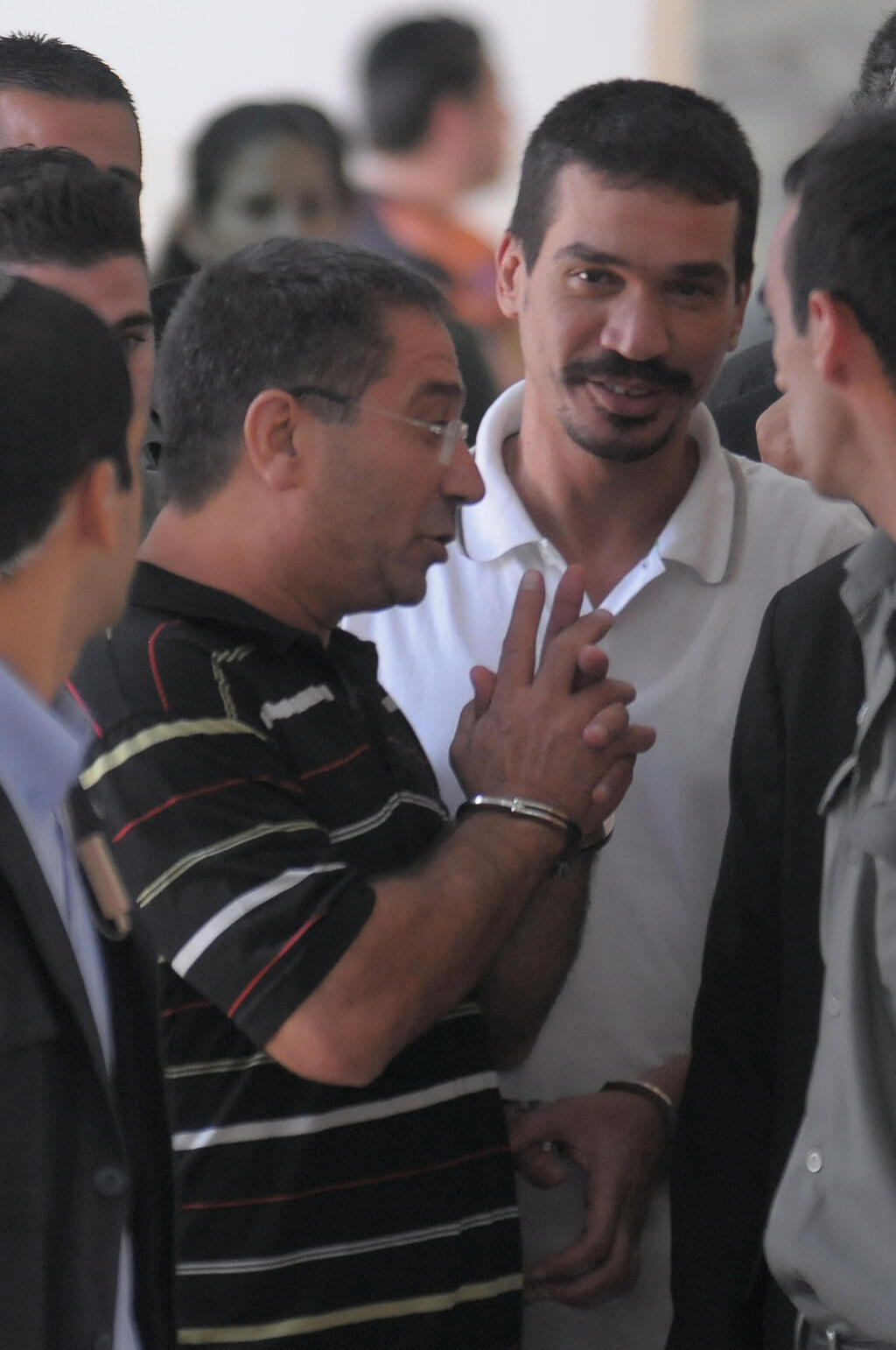
Yitzhak Abergil
(Photo: Guy Assayag)
And how did they react when they saw you?
“Some didn’t recognize me at first. With others I talked about old Lod.”
Capuya was the one who handled the first state witness brought into the authority when it was founded. “It was a witness in the ‘North Star’ case, a 108-kilo cocaine import case from Panama involving soldiers in the organization of Zeev Rosenstein and Amir Moolner.”
The witness implicated 15 defendants in various offenses of drug trafficking, importation, forgery and other crimes. No evidence was found against Moolner sufficient for indictment, but the witness did implicate Rosenstein, who was accused of ordering a triple murder at the Shaldag beach restaurant on the Sea of Galilee in 2001. Rosenstein was eventually convicted in a plea deal in 2011 only of conspiracy to commit a crime.
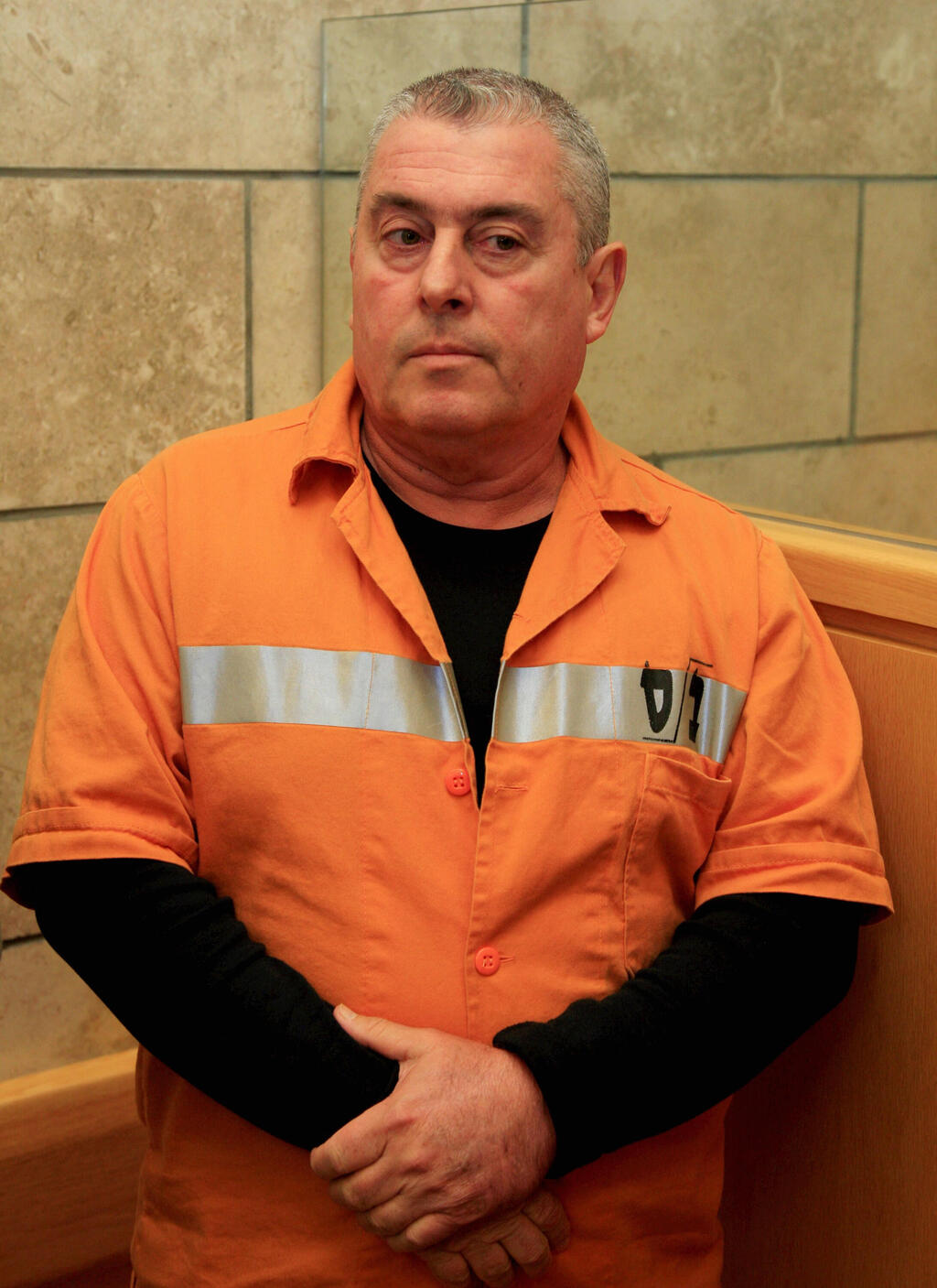
Zeev Rosenstein
(Eran Yuppy Cohen)
Since then, the authority has taken in dozens more witnesses. But not every state witness is eligible to enter the program.
“The recommendation to accept a state witness comes only from the police and the prosecution. This is not a program on demand,” Capuya explains. “There are three criteria: first, threat level — only Level 6; second, public interest — the testimony must significantly damage organized crime; third, suitability — each candidate undergoes strict psychological evaluation. Anyone with addictions to alcohol, drugs or gambling is not accepted.”
Even if they testified against major crime organizations?
“There have been rare cases. We must remember these are products of the criminal world, so you cannot expect normative behavior. In some cases we accepted people who underwent a structured rehabilitation process and passed the program.”
He adds that even lower-level witnesses are only accepted if they are at Threat Level 6, otherwise other protection bodies handle them. “The goal is to dismantle organized crime, and the greater the public interest, the more significant the program becomes.”
Once an agreement is signed, the authority protects the witness during testimony in Israel. But the real project begins afterward, when they must be relocated — often with their families — and given entirely new identities and lives abroad.
Capuya: “Before relocation, witnesses go through intensive life-skills courses, language training in the destination country, cultural orientation and vocational training. If needed, we even help them get a driving license and learn a profession from scratch. We currently have witnesses working as truck drivers, crane operators and forklift operators. They need to work to support themselves.”
So what do they live on abroad? A forklift salary?
“In the end, they have different sources of income. Some receive compensation under their agreement with the police, others have private funds. Beyond that, they receive ongoing financial support from the State of Israel until their official contract with the authority ends.”
And physical appearance changes?
“That’s a force multiplier that can save a witness’s life. We remove every identifying feature — tattoos, even replacing tattoos, changing hairstyles, hair color, glasses, clothing, professional makeup. Sometimes we perform surgical procedures to obscure scars or completely change identity. We simply turn these people into other people.”
With a new name, a new face and a new identity, a destination country is selected for the witness. A residence is chosen there as well, one that is monitored by cameras and designed to allow rapid response from security teams.
The Israeli authority maintains close cooperation with counterpart agencies in destination countries, and local protection officers assist in receiving the “assets” from Israel.
But that is the easy part. The complex issue is building an entirely new life for the witness, and in many cases for their family, one that is completely different from the one they had before.
“Before every overseas deployment we carry out operational preparation and extensive prior checks,” Capuya says. “Among other things, we examine the designated residence in relation to other protected individuals in the same country, to ensure there is no operational failure or accidental encounter.
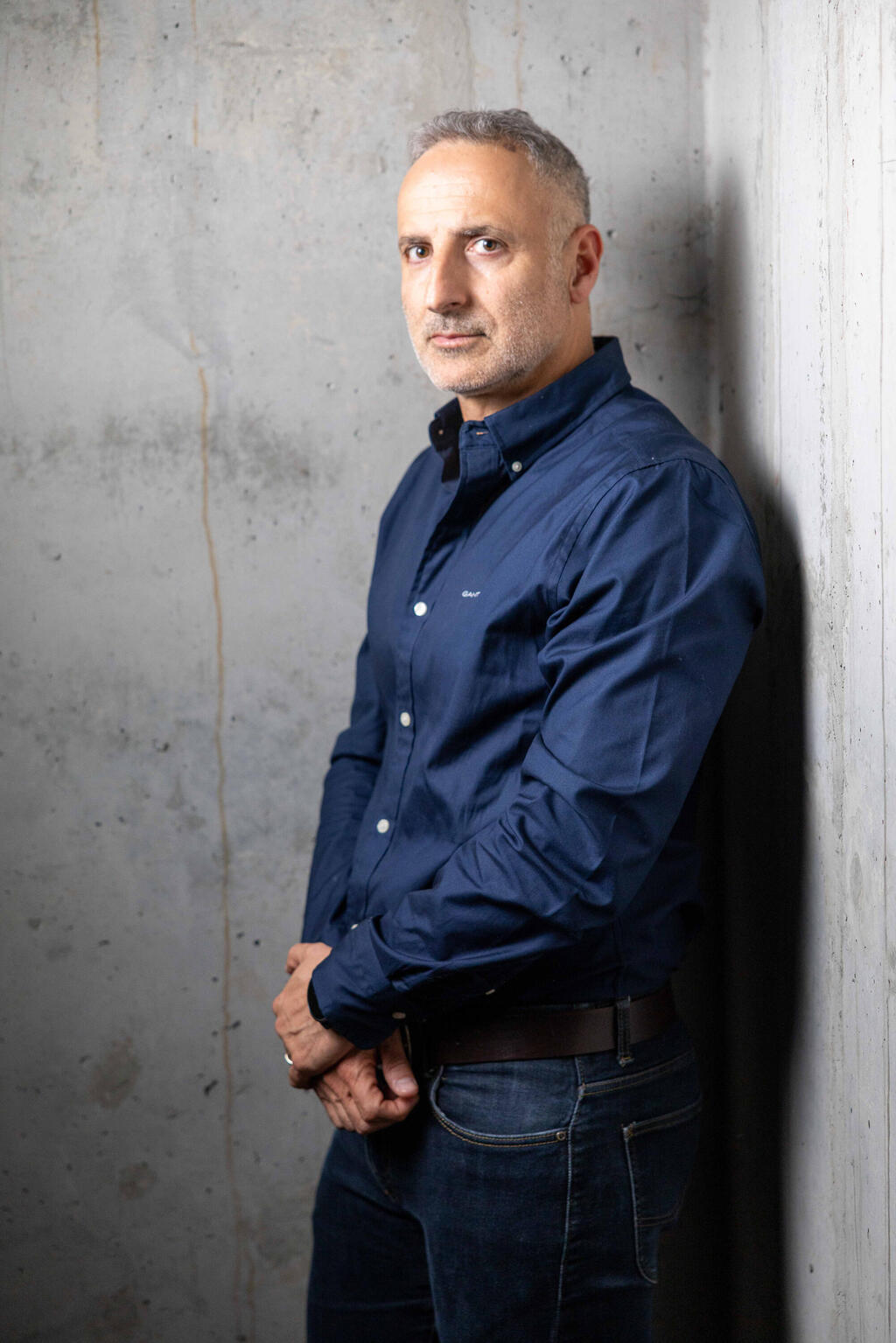
Danny Capuya
(Photo: Tal Shahar)
“Ultimately, we are disconnecting people from their home, their environment and their country and placing them in a foreign place, with a different culture, language and even climate. Even the money they once had from criminal organizations and the high standard of living they were used to no longer exist.
“There are witnesses who have to explain to their families what happened. The adaptation difficulties are profound and last at least six months. And if such a transition is difficult for an ordinary person, it is even more so for them.”
Do families always accompany them?
“No, it depends entirely on operational necessity. The difference between protecting a single witness and an entire family is enormous, especially when teenagers are involved. We invest enormous effort in showing them the risks.
“These are children who are used to being online all day, using their real names, photos and events. The disconnection is very difficult.”
Do the children cooperate?
“Not always. There are heartbreaking situations, for example when you have to permanently separate a girl from her boyfriend. You cannot always reveal the real reason, so she sees you as the one responsible.
“This is adolescence, there is natural rebellion. Some blame their father for the situation, others undergo intensive psychological treatment or close social worker support from the authority. There was a girl who refused for an entire month to change her name, because in that moment she was essentially burying her identity. But there is no choice. A state witness and their family must understand: in identity change there is no return. The past no longer exists.”
Mati (a pseudonym), head of the authority’s security branch, knows these human dilemmas closely. He simultaneously managed the security of two state witnesses in Case 1131, a trial concerning a series of murders in central Israel as part of a struggle for control between crime organizations.
“With the first witness, a personal bond developed, almost like friends, emphasis on ‘almost,’” he recalls. “Because in the end, these are criminals. There is no friendship here. When he finished testifying and was deployed abroad, he felt like he was leaving a close family.”
“But with the second witness, it was different.”
What happened with him?
“This was a state witness who was a murderer. He was divorced, with two sons close to military age. After months of complaints and resistance, the moment came for relocation abroad. Suddenly this intimidating man realizes he must say goodbye to his sons forever.
“We arranged a meeting between them and he just could not stop crying. It broke our hearts too.”
Capuya: “There are extremely difficult moments. The role of field officers is to contain them. We had a very high-risk witness who entered the program, and a few days later his brother was murdered. Because the funeral was expected to be attended by criminals and the area was volatile, we prevented him from attending. What was the alternative? Let him go and be killed?”
“This means erasing the parents’ entire professional status built over a lifetime,” Capuya says. “Witnesses who were businessmen or accountants become cleaners, truck drivers or shop clerks, simply because they are not allowed to use their real degrees or titles.
“It means creating fake credit histories and medical records from scratch so they can open bank accounts or visit dentists without raising suspicion of money laundering or fraud.
“It means finding schools and kindergartens for children in the middle of the academic year and registering them under false names they can barely pronounce. The biggest challenge with teenagers is preventing them from accidentally calling each other by their real names in public.”
How do you make sure they do not slip up?
“To make it easier, we let them choose their new names themselves. When they are part of the decision, the chance of mistakes is lower.”
What about extended family in Israel? Uncles, cousins? Does the separation mean they will never meet again?
“The past belongs to the past. However, we understand the human need and arrange family meetings depending on operational necessity, in full cooperation with our counterparts abroad.
“These meetings never take place in the destination country where the witness lives, but always in third or fourth countries. We deploy the strictest security measures to ensure the meeting does not expose the witness, their location or their new identity, including covert surveillance from the moment the family leaves Israel.”
Cooperation with counterpart agencies in destination countries is critical. It was previously reported that Israel works with around 12 countries and their protection agencies.
Capuya, how many destination countries are you working with today?
“That is classified, but there are many more.”
And does it work both ways, meaning they also send protected witnesses here?
“There is an obligation on the state and our partners to conduct joint operations,” Capuya says carefully. “Some countries are stricter and impose more limitations on daily contact with authorities. Each country operates according to its own system.”
So theoretically there could be a Sicilian mafia boss who turned informant and is being held in Israel under protection?
“In principle, that could happen. If needed, we protect such a person physically. At the end of the day, behind every state witness, regardless of country, there is a human being living under real threat.”
In recent years there has been a dramatic shift in the profile of witnesses entering the program. This shift stems from changes in Israel’s crime landscape: Jewish crime organizations have weakened — mainly due to state witnesses in cases like 512 dismantling them — while Arab crime organizations have grown stronger.
Police and prosecutors are also trying to recruit state witnesses there, although it is significantly more complex. Protection is more complicated as well.
“We have quite a few protected individuals from Arab society,” Capuya says. “It is difficult to recruit state witnesses there, but we are in the middle of a process.”
What does that mean operationally?
“It required us to adapt the authority to receive them, and we changed how we operate. As part of these changes, the Ministry of National Security under Minister Itamar Ben-Gvir increased the budget by tens of millions of shekels.
“We established an Arabic language training program for staff and provide dedicated cultural training so they understand the society and mentality, things we did not focus on in the past.”
Elad, the chief security officer: “The biggest friction occurs when a family from Arab society moves to non-Muslim countries with a completely different mentality.”
But you prepare them for that in advance.
Elad: “Yes, but you cannot erase mentality overnight. Our local counterparts abroad provide us with indications that behavior, even when completely innocent, makes them stand out and endanger the program.”
Vicky (a pseudonym), head of intelligence at the authority: “It is enough for a woman to throw out a garbage bag without separating organic waste, recycling and bottles — after the second time the neighbors already complain.”
Elad: “There was a family that decided to barbecue on the balcony, and all the smoke detectors in the building started going off. In other cases, there was a domestic argument and the man shouted at his wife. Abroad, within ten seconds police arrived and detained him for questioning.”
What happens in such a situation? Could such questioning expose the cover story?
Capuya: “He is our asset stationed in a foreign country. The local partner officer went there, used their authority and secured his release.”
Vicky: “There was a case where we had to relocate an entire family because the local environment basically rejected them. They had a very hard time adapting to local customs — from basic cleanliness in and outside the home to elementary rules of living in a shared building. In the end, we had no choice and moved them to another country.”
Capuya: “Over the years we improved at preparing them in advance for destination countries, not necessarily Muslim countries. We now provide much more cultural training and reduce these gaps beforehand.”
One of the key state witnesses in Arab organized crime was “the Prince,” whose story was published recently. He testified against two organizations simultaneously — Abu Latif and Hariri.
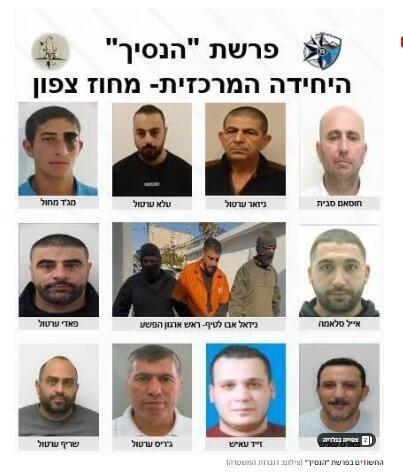
Some of the suspects of the 'Prince" case that the state witness indicted
(Photo: Police spokeswoman)
Capuya: “His case was especially complex. Because he implicated two crime organizations at once, he lived in deep fear and we had to get involved from the early investigation stage, which is unusual for us.
“Normally I work with the head of police investigations, who builds the intelligence picture, and the prosecution that signs the agreement. In the Prince’s case, I was approached very early on with a special request.
“He himself did not come from a criminal background, and it was clear this was a different kind of event. We ran a joint operation with the Northern District investigations unit and I sent a special team to assess him for suitability.
“In the end, the operation succeeded. He adapted well with his family somewhere around the globe and is living his new life.”
Are there women in the program?
Vicky: “We have only one, and she is not even a state witness but a testifying witness. Her husband was murdered and she knows who the killers are. We sent her abroad with her children.”
But despite everything — livelihoods, new identities and relationships with neighbors — the main concern of the Witness Protection Authority is first and foremost to keep their protected individuals alive, even when many would do anything to kill them.
Elad, the chief security officer for the past six years, is a former elite unit operative, from a bereaved family — his sister and brother-in-law were murdered in a terror attack — who has already experienced many extreme situations in the job.
One of them was the night he woke up at 2 a.m. to an emergency call from Mati, head of a security unit, who at the time was protecting a high-risk witness in Israel for testimony.
Mati reported that he had spotted three masked figures moving around the house where the witness was staying.
“The immediate assumption is a hit squad coming to settle a score and the witness is in immediate danger of death,” Mati recalls. “I called everyone. Within seconds the security force moved in, closed the perimeter and pinned them down with guns drawn.”
And in hindsight, who were they really?
“A professional burglary gang from the north, wanted by police for a year. They were gathering intelligence to break into the house. We caught them and handed them over to the police. The witness, by the way, was asleep in the room and still does not know anything happened.”
“It happens a lot. We have had cases where during protection operations we caught car thieves and even a suspect in a sexual harassment incident.”
Beni (pseudonym), head of a protection team: “It happened to us too. About a year ago, a witness in a major case against a large crime organization asked to pray at a synagogue right before testifying. We approved it and planned a tight security operation.
“A few minutes before he arrived, our surveillance team spotted a suspicious man circling the area. We had to decide in seconds without exposing the witness or endangering him.”
What did you do?
“We diverted him with the witness’s car and took him instead to a nearby religious items shop. We told him to check if he wanted to buy or donate something to the synagogue. While he was delayed there under protection, the field team dealt with the suspect outside.”
Who was he?
“A serious criminal wanted for questioning by Israeli police. We detained him on the spot until police arrived. Meanwhile the witness insisted on praying. Within minutes another security team was deployed and a different synagogue was approved in a religious neighborhood. Within seconds we all disguised ourselves as ultra-Orthodox Jews and after the prayer we flew him to testify.”
It is surprising this does not happen more often. Israel is a small country, everyone knows everyone. During testimony periods, how do you hide someone without mistakes happening?
Vicky: “In Israel it is much harder, so we invest enormous resources. The distance between sterile routine and a chance encounter on the street is almost zero.”
Jenny (pseudonym), a female security officer: “I once got approval to take a protected person to a hair salon. After the area was cleared, he went in to get a haircut. Suddenly I saw him turn pale.
“It turned out he had spotted a drug dealer from his past sitting next to him in the salon. The dealer recognized him and even said hello.”
What happened?
“The witness kept a poker face, said hello back, finished the haircut and immediately reported to us.”
Vicky, head of intelligence: “We extracted him discreetly and moved him to another apartment. He stayed there for two nights and after we confirmed there was no reaction from the field, we brought him back.”
All authority personnel are former elite unit operatives who undergo strict selection, Shin Bet-led training and additional specialized courses.
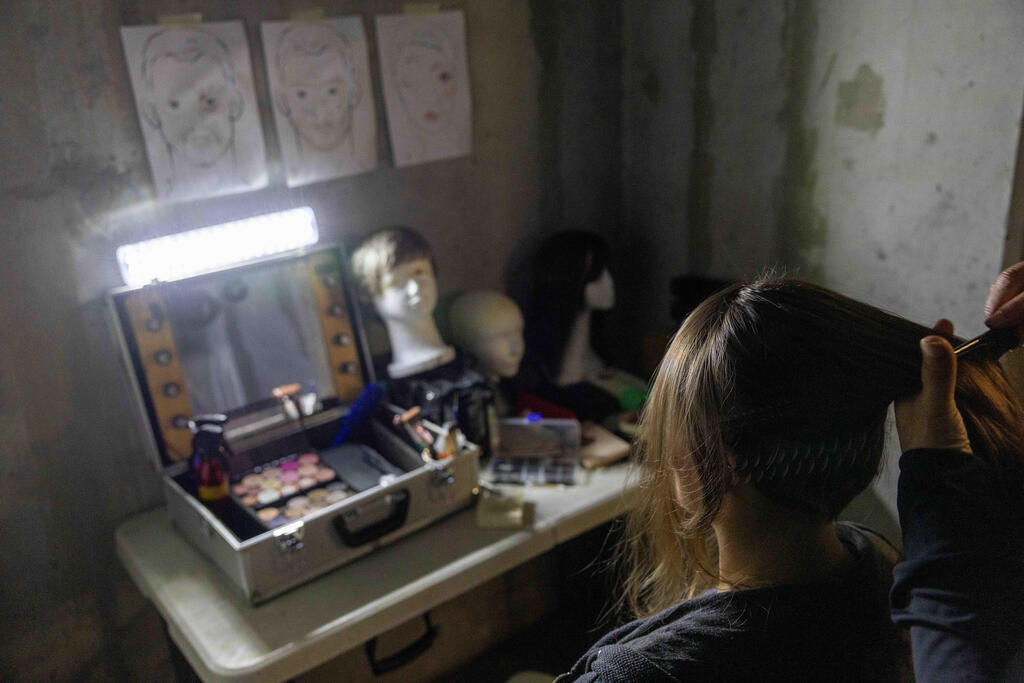
Witnesses Protection Authority personnel are undercover
(Photo: Tal Shahar)
“We train in shooting, marksmanship, advanced combat and neutralizing hit squads in civilian environments,” says Assaf (pseudonym), a security officer. “We are prepared for every scenario, but the pressure from witnesses to go out and live their lives is enormous. We constantly fight for every exit approval. Sometimes family pressure also overcomes us, even though it requires complex operational preparation.”
Mati: “A protected person’s brother got married in central Israel and he begged to attend. We approved it. He arrived under a new identity, and we deployed covert and overt forces. Police also secured the event.
“Outside we were overt, inside covert, and no guest entered the hall without us knowing who they were. The music was loud, the bride and groom were dancing, everything looked normal — and suddenly everything froze.
“Our outside overt team identified criminals who knew the witness, who had actually come to a different event. The distance between celebration and assassination became a matter of seconds.”
What do you do?
“We relayed the situation to the protected person and extracted him quickly without anyone noticing. We left our overt team in place as if everything was normal. Only later, once the area cleared, did we receive final confirmation that he had not been exposed and the operation succeeded.”
At some point, protected individuals leave the program.
“It is not for life,” Capuya clarifies. “The authority gives a protected person a platform to start a new life, in Israel or abroad, for a number of years. We continuously gather intelligence on them, and once their legal obligations are completed and the threat level drops, the program ends.
“We are usually talking about three to six years, and there are protected individuals we continued assisting even after the formal program ended abroad.”
So what happens to them afterward?
“They continue their new lives. There is no going back. Their past is completely erased. Many continue independently abroad, with housing and stable employment.”
What if they return to crime?
“They will be prosecuted like any citizen in Israel or abroad.”
But your interest is that they do not, because you cannot protect them in prison. Most of the witnesses in the program are criminals themselves. How do you prevent them from returning to crime once they are living under a new identity?
“Some of them return to old criminal patterns, and when that happens, it ends there. Full stop. When I check with our counterparts abroad, it exists there too — people who relapse into crime.”
In the TV program “Uvda,” a former protected witness known as “the Etrog” recently said he was not prepared for his new life by the authority, that his wife and children left him and his family was destroyed. He claimed he left the program. What happened there?
“The Etrog has not been in the program for three years. Anyone who is in the program and throws away everything after the immense investment by the State of Israel, the police and the prosecution should not blame anyone but themselves.
“At the end of the day, our goal is for protected individuals to complete the program when we determine that they and their families are in a good place. They have work, housing and are not threatened because they are somewhere around the globe under a new identity living their lives.”
Does it happen often that witnesses choose to leave?
“It does not happen often. That is why we assess suitability beforehand. Not everyone is fit for the program. But the program is not on demand. The witness receives a full framework and signs an agreement. If they violate it, there is no way back.”
Has there ever been an attempt by a crime organization to infiltrate the authority? To recruit a security officer or employee?
“I am not aware of such a case, but it worries me. Our employees undergo high-level clearance and strict screening.”
Could it happen, like attempts to infiltrate police units?
“Yes, and we must always be prepared for it, including measures we implemented this year to raise clearance levels and update staff.”
Do you fear criminals may try to harm authority personnel?
“My fear is mostly personal, because I am the visible figure.”
So that is your biggest nightmare?
“No. The nightmare is harm to a protected witness. Full stop.”