

In a first profile published about her in 2009 in Yediot Ahronot’s “Where’s the Kid?” column, cosmetician Hava Zingboim described her daily routine: she woke up every morning at 5:15 to make sandwiches for her six children, headed to the gym, dropped them off and, by six, “was back home with the kids for homework, tests and school assignments.”
Since then, she sleeps even less. “Today I wake up at three in the morning,” she says. “Between three and five, I read, study and write. People get emails from me at insane hours.”
Gallery
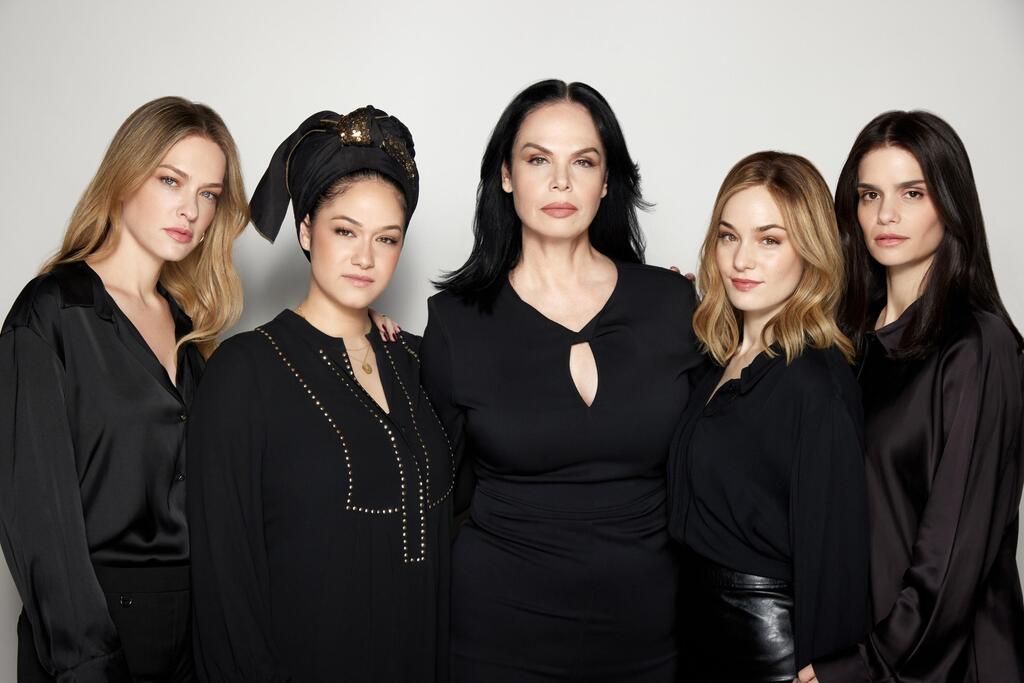
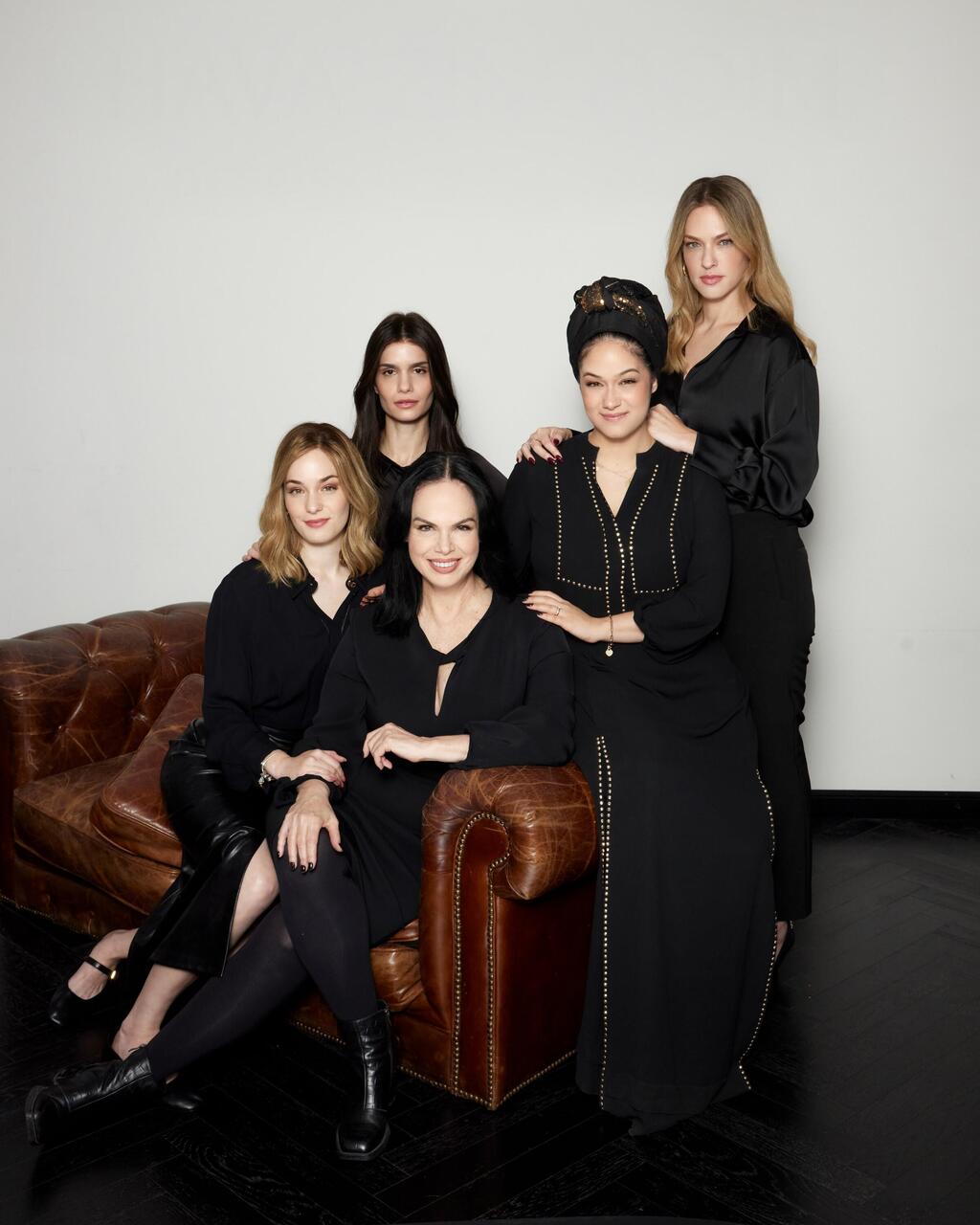
Bat El Gross, Emuna Ganz, Hava Zingboim, Hodiya Matatia and Sapir Solomovitz
(Photo: Shahar Arviv)
“Emails at four a.m.,” confirms her daughter, Emuna Ganz. “Those are usually the most important and serious ones.”
Fifteen years have passed since that article. Today, she runs the skin-tech corporation “Hava Zingboim,” which blends science and aesthetics. On Sunday, the brand unveiled its new Prophecy series before hundreds of cosmeticians who work with her, aiming to replicate the success of previous products in the line.
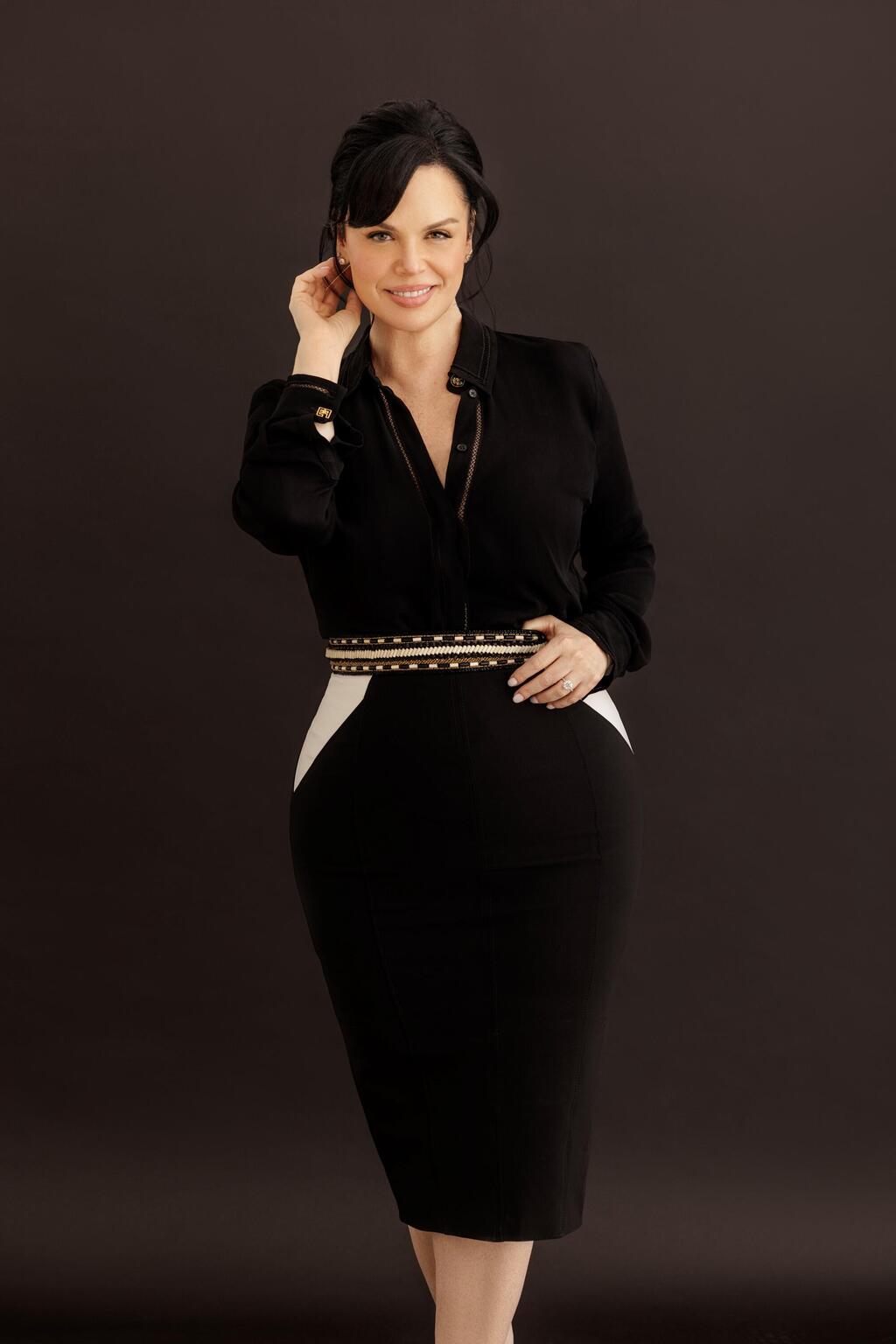
Hava Zingboim
(Photo: Alex Lipkin)
While celebrities like Bar Refaeli promote injecting salmon sperm into the face, Zingboim is less drawn to fleeting trends. She developed the new product, made of cross-linked hyaluronic acid, after encountering a study about three years ago.
“In MRI images of the skin, they saw that injected hyaluronic acid stays in the tissue under the skin for years,” she explains. “It was a stunning discovery. It’s a major shift, because unlike silicone, until now we treated hyaluronic acid as a substance the skin absorbs.”
Cross-linked hyaluronic acid undergoes a chemical bonding process that makes it thicker and more durable. According to Zingboim, Prof. Rachel Lubart and Dr. Lipovsky from the company’s R&D department managed to shrink the acid’s molecule without breaking its cross-linked structure.
“Once the acid stays deep in the skin for a long time, it triggers processes we now call biosimulation — renewing tissue at the skin’s depth,” Zingboim says. “In the injected areas and in areas where the hyaluronic acid remained, they detected increased production of collagen and anti-inflammatory compounds.”
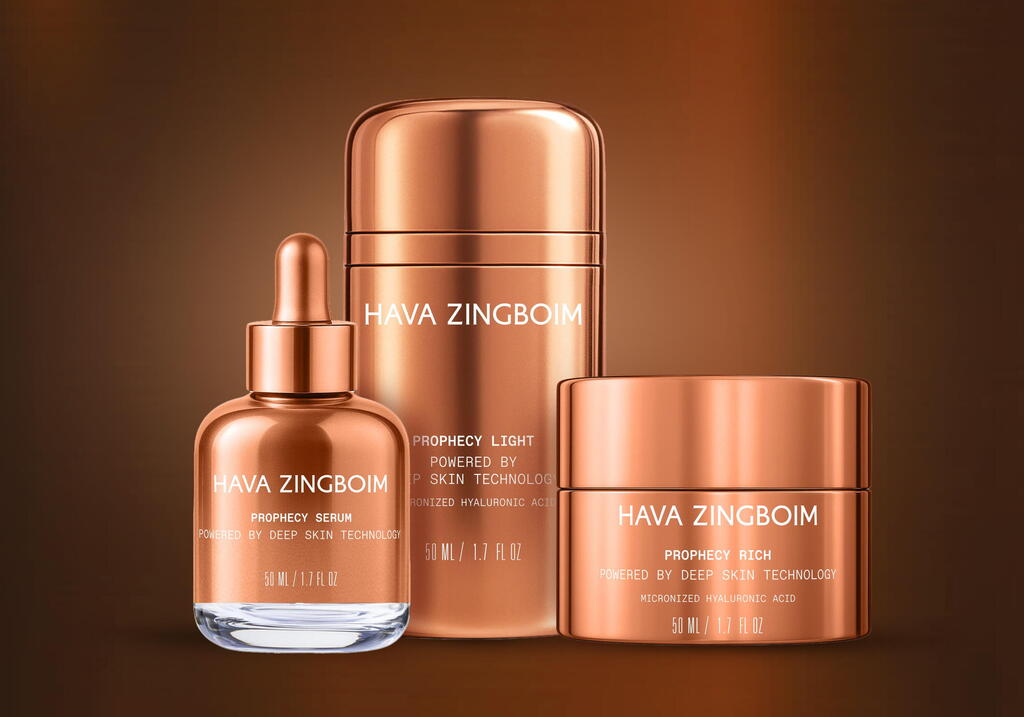
The new Prophecy series
(Photo: Kfir Ziv)
After a series of tests, the company developed three products that she says deliver significant improvements to the skin’s appearance and “age” within two weeks: a gel cream, a serum and a rich cream. “We were shocked by the results. Within two weeks, there’s a drop in chronological age — wrinkle depth, fine lines, texture,” Zingboim says. “This isn’t just another cream. This is serious work by our R&D department.”
What does that mean for the consumer?
“Now she can apply cross-linked hyaluronic acid to the skin and stimulate collagen production. Today, to encourage collagen, we do invasive treatments like microneedling. Creating collagen naturally in the skin is completely new. It’s another step in what we used to call anti-aging and now call longevity.”
A term that has become a major trend.
“Longevity represents a major conceptual shift in our field. In anti-aging treatments, a patient comes to a doctor or cosmetician, and they’ll do everything to make the skin look better. Longevity is a completely different mindset. We want to ensure the skin reaches old age in peak health and help it perform its natural processes better. It’s a different perspective, not a trend.”
It certainly feels like a trend being pushed from all directions. How did it suddenly catch on?
“Because of new studies about aging, as well as research on nutrition and sports. These are constantly studied fields, huge industries, and the research drives a shift in how we think about lifespan and quality of life — not just appearance.”
Can you promise that in two weeks I’ll look younger?
“I don’t like promising things, and I’m very careful with that, but studies show rejuvenation in skin age. The skin looks younger, pigmentation improves, hydration levels rise and it’s more radiant.”
We live in an age flooded with information — and misinformation — especially online. Who should I trust?
“I’m in the same place. I also ask myself, ‘Should I let this information influence what I do?’ So I check who’s giving me the information. Like in any field, there are credible sources and serious researchers who’ve worked for many years. Then I check if others at that level say the same.”
So we won’t be injecting salmon sperm into our faces.
“No, that won’t happen. Why? Because if we’re talking about DNA fragments, you’re talking to me about fish DNA? I’m not a fish. There are things I ruled out from the start, like collagen supplements. For years, it didn’t make sense to me, and I didn’t take them. But twenty years passed, and studies came out showing that in certain conditions, with certain diets, it works. For now, I say: eat fresh salmon because it has proteins that enrich your diet — more than rubbing it on your face or injecting it.”
Speaking of trends, we’re in an era where many influencers and celebrities launch skincare brands. You may be well-known, but they’re stronger than you on social media.
“It’s like a chef preparing food for takeaway. He knows the chemistry, how food keeps over time, how to preserve its qualities. Then someone else with no knowledge arrives and cooks too. I respect anyone who opens a business, especially women — but you can’t compare that to someone who’s spent 30 years in the field and researches it. Unlike them, I work with skin, I treat people, I teach cosmeticians, I see their results. It’s work that is — I won’t say on a different level, okay? — but it’s different.”
Zingboim stresses that the new product is not meant to replace injectables, but to offer another option — one that can complement injections or serve as an alternative for those who don’t want a swollen look. She herself reduced fillers at age 50 because she didn’t like the appearance, and stopped entirely over the past year and a half.
“I see the growing demand for products that deliver quick results,” she adds. “People want instant, now, immediately. They don’t have time. And the age keeps dropping, so we’re seeing more and more products tailored for younger ages. Very young.”
Fourteen to sixteen?
“Younger. Ten, eight. They’re already talking about four-year-olds. There’s a company in the United States (Rini, co-owned by actress Shay Mitchell) that just launched face masks for four- and five-year-old girls. Today, girls aged ten and eleven are cosmetics consumers.”
'Being part of the family business obligates you'
The interview with Zingboim takes place at the company’s Ramat Gan offices, where her school sits alongside the training, research and development divisions. It is an empire. In each arm of the business, Zingboim has placed one of her four daughters. All identify somewhere along the religious spectrum — some with uncovered hair, some with wigs — and all live within a short radius around her in Ra’anana. Zingboim also has two sons (“the youngest is just now leaving home,” she says with a hint of sadness) and 13 grandchildren, including one-month-old Libi, who joins the interview as well.
Zingboim and her children
The maternal umbilical cord has never really been cut, and for the first time, the women sit together for a joint interview about business, family, faith and the label often attached to them: “the Israeli Kardashians.” As with Kris Jenner, Zingboim’s daughters see their mother as a “momager.” “Sometimes I watch the Kardashians, hear Kris talk and say to myself: that’s Mom!” says Hodiya Matatia, 29, the company’s brand manager and head of social media.
“I don’t know if you watch,” adds Sapir Solomovitz, 36, a mother of four, formerly the VP of marketing and now in business development. “No matter how strong Kris is, she cries in a second. I love how composed and polished she is, and in a split moment, you say something emotional, and she just breaks down.”
Zingboim’s eldest daughter, Bat-El Gross, 38, a mother of six, was the first to join the business. She had planned to be an English teacher at a Bnei Akiva yeshiva in Ra’anana until she was called in. Later came the youngest daughter, Emuna Ganz, 25, a mother of one and now VP of R&D. Their father, Moti, is also involved. It is a family business where the work never really ends — even when they go home and close the door on the day.
“Being part of the family business obligates you. You’re not an employee in an office,” says Solomovitz. “We live and breathe it. We exchange messages, references, ideas. There are advantages — when I talk to my mom, I can also bring something up about my daughters and grab a quick coffee. We’re together at my parents’ house every Shabbat, and the next day we’re back at work. My husband always says, ‘Don’t you get tired of it?’ No, I don’t. You learn to balance personal, family and professional. So what if yesterday I yelled at her and hung up on her? You learn to set boundaries.”
What’s the boundary?
Matatia: “Shabbat. For my father, it’s very important that on Shabbat we don’t talk about work, don’t think about work. It’s sacred time.”

Solomovitz, Matatia, Zingboim, Ganz and Gross
(Photo: Shahar Arviv)
Was it obvious to all of you that you’d join the business? Was this path set in advance?
Matatia: “I never imagined I’d work here. After national service, everyone assumed I’d join the family business, but for me it wasn’t an option. I wanted to work in marketing, just not necessarily here — but one thing led to another. It’s a huge privilege to learn from our parents and work together as a family. We have a lot of disagreements, and we have to rise above them and say — what a privilege it is that we even get to argue about work. It’s not a fight; it’s a different way of looking at things.”
Do you think Hava would have allowed you to choose another path?
Matatia: “Look, each of us is doing another degree, each of us studies, each has another niche in life. I teach bridal classes and work as a mikveh attendant, and I’m doing a master’s in Bible studies.”
Solomovitz: “I resigned once and went to work at a startup because I felt I needed experience in other fields — and then I came back. Now I’m studying law. As a workplace, it lets us grow.”
Ganz: “I thought I’d be a special-education preschool teacher or study psychology, something in the therapeutic world. At the same time, I had a huge passion for this industry — helping people become the best version of themselves and feel confident in their appearance. What we do here can sound superficial, but it isn’t. It’s deep.”
Hava, you also employ people who aren’t family. Do your daughters’ opinions carry extra weight?
Zingboim: “Being my daughter gives no special privileges; on the contrary, my daughters work harder than anyone. I trust them deeply, just as I trust my teams. In work meetings, I know how to make decisions, and I know how to accept them — just as I do with the CEO, the deputy CEO or a department head. The bonus, for me, is that I love being around them and I love the women they’ve become. I couldn’t work the long hours I do if they weren’t around me.”
Who do you ask for a raise — Mom or Dad?
All together: “The CEO.”
Matatia: “According to the contract, he can even fire us. Working with your parents is the hardest thing. You need them to value you not because you’re ‘their daughter’ but because you truly do your job well.”
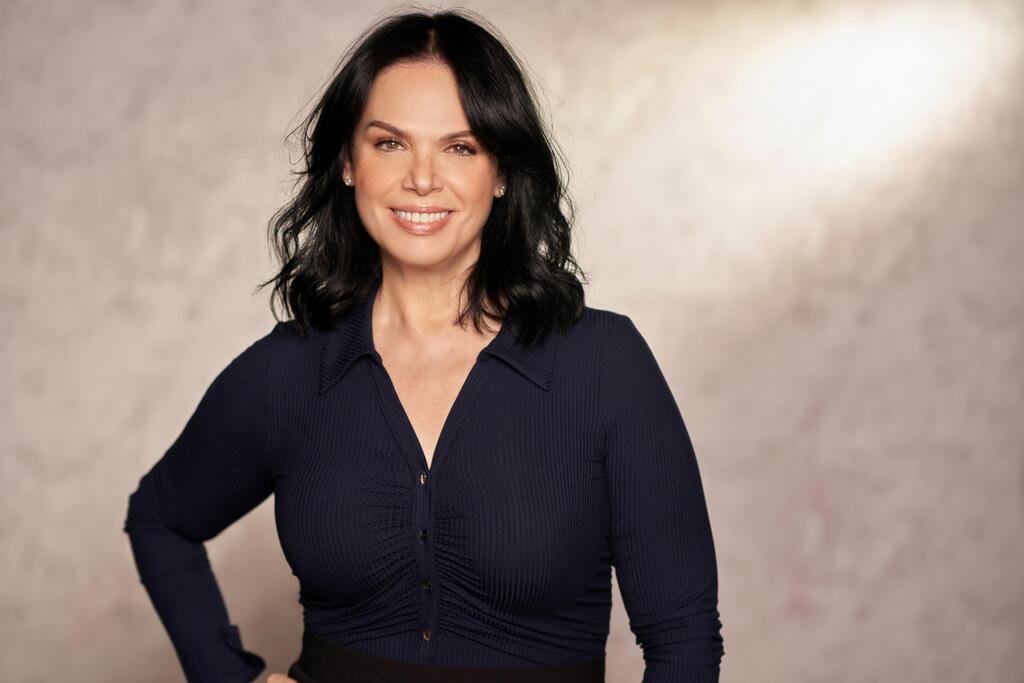
Hava Zingboim
(Photo: Alex Lipkin)
In the office, do you call her Mom or Hava?
Gross: “I think I’m the only one who calls her Mom. Even in emails, I write ‘Mom.’”
Ganz: “Let’s put it on the table — I used to call them Mom and Dad. Then I was told it was weird. So I said, ‘My mom.’”
Zingboim: “What is this ‘I’ll ask Dad’? Say ‘my dad,’ because ‘Dad’ became slang here. ‘Daddy, come to Daddy,’” she laughs. “Bottom line: whatever you call me, I’ll answer.”
Ganz: “I know calling her Mom isn’t formal enough, but when I talk to her, I say Mom, okay? And when I talk about you,” she turns to her mother, “I say Hava.”
Matatia: “I also used to say Mom, and switched to Hava — mother of all living.”
You’re all on the religious spectrum, correct?
Solomovitz: “On the spectrum, period.”
How does faith shape the way you build and run the business?
Solomovitz: “I’m a person with very strong faith in the Creator, and I believe everything has a reason. Our lifestyle is religious, although personally, I’ll admit that modest dress and head coverings never limited me. From a very young age, I was also in secular settings, so I stepped out of the religious bubble. That probably shaped me in some way.
“How does it affect decision-making? Many times I could have taken things hard, or when something didn’t work out the way I wanted, he always helped me understand and believe that everything is for the good. I don’t know if that comes from a religious or a spiritual place, but I interpret it as faith — that there’s something bigger guiding the path. Even if it’s not what I imagined or not at the pace I expected, there’s a reason.”
(Photo: Shahar Arviv)
Beauty and fashion brands sell to us through sex. If you were shooting a campaign for the new product, would you veto seductive poses?
Gross: “Personally, I don’t connect to that, but it’s not my decision. Beyond that, the language or at least the DNA of our brand is about strength, not seduction or sexuality.”
Solomovitz: “When you have science and results on the ground, there’s less need to overshadow everything with something very sexual. I don’t need to push sex to get you to buy. On the contrary, it bothers me. I have the real thing.”
Hava, in interviews over the years, you’ve spoken at length about your life story. You lived on the street as a teenager and later recovered from cancer. How did that shape your motherhood, and how did it shape theirs?
Zingboim: “There’s no doubt my childhood shaped my motherhood and who I am. I grew up without a mother, and that absence is very present in my life. When she died, I was already an adult, but from a very young age, she didn’t function as a mother. She was very ill and not part of my life. From that place, I wanted to become a mother young. When I wake up every morning, I feel like a mother first, and I act from that place.”
Solomovitz: “It’s not just toward us. She calls her cosmeticians ‘my girls.’ Before I joined the business, I thought, ‘Sorry, I’m your daughter, who are these other girls?’ But her maternal warmth, which comes from her own lack, defines her personality.”
Zingboim: “When you lack something in childhood, you can let the absence define you and become that distant, detached mother who doesn’t get close, doesn’t touch, doesn’t hug; or you can take that emptiness and fill it with goodness. I decided to be the mother I wish I had. My motherhood fills a very big void — a void I know today can never fully be filled. No parenting will replace not having had a mother. Today I enjoy my children, their presence in my life, and their children. There is no greater joy than being an involved grandmother who spends time with her grandchildren.”
An hour ago, you said you leave the office at 11 p.m. When do you find time?
“Weekends are dedicated entirely to my grandchildren, and sometimes I see them during the week too. Some come in the mornings because their rabbit is in my yard. I know what each child likes, what interests them now. At the moment, the house looks like a playground that I update according to the grandkids’ hobbies. Right now we’re in a knights-and-dragons phase; before that it was cars.”
You were young when she first became a public figure 17 years ago. Was it embarrassing that your mother became famous at 40?
Gross: “My friends just wanted three seconds with her — for her to look at their skin and give an opinion.”
Solomovitz: “We can’t walk with her in the mall without people approaching her for a photo.”
Zingboim: “Even if we’re in the middle of an intense personal conversation, people don’t care. ‘Excuse me, are you Hava?’”
Solomovitz: “‘Excuse me, can you diagnose my skin?’”
Gross: “Personal space isn’t really a sacred concept in Israel.”
Solomovitz: “I think women connect to her because she proves there are no glass ceilings. Is something above us? Nothing. Someone invented this idea. You want to be a stay-at-home mom for a year? Go for it and be a stay-at-home mom.”
That’s a big privilege, staying home for a year.
Solomovitz: “It was an enormous privilege, something I reached with my fourth child, nearing 40. What I’m trying to say is that physically — there is no glass ceiling, and that’s something we were born into. You say she’s a larger-than-life woman, and she is. I’m aware of what happens in the male business world and of equality issues. I’m not saying it doesn’t exist — I’m saying that personally, I haven’t experienced it. I was born to a woman who managed to do everything with her own two hands.”