

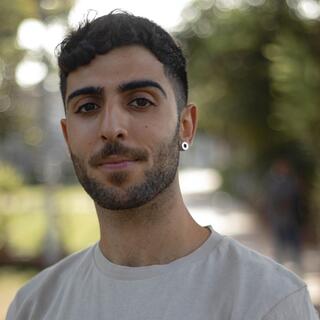
Nearly three years after the October 7 massacre, residents of Kfar Aza are beginning to return home. The key word in that sentence is "beginning."
This is not a single moment, not a day when the gates open and the entire community returns together, but a slow, cautious and sometimes painful process in which one family after another packs up its life again and tries to imagine rebuilding it in a place where everything has changed.
Gallery
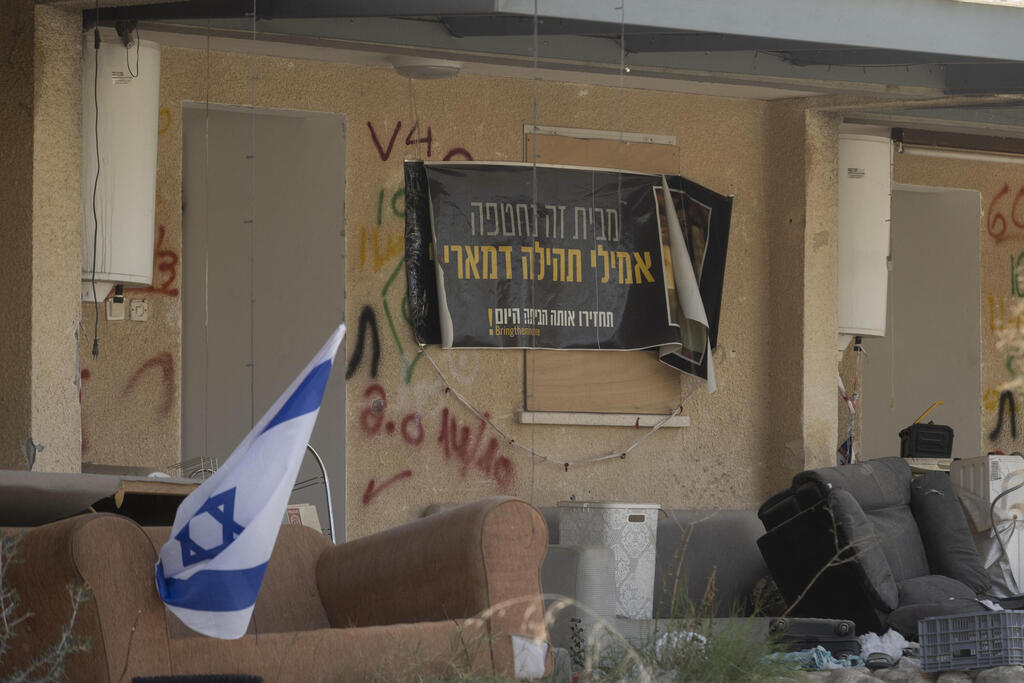
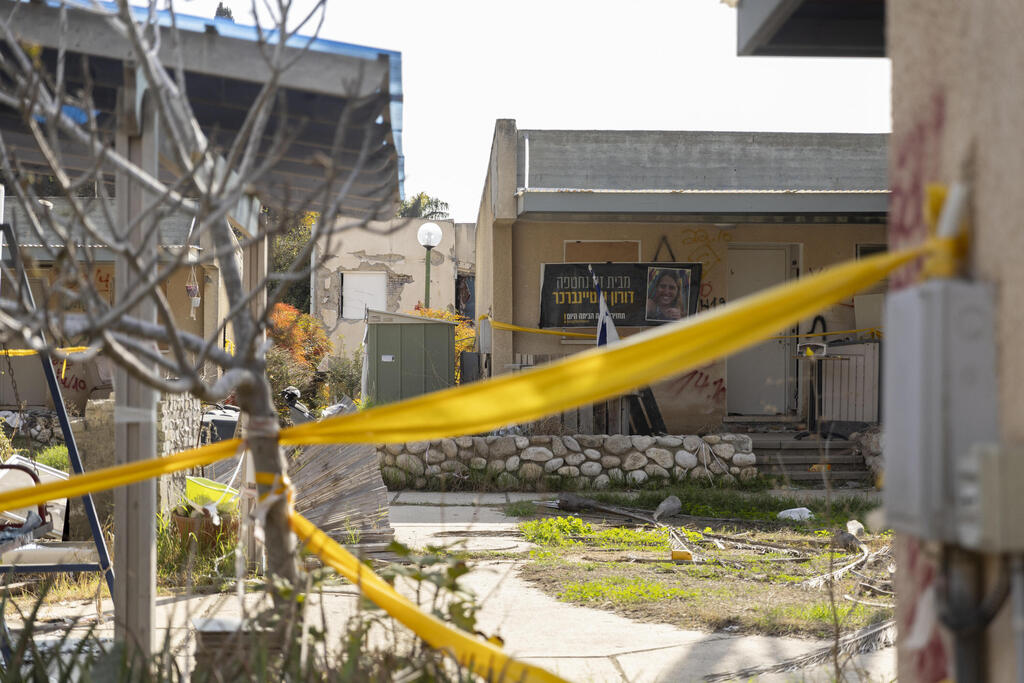
A symbol of the failures at Kfar Aza — the 'Young Generation' neighborhood; the house from which Emily Damari was abducted
(Photo: Amir Levy/Getty Images)
Many are still debating whether to return and many will not. On Sept. 1, the sound of children could once again be heard in the kibbutz. Kindergartens opened, the clinic is on the way, the resilience center is being rebuilt, a pre-military academy is already operating there and amid the returning signs of life, tractors are everywhere.
After a prolonged evacuation, spent mainly at Kibbutz Shefayim and Kibbutz Ruhama, the official return began last month. About 50 families out of roughly 300 households that lived in Kfar Aza before the war have already returned, with another one or two families arriving each week. The community hopes the pace will accelerate after the holidays.
But there is still a long way to go. About 30% to 40% of families remain undecided about whether to return at all, while 10% to 15% have said they will not return and are looking for alternatives.
The shadow of October 7 alongside every sign of life
The kibbutz estimates that about 70% of residents will return by the end of 2027. "That's a realistic target that depends on the security situation," said Sigal Moran, chairwoman of the kibbutz.
"The return process is complex. It is shaped by fears, trauma and a lack of trust. We are rebuilding the kibbutz and rebuilding trust."
Tzion Regev, the community manager, said: "We're celebrating and not celebrating. It's moving to see the kindergartens open on Sept. 1. You start seeing people walking around, there are students from the new pre-military academy, new residents are arriving, new families. Life is starting to return."
But he, too, knows there is no room yet for a full celebration. "Everything is incredibly sensitive. We're cautious about our celebrations. Many people still aren't coming back. There's uncertainty. People are still deciding."
That may be the most striking thing about Kfar Aza these days: Alongside every sign of life, the shadow of October 7 remains.
According to an IDF investigation, about 250 terrorists invaded the kibbutz that morning. For the first two hours, 14 members of the local security team fought them alone. Half were killed.
The terrorists breached the fence, and among the first to enter the kibbutz were attackers who arrived on paragliders.
ynet photographer and kibbutz member Roy Idan, who documented the invasion in those first minutes, was murdered along with his wife, Smadar, and their daughter Abigail was kidnapped.
Now, nearly three years later, people are returning to the place where it all happened. The most powerful symbol in the kibbutz of that catastrophic failure is the devastated "Young Generation" neighborhood, where 11 residents were murdered and seven were abducted, including captivity survivors Gali and Ziv Berman and Emily Damari, who strongly opposed demolishing the homes.
In a vote among kibbutz members, residents decided to clear the neighborhood and move several buildings to a memorial site outside the kibbutz.
Several bereaved families who oppose the evacuation petitioned the Supreme Court sitting as the High Court of Justice. Until the court rules, the kibbutz decided to reroute the entrance to the neighborhood outside the community and erect a fence that will separate and conceal it from the rest of the kibbutz.
'We wanted to stop feeling like our lives were temporary'
Viki and Nadav Nasi Tzantzifer arrived in Kfar Aza only in September 2022. They wanted to leave Ashkelon and move somewhere more rural, and with the help of Nadav's cousin, a kibbutz member, they found an apartment.
Within a year, they already felt at home and described it as nothing short of a dream year.
On October 7, Viki was six months pregnant with Guy, who is now almost 3.
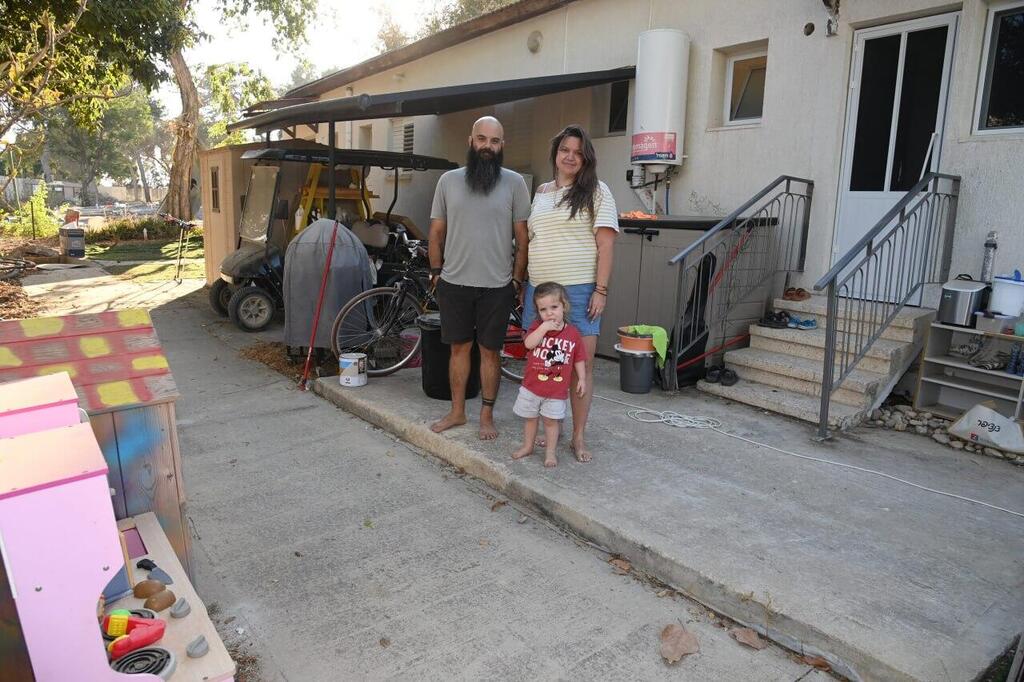
Viki Nasi returns to live at Kibbutz Kfar Aza
(Photo: Herzl Yosef)
On the morning of the massacre, they were at home. The sirens caught them, like everyone else. They entered the safe room and remained there for hours.
Gunfire, shouting and exchanges of fire could be heard outside. The safe room's exterior wall carried the sounds of shooting directly to them, and at one point Nadav saw a cell of terrorists outside the house.
They sat on the floor in darkness and silence, without food or water, and a laundry basket became a makeshift toilet.
Then came the moment that frightened Viki most: She stopped feeling the baby move.
"It was very frightening," she said. "Every so often I felt short of breath and had some anxiety. It came and went. At one point I stopped feeling the baby's movements, and then I started to panic."
Nadav also remembers the fear. "There was a very real fear that she would give birth right then. It's an extreme situation. You don't know how you'll react or how the body will react. The terrorists reached the entrance to the house."
They were evacuated from the kibbutz close to midnight.
Then began a journey that seemed endless: a month in Shefayim, nearly a year in Tel Aviv, a month at Viki's parents' home in Ashkelon, then Ruhama.
Including their move back to Kfar Aza three weeks ago, they lived in five different places in less than three years.
"The dream was to walk with the stroller along the kibbutz paths, not through the streets of Tel Aviv or Yarkon Park."
They even expanded their family while living in Ruhama. Viki became pregnant with their second child, but their desire to return to Kfar Aza only grew stronger.
"It was clear to us that we wanted to return," she said. "There were important things we needed in place to make that possible, like an education system. The rest mattered less."
For Nadav, returning was also an attempt to escape the sense of limbo that had been imposed on them.
"It was a complicated period. It's a new place, we're carrying everything that happened in the kibbutz and trying to understand what is happening to us, and suddenly a new member joins the family.
"Today we understand how important it is to have a community surrounding you. We had a very strong desire to return to the kibbutz and get out of that feeling of 'temporariness' in Ruhama. They were wonderful hosts, but we wanted to go home."
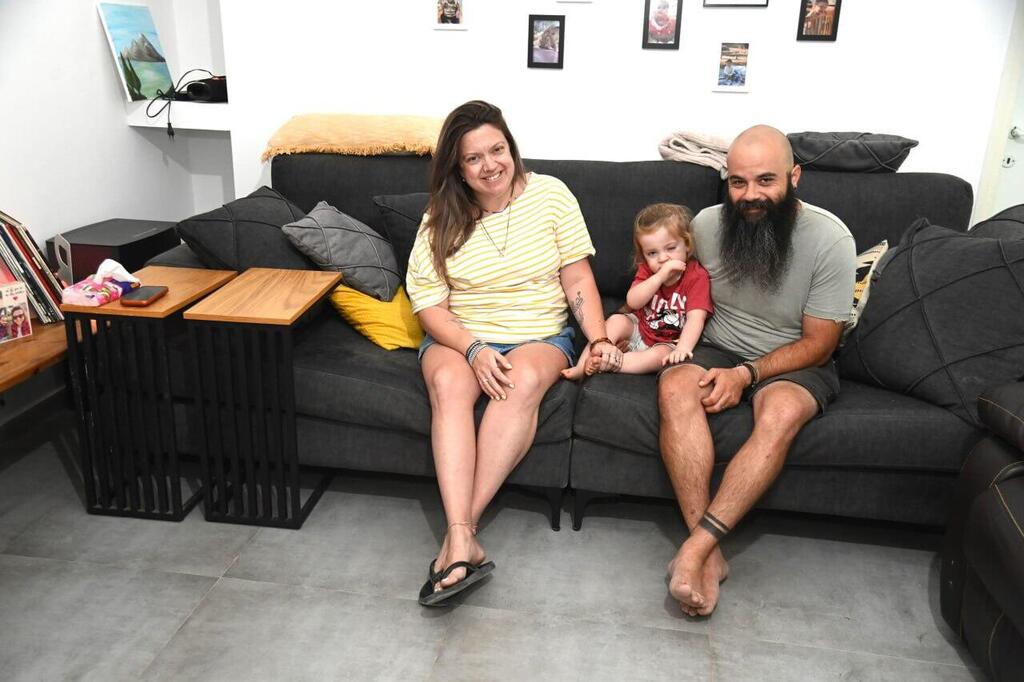
Viki and Nadav returned despite the difficulties
(Photo: Herzl Yosef)
Their original house, however, was no longer an option. After several attempts to enter it, they realized they would never be able to live there again.
"We went into the safe room and I told Nadav there was no chance, that I couldn't do it," Viki said.
They found another apartment to rent and decided to start over somewhere else within the same place.
On Aug. 21, they returned to Kfar Aza. The kibbutz they found was completely different from the one they had left.
"The kibbutz looks like a construction site today. Everything is torn up, and some of that keeps that day present," Nadav said.
Still, amid the ruins and construction work, he feels he has come home. "With all the difficulty — and there is difficulty — it's good for us here. We want to raise our children here."
The war beyond the fence can still be heard. Sometimes it brings the memories back with it. But now there is also a community around them.
"We see friends who have also returned walking along the kibbutz paths, because now there's one area where people can move around. It's complicated, but we're dealing with it. I'm glad to be among the first to return to the kibbutz, and it gives me a sense of pride," Nadav said.
Viki feels the return is also a kind of repair. "There's an element here of deciding for yourself what you do with yourself and your family. There's also a feeling of rebuilding and of being able to help shape the place."
For Guy, meanwhile, the rehabilitation effort is mainly one enormous show of tractors and excavators. "He's thrilled," she said.
Both know the Kfar Aza they will live in will be different from the one they knew. But for them, that is not necessarily bad news.
"It will be good here, and we hope it will be even better," they said. "It will be different, that's for sure, but different in a good way."
The couple are expecting another child in October.
'People are moved to tears seeing the kindergarten operating'
And then there are the children. If there is one sign that Kfar Aza is truly beginning to come back to life, it can be found along the kibbutz paths leading to kindergarten.
Einat Hemias Bons, 54, a kibbutz member, has been a special education teacher for 20 years.
When she realized the kindergartens were about to reopen in Kfar Aza, she took unpaid leave from the Education Ministry and decided not only to return home, but also to run the kindergarten.
"I felt this was what I needed to do right now," she said. "I told myself, I'm doing it. Mainly to give those returning a sense of security, so there would be someone from the kibbutz with experience and they could at least feel calm about that."
She moved from Ruhama, where the community had been evacuated, back to Kfar Aza at the end of August.
Alongside boxes in her new home, she also prepared the kindergarten.
On Sept. 1, 10 children entered it, with several more expected to join after the holidays. One of them is Guy, Viki and Nadav's son.
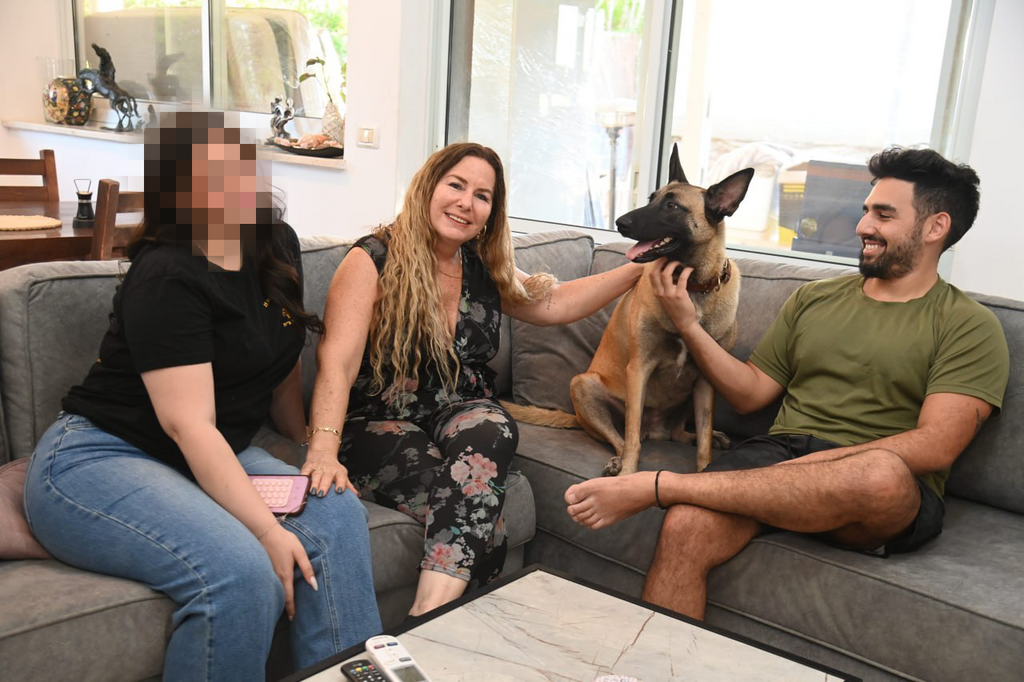
Einat returned to run the kindergarten
(Photo: Herzl Yosef)
On October 7, Einat was at home in the kibbutz with her eldest son, Ofek. "Luckily, he had been playing on the computer until late and decided to sleep here instead of going back to his apartment in the 'Young Generation' neighborhood," she said. "His neighbors were murdered."
Her former partner, Yaron, tried to reach Kfar Aza. On the way, he evacuated wounded people and the bodies of partygoers who had fled the Nova festival. He later entered the kibbutz and fought terrorists in the "Young Generation" neighborhood. He was shot twice in the chest and critically wounded.
During those hours, Einat and her son were in the safe room. Terrorists took positions on the roof of her home and a gunbattle later erupted. The terrorists were killed, but Einat and her son were not evacuated until nighttime.
"I remember walking toward the entrance to the kibbutz. We called it the 'death march.' We walked on foot and crouched down because we were afraid of gunfire. There were bodies of terrorists along the way. From there, they took us to the gas station at the entrance."
In Shefayim, the family gradually began to understand the scale of the disaster — who had been killed, who had been abducted and who had survived.
Einat stayed there for a year, then moved to Ruhama. But for her, the question of whether she would return to Kfar Aza was never really open. The only question was when.
When she decided to take over the kindergarten, she realized she could not do it from Ruhama. "I told myself I wasn't going to live in Ruhama and run the kindergarten here. I need to live here and set an example."
But returning has not been easy. Her neighbors have not returned, and many of them lost loved ones. "I still don't walk around the kibbutz. I drive from home to the kindergarten and back. It's still hard for me to walk around," she said.
"When a few more people return, it will be easier. For now, the children and the work fill me up. It's simply happiness. I'm tired from the work, but they fill me up. That's what occupies me and helps me, because I'm busy with good, positive things."
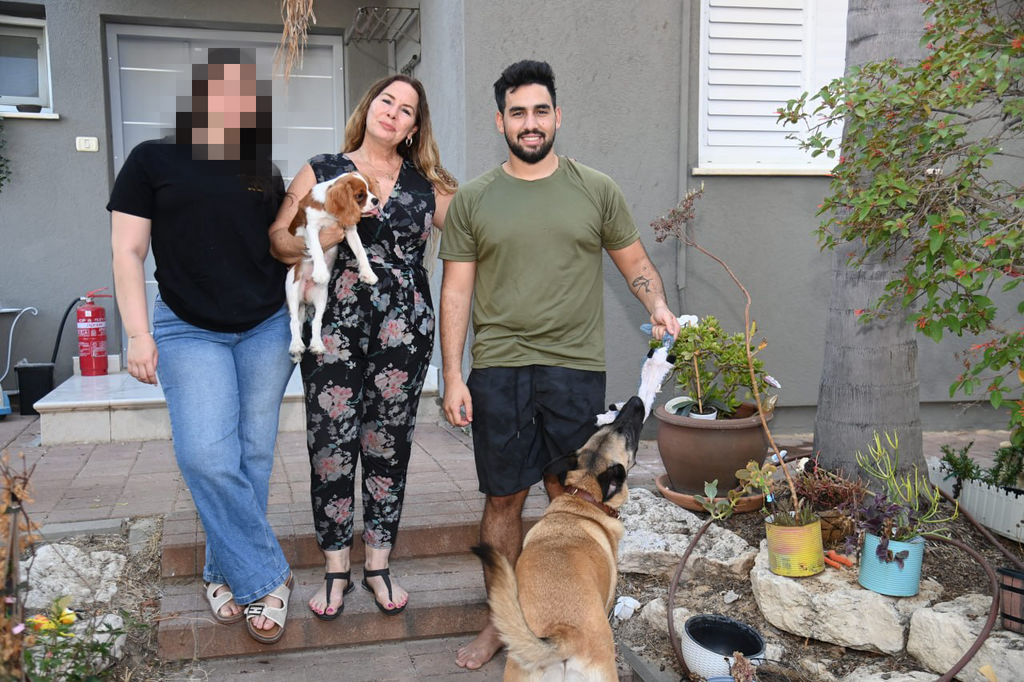
Einat: 'The children are the revival and the foundation of the kibbutz'
(Photo: Herzl Yosef)
When she sees children heading to kindergarten and walking along the kibbutz paths, she sees something larger than the start of another school year.
"People are moved to tears seeing the kindergarten operating, seeing children on the paths after three years. To me, the children coming to kindergarten are the revival. They are the foundation of the kibbutz."
Moran, the kibbutz chairwoman, said of the reopening of the kindergarten and daycare center: "It's not a rational step because most of the community is still in Ruhama, but it creates movement in the kibbutz and it's symbolic."
'The dream is on hold — but home is home'
Sharona Kessler, 60, and her husband Alon arrived in Kfar Aza in 2020. During the massacre, they were in Haifa, but their daughter and two grandchildren were in the kibbutz, in the heart of an area where heavy fighting took place.
From afar, she tried to understand what was happening and help her family while Alon, an IDF colonel, was called up for reserve duty.
"It was an insane feeling of helplessness." The family moved from place to place. First they evacuated themselves to Shoham, then to Shefayim, Tzukey Arsuf and Rishpon.
Four different apartments, with a family of 10 trying each time to turn a temporary place into a home. "We moved around as a tribe. Good people opened their hearts to us," she said.
But at some point even the best hospitality could not replace the feeling of home. "We were tired of another temporary house. We wanted to take responsibility for our lives and decided we were going back to Kfar Aza."
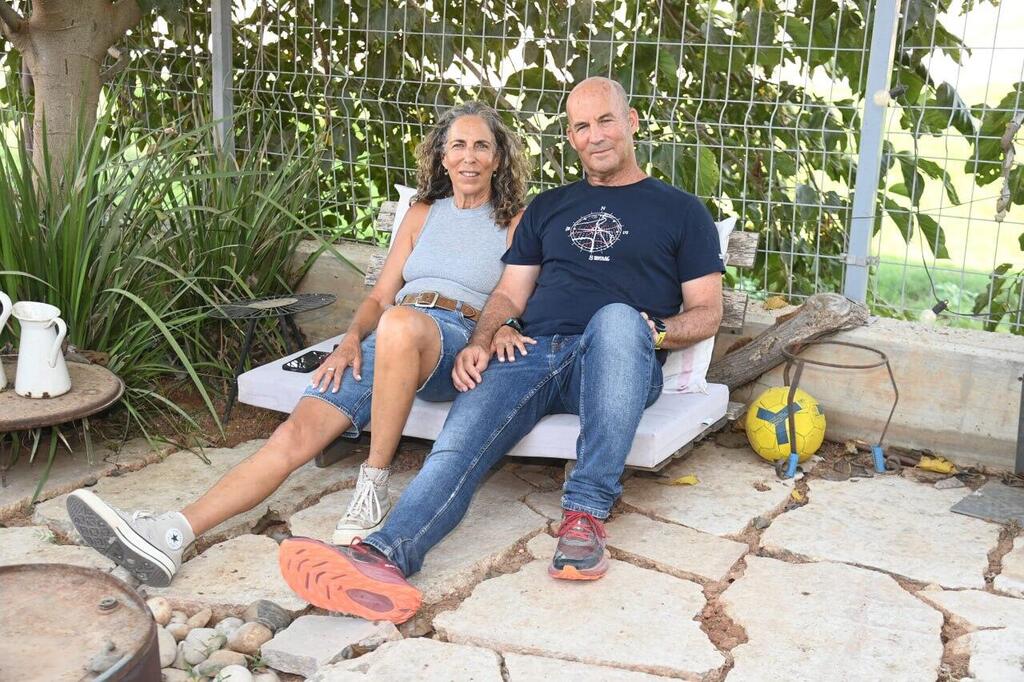
Sharona and Alon
(Photo: Herzl Yosef)
In October 2024, while most of the community moved to Ruhama, Sharona and Alon returned to Kfar Aza. They knew they would be almost alone, that they were pioneers. They knew the place was still far from ready.
Even so, they chose to return. "We fully accepted that we'd be pretty much alone here. We understood that this was what the moment required," Kessler said. "We told our daughters, 'We're part of the community' — active, involved grandparents."
Sharona, an interior designer by profession, did not only return to live in Kfar Aza. She is also working on its rehabilitation.
The kibbutz workshop she operated during the evacuation moved with her from Shefayim to Ruhama. Later, she began helping with renovation and planning projects, and today she works on the rehabilitation and infrastructure team.
Among other things, she is involved in renovating the building for veteran members, known as "the Vatican," and developing a building that will become a welfare and treatment center for the community.
"For me, it meant getting under the stretcher and working for the community. Nothing feels normal, but because both Alon and I are part of the rehabilitation and the team working here to bring the kibbutz back to what it was and make it even better, it's actually very rewarding to live here too.
"Every little patch of grass that's planted, every path that's poured — I see it and I'm part of it. We're walking through powdery dirt and dust, but we can see the progress."
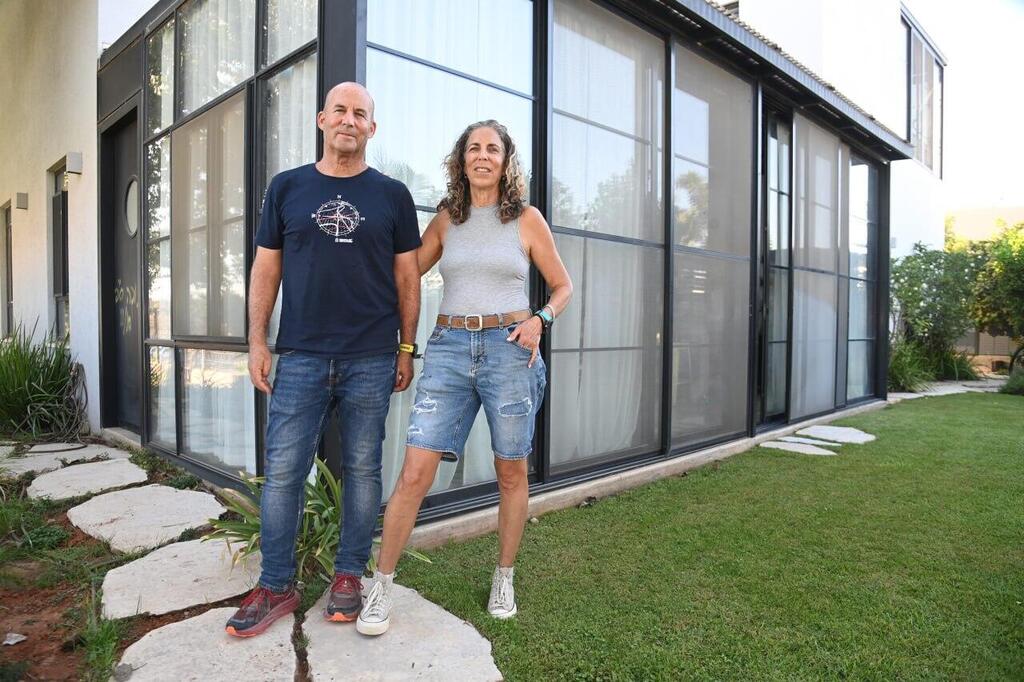
For now, the dream is on hold
(Photo: Herzl Yosef)
She knows some people prefer to return only when everything is ready. To her, that is also a legitimate choice. "It's important to me that people take a deep breath and feel: Here I am, I'm home."
Her and Alon's dream was to live in Kfar Aza as an extended family, with their children and grandchildren around them. For now, that dream remains distant.
One daughter will return, but another, whose children experienced October 7 in the kibbutz, still cannot bring herself to come back.
"Right now that dream is on hold, or maybe it won't happen at all. We'll continue to be involved grandparents even if they don't live nearby."
'We just need quiet in Gaza — everything depends on that'
As noted, the return to Kfar Aza is unfolding alongside a debate over what the kibbutz should look like after the disaster. For now, the kibbutz has decided not to take any irreversible steps regarding the "Young Generation" neighborhood.
"Until the High Court ruling, we're not touching anything and we're not doing anything irreversible. We didn't receive an injunction or anything like that, but we decided to respect the process. We're planning, but for now we're waiting patiently for final decisions," community manager Regev said.
Outside the kibbutz, construction of a visitors center is moving ahead, while tours for the general public inside the kibbutz have already been canceled. The sense of security is still far from taken for granted.
Kites that recently crossed in from the Gaza Strip and were found in the border communities caused anxiety among residents.
The community is working with an expert to rebuild its emergency system and operational procedures for the local emergency response team.
Soldiers stationed in the area give some residents a sense of security, but the larger question remains unresolved: Will it be possible to live here again without the constant fear that history could repeat itself?
"We have no control over the security situation," Moran said. "A return to the border conditions that existed before October 7, Hamas rebuilding its strength — these are things that influence people's decisions about whether to return."
'Anyone who was here on October 7 needs to hand over the keys and go home'
(Photo: Amir Levy/Getty Images)
Regev, the community manager, is optimistic. "I see the future kibbutz as a large community. We were 950 people, but obviously we're not starting again from the same point. There are people who were murdered, there are people who won't return, but the young people's neighborhood will be full and the kindergartens will be full. "We just need quiet in Gaza. Everything depends on that."
Moran wants to highlight the community's demand that the state provide solutions for those who are unable to return to the kibbutz. "We are working to ensure that the state fulfills its duty to those who still don't know how to return, and we need to help those who have to rebuild their lives."
With elections approaching, Kfar Aza residents say they hope for change. Nadav said he "hopes things will be better." Viki said change is essential.
Sharona wants leadership that will see the residents of the Gaza border communities and restore their trust.
Einat, who prefers not to discuss politics, put it simply: "Anyone who was here on October 7 needs to hand over the keys and go home. That's how we'll regain our trust."
Kfar Aza is still far from what it once was. There are homes that will no longer stand, families that will not return, memories that will not disappear and questions with no answers.
But after nearly three years in which home existed mainly as a memory, the sounds of life are beginning to be heard there again.