

In the wake of the killing of Ali Khamenei and the launch of Operation Roaring Lion, many Iranians who oppose the regime say Israel’s prime minister is returning a historic favor. If the Persian king Cyrus the Great once freed the Jewish people from exile, they see Netanyahu as someone who could help liberate the Iranian people from the tyranny of the mullah regime.
When Reza Pahlavi, the exiled son of Iran’s last shah, outlined his vision for Iran during a wave of protests in the country, he pledged that under his leadership Iran would “expand the Abraham Accords into the Cyrus Accords.”
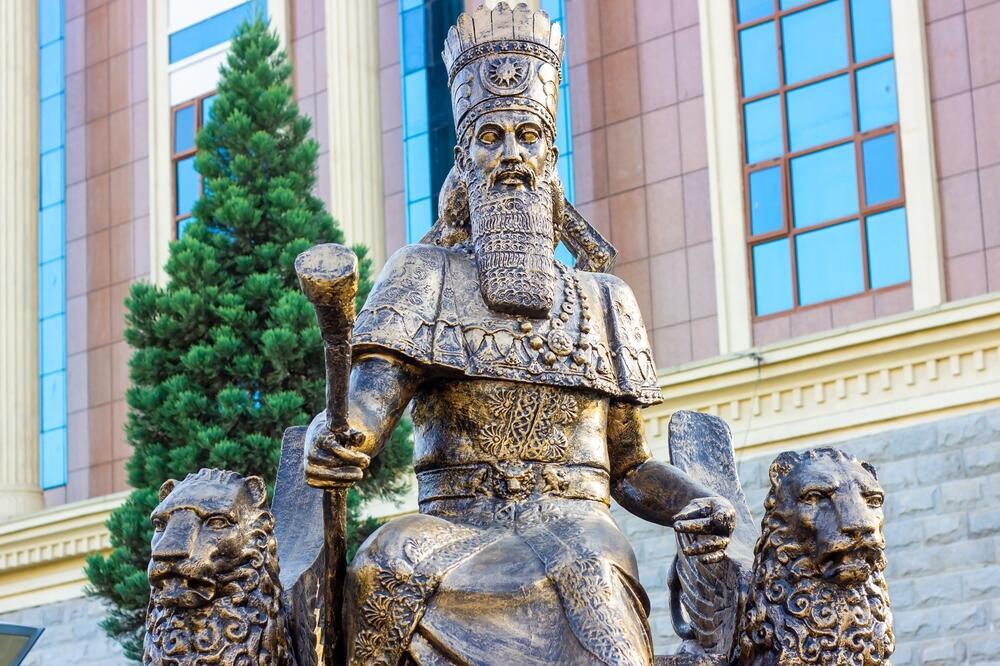
The vision has yet to materialize, but the remark underscores the central role of Cyrus the Great in both Persian and Jewish history.
During last year’s Operation Rising Lion, Netanyahu invoked that legacy while visiting the site of a missile strike at Soroka Medical Center in Be'er Sheva. "2,500 years ago, Cyrus the Great, the king of Persia, liberated the Jews, and today, a Jewish state is creating the means to liberate the Persian people,” he said.
Cyrus II, known as Cyrus the Great, is remembered favorably in Jewish history for the decree that permitted the return to Zion and the rebuilding of the Second Temple. To understand the importance of the Cyrus Declaration, historians argue, one must first grasp his broader role in world history.
“In 550 B.C., Cyrus II, the founding father of the Achaemenid Persian Empire in the sixth century B.C., conquered the neighboring kingdom of Media,” said Dr. Dror Ben-Yosef, heritage commissioner in the northern district of the Nature and Parks Authority. “He later captured Asia Minor, which is modern-day Turkey. In 539 B.C., Cyrus’ forces marched into Babylon and took control of the vast Neo-Babylonian Empire.”
The vision of exiled Crown Prince Reza Pahlavi for Iran under his leadership


Among other consequences, the decree issued in 538 B.C. allowed Jewish exiles in Babylon to return to the Land of Israel and rebuild the Temple. “To ensure the loyalty of the many peoples under Persian rule, Cyrus adopted a relatively humane policy,” Ben-Yosef said. “He issued an order allowing populations deported by the Babylonians to return to their homelands, rebuild their temples and practice their religions freely.”
Through this approach, Cyrus united Persian and Median tribes and built a vast empire that at its height stretched from modern-day Turkey to India. The Persian Empire ruled large parts of Asia for more than two centuries, from 539 B.C. to 332 B.C. It is also known as the Achaemenid Empire, named after Achaemenes, the dynasty’s founder.
Several books of the Hebrew Bible reflect the realities of the Persian period, even if they were not necessarily written during it. These include Ezra and Nehemiah, the Book of Esther, Chronicles, and the prophetic books of Haggai, Zechariah and Malachi.
The Cyrus declaration appears several times in the Bible. In the Book of Ezra (1:2–4) it states:
“Thus says Cyrus king of Persia: ‘The Lord, the God of heaven, has given me all the kingdoms of the earth and he has appointed me to build a temple for him at Jerusalem in Judah. Any of his people among you may go up to Jerusalem in Judah and build the temple of the Lord, the God of Israel, the God who is in Jerusalem, and may their God be with them. And in any locality where survivors may now be living, the people are to provide them with silver and gold, with goods and livestock, and with freewill offerings for the temple of God in Jerusalem.’”
A similar passage appears at the end of II Chronicles (chapter 36, verse 23).

“Thank you Trump, thank you Bibi”: A member of the Iranian community in Romania holds a sign during a protest outside the Iranian Embassy in Bucharest
(Photo: Daniel Mihailescu / AFP)
Cyrus’ approach earned him admiration throughout his empire. The Hebrew Bible even refers to him as God’s anointed. In Isaiah 45:1 it says: “Thus says the Lord to His anointed, to Cyrus, whose right hand I grasped to subdue nations before him and to strip kings of their armor, to open doors before him so that gates will not be shut.”
Centuries later, when Britain issued the 1917 Balfour Declaration supporting the establishment of a national home for the Jewish people in the Land of Israel, some commentators compared it to the decree of Cyrus.
A king admired by all
Cyrus established an effective administrative system and sought the welfare of his subjects. Prof. Michael Shenkar, associate professor of pre-Islamic Iranian studies at the Hebrew University, Jerusalem, says Cyrus was an exceptional historical figure. "He was exceptional to the extent that the written sources had almost nothing negative to say about him,” Shenkar said. “He was admired not only by the Persians but also by the Greeks, who saw him as an ideal model of kingship.”
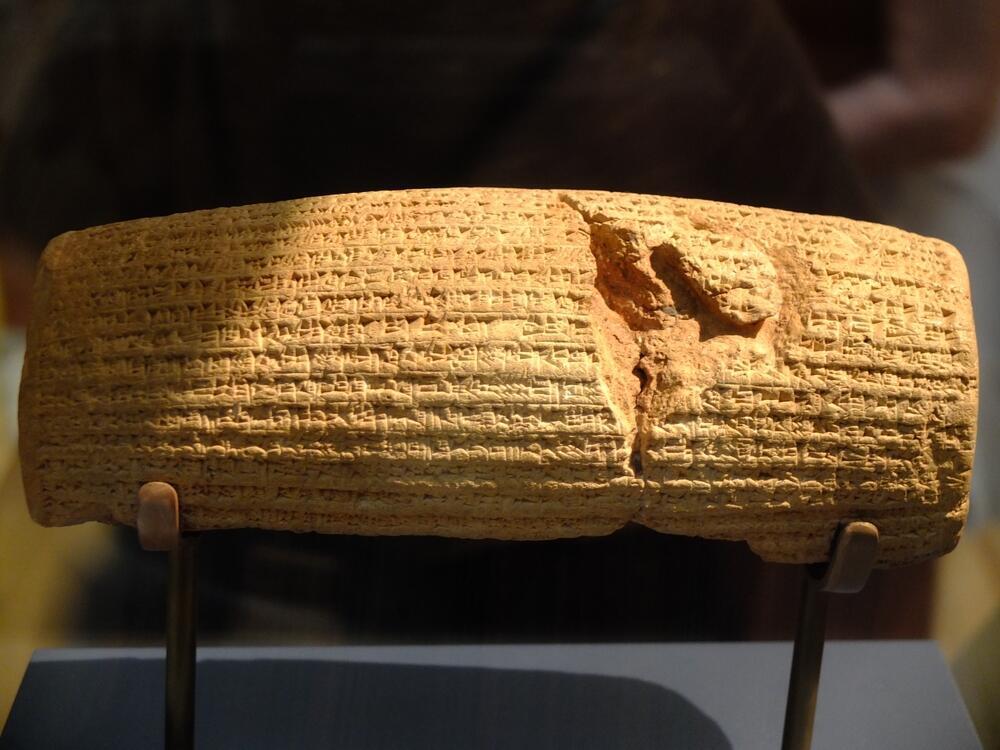
The 'Cyrus Cylinder' on display at the British Museum in London, an archaeological testament to Cyrus’ declaration
(Photo: Robert Szymanski/Shutterstock)
“Cyrus the Great even overshadowed Alexander the Great as he was the first to unite very different regions into a large and prosperous empire, whereas Alexander conquered something that already existed", says Shenkar.
“At the same time, he was a ruthless leader who destroyed cities and massacred populations he conquered,” Shenkar added. "He was preceded by the Assyrian Empire, whose rulers relied on outright terror and intimidation. What we see in the texts is a kind of propaganda that avoids describing violence. In reality, he did what other imperial powers did before him.”
The difference, Shenkar said, lay in the message. “The Persian kings wanted to convey that they were kings of everyone, of all peoples,” he said. “Cyrus seems to have understood that what matters is not only what you do but how you present it.”
The Persians also created legal systems for different peoples in their empire, including the Jews. According to Shenkar, the word "dat" (religion in Hebrew), comes from an Old Persian term meaning “the law of the king.”
“The most troublesome region in the empire was Egypt, where rebellions broke out constantly because its people did not believe Persian propaganda. That is why it was important for the Persians to maintain a strong presence in the Land of Israel, so they could deal with the threat from Egypt.”
PM Netanyahu mentions Cyrusthe Great at the missile impact site at Soroka Medical Center
After Cyrus
After Cyrus was killed in battle in 530 B.C., his son Cambyses II took the throne and continued expanding the Persian Empire. The region of Judah, known in Persian administration as “Yehud,” played a strategic role in the Persian conquest of Egypt, completed in 525 B.C.
Later, in 522 B.C., Darius the Great came to power and set his sights on Greece. After consolidating his rule, he introduced sweeping reforms: the empire was reorganized into 20 provinces known as satrapies, and Zoroastrianism became the empire’s official religion, centered on the supreme deity Ahura Mazda (Lord and wisdom).
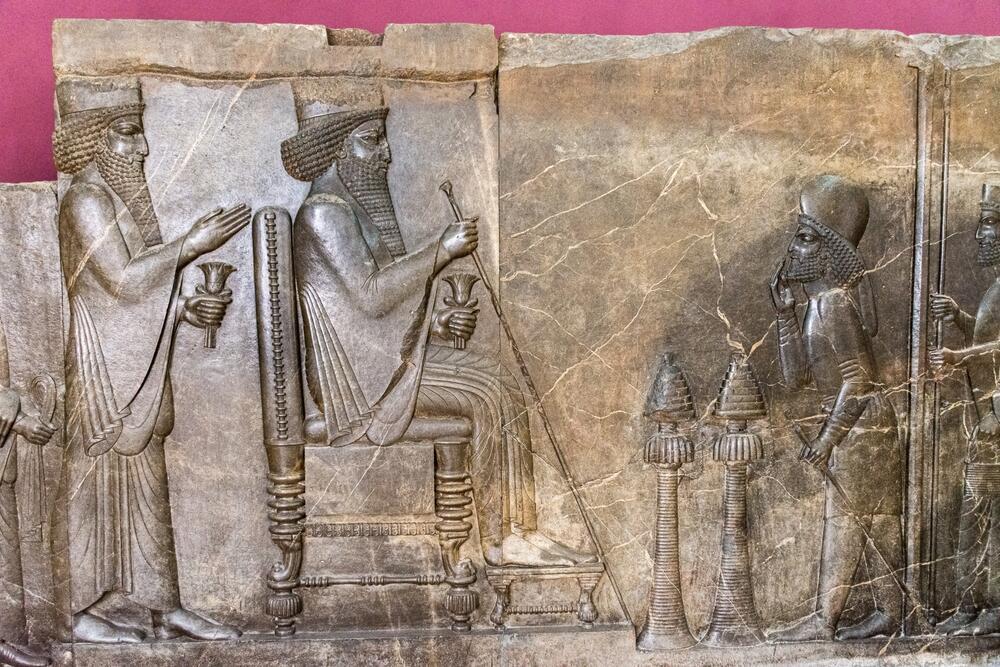
Darius the Great
(Photo: T. van den Brink/Shutterstock)
Scholars have long noted parallels between Zoroastrianism and Judaism. “Similarities have been found between the Avesta, the sacred texts of Zoroastrianism, and the Bible, Second Temple literature and the Babylonian Talmud,” Ben-Yosef said. “Some researchers believe Zoroastrian ideas influenced Judaism to a certain extent and vice versa.”
In some cases, the relationship reflected theological disputes between the religions, such as attitudes toward dogs, which are considered impure in Judaism but sacred in Persian tradition.
Among the shared motifs are laws and customs such as purity regulations, commandments related to the altar fire, head-covering practices, the wearing of fringes and a sash, the burial of clipped nails, the eternal struggle between good and evil, belief in a Day of Judgment, faith in eternal life, and the existence of angels and demons, such as Satan and Ashmedai.
What would Cyrus have thought?
The Persian period also brought a wave of development and urbanization in the Land of Israel, especially along the coast. The books of Ezra and Nehemiah describe the return of tens of thousands of Jews to the province of Yehud, centered on Jerusalem.
An administrative center operated at Ramat Rachel near Jerusalem, where archaeologists have also identified a Persian-style royal garden. From the fifth century B.C., the Persians introduced new urban planning concepts, including grid-based street layouts influenced by the Greek architect Hippodamus.
Archaeological finds from the period include cube-shaped incense altars, Dr. Ben-Yosef said. “These small altars, usually with four legs, may point to an increase in the incense trade along the ‘Incense Route.’”
At Tel Lachish, about 200 such altars were discovered in what researchers call a “sun temple.” Another striking phenomenon is the burial of dogs, which were considered sacred in Persian culture. In Ashkelon, archaeologists uncovered a large cemetery containing more than 2,000 buried dogs.
Some cities were granted the rare privilege of minting their own coins with approval from the Persian royal court. In the province of Yehud, this right was given to Samaria, Jerusalem, Ashdod, Ashkelon and Gaza.
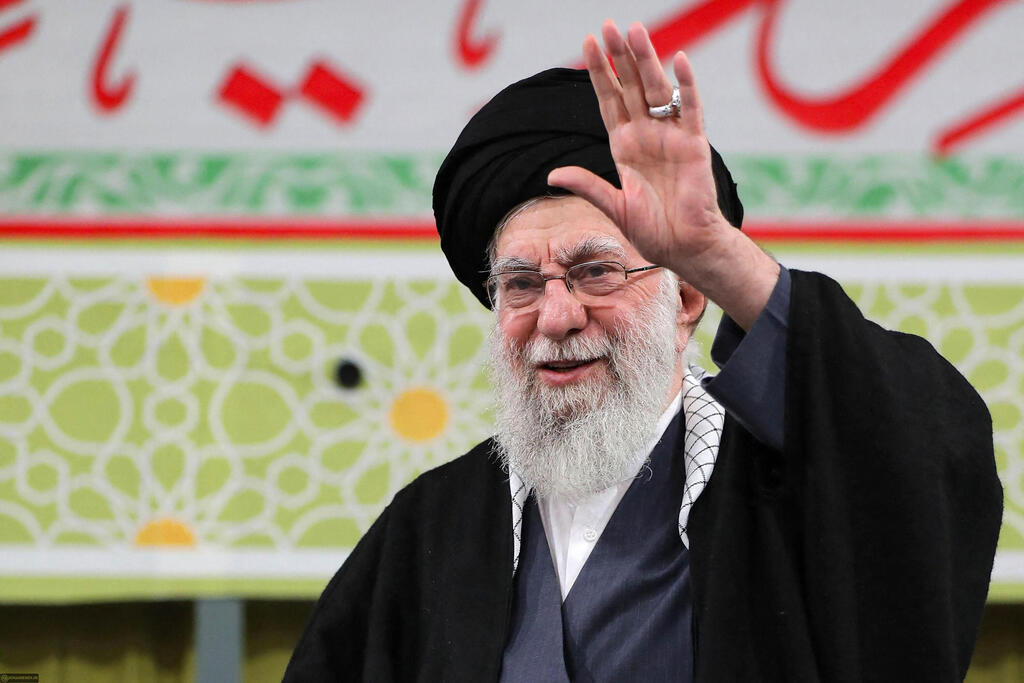
Ali Khamenei, killed in Israeli strike
(Photo: AFP PHOTO / HO / KHAMENEI.IR)
Darius failed in his attempts to conquer Greece, and so did his successor Xerxes I. Conflicts with the Greek city-states continued for decades. In 404 B.C., Egypt broke free from Persian rule with the help of Athens and Cyprus. In the land of Israel, several coastal settlements show layers of destruction from that turbulent period.
In 343 B.C., Persia reconquered Egypt, restoring its control over the region, but the empire’s days were numbered, explained Ben Yosef. "In 333 B.C., Darius III confronted the forces of Alexander the Great at the Battle of Issus and was defeated. After the victory, Alexander conquered the southern Levant in 332 B.C., ushering in the Hellenistic era.
The Persian people are among the world’s oldest civilizations, and their relationship with the Jewish people has seen both cooperation and conflict. Whether Israel could play any role in freeing Iran from clerical rule remains an open question.
“At present, the IRGC represents the most serious existential threat to the State of Israel,” Ben-Yosef said. “It’s interesting to wonder what Cyrus the Great would think about that, considering he freed the Jewish people from exile and allowed them to rebuild Jerusalem.”
“Who knows,” he added, “maybe today it is the Jewish people’s turn to free the Iranian people from their chains.”
Shenkar offered a more sober perspective. “Cyrus the Great would have likely believed that the entire world should be ruled by the Persian Empire.”