

The killing of Izz al-Din Haddad, head of Hamas’ military wing and an architect of the Oct. 7 massacre, is a necessary and essential step in eroding what remains of the terrorist organization’s leadership. It was only a matter of time, intelligence capability and operational feasibility before the arch-terrorist was eliminated, a development that once again underscores the magnitude of the failure and flawed conception that preceded Oct. 7, when numerous proposals presented by the Israeli military and Shin Bet to target senior Hamas leaders were rejected by the political echelon.
As in the other active theaters of conflict, the gap between tactical military achievements and the absence of a political-strategic horizon continues to widen. Haddad’s killing, like those of his predecessors in Hamas leadership, disrupts the chain of command, temporarily weakens the organization’s capabilities and creates localized deterrence. But in itself, it cannot restore long-term calm or redefine the strategic reality in Gaza.
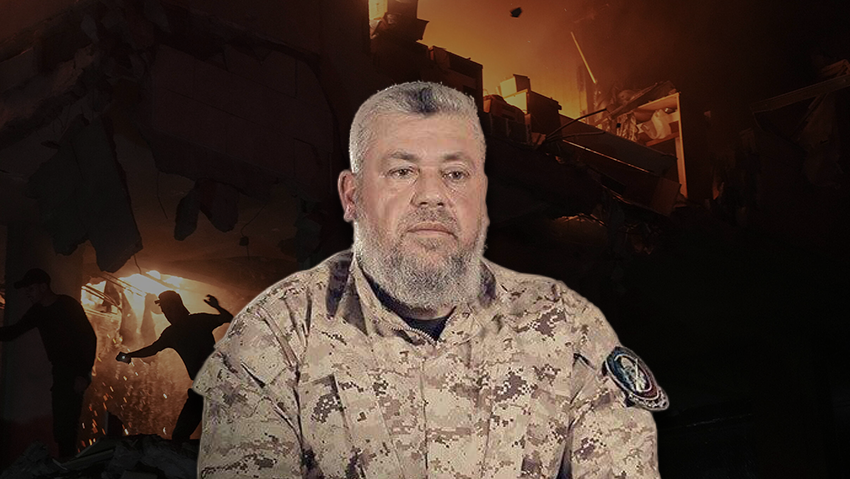
Izz al-Din Haddad
(Photo: AP Photo/Jehad Alshrafi)
The central challenge remains unchanged: Who governs Gaza the day after the war, and through what mechanism can Hamas be removed from the strip? As of now, there is no coherent answer. The political leadership, constrained by its own limitations, has avoided deciding among the alternatives, renewed Palestinian governance, regional involvement, an international presence or some combination thereof, and instead continues to operate through risk management and avoidance of meaningful change to the existing reality.
The international arena has also failed to provide a response. The U.N. Security Council has struggled to advance effective resolutions regarding Gaza, whether because of disagreements among major powers or gaps between humanitarian demands and security considerations. Likewise, the so-called “Peace Council” has struggled in its dialogue with Hamas, in allocating resources, setting priorities and establishing a more stable security reality in the strip.
The result is prolonged paralysis and the absence of an orderly action plan — a pattern that characterizes Prime Minister Benjamin Netanyahu’s handling of all active conflict arenas.
Within this vacuum, regional actors have been careful not to overextend themselves. Egypt has maintained its role as mediator while avoiding overly deep involvement. Gulf states, focused primarily on developments in the Persian Gulf, have expressed some interest in Gaza reconstruction efforts, but have conditioned involvement on stability and proper governance, conditions Netanyahu’s government, predictably, has avoided addressing. The Palestinian Authority, frequently mentioned as a possible option for returning to Gaza, suffers from a severe crisis of public trust and internal weakness that make it difficult for it to play a meaningful role.
Not by targeted killings alone: Without a clear definition of a realistic and gradual political objective, military activity will remain largely reactive and continue to generate recurring cycles of armed confrontation.
As a result, a growing sense has taken hold — heard perhaps most clearly from residents of the communities near the Gaza border, that the Gaza issue, with all its complexity and consequences, is merely being postponed. Instead of resolution, a pattern of strategic procrastination is becoming entrenched. In this sense, Gaza is gradually turning into yet another open file, another murky and chronic crisis that Netanyahu’s sixth government will leave to its successors.
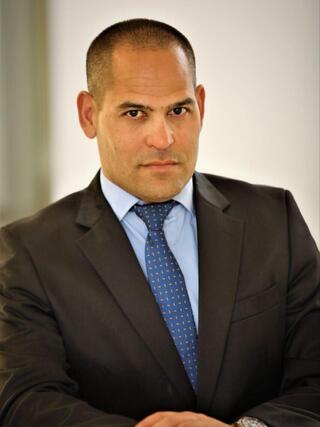 Avi Kalo Photo: Aloni Mor
A sense of victory will not be measured by the ability to strike another high-value target, but by the ability to ensure that the green lawns of the kibbutzim near Gaza are once again filled with young families, and that returning home is no longer perceived as an act of courage, but as a natural Zionist step.
After the terrible trauma, restoring a full sense of security to residents of the border communities will not happen by magic. It will only be achieved with a clear strategic compass guided by leadership driven by hope and change: creating a reality in which the Gaza Strip no longer generates cyclical threats, but instead becomes a managed and supervised space that prevents the renewed buildup of bloodthirsty jihadist terrorism. That is within our power.