

Since the deadly terror attack on Simchat Torah two years ago — when more than 1,200 Israelis were murdered and many others kidnapped — the Gregorian date of October 7 has become a national and even international symbol of collective trauma. It is etched into the public consciousness as a deep wound, mentioned in every conversation, report and memorial — and rightly so.
But amid the pain, it is worth asking: Why did the terrorists choose this date for such a brutal massacre? What were they trying to destroy, silence and erase?
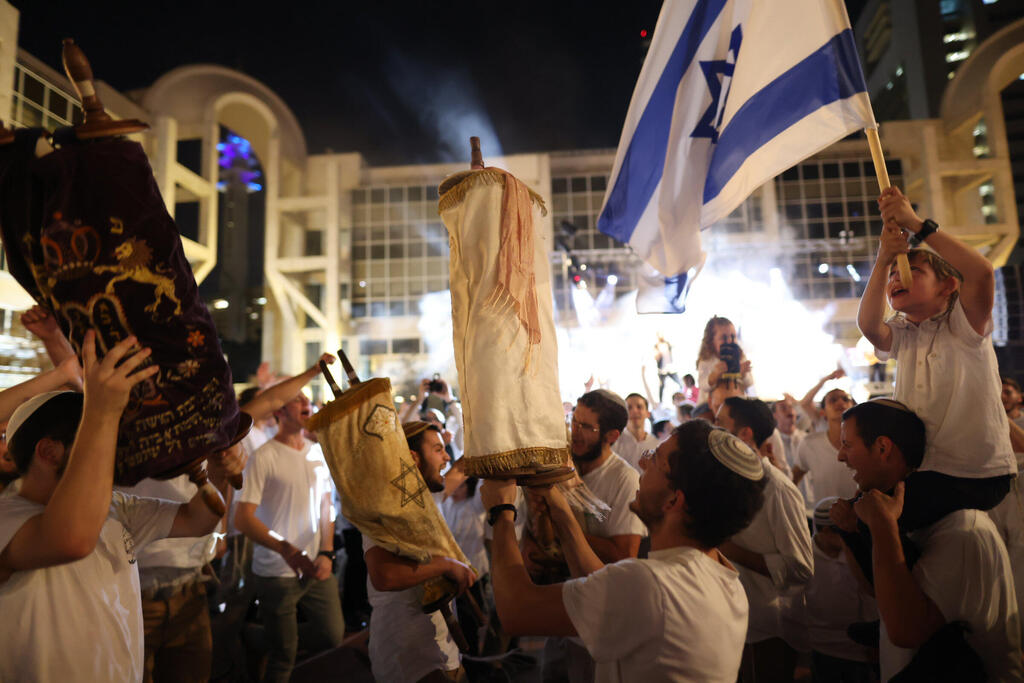
Second Hakafot on the night after Simchat Torah in Tel Aviv, 2022
(Photo: Tal Shahar)
Simchat Torah is a day of joy and unity. It brings together the entire spectrum of the Jewish people — religious and secular, young and old, men and women, left and right — around the Torah. It is the happiest day in the Jewish holiday season, marked by singing, dancing and celebration of the Torah itself. Even a Jew who doesn’t know a single letter of Torah joins in the joy of Simchat Torah — simply because he is Jewish, because of the enduring bond between the Jewish people and God, and the gift of Torah we received.
At Kibbutz Be’eri — one of the communities hardest hit in the October 7 massacre — residents spent that Simchat Torah huddled in safe rooms. A year later, they made a deliberate choice: to dance, to celebrate as much as possible and to dedicate a hakafa (dance circle) to the affected communities, to the soldiers and to the hostages. “We’ll make up for last year too,” they said — a powerful symbol of the resolve to reclaim the joy that was stolen. Their story shows how even in the shadow of grief, the holiday can become a source of light and strength.
This year, October 7 fell on the eve of Sukkot, prompting many to wonder how to balance the holiday’s joy with the weight of memory. Should a non-Hebrew date become a national memorial day? Ironically, the attempt to extinguish our joy demands that we amplify it, as many border communities demonstrate through their dancing.
True remembrance means choosing life
The Lubavitcher Rebbe taught that true remembrance is expressed through investing in life. When a Jewish leader once suggested leaving an empty chair at the Passover Seder in memory of Holocaust victims, the Rebbe replied: Fill it with a Jew celebrating. That is a living legacy — a Jewish victory.
So too, Simchat Torah must become a time not just of remembrance, but of life-affirming action. At the same time, the Knesset, in partnership with rabbis, community leaders and representatives from across Israeli society, should establish an official national day of remembrance — with ceremonies and Torah study — without undermining the joyous nature of the holiday the terrorists sought to destroy.
Even those who prefer a neutral, Gregorian date can likely agree that a Hebrew date connects us more deeply to our shared identity. This is how we turn pain into purpose — just as so many in the hardest-hit regions have shown us: by dancing, rejoicing and dedicating that joy to those we’ve lost and those still fighting.
 Menachem Cohen
The choice is ours: because Hamas set out to shatter our joy, we will reclaim it. We will remember, honor life and once again dance with the Torah in our arms. Jewish joy, in the end, is our most powerful victory over the darkness. With God's help, we pray that this year the circle will be complete — and we will celebrate Simchat Torah with the dozens of hostages who, at last, return home.