

On Monday morning, my son was happy to hear that despite the threats from Tehran, his school trip would go ahead as planned. After the bitter disappointment of the previous trip’s postponement, which turned into a lightning round of Roaring Lion, the feeling was understandable. When I saw the joy on his face, I could not help but feel a pang in my heart. The quiet we are experiencing in the present will, in all likelihood, turn into deafening noise in the future. That is the most painful lesson we learned from October 7. And indeed, as the details of the cease-fire agreement between Iran and the United States become clearer, it is hard not to feel that we will be the ones to pay the price for America’s fatigue with wars.
At a news conference held amid criticism of the agreement, Prime Minister Benjamin Netanyahu presented a picture of victory: "We established deep security zones around the State of Israel." But in an interview with CBS, he admitted: "There are still proxies that — Iran supports. There are ballistic missiles that they still — want to produce. Now, we've degraded a lot of it. But all that is still there, and there's work to be done." The military success conceals the success of Iran’s strategy.
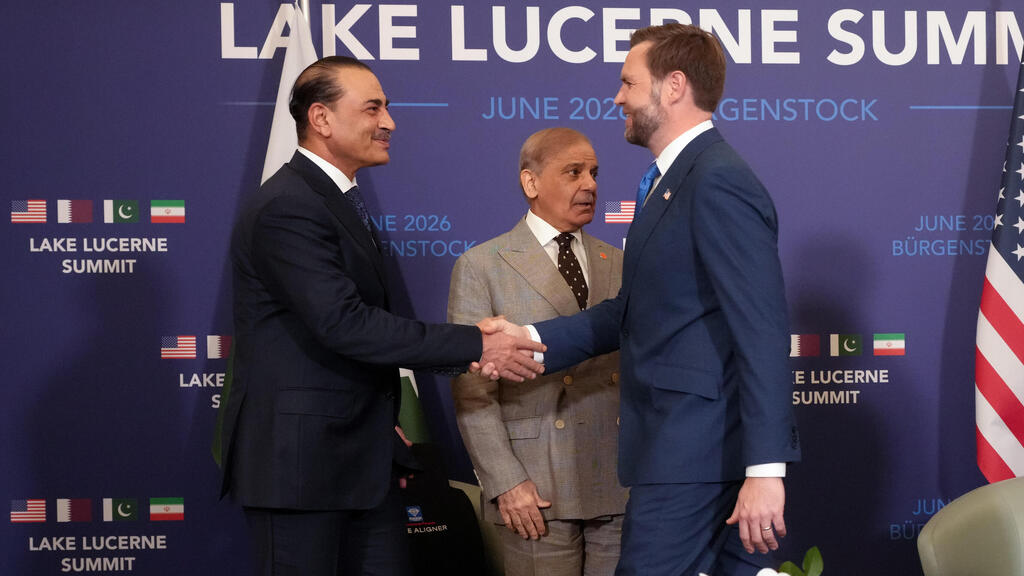
Iran-US talks summit in Switzerland
(Photo: Nathan Howard/Pool Photo via AP)
As a painful lesson from its long war with Iraq, Tehran pushed the war away from its own territory and wove a ring of proxy armies around Israel. Hamas, Islamic Jihad and Hezbollah forced us to fight simultaneously on three fronts. By a miracle, our military position is better than it was on October 6, but the suckers who died for Tehran have been replaced by a new proxy.
If in the past terrorist organizations looked to Tehran for resources, Washington is now serving Tehran’s interests, even if unintentionally. Instead of paralyzing Israel militarily, Iran has paralyzed it diplomatically. The rules of engagement in Gaza and Lebanon are reminiscent of days that led to dark times. Diplomatic isolation in the face of an enemy that calls for our destruction, is developing a nuclear bomb and maintains a ring of suffocation around us is not a tactical obstacle. It is a clear existential threat.
In a historical absurdity, the United States is acting as Iran’s de facto proxy. Whether out of war fatigue, cold economic calculation over reopening the Strait of Hormuz, or the understanding that a country hosting the World Cup cannot afford a regional war at the same time. If Iran once used terrorist organizations to deter Israel from attacking Tehran, it is now using the United States. The demand for an Israeli withdrawal from Lebanon and the refusal to present Jerusalem with the details of the agreement reveal the depth of the rupture.
Trump is an avid WWE fan. There was once a wrestler named Eddie Guerrero, whose motto was "I lie, I cheat, I steal." Perhaps unintentionally, that is the approach guiding Trump in his dealings with Iran
Trump is an avid WWE fan. There was once a wrestler named Eddie Guerrero, whose motto was "I lie, I cheat, I steal." Perhaps unintentionally, that is the approach guiding Trump in his dealings with Iran: concealing the details of the agreement from Jerusalem, sending contradictory signals regarding Lebanon and declaring victory before anything has been signed. Iran can sit on the sidelines and let Washington’s Eddie Guerrero do the work for it.
We have faced American abandonment more than once. When Biden threatened to halt arms shipments, Netanyahu declared: "If necessary, we will fight with our fingernails." But even then, the United States continued to supply most of the weapons needed. This time, the situation is fundamentally different: Hamas did not threaten Israel’s physical existence. Iran does. And the bitter irony is that precisely in Trump’s attempt to prevent Iran from racing toward a nuclear war, he may push Israel into starting one.
Israel may be forced to rely on every means at its disposal — including unconventional weapons, to the extent it has access to them — against those threatening to destroy it. Simply because this time, the American interest and the Israeli interest have ceased to be identical.
First published: 10:32, 06.23.26