


As the dust begins to settle from recent fighting in Iran and Lebanon, a clearer picture is emerging of what has materialized from promises in Israel to reshape the Middle East since Oct. 7, particularly during Operation Roaring Lion.
All of Israel’s enemies have absorbed an unprecedented blow, and the security reality has improved compared with the situation two and a half years ago. However, none of the three central adversaries — Iran, Hezbollah and Hamas — has been eliminated in line with the spirit of a “total victory,” and the axis and the idea of “resistance” have not disappeared.

(Photo: GPO)
This is, in effect, a new-old Middle East. In Syria, the Assad regime has fallen, but its successor is not friendly toward Israel. Turkey is strengthening its regional position and presenting a growing challenge to Israel. The Arab world is not rushing to align itself with Israel despite a shared stance against the Iranian threat. On the contrary, Arab states are expressing suspicion in the face of Israel’s display of power and continue to make clear — particularly Saudi Arabia — that normalization will not take place without progress on the Palestinian issue, which Israel continues to avoid, much as it did before Oct. 7.
The war has brought Israel into proportion. It has demonstrated dramatic military capabilities and achievements, but has also exposed the limits of power, chief among them deep dependence on the United States — and more precisely on President Donald Trump — both in advancing military efforts and in determining the timing and framework for ending the fighting. The precedent set in Gaza is now repeating itself in Iran and Lebanon: Prime Minister Benjamin Netanyahu promised total victories, likened the conflicts to World War II and the enemy to Nazis that must be eradicated, and sought to conduct campaigns without time limits. Ultimately, Trump dictated the end of the fighting and set arrangements under which the adversaries remained dominant forces.
Israel is not Sparta or an all-powerful Middle Eastern Popeye. This has become evident with the end of the war in Gaza — which was effectively imposed following a failed attack in Qatar — and with the shelving of the vision of emptying Gaza of Palestinians and establishing a Mediterranean riviera. It is now also evident in the inability to disarm Hezbollah or bring about regime change in Tehran, alongside the ongoing need to ensure that efforts to neutralize the nuclear program are realized.
Vision, boldness and ingenuity are foundational principles of the Zionist project. However, when driven by fantasies, they can cause significant damage. Israel must recognize that in the eyes of much of the world, its image is not that of a just underdog, but of a powerful giant striking constantly and everywhere, amid growing questions about judgment and moral values, including in relation to developments in the West Bank.
A sense of collective unease has emerged. It does not stem from military outcomes, as Israel has achieved clear victories in all arenas while demonstrating technological and intelligence superiority. Rather, it arises from the sharp gap between promises, slogans and illusions and the reality on the ground, along with the overuse by decision-makers of absolute terms — mainly military — such as decisive victory and decapitation, or the ongoing tallying of dismantled units and destroyed weapons. These concepts may fit conventional warfare but not current conflicts.
The gap reflects flawed situational assessment and a lack of deep understanding of the nature of the adversary. It also underscores the cost of dismissing calls for a coherent strategy and a political component. More direct and sober discourse between leadership and the public might have prevented the buildup of unrealistic expectations.
At the same time, it is notable that decision-makers who present themselves as pragmatic and as correcting the failures of Oct. 7 — claiming to understand what influences Arabs and how they think and promoting the idea that Israel will forever live by the sword — are the same figures advocating for utopian ideas of total victory. They maintain a belief in the ability to engineer consciousness through deradicalization and to uproot ideology through economic measures — concepts rooted in pre-Oct. 7 thinking — exemplified by the failed GHF initiative in Gaza, which many now prefer to forget.
This pattern highlights a broader problem: a reluctance to investigate past failures leads to their repetition, causing further damage that also goes unexamined. This reflects a flawed culture that has taken hold since Oct. 7, allowing decision-makers to avoid acknowledging mistakes or taking responsibility.
If and when a future leadership undertakes a thorough review of the war and the roots of the Oct. 7 failures — possibly including the formulation of an updated national security doctrine — several conclusions should guide it. Among them: in the current reality, adversaries cannot be entirely eliminated or decisively defeated, and the struggle against them is a long-term campaign; a strategic military achievement cannot be realized without a political dimension; cultivating distant allies or fringe groups is not a substitute for close ties with neighboring states; holding territory alone is not a guarantee of long-term security; and the Palestinian issue cannot be avoided indefinitely.
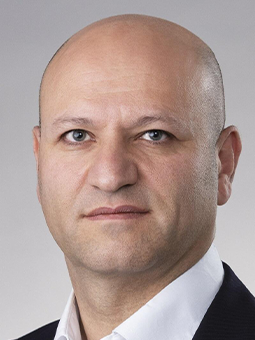 Dr. Michael Milshtein
Finally, the analysis calls for internal reflection. The campaign since Oct. 7 may be among the most successful in military terms, but it has been marked by a shallow public discourse within Israel, an unprecedented subordination of arguments and actions to political considerations, a collective attachment to fantasies — some with messianic undertones — and the suppression of criticism and complex thinking under accusations of lack of patriotism.
There is a sense of nostalgia not only for a less divided society, but also for leaders such as former Prime Minister Levi Eshkol — described as gray and hesitant — who, after the victory of the Six-Day War, when Israel was in a state of euphoric triumph, was able to caution that the bride is beautiful, but the dowry is problematic.
After two and a half years of difficult war, the conclusion is that complex truths are preferable to rhetoric saturated with illusions.
Dr. Michael Milshtein is head of the Forum for Palestinian Studies at the Dayan Center at Tel Aviv University