

Itai Ater of Tel Aviv University described the decline in the number of doctors in great detail, writing at tedious length about their ages, specialties and other irrelevant details.
As we have learned and taught, half a truth is worse than a lie. Ater emphasizes only one side of the equation and, for some reason, ignores the other side, which is of course highly positive but does not fit Itai Ater, who represents the “Economists for Democracy” forum, a left-wing organization that opposes the government and the judicial overhaul.

The Tel Aviv University team writes about doctors leaving Israel
(Photo: Shutterstock)
In their forecasts for the future of the Israeli economy following the war, they failed miserably. The Israeli economy has proved to be much stronger and more stable than a small number of academics who are wrong and misleading. For example, the exchange rate has remained stable at around 3 shekels to the dollar, while their forecast was for a collapse. Unemployment is at a low, inflation is in the middle of the Bank of Israel’s forecast and foreign currency reserves are among the highest in the world relative to national output. Growth is impressive and the deficit is lower than expected.
And now to the facts: The Tel Aviv University team writes about doctors leaving Israel. Why does it fail to mention the number of doctors who immigrated to Israel from Western countries, the U.S., Canada and Europe in 2023-2025 — doctors with unique expertise, some of whom left their countries because of antisemitic factors? A total of 1,450 doctors immigrated to Israel during those years.
In counting those who left, the team members forgot to mention that some of the doctors who emigrated had arrived following the war in Ukraine, for whom Israel was a way station.
When the figures for those leaving and those arriving are combined, they show a positive balance for 2023-2025: 1,447 doctors immigrated to Israel, in addition to 689 Israeli doctors who returned. These figures give us a net gain of 769 doctors during this period, an average of about 250 doctors added to the country’s medical system each year.
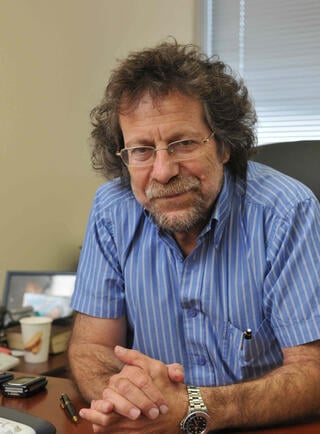 Shmuel Slavin
There are 46,000 people licensed to practice medicine in Israel, while 39,000 doctors are actually active. One of the measures that determines the quality of health care is the number of doctors per 1,000 people. In Israel, there are 3.9 doctors per 1,000 people, which is higher than the average in developed OECD countries.
Nadav Eyal explained that “the most extreme Netanyahu government there has ever been here is endangering the strength of Israeli society.” For Eyal’s information, 15 years ago there were about 450 Israeli students in the first year of medical school. In 2026, about 1,700 Israeli students began studying at medical schools in Israel — nearly four times as many. So who is endangering Israeli society and who is looking after it?
And finally, some advice for Tel Aviv University: If this is the level of research conducted by your academics, is it any wonder that you are lagging behind in the Shanghai Ranking of universities? Genuine economic research does not bend to political agendas. That destroys academia, and you are on the sure path there.
- Shmuel Slavin is a former director-general of the Finance Ministry.