

The dollar continues to strengthen sharply against the shekel on Tuesday, trading around 3 shekels, its highest level since early April.
The representative dollar rate was set Monday at 2.96 shekels. The latest move comes against the backdrop of an emerging agreement between Iran and the United States and reports of possible restrictions on IDF activity in Lebanon. The euro also strengthened, trading around 3.42 shekels, about 3 agorot higher than Monday’s representative rate.
At the start of the month, the dollar was still trading near 2.80 shekels. Since then, it has risen sharply, against the backdrop of a possible easing of the Middle East confrontation and the difficulties Israel is facing in Lebanon.
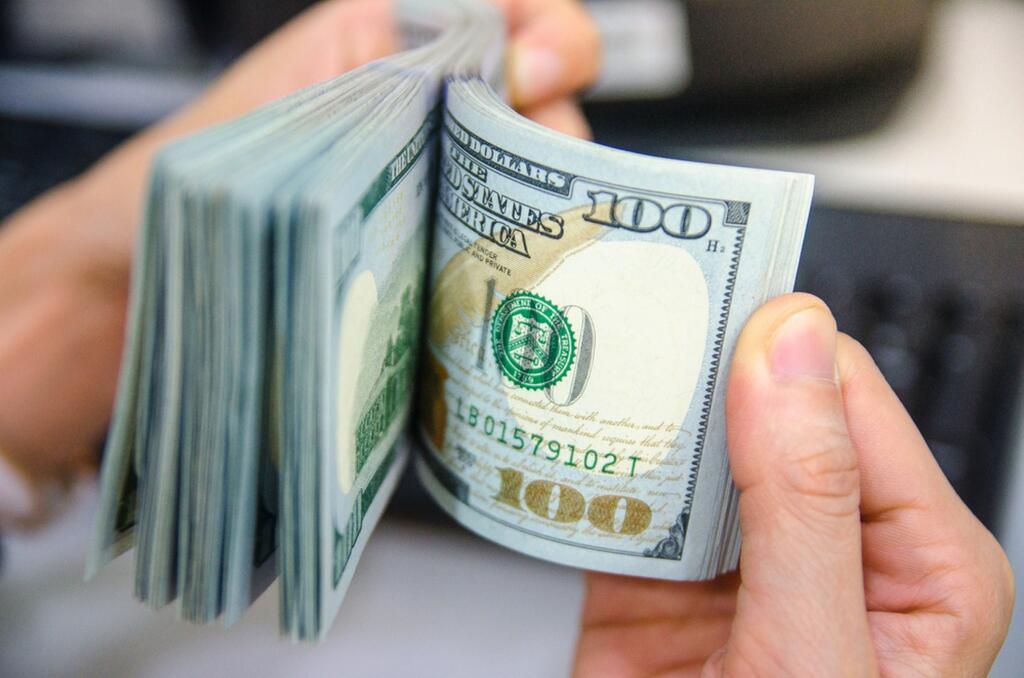
The dollar rises sharply against the shekel
(Photo: Shutterstock)
Trading on the Tel Aviv Stock Exchange also opened lower, with leading indexes falling by more than 1%. The TA-35 index was down 1%, the TA-125 fell 1.2% and the TA-90 dropped 1.5%.
Joseph (Yossi) Freiman, CEO of the Prico Group, which specializes in financial risk management and investments, said that “The strengthening of the dollar worldwide is also reflected in the local arena, and the dollar continues to move toward the level of 3 shekels to the dollar."
“The pro-shekel movement, which dragged the exchange rate toward 2.8 shekels to the dollar, was driven by four main engines that created a massive supply of dollars and led to the strengthening of the shekel: the weakening of the dollar globally, the sharp decline in geopolitical risk, extreme capital movements by institutional investors and foreign investment," he added.
“Following the rise in dollar interest rates, fears of escalation and a change in the structure of holdings, there has been a change in the strength of these engines, supporting a pro-dollar movement,” he said. “In our assessment, without significant weakness in equity markets, and against the backdrop of the sharp decline in energy prices, expectations of easing inflationary pressures have grown, meaning the shekel’s depreciation potential in the medium and long term remains limited.”
Or Poria, chairman of Poria Finance, said: “The familiar correlation between market trends and the shekel continues to hold, and the shekel is now weakening against leading currencies amid declines in global markets, led by chip stocks. However, we view this as a short-term move that does not change the broader picture.
“Our assessment has not changed: over the medium and long term, we expect the shekel to regain strength against the major currencies. Only an exceptional domestic event or a continuation of sharp and sustained declines in global markets could alter that outlook. For that reason, any weakening of the shekel at this stage is seen by us as an opportunity to buy it, or as an opportunity to take profits in leading currencies.”
First published: 11:33, 06.23.26