


Something extraordinary happened on Monday that no analyst predicted and no diplomatic textbook describes. The leaders of Qatar, Saudi Arabia, and the UAE, three countries whose territory Iran has been striking for weeks, picked up the phone and called Donald Trump to beg him not to bomb Tehran. They succeeded. The scheduled American military assault on Iran, set for Tuesday morning, was called off. Not by negotiations. Not by Iranian concessions. By the very nations bearing the brunt of Iranian aggression.
This is not diplomacy. This is extortion at a civilizational scale, and Iran has perfected it.
Gallery
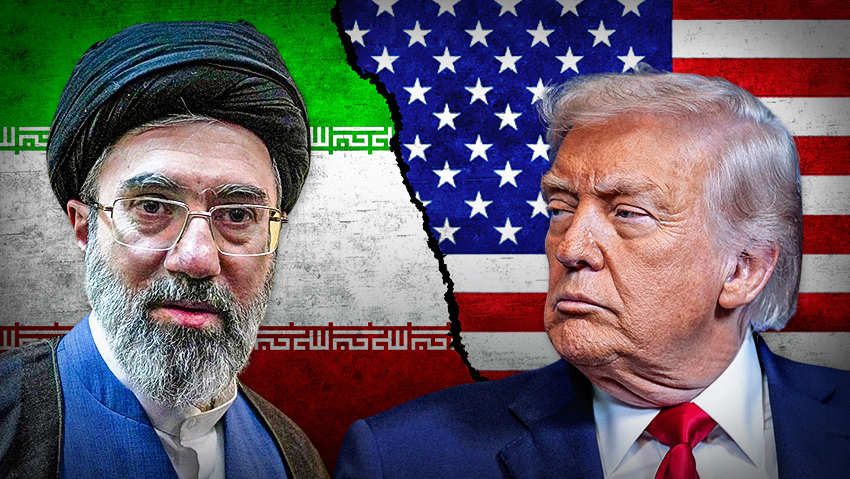
(Photo: Hamed Jafarnejad/ISNA/WANA (West Asia News Agency) via REUTERS, shutterstock, AP/Alex Brandon)
Trump said Monday evening he had planned a very major attack but put it off, for a little while, hopefully maybe forever, after receiving requests from Gulf leaders to give negotiations more time. He said the Emir of Qatar, Sheikh Tamim bin Hamad Al Thani, Saudi Crown Prince Mohammed bin Salman, and UAE President Mohamed bin Zayed Al Nahyan had each personally urged him to delay the planned strike, citing ongoing negotiations with Tehran and expressing confidence that a deal would be reached. Trump, framing the concession as deference to allies rather than weakness, agreed to stand down.
The pause came loaded with warnings. Trump instructed Defense Secretary Pete Hegseth, Joint Chiefs Chairman General Daniel Caine, and the broader U.S. military to remain fully prepared for a full, large-scale assault on a moment's notice should negotiations collapse. But threats attached to pauses are still pauses, and Tehran's strategists understand exactly what they are looking at: another window, another delay, another cycle in which Iran does not pay for its violations.
The violations are not in dispute. The United Arab Emirates, one of the three nations now lobbying for restraint, had recently accused Iran of launching drone and missile attacks despite the ceasefire. On Sunday, a drone strike sparked a fire on the edge of the UAE's sole nuclear power plant in what authorities called an unprovoked terrorist attack. The Barakah nuclear facility, the Arab world's first operational reactor, sits near Abu Dhabi. A drone struck an electrical generator on its perimeter. The IAEA confirmed the incident and noted that off-site power was restored only after emergency diesel generators were deployed. The UAE did not publicly name Iran. It did not need to.
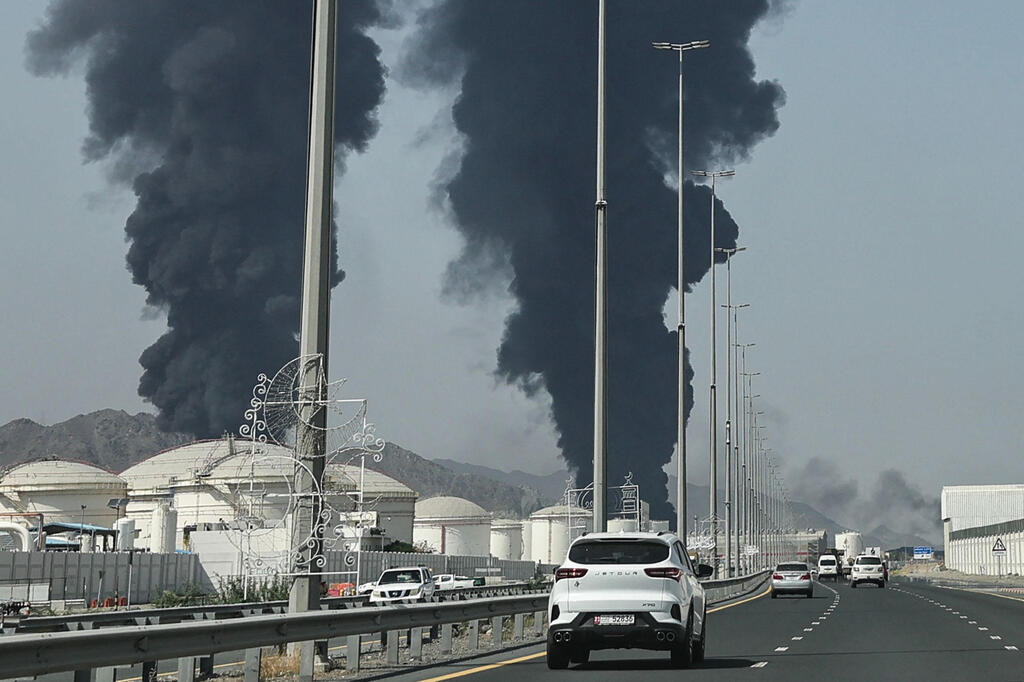
Smoke rises in Fujairah, UAE, after an Iranian attack
(Photo: AFP)
This is the paradox at the center of the current ceasefire. Iran attacks the Gulf states. The Gulf states then lobby Washington for restraint on Iran's behalf. Tehran fires at the hand that feeds the argument for its survival. And the hand, rather than withdrawing, extends further.
The logic, from the Gulf's perspective, is not irrational. It is desperate. The Gulf governments have increasingly positioned themselves as intermediaries while also seeking to avoid a direct military confrontation between the U.S. and Iran that could threaten oil markets and shipping lanes across the Middle East. A second full-scale American assault on Iran, coming six weeks after the first, would not merely close the Strait of Hormuz for another month. It could close it indefinitely. It could ignite Iraqi Shia militias already active against American and Gulf targets. It could collapse the already-fragile security architecture that Abu Dhabi, Riyadh, and Doha depend on for their economic survival. So they beg. And Iran knows they will beg. And Iran keeps striking.
The pattern continued Tuesday afternoon when explosions were heard on Qeshm Island in the Strait of Hormuz, near where air defenses had already been activated twice in the previous twenty-four hours. Pro-regime protesters in the area were filmed chanting "Death to Israel" and "Death to the United Arab Emirates." Iranian authorities attributed the sounds to the neutralization of unexploded munitions. The timing, hours after Trump announced his pause, was its own message.
The negotiating positions remain far apart. Iran's demands include the release of Iranian assets frozen abroad, the lifting of long-standing sanctions, and reparations for the war. Iran's Fars news agency said Washington had presented a five-point plan that included a demand for Iran to keep only one nuclear site in operation and transfer its stockpile of highly enriched uranium to the United States. Tehran has rejected this framework while simultaneously signaling openness to talks. The gap between those two postures is not a negotiating tactic. It is a strategy designed to extend the ceasefire period indefinitely while Iran rebuilds, reconstitutes, and recalibrates.
Iran's supreme leader was killed in the initial strikes on February 28, but the clerical state has proven resilient. The Revolutionary Guards have effectively absorbed the institutional shock of losing the top of the command chain. The IRGC spokesman declared this week that Iranian forces control the Strait of Hormuz and that the situation will not return to its previous state, a statement that functions simultaneously as a threat, a negotiating position, and a declaration of victory. Iran entered the war as a regional hegemon with a nuclear program and a proxy network. It has lost its supreme leader and much of its conventional capacity. Yet it is now dictating the tempo of American military planning through intermediaries who are its own victims.
Trump is not wrong to want a deal. A second round of fighting, launched before the first round has produced a durable framework, risks all the gains of the February campaign without securing any of its strategic objectives. But the conditions for a deal that actually matters are not present. Iran is not negotiating out of weakness. It is negotiating out of patience, offering just enough flexibility to keep American bombs grounded while it recovers.
The question now is whether Washington recognizes the difference between a pause that creates space for genuine diplomacy and a pause that simply rewards the next strike. History in this region does not favor optimism on that distinction. Iran has survived worse and learned more from every round than its adversaries expected. The explosions over Qeshm Island today were not a provocation. They were a reminder.
- Amine Ayoub, a fellow at the Middle East Forum, is a policy analyst and writer based in Morocco.