

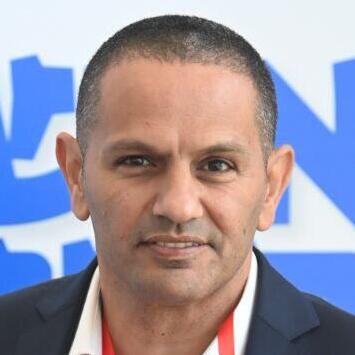
Prime Minister Benjamin Netanyahu’s selection of Maj. Gen. Roman Gofman, 49, as the next Mossad director has drawn intense attention inside Israel’s security establishment, highlighting the unusually close relationship that developed between the two men during the war and raising questions about how the appointment will reshape the intelligence agency.
Gofman, currently the prime minister’s military secretary, emerged as one of Netanyahu’s most influential advisers over the past year, according to senior officials familiar with their working relationship. After the failures exposed by the Oct. 7 Hamas attack, Gofman became a central conduit of battlefield information to the prime minister and helped shape key military decisions — a role normally reserved for the IDF chief of staff.

(Photo: GPO)
The shift created friction with then–Chief of Staff Lt. Gen. Herzi Halevi, who saw his authority erode as senior commanders began turning to Gofman to reach Netanyahu directly. Under ordinary circumstances, officials said, such a dynamic would have been unacceptable. But the crisis of confidence following Oct. 7 left a vacuum that Gofman quickly filled.
From Belarus to the Prime Minister’s inner circle
Gofman was born in Belarus in 1976 and immigrated to Israel at age 14. In interviews, he has described a difficult adjustment and a desire to deepen his understanding of Israeli identity. After completing officers’ training, he embarked on what he called an intellectual journey: finishing his matriculation exams, earning a university degree, and studying Zionist and Israeli history.
He rose through the Armored Corps, later commanding the Etzion Brigade during a wave of stabbing attacks, and then the storied 7th Armored Brigade. In that role, he openly challenged the IDF’s reluctance to conduct ground operations, telling then–Chief of Staff Gadi Eisenkot that a dangerous pattern of inaction was emerging. Officers who later faced criticism over Oct. 7 had dismissed him at the time, colleagues recalled.
As commander of the Golan Division, he warned that any future conflict with Hezbollah would require decisive maneuvering. On Oct. 7, while serving as head of the Ground Forces Training Center in Tze’elim, Gofman joined first responders in Sderot, killed at least two attackers, and was seriously wounded. Netanyahu appointed him military secretary months later, awarding him the rank of major general.
A controversial episode
Gofman’s record includes one contentious case. While commanding a division in the north, he authorized a 17-year-old civilian to take part in an influence operation without proper clearance. The teen disseminated classified information, was arrested by the Shin Bet and held for 18 months until investigators learned he had acted under Gofman’s direction. Charges were dropped, and Gofman received an administrative reprimand.
A divisive appointment
Unlike previous Mossad chiefs Yossi Cohen and Meir Dagan, outgoing director David Barnea will not receive a term extension. Barnea’s tenure included achievements, but several former senior officials said many high-profile operations attributed to the Mossad were in fact led by the IDF and Military Intelligence. They also said Barnea failed to groom a successor, leaving Netanyahu to choose an outsider with no intelligence background.
Two internal candidates were passed over, and officials expect both to resign.
Gofman is likely to encounter opposition within the Mossad, especially from veterans who recall the unauthorized influence operation. Unlike the Shin Bet, where incoming director David Zini enjoyed significant internal support, Gofman enters an organization known for its sensitivity to external appointments.
 Yossi Yehoshua
His lack of intelligence experience has prompted comparisons to Dagan, who also arrived from outside the intelligence world but ultimately reshaped the agency. Whether Gofman can repeat that success — or whether his appointment reflects political considerations more than professional necessity — will become clear only in the months ahead.
Netanyahu’s office has not commented on the internal criticism, and Gofman has not spoken publicly since the appointment was announced.