


On Thursday, July 30, 2026, thousands of young men and families crossed the heavily fortified border line separating Moroccan territory from Spain’s North African enclave of Ceuta. According to verified, contemporaneous reporting from international news agencies Reuters, EFE and the Associated Press, alongside statements from Spanish regional authorities, dense crowds surged past physical barriers on foot and swam around the Tarajal breakwater after Moroccan auxiliary security forces were observed stepping back from key posts along the perimeter fence.
This dramatic influx followed a tense week in which more than 1,500 migrants had already reached the enclave by swimming across the short coastal stretch. The sheer scale of arrivals severely strained local reception infrastructure in Ceuta.
Coming from the sea, breaking through the fence: the assault on Ceuta


Official municipal figures indicated that emergency reception centers for adults and temporary housing facilities for unaccompanied minors operated between sixteen hundred percent and twenty-four hundred percent of their intended design capacity. In immediate response to the unfolding emergency, Juan Jesús Vivas, the Mayor-President of Ceuta, publicly requested that the central government in Madrid declare a national state of emergency and deploy the Spanish armed forces to secure the frontier. Spain’s Interior Minister, Fernando Grande-Marlaska, scheduled an urgent visit to the city, while official Spanish government statements emphasized continued security coordination with Rabat and explicitly credited Moroccan security forces with intercepting many would-be crossers before they could reach the boundary line.
Spanish political commentators and international security analysts have interpreted the surge as a deliberate relaxation of perimeter enforcement by Moroccan authorities, pointing directly to the observed tactical retreat of security personnel from primary border posts. Conversely, Moroccan officials rejected allegations of engineered political pressure. They pointed to continuous daily interceptions of hundreds of crossers by their own security forces, exceptionally difficult maritime swell conditions, acute regional socioeconomic factors, and the legal impact of a recent Spanish Supreme Court ruling issued in late June and early July 2026 that restricted summary pushbacks of individuals intercepted while swimming near the shore.
Gallery
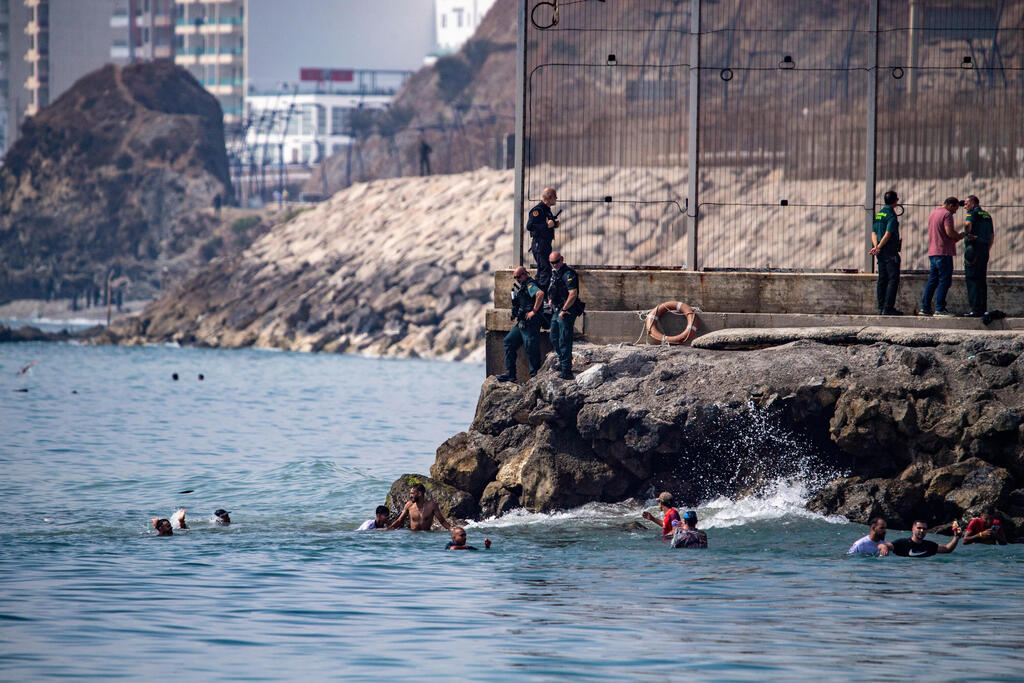
Spanish Supreme Court ruling issued in late June and early July 2026 restricted summary pushbacks of individuals intercepted while swimming near the shore
(Photo: AP Photo/Antonio Sempere)
Morocco possesses an established, calibrated capability to manage border enforcement along Europe’s only direct land frontier with the African continent, retaining the practical ability to tighten or loosen physical access based on its strategic assessment.
The immediate geopolitical context surrounding this operational demonstration cannot be separated from the diplomatic maneuvering that occurred in North Africa 10 days prior. On July 20, 2026, Spanish Prime Minister Pedro Sánchez conducted a high-profile official visit to Algiers, where he held an extensive meeting with Algerian President Abdelmadjid Tebboune.
Sánchez was accompanied by a delegation of senior executives from Spain’s leading energy conglomerates, including Naturgy, Repsol and Enagás. The explicit objective of the visit was to expand natural gas imports through the Medgaz pipeline, given that Algeria supplied roughly one-third of Spain’s total natural gas during the first half of 2026.
Crucially, Sánchez sought these commercial energy concessions without offering any formal revocation of Spain’s March 2022 endorsement of Morocco’s autonomy plan for Western Sahara. Nevertheless, the timing of the Ceuta surge, occurring exactly 10 days after Sánchez’s departure from Algiers, has been widely read by regional security analysts as a tactical signal. To planners in Rabat, Madrid’s high-visibility energy courtship of Algiers represented an ill-advised attempt to hedge between North Africa’s primary strategic rivals, signaling to Spanish leadership that diplomatic hedging carries immediate operational costs along the Strait of Gibraltar.
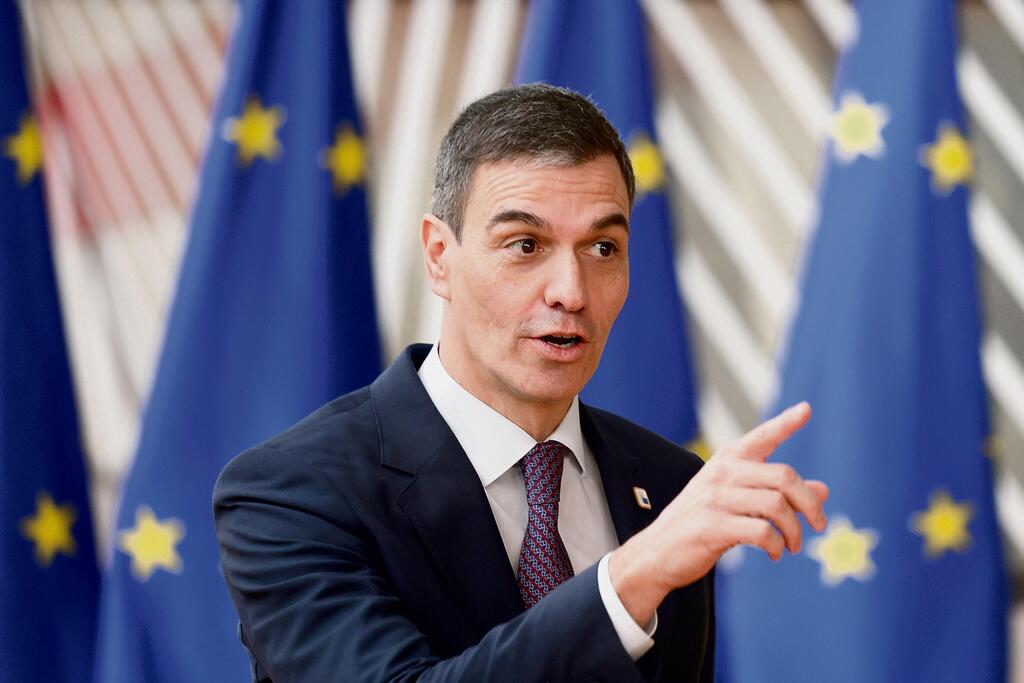
Spanish Prime Minister Pedro Sánchez conducted a high-profile official visit to Algiers
(Photo: AP/Omar Havana)
This operational dynamic reinforces why Morocco occupies a central position within the joint grand strategy of the United States and Israel. The December 2020 normalization of relations between Jerusalem and Rabat, negotiated under the Abraham Accords framework, was fundamentally tied to Washington’s formal recognition of Moroccan sovereignty over Western Sahara. Israel solidified this tripartite strategic alignment in July 2023 by issuing its own explicit, formal recognition of Moroccan territorial integrity over the disputed territory.
Far from remaining a symbolic diplomatic arrangement, this structure has evolved into a robust hard-power security axis linking Washington, Jerusalem and Rabat. Bilateral defense integration between Israel and Morocco has advanced rapidly through structured intelligence sharing, joint military work plans and the operational integration of advanced Israeli defense technologies, including air defense batteries and uncrewed aerial vehicles. The establishment of joint co-production facilities for defense hardware inside Morocco further embeds Israeli technological expertise into the North African strategic ecosystem.
From the perspective of American grand strategy, supporting Morocco is anchored in long-standing diplomatic tradition and structural necessity. The 1786 United States-Moroccan Treaty of Peace and Friendship stands as the longest unbroken treaty relationship in American history, representing a foundational commitment to a stable partner along the Atlantic approach to Africa. American defense planners view the Moroccan monarchy as an essential anchor against regional radicalism and a vital counterweight to Algerian hostility and expanding Iranian influence networks across North and West Africa.
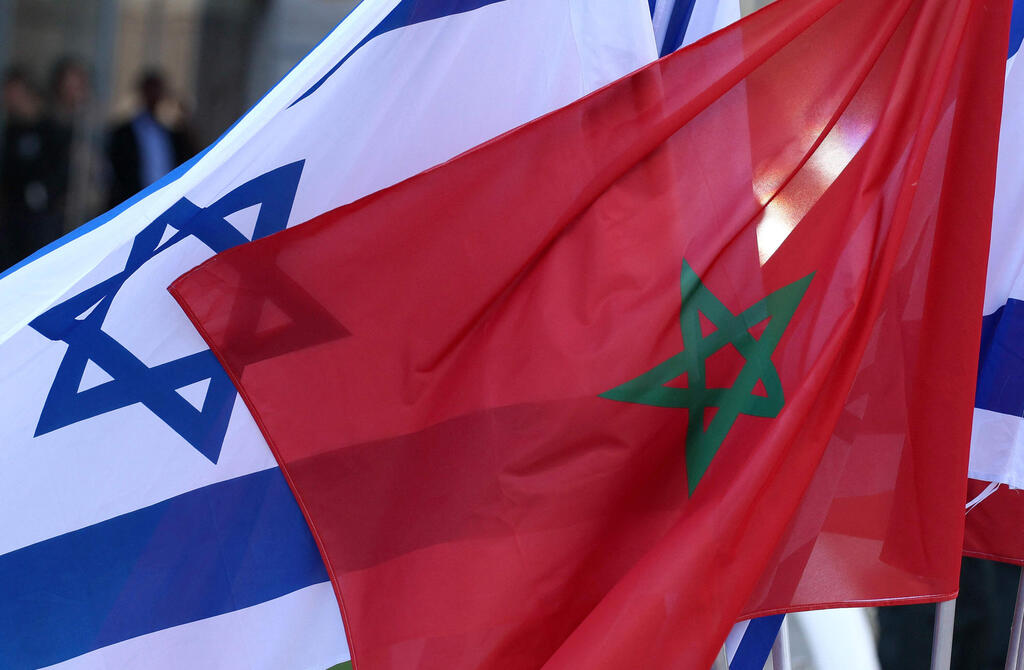
Bilateral defense integration between Israel and Morocco has advanced rapidly through structured intelligence sharing, joint military work plans, and the operational integration of advanced Israeli defense technologies
(Photo: AFP)
The integration of Morocco into expanded regional security initiatives, including United States Africa Command exercises and Central Command operational frameworks, reflects Washington’s recognition that Rabat serves as a vital western flank for broader Middle Eastern and Mediterranean security. When European nations experience security vulnerabilities along their southern approaches, both Washington and Jerusalem derive direct strategic benefit from a resilient, well-resourced Moroccan state capable of projecting authority without falling into domestic instability or political paralysis.
Critiques from Western non-governmental organizations often frame Morocco’s border posture as an unethical deployment of human migration for political leverage. From a realpolitik perspective, this normative critique misunderstands the fundamental mechanics of sovereign statecraft in contested geographic zones. Sovereign nations routinely calibrate border enforcement mechanisms, regulatory barriers and interdiction capabilities to defend their core national interests and signal strategic priorities.
Spain itself has historically employed physical barriers, maritime interdictions and strict perimeter controls whenever national security dictates.
Furthermore, the European Union as a collective entity maintains transactional migration management arrangements with external partners, including Turkey and various North African regimes, to insulate its external boundaries. Morocco, however, distinguishes itself from other regional actors through its institutional coherence, professional military apparatus, and explicit alignment with Western security priorities. Sustaining support for Rabat’s defense capabilities and core territorial objectives represents a pragmatic, long-term investment in regional order along a vital maritime choke point.
The events of July 30, 2026, along the Ceuta perimeter serve as an unmistakable stress test for Mediterranean power dynamics. They highlight the structural fragility of Europe’s southern perimeter and demonstrate Morocco’s decisive role in regulating trans-Mediterranean stability.
The Abraham Accords were conceived to build a coalition of capable sovereign states capable of securing vital maritime corridors, countering revisionist regional alignments, and maintaining strategic balance. Supporting Morocco during periods of border friction or European diplomatic double-dealing is not an exercise in political favor, but the necessary execution of a joint grand strategy.
Amine Ayoub, a fellow at the Middle East Forum, is a policy analyst and writer based in Morocco. Follow him on X: @amineayoubx