

The IDF has reduced the size of its force in southern Lebanon from five divisions to three: two deployed for defense and one — the 36th Division — focused on offensive operations, according to the IDF. The effort by the troops on the ground is great, sometimes even heroic. The operation is legitimate: There are no good solutions in Lebanon. Is it useful? That is not certain.
The IDF is now doing in southern Lebanon what looks like a copy-paste of what it did in Gaza. If the result is the same result — the renewed strengthening of a terrorist organization and futile stagnation and destruction in captured territory — the damage outweighs the benefit. “Insanity is doing the same thing over and over again and expecting different results,” Albert Einstein said, but what did Einstein understand about wars?
It is easy, and justified, to pile on our Cabinet, a group of politicians who might not be elected to a building committee. But in the decision-making process in wartime, the chief of staff and the generals of the General Staff carry great weight and great responsibility. They cannot play small, certainly not opposite Cabinet ministers who do not know the difference between Nukhba and Nakba.
The ground entry into southern Lebanon was planned in advance. The IDF did a lot to tempt Hezbollah to open fire. The terrorist organization, battered, humiliated and hated by its own people, was not looking for wars. It absorbed and absorbed until early March, when it could no longer restrain itself. Missiles were launched from Lebanon in large numbers, and the operation for Hezbollah’s final destruction opened with fanfare.
Fine. It was important to distance the Radwan Force from the northern communities and strengthen deterrence. What was even finer was American support. The U.S. administration and the heads of its security branches had a blood account with Hezbollah. In previous wars in Lebanon, in 1982 and 2006, the Americans were a restraining factor. This time, as far as Hezbollah was concerned, they were a motivating factor.
American support is a bonus, but it is far from the main thing. I visited the headquarters of one of the divisions at the start of the ground entry. The plan was to take control of an area reaching up to 6 kilometers north of the border. That would block anti-tank fire at the northern communities, which was then seen as the greatest threat.
“If you block the anti-tank fire, you will get the same threat in rockets,” I told one of the officers. “If you block the underground, you will get it above ground, as happened around Gaza on Oct. 7. The ground entry will not solve the problem.”
He agreed with me, and went back to doing what he had been ordered to do.
As with Iran, so with Hezbollah: The decision-makers underestimated the enemy’s strength, resilience and fanaticism. Intelligence knows which window in every terrorist’s apartment in Dahiyeh leads to the bed he sleeps in, but it does not know how to understand the other side’s power, its survivability.
Israel’s decision-makers sanctify targeted killings. The operational achievement is amazing: well done. Most of the leaders and commanders who were killed earned their deaths honestly. But experience teaches that apart from very temporary damage to the enemy’s command-and-control system, there is no proven benefit to assassination. The IDF functions as the human resources department of Iran and its proxies: The next leader is more fanatical than the previous one, and sometimes more effective. The framework is stronger than its leaders.
Not the killing of Khamenei and the top of the Iranian regime created a turning point; not the killing of Nasrallah and his predecessor Abbas Musawi; not the killing of Sinwar and his brother; not even the killing of Sadat.
I hesitate to write the next sentence, but it is the truth: Yes, the assassination of a leader created a real change in our situation. It happened only once — on Nov. 4, 1995.
Back to Lebanon: In the IDF, they thought about anti-tank missiles but ignored drones, even though the issue of drones has occupied armies around the world for more than a decade. Israel’s defense industry has achieved enormous successes in developing sophisticated, precise, terribly expensive defense systems. We are a startup nation: We go for the best. Dealing with inferior, cheap toys — drones, for example — we left to others. That, too, is a subject that deserves to be investigated in depth one day.
A solution will eventually be found for drones: The best minds are now working on the project 24/7. That will not help the soldiers and civilians who were killed and wounded, but the country will overcome it. I hope it will also overcome the rocket problem. But the Lebanon problem will not be solved at Elbit or Rafael.
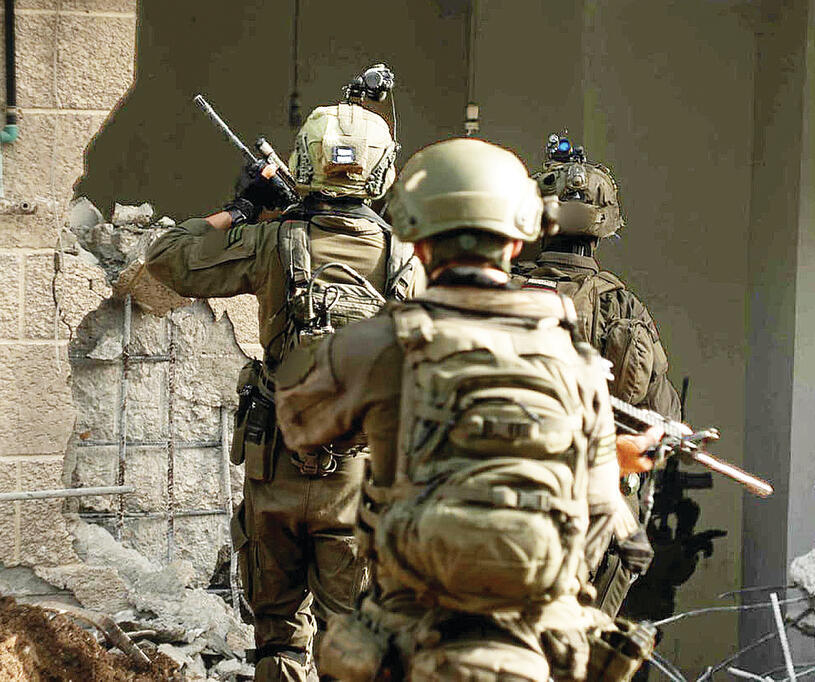
The 36th Division is now operating in the area overlooking Metula and Misgav Am, toward the Litani. The forces are eliminating cells, preparing routes and, mainly, destroying infrastructure Hezbollah left behind.
“Why destroy every house?” I ask a military official. After all, when the million Lebanese who were forced to leave their homes — half from southern Lebanon, half from Dahiyeh — return and find ruins, they will return to supporting Hezbollah. The organization has been gaining renewed popularity in Lebanon in recent weeks. In effect, we are building Hezbollah.
“That is what happens in fighting in built-up areas,” the military official said. “Take Qantara as an example: All the buildings in the village were bought by Hezbollah. We found weapons in every house. We located 2 kilometers of underground infrastructure there. I have to clean the area, create a security zone, so I have control, so a terrorist cannot return and harm our forces. There is not one righteous house there.
“What is happening is a tragedy,” he concluded.
Indeed, a tragedy.