


The flood of reports and leaks in recent days surrounding the U.S.-Iran negotiations has been filled with contradictions, disinformation, political interests and very few hard facts. More than anything, it reflects how many hands are stirring the pot.
For the average news consumer, the result is confusion and a constant, unsettling uncertainty. One moment, it appears the United States and Israel are on the verge of renewed strikes in Iran. The next, the diplomatic track seems to be moving toward understandings between the Trump administration and Tehran.
Gallery
(Photo: AFP - SOURCE: UGC / UNKNOWN, REUTERS/Jessica Koscielniak/Stringer, Oliver CONTRERAS/AFP)
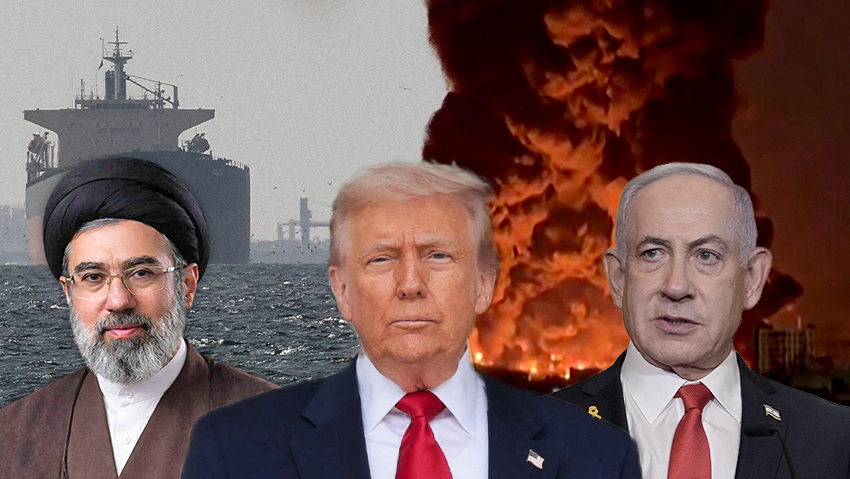
As of Saturday evening, the direction appeared to be shifting toward an agreement, and the likelihood of an immediate American strike seemed to have decreased.
According to reports in the United States and the region, Washington and Tehran are moving toward an initial understanding through Pakistani and Qatari mediation. This is not yet a comprehensive agreement that would end the confrontation in all its dimensions. It is a document of principles, a memorandum of understanding, meant to serve as the basis for a more detailed round of negotiations expected to last 30 to 60 days.
The concern in Jerusalem is that an interim understanding could stop the war without dismantling Iran’s nuclear infrastructure, without limiting its ballistic missile and drone programs, and without curbing the activity of its regional proxies, especially Hezbollah in Lebanon and the Houthis in Yemen.
One source familiar with the Iranian arena put the Israeli fear bluntly: once the United States enters a prolonged negotiating process with Iran, Tehran gains time, leverage and room to maneuver.
The Israeli concern is not only about what officials in Jerusalem define as a “bad deal,” meaning an agreement that allows Iran to preserve capabilities it can rebuild over time. It is also about the political horizon in Washington. Israeli officials fear that if the issue is pushed down the road, a future U.S. administration, or a less pro-Israel political climate in Congress and among American voters, could leave Israel with far less freedom to act.
In that scenario, Israel could face heavy diplomatic pressure, restrictions on weapons and spare parts, and a clear American warning not to act independently against a renewed Iranian threat.
For now, Iran’s willingness to move toward an arrangement appears to stem first and foremost from its desire to stop the war. Tehran is not seeking only a temporary ceasefire. It wants an American commitment to end the war entirely, including on related fronts, chief among them Lebanon.
Even hardline circles in Tehran appear to understand that the combination of Washington’s economic pressure and another wave of American-Israeli strikes, especially against strategic national energy infrastructure, could severely damage Iran’s ability to recover economically from the war and from the already deep crisis facing the regime.
Such a scenario could threaten the regime’s stability. That is why Tehran is showing flexibility on the structure of an interim arrangement, while still trying to preserve its most important strategic assets.
Washington, too, has an interest in stopping the escalation. President Donald Trump and his team are facing economic and political pressure to end the war, or at least prevent it from expanding further. An interim arrangement could allow the White House to claim diplomatic progress while postponing the most explosive questions to a later stage.
The problem, from Israel’s point of view, is that postponement has often been Iran’s strongest card.
Iran’s demands
Iran is placing several central demands on the table.
The first is an American commitment to end the war, not only inside Iran but also on fronts linked to the Iranian axis. In practice, that could include Lebanon, where Hezbollah continues to pose a direct threat to Israel despite formal understandings and repeated diplomatic efforts to stabilize the border.
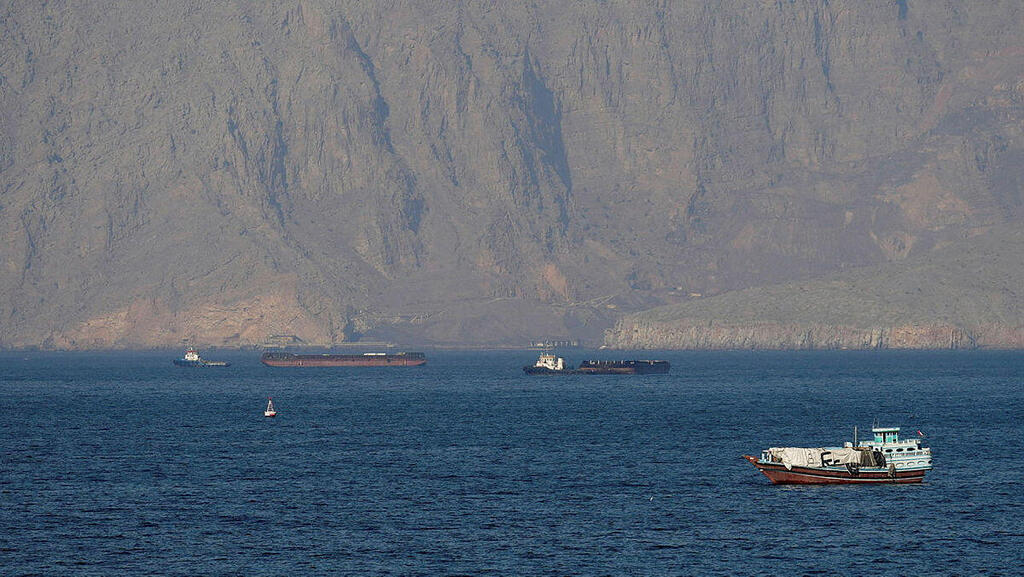
The second demand concerns the Strait of Hormuz. Tehran is seeking recognition of a special Iranian role in managing traffic through the strategic waterway. In some formulations, this includes influence over shipping routes and the possibility of collecting payments from vessels in exchange for what Iran describes as security services.
Washington rejects the idea of Iranian control or tolls in an international waterway. Gulf states also oppose any arrangement that would allow Tehran to turn the strait into a permanent lever of pressure over global energy markets.
(Photo: REUTERS/Stringer/File Photo)
Still, diplomats may try to find a vague formula that Iran can accept without giving it everything it wants. That kind of ambiguity is precisely what worries Israel and Gulf states: even if Iran does not receive formal control over Hormuz, it may retain the practical ability to threaten, disrupt or block the strait whenever it chooses.
The third Iranian demand is access to frozen funds and sanctions relief. Tehran wants frozen assets released and is seeking financial breathing room after months of war, economic pressure and damage to infrastructure. According to reports, Iran may be willing at this stage to accept a partial release of funds, provided it happens quickly.
Iran is also demanding compensation for war damage. One possibility raised in diplomatic channels is that any financial arrangement may involve Qatar or other mediators rather than a direct American payment to Tehran.
The American demands
The American position remains centered on the nuclear issue. Washington wants Iran to commit clearly that it will not possess nuclear weapons. On its face, that is not a difficult statement for Tehran to make. Iran has long claimed that its nuclear program is peaceful, even as its enrichment levels, concealment efforts and military infrastructure have pointed in a far more dangerous direction.
The real dispute is not over a general declaration. It is over the details.
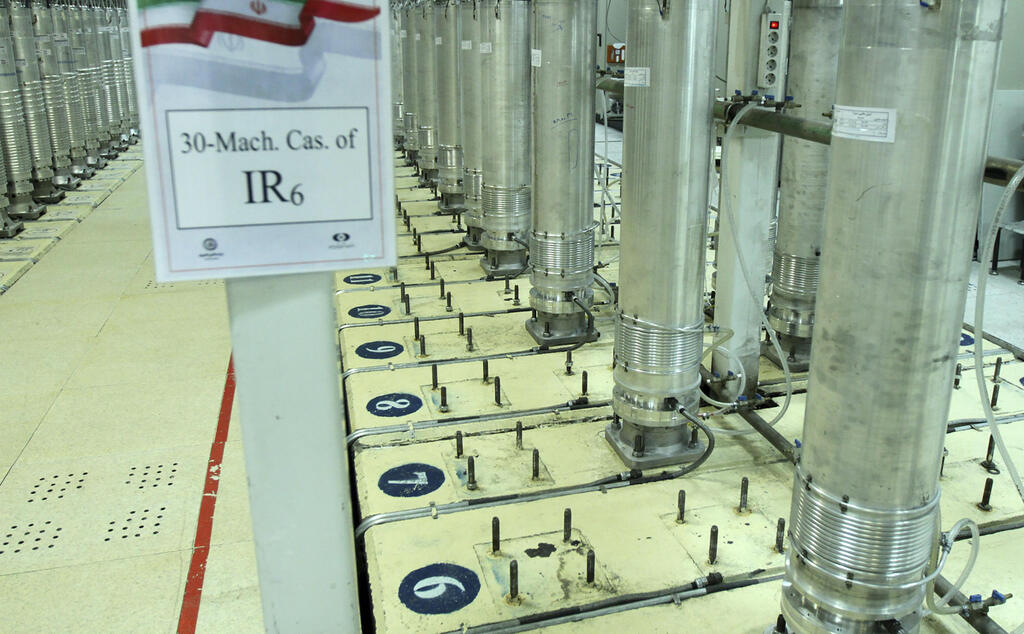
Washington wants the memorandum, or at least the follow-up process, to address Iran’s stockpile of highly enriched uranium. The American demand is that the material be removed from Iranian soil, diluted, or otherwise placed beyond Tehran’s immediate reach.
Iran, according to reports, may be willing to discuss diluting uranium enriched to high levels, but is resisting any demand that all such material be removed from the country. Tehran wants at least part of the material to remain in Iran, even if under some form of monitoring or limitation.
For Israel, that is a red line in practice. Any agreement that leaves enriched uranium on Iranian soil, even if temporarily, is seen in Jerusalem as preserving the core of Iran’s nuclear breakout capability.
It is still unclear whether Washington will agree to any formula that allows Iran to continue low-level enrichment, possibly around the level permitted under previous nuclear frameworks, and in limited quantities. From Israel’s perspective, even low-level enrichment on Iranian soil is problematic because the infrastructure, expertise and legitimacy of the program would remain intact.
(Photo: AP)
That is why the sequencing of the emerging memorandum is so troubling to Israel. If the war ends first and the uranium issue is deferred to a later round, Iran keeps its most important bargaining chip while gaining relief from military pressure.
The missiles and drones are outside the frame
Another major Israeli concern is what does not appear to be central to the current framework: Iran’s ballistic missile and drone programs.
The emerging memorandum, as described in foreign reports, focuses on ending the war, resolving the Hormuz crisis and opening a window for broader negotiations. But Israel’s threat perception is not limited to uranium enrichment. Iran’s missile and drone arsenal is a direct strategic threat to Israel, to Gulf states and to American forces in the region.
American officials may argue that those issues can be handled later. Israeli officials fear the opposite: once the immediate war-ending framework is signed, the missile and drone issues may be pushed aside, diluted in technical talks, or traded away in the name of preserving the broader diplomatic process.
For Jerusalem, that would be a dangerous outcome. Iran’s nuclear project, missile program, drone capabilities and proxy network are not separate problems. They are parts of the same strategic system.
A deal that addresses only one part, or delays the most difficult parts, could leave Israel facing a renewed and better-positioned Iranian threat within a few years.
The mediators and Tehran’s strategy
The mediation effort has been led in practice by Pakistan’s army chief, Field Marshal Asim Munir. During his visit to Tehran, he met senior Iranian officials, including Foreign Minister Abbas Araghchi, President Masoud Pezeshkian and parliament speaker Mohammad Bagher Ghalibaf.
Those meetings are important, but Israeli assessments remain cautious. The officials meeting foreign mediators are not necessarily the only decision-makers in Tehran. The Revolutionary Guards, hardline political circles and figures close to Iran’s supreme leadership continue to wield decisive influence over security and strategic issues.
The assessment in Israel is that Tehran is allowing its more diplomatic figures to manage the public and international track, while the harder centers of power remain behind the scenes. That allows Iran to present a pragmatic face to mediators while avoiding direct concessions on the issues that matter most.
From Tehran’s perspective, the task is not especially difficult. In the United States, support for continuing the war is limited, and voices in Congress are increasingly warning against another round of escalation. Trump himself has alternated between threats of renewed strikes and public statements that he prefers a diplomatic solution.
Iran understands that clock. It knows Washington wants a way out. It also knows that once negotiations begin, the international system tends to reward process, patience and delay.
What happens if talks collapse
If the negotiations fail and fighting resumes, the next round could look different from the previous one.
Until now, the United States has largely avoided major strikes on Iranian energy infrastructure, including oil and gas production, transportation, refining and processing facilities. Washington has feared that a severe blow to Iran’s economy could produce unpredictable consequences, including public anger that might be directed not only at the regime but also at the West.
Israel has been more willing to consider strikes on strategic infrastructure, believing that deep pressure on the regime’s economic foundations could help achieve the broader goals of the war. But any such action would require careful coordination with Washington and could carry regional risks, including retaliation against Gulf states, oil facilities and American bases.
(Photo: AFP PHOTO / US NAVY / NAVCENT PUBLIC AFFAIRS)
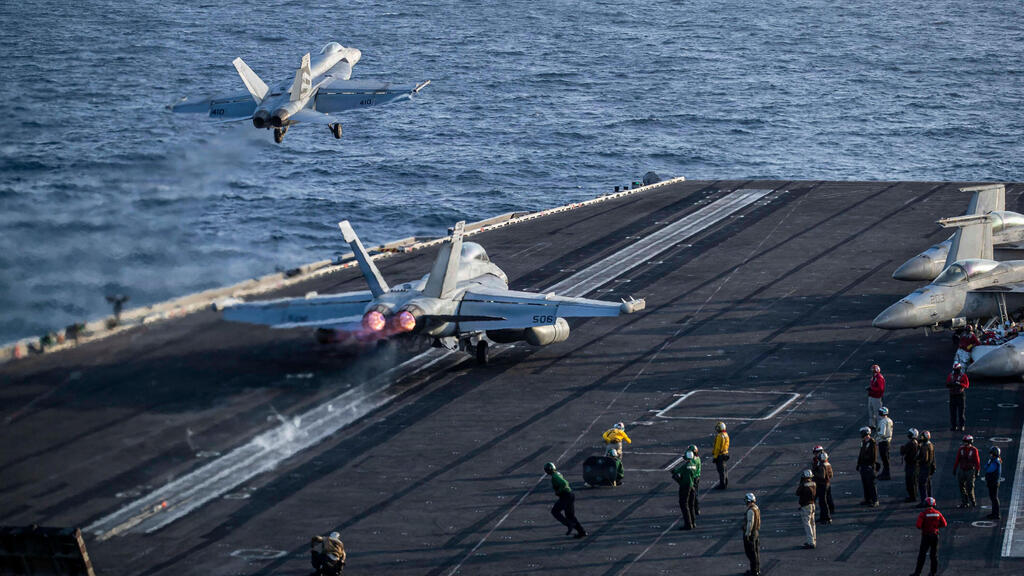
If Trump decides to resume military action, the expectation is that targets could include energy infrastructure, missile facilities, drone production sites, steel plants and petrochemical industries linked to weapons production.
At the same time, there is debate in Washington over the military value of another strike campaign. Some American reports have suggested that Iran has restored a significant portion of its missile and drone capabilities, and that repeating earlier strikes may not produce a decisive result.
Israeli assessments are more nuanced. Officials familiar with the data distinguish between Iran’s short-range systems, which threaten Gulf states and American bases, and the long-range missiles and attack drones capable of reaching Israel.
Iran still has large numbers of shorter-range weapons. But when it comes to the arsenal that directly threatens Israel, a significant portion has reportedly been destroyed, fired or left trapped underground. Production sites, launch infrastructure and command networks have also been damaged, along with personnel connected to those systems.
That does not mean Iran has lost the ability to attack Israel. It still can. But the assessment is that its ability to fire at a pace that would overwhelm Israel’s missile defense systems has been reduced.
Israel’s dilemma
This is the heart of Israel’s dilemma.
A renewed strike campaign could further damage Iran’s military and strategic infrastructure, but it could also trigger retaliation, shake energy markets and increase diplomatic pressure on Washington to restrain Israel.
A diplomatic memorandum, on the other hand, could freeze the war while leaving Iran with enough nuclear, missile and regional capabilities to recover over time.
From Israel’s perspective, the danger is not that diplomacy exists. The danger is diplomacy that stops the fighting without resolving the threat.
That is why Jerusalem is watching the emerging memorandum with deep concern. Israeli officials fear it will not guarantee the dismantling of Iran’s nuclear project, will not limit the missile and drone programs, and will not stop the activity of Iran’s proxies, especially Hezbollah and the Houthis.
For Israel, the preferred outcome is not necessarily an immediate strike. It is continued economic, military and diplomatic pressure until a tougher and clearer agreement is reached.
Such an agreement, from Israel’s point of view, would need to address four issues explicitly: highly enriched uranium, enrichment on Iranian soil, ballistic missiles and drones, and Iran’s regional proxies.
The emerging memorandum, as currently described, does not appear to do that yet.