

Just a few months ago, there was a direct hit on Soroka Medical Center in Be’er Sheva during the Israel-Iran war. It can be strongly stated that hospital planning in Israel has, in recent years, become a top-level national engineering task.
In an era where security threats are not exceptions but part of the routine, with multiple missile barrages and strategic targets in the country threatened, the medical system cannot afford to stop functioning, even for a moment.
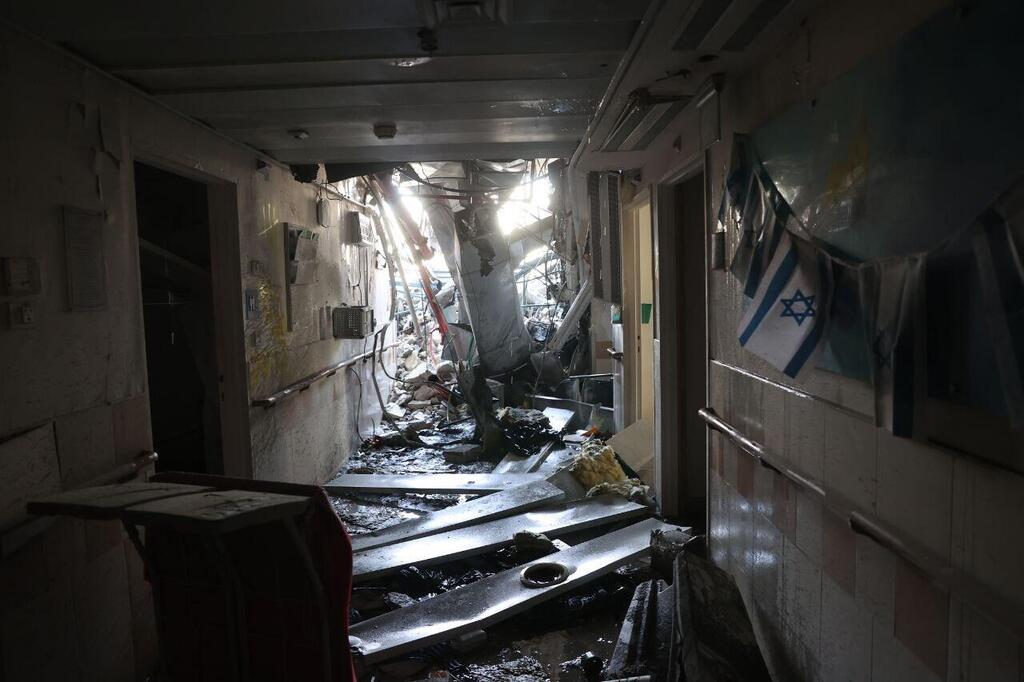
Soroka Medical Center in Be'er Sheva sustained direct impact from an Iranian missile during the recent June war
(Photo: Alex Kolomoisky)
Current planning and construction standards for hospitals in Israel now address not only earthquakes but also, and primarily, security risks and targeted attacks. Fortification is no longer a recommendation but a basic requirement: operating rooms, intensive care units, emergency rooms, energy and communication centers. All are designed to be protected, available, and accessible even under fire.
Saving lives during emergencies
The central principle is maintaining functional continuity. This refers to a hospital’s ability to continue treating patients, stabilizing the injured, and saving lives during emergencies. This requires prior planning of: protected areas, backed-up life-support systems, and means to ensure autonomous functioning, including water, electricity, communication, and medical logistics.
In practice, only a small number of hospitals were built this way. Most were established before the new fortification standards were implemented. Changes are mainly reflected in new wings or departments, which can be redesigned or adapted to regulations. Newly planned and executed hospitals today are fully designed according to these standards, such as Assuta Ashdod.
Today, every newly planned hospital, including existing expansions, must comply with the standard. However, another significant factor comes into play: costs. Meeting strict fortification standards can increase construction and systems costs by tens of percent, depending on the operational concept during emergencies.
If the operational model assumes full functionality under attack, costs soar. If some operational flexibility is allowed, part of the investment can be reduced. This is a systemic decision affecting not only construction but also health policy and budgeting.
A strategic investment
High fortification costs directly influence the pace of hospital construction and expansion and require careful prioritization within government budgets. It is not always possible to execute all projects simultaneously, necessitating a balance between fortification requirements and maintaining regular operational capacity.
 Margolin Engineering & Consulting Co-CEO Yossi Valass Photo: Courtesy
Investment in fortification is not an unnecessary expense but a vital strategic investment, especially in an era of ongoing threats. It will enable future handling of complex crises and large-scale emergencies.
Events since October 7, particularly during attacks by Iran and its affiliates, including rocket and missile fire and constant preparation for large-scale incidents, highlight how essential early planning is. Hospitals must continue operating even when the entire area is under attack.
This is an important step in maintaining public trust alongside providing the required medical care. Beyond the state’s focus on victory on the battlefield, there is a real need to consider the survivability of critical civilian systems. Full functionality of hospitals under attack is an integral part of national resilience.
The author is Yossi Valass, co-CEO of Margolin Engineering & Consulting
First published: 16:08, 09.10.25