

For years, Israel hoped that its conflict with its enemies would have a national character: that it would be based as much as possible on a territorial dispute between peoples and as little as possible on ideology and religion, which would mean an all-out war with no prospect of a settlement.
The main challenge in this regard is fundamentalist Islam, which, based on divine command, prohibits recognition of Israel and permits, at most, a hudna — a temporary truce that can be broken, as happened in the October 7 attack. Dealing with non-Islamist actors has not been easy either, particularly when it comes to genuine acceptance of Israel's existence. But it has been proven that political agreements can be reached, some based on territorial compromise.
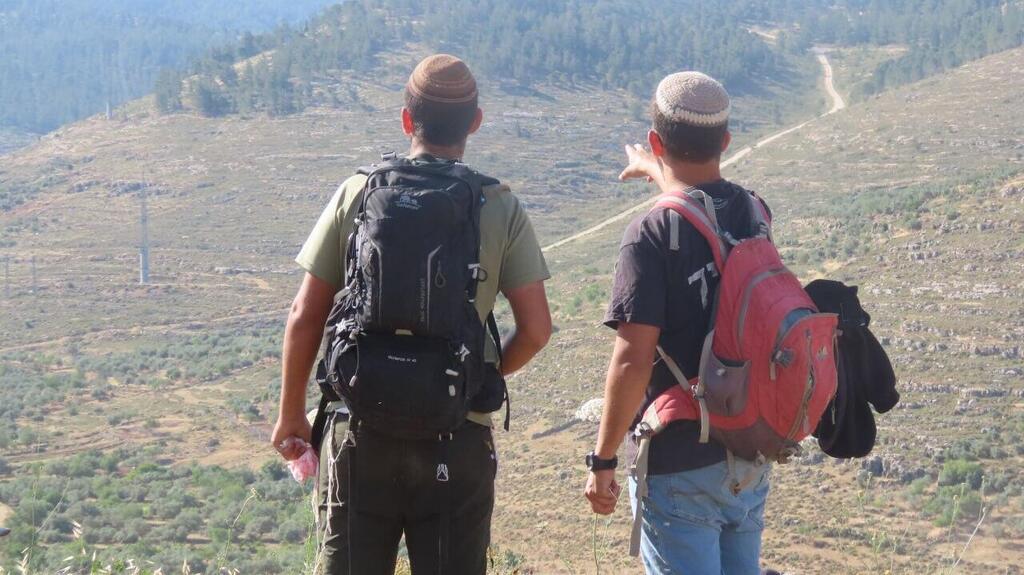
Gush Etzion
(Photo: Yaron Botzer)
Recently, Israel's own conduct has contributed significantly to this longstanding challenge. Since October 7, religiously charged ideas have played an increasingly prominent role in its policies, particularly on the Palestinian issue. Such ideas have always existed, but they have never held such a dominant position as a national compass.
A turbulent reality, with no investigation of the failures or treatment of the collective trauma, has persisted for three years, providing fertile ground for embracing ideas once regarded as unrealistic and even delusional. Concepts and goals drawn from biblical times and associated with the religious Zionist movement are thus being injected into the life of a modern state, without any serious debate over what it means for the state to rely on the belief that we are living in an age of miracles and approaching redemption.
The West Bank is a central arena in the "religionization" of Israeli policy, reflected in the sanctification of holding onto the territory under divine command and in the attitude toward Palestinians — non-Jews who are encouraged to leave, preferably "voluntarily."
To Finance Minister Bezalel Smotrich's past statements about the need to wipe out the Palestinian town of Huwara, establish a Joshua doctrine — under which there are no non-Jewish citizens with equal rights, only "gentiles" — regard Arab Israelis as "citizens for now" and rely on a "God willing" economy and Torah law as in the days of King David, have now been added a promise to fund the construction of a Jewish Temple, as well as telling the Saudis to go ride camels in the desert if they continue demanding negotiations with the Palestinians as a condition for normalization and telling Europe to go to hell over sanctions and criticism of Jewish violence in the West Bank.
The West Bank is a central arena in the "religionization" of Israeli policy, reflected in the sanctification of holding onto the territory under divine command and in the attitude toward Palestinians — non-Jews who are encouraged to leave, preferably "voluntarily." In the extraterritorial realm of the West Bank, norms are developing that are gradually spilling over into the rest of the country and affecting the circumstances and future of all Israelis. Daily life in the West Bank illustrates how the conflict is becoming fundamentally religious, as seen, for example, in the burning of mosques and churches and the deepening Israeli hold on numerous religious sites that are increasingly being accorded the status of existential assets for Israel.
The culmination of this process is the change in the status quo on the Temple Mount, accompanied by a proliferation of ceremonies, most of them religious, with more participants than in the past, alongside public declarations that in the future the Al-Aqsa Mosque will have to be "cleared" to make way for the construction of the Temple.
As they await the election results and focus on the Iranian threat, Arab states, particularly those with ties to Israel, have voiced anger over current Israeli policy on the Temple Mount but have stopped short of taking drastic action. This has given Israeli decision-makers greater confidence to say, "We scared ourselves for nothing." It would be wise to assume that a dramatic change in the status quo at the site cannot be carried out quietly and that eventually a breaking point will be reached, accompanied by severe damage to ties with regional states, which constitute a strategic asset for Israel.
The strengthening of religious elements in Israel's foreign and security policy toward the Palestinians has been accompanied by ceremonies presented as "national events," ranging from festivals calling for a return to the Gaza Strip to holiday tours in northern Samaria, the biblical name commonly used in Israel for the northern West Bank.
On the fringes are delusional efforts to establish settlements in Syrian territory and dangerous crossings of the border with Lebanon. These stir the hearts of many members of the religious Zionist community but mean little to a large portion of the public. In other words, a profound, long-term transformation of the country's national reality is underway without debate, without asking what the citizenry as a whole thinks and without explaining its implications, while imposing the vision of one sector on the broader public.
The strengthening of the religious pole in Israeli strategy is likely to severely damage relations with countries in the region and around the world and lead them to conclude that Israel is changing its character and becoming fanatical, reckless and unequal. That, in turn, could lead to a negative shift in diplomatic and economic relations with Israel.
Those promoting the "revolution" in the West Bank, who are consciously seeking to create a single state between the Mediterranean Sea and the Jordan River, dismiss concerns, let alone criticism, arguing that these are insignificant obstacles compared with the strategic achievement, which they say belongs to "all of us."
If the current policy continues, particularly if it expands and becomes more extreme, it will also severely damage Israel's already fragile internal balance. A proliferation of ideological adventures — such as insisting on operations whose purpose is to enable prayer at religious sites, organizing trips to high-risk areas, particularly in the West Bank, and planting flags in territories that matter greatly to certain groups but have little, if any, significance to others — along with the nightmare scenario of mass expulsions and severe violence against broad populations, will deepen the divisions that already exist over the country's shared vision, values and goals and, above all, over what Israelis are fighting and sacrificing their lives for.
Dr. Michael Milshtein is a senior researcher at the Moshe Dayan Center at Tel Aviv University.