


One of the central problems in covering the war with Iran is not military but perceptual. A senior IDF official says the public in Israel and around the world barely understands what is actually happening there. The reason is not the scale of the activity but the lack of documentation. Unlike other arenas in which the Israel Defense Forces operate, the campaign inside Iran is unfolding almost without cameras, without videos and without a steady stream of images illustrating the intensity of the strikes.
In Gaza or Lebanon, almost every strike is documented within minutes. Videos appear on social media, images circulate on Telegram channels and every hit immediately becomes an international talking point. In Iran, the situation is the opposite: the regime restricts internet access and at times shuts it down completely, access to social networks is largely blocked and information leaving the country undergoes careful filtering. The result is that there is almost no documentation from the ground, and even when images are published they arrive late or in very partial form.
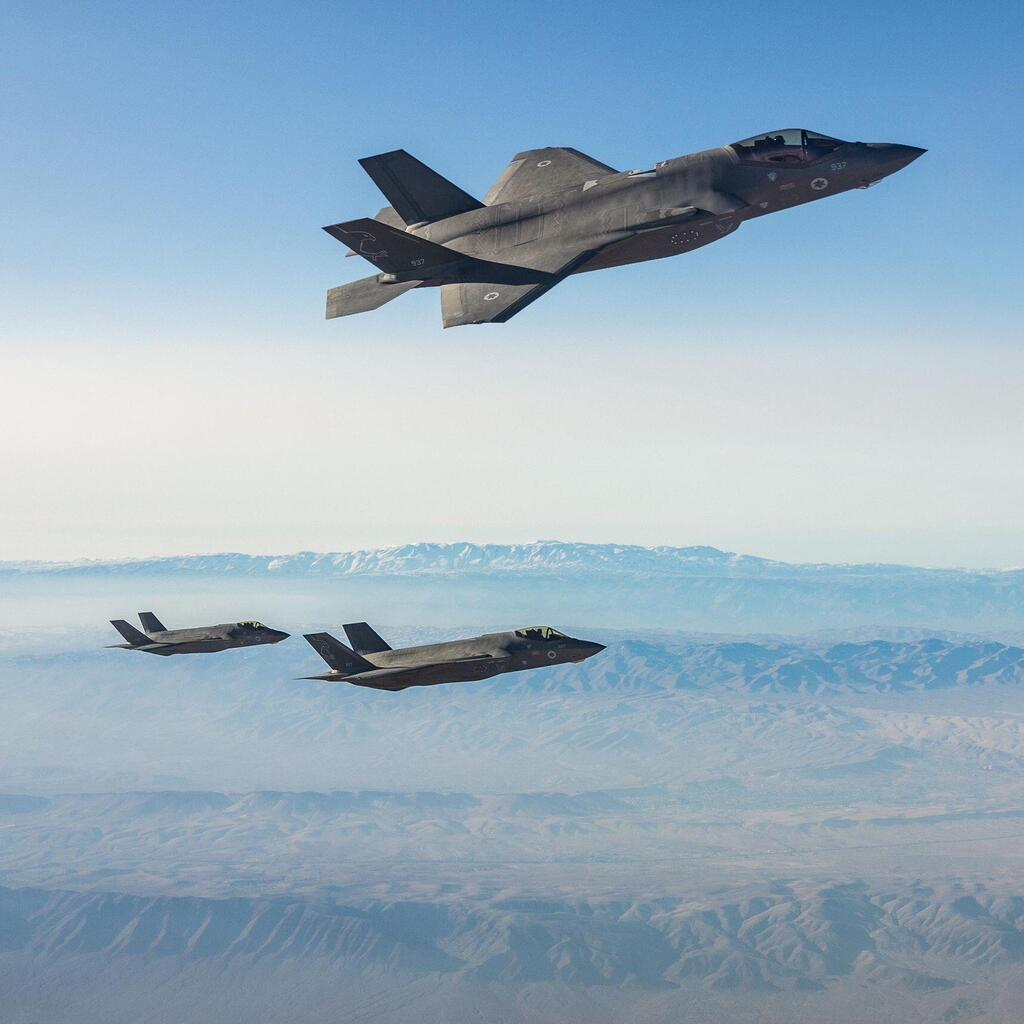
Adir jets on their way to attack Iran
(Photo: IDF Spokesperson's Unit)
“This creates a significant perceptual gap,” the senior IDF official said. “In other arenas the public immediately sees the intensity of the strike. In Iran there are almost no cameras and no network, so it is difficult to illustrate the scope of the activity and the damage inflicted on the regime.” According to him, this gap means the public does not understand how broad the campaign is or how deep the blows on the ground actually are.
The IDF stresses that, behind the small amount of information leaking out, a large-scale campaign is underway, systematically directed against the power centers of the Iranian regime. At this stage, the main effort is focused on striking military infrastructure, headquarters, command-and-control centers, Revolutionary Guard bases and Basij sites. The Basij forces have for years been one of the regime’s main tools for suppressing civilian protests, including during the large wave of demonstrations that erupted in the country in recent years.
In addition, the IDF is acting against the operational infrastructure of Iran’s missile array. According to Israeli assessments, following the recent strikes the Iranian regime is currently unable to produce new ballistic missiles. This represents a particularly significant blow after the IDF systematically struck the entire missile production chain — from development facilities, through manufacturing plants, to component warehouses and the industrial infrastructure that enables the system to operate.
IDF strikes Iranian regime headquarters in Hamedan area
(Video: IDF)


At the same time, the Israeli Air Force has been working to achieve air superiority over large parts of Iran. According to IDF officials, within less than 24 hours from the start of the campaign the Air Force managed to neutralize significant portions of Iran’s air defense network. This achievement was made possible largely thanks to precise intelligence from the Military Intelligence Directorate, which allowed the critical systems to be struck in the early stages of the fighting.
As part of the strikes, more than 120 detection components and about 100 air defense systems across Iran were destroyed. In addition, according to IDF figures, roughly 70% of Iran’s missile launchers have been taken out of service and about 85% of the detection capabilities of the regime’s defense arrays have been damaged. This damage has allowed the Air Force to operate on a broader scale and with far greater freedom of action over large areas of the country.
The activity is not focused only on the weapons themselves but also on the command structure that operates them. In recent days the IDF has also been acting against the command-and-control chain of Iran’s missile array. Senior commanders, command bases and alternate headquarters have been struck in several provinces, which according to assessments in Israel’s security establishment has led to a significant reduction in missile fire toward the Israeli home front.
According to IDF figures, more than 2,200 components tied to the Iranian regime’s security apparatus have been destroyed so far — from intelligence infrastructure to command-and-control facilities and sites belonging to the Revolutionary Guards and internal security forces. This is complex and painstaking intelligence work, based on the integration of multiple sources of information and the ongoing activity of thousands of intelligence personnel in the Military Intelligence Directorate who continue to identify new targets for attack.
The IDF says it is identifying signs of erosion on the Iranian side. According to assessments in the security establishment, thousands of regime personnel have been killed and tens of thousands wounded during the strikes and operational activity. At the same time, there has been a decline in morale among some of the forces, along with indications of reluctance to operate, desertions and refusals to carry out orders.
The IDF stresses that the campaign is not limited by time but by the achievement of its defined objectives. Removing a threat that has been built over decades cannot happen within a matter of days. However, in the security establishment there is an assessment that the window of opportunity that has now opened allows Israel to inflict deep damage on the Iranian regime’s power infrastructure.
According to IDF officials, the achievements so far exceed the early expectations of the security establishment — both in the scale of the damage to the missile and air defense arrays and in the depth of the penetration into the regime’s centers of power. In other words: even if the public barely sees the images, on the ground one of the most significant blows the Iranian regime has suffered in decades is unfolding.