

It turns out that sometimes a story can break through where entire public diplomacy operations struggle to reach.
Last week, the fifth season of “Fauda” premiered on Netflix worldwide, in 190 countries, and almost immediately returned to the international conversation, drawing coverage and reviews outside Israel. It is also the first season to have been rewritten in the wake of October 7, and the trauma of that day runs through it from beginning to end.

From 'Fauda,' Season 5
(Photo: Elia Spinopolos, courtesy of yes)
That same week, poet and author Maya Tevet Dayan, who moved with her family to Canada for a year, described a meeting at her daughter’s new school. The counselor asked what life in Israel had been like in recent years. She answered simply: “Not easy.”
He told her he watches “Fauda” and said that until you live in a certain place, it is difficult to truly understand its reality, let alone judge it from the outside. At the end of the meeting, he told her that if anyone made her feel uncomfortable, she could come to him.
It may be one of the best stories about Israeli public diplomacy I have read recently. Not because “Fauda” is a public diplomacy series. Quite the opposite. If it were, it would probably lose much of its power. First and foremost, it tells a story.
Since October 7, we have been trying to explain facts to the world: videos, testimonies, numbers and maps. To explain what it means to live in communities just minutes from a border, to have someone break into your home, to hear an air-raid siren, to have a child who knows where the safe room is.
But human beings do not understand reality through facts alone. They understand it through other people — through people they can identify with and fear alongside.
That is a central blind spot when it comes to Israel.
From the outside, Israel is perceived as powerful — militarily, technologically and economically. At times, too powerful: the neighborhood bully, a country wielding immense force against those perceived as weaker. It is easy to understand where that image comes from: fighter jets, tanks, special forces and one of the strongest militaries in the world.
But that image misses a deeper layer of the Israeli experience.
It is not always an experience of power. Sometimes it is exactly the opposite: fragility. Short borders. A home that can be breached. A small country where war can reach the living room, the highway, an outdoor music festival and a child’s bedroom.
October 7 made that gap impossible to ignore.
For much of the world, Israel is the stronger side in the conflict. For many Israelis, that day was a chilling reminder that beneath the military strength lies an existential fear as well: that the border will collapse, that the army will not arrive in time, that home will not be safe.
There is no contradiction in that. A country can be extremely strong while at the same time living with the sense that its existence cannot be taken for granted.
Behind the image of power
This is where “Fauda” breaks through to places official Israeli advocacy sometimes struggles to reach.
It takes the viewer behind the image of power: to the soldiers, but also to their families; to operational capability, but also to fear. Suddenly, “powerful Israel” is not merely a country that uses force. It is also a society trying to protect a small and vulnerable space in which to live.
That does not justify every Israeli action. It is simply a layer that is often missing from the international conversation: the understanding that, from the Israeli point of view, the conflict is not only a struggle over borders, rights and policy. Time and again, it is also experienced as a question of survival.
“Fauda” also illustrates the almost unimaginable proximity between the different worlds. Those fighting each other often live only minutes apart, know the same roads, cities, gestures and language.
There is something in that which even a European viewer can recognize: the possibility that a terrorist cell can emerge right under one’s nose, inside a familiar civilian environment. Europe has already experienced the moment when it became clear that someone planning an attack does not necessarily “come from outside,” but may live within society itself.
The series also shatters the image of the Israeli as a hero made of steel.
Its men are broken, post-traumatic, frightened and angry. They cry and use humor as a form of escape. Especially after October 7, there is something courageous about normalizing that brokenness.
Nor is the natural presence of women in key roles within the security establishment insignificant. When women are in the operations room, involved in decision-making and at the center of the plot without any need to explain why, it changes perceptions.
But perhaps the most important thing “Fauda” allows viewers outside Israel to understand is that there is no simple story here.
Public diplomacy is not only an attempt to prove that we are right. It begins with trying to help another person understand the reality in which we live — not so they will agree with us about everything and not so they will ignore the power Israel possesses and the responsibility that comes with it, but so they understand that when Israelis talk about security, they are also talking about their homes, their children and the question of whether we will still be here tomorrow.
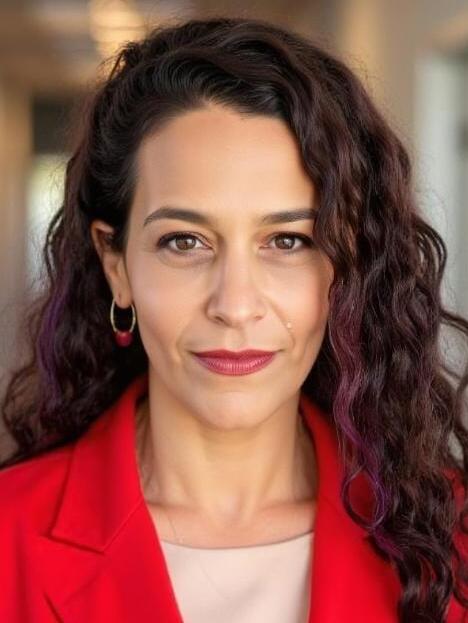 Ayelet Razin Bet Or
Perhaps that is why Maya Tevet Dayan’s story touched me so deeply.
In a distant Canadian community sat a man who had never lived here. He had not received a briefing from an IDF spokesperson and had not taken part in a public diplomacy delegation. He had simply watched a television series.
And it managed to reach a place facts and arguments often struggle to reach: it allowed him to feel, if only slightly, the Israeli reality.
It is a reminder that culture is not a country’s decoration and art is not peripheral to the struggle over public opinion.
A story told well can break through where facts alone come to a halt. Not in order to make the world agree with us, but so that before it judges us, it can for a moment also see the fear that lies behind the power.
- Attorney Ayelet Razin Bet Or is an expert in advancing gender equality and combating gender-based violence and a former director-general of Israel’s Authority for the Advancement of the Status of Women.