


While Iranian missiles destroy American and Qatari defenses, Doha continues to protect the very terrorists attacking Israel. The paymaster finally received the bill — and Israel should take note.
In the escalating shadow war that has engulfed the Middle East since late February 2026, one strike stands out as a bitter symbol of irony and strategic folly. On March 3, 2026, an Iranian ballistic missile penetrated Qatar's air defenses and struck Al Udeid Air Base — the largest U.S. military installation in the Middle East and the forward headquarters of U.S. Central Command (CENTCOM).
Qatar's Defense Ministry confirmed the hit: two missiles were launched toward Qatari territory, one intercepted, the other impacting the base without causing casualties. But satellite imagery and reports tell a more damaging story.
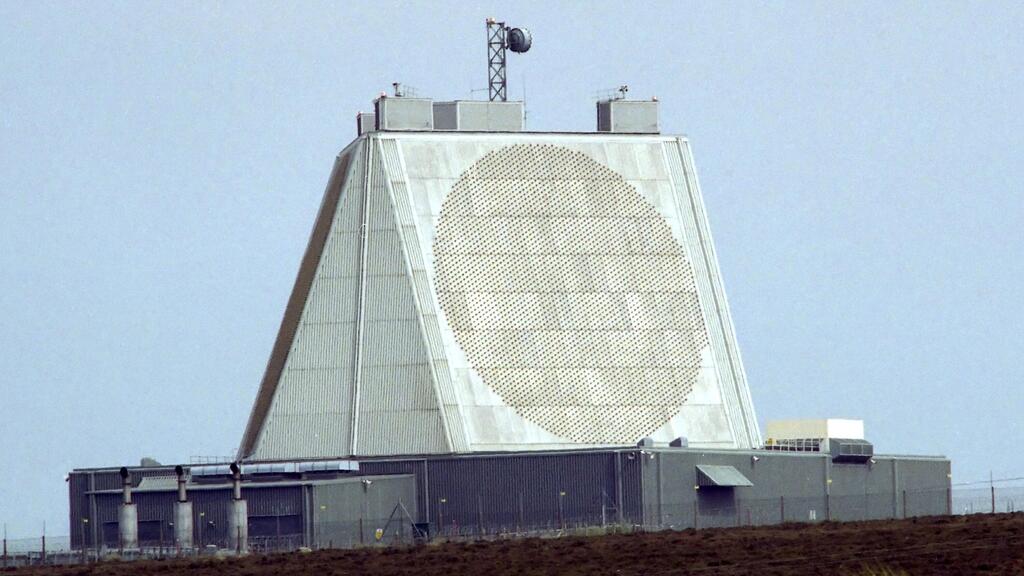
The missile — or a follow-up drone in related waves — targeted and damaged the AN/FPS-132 early-warning radar system, a $1.1 billion U.S.-built phased-array behemoth stationed near Al Udeid at Umm Dahal. This radar, capable of tracking ballistic missiles up to 5,000 kilometers away, feeds critical data into THAAD, Patriot, and other allied defense networks across the Gulf.
Iranian state media and the IRGC claimed a "precision strike" that "completely destroyed" it; while full destruction remains unconfirmed by U.S. or Qatari officials, geolocated satellite photos from Planet Labs and analyses by different outlets show clear structural damage to the radar complex and nearby communications infrastructure. Total U.S. equipment losses in the region since the conflict intensified are now estimated at $1.9–2.4 billion, with the Qatar radar as the single most expensive blow.
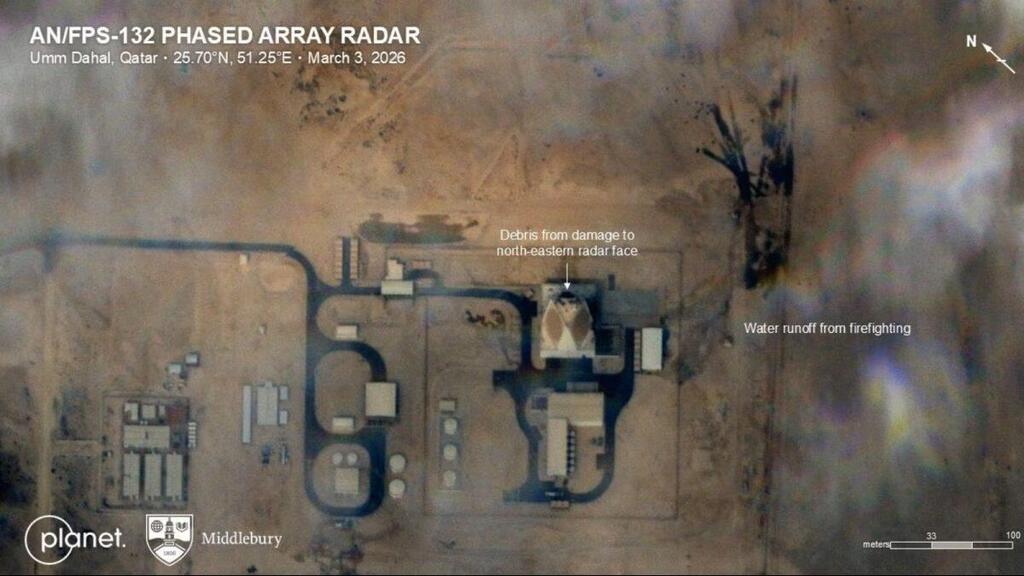
The strike on the strategic radar system
(Photo: Planet Labs)
This isn't just hardware — it's a direct degradation of Israel's and America's ability to detect incoming threats from Iran or its proxies. Shorter warning times mean tighter reaction windows for interceptors protecting Israeli cities, Gulf allies, and U.S. forces. Iran has repeatedly framed these strikes as retaliation for U.S.-Israeli operations against its nuclear sites and command structures. Yet the irony cuts deepest in Doha: the very nation hosting this crippled American asset has long provided safe haven and financial lifelines to the Hamas leadership orchestrating attacks on Israel.
Qatar remains home to key Hamas political figures, including senior officials who have operated from luxury Doha compounds for over a decade. Despite an Israeli strike in September 2025 that targeted Hamas negotiators in Doha — killing at least six people (including aides and a Qatari officer) but sparing top leaders like Khalil al-Hayya — the group's core political bureau has not fully relocated.
Hamas leadership survived that attempt and continues to use Qatar as a base for diplomacy, fundraising, and coordination. Qatar's hosting arrangement, backed by billions in aid funneled to Gaza (often criticized as indirect support for Hamas military wings), has drawn repeated Israeli condemnation. Prime Minister Netanyahu's office has long accused Doha of enabling the October 7, 2023, massacre architects by sheltering them.
 Amine Ayoub
The Al Udeid strike exposes the contradictions: Qatar hosts U.S. forces to deter threats like Iran, yet maintains ties with Tehran-aligned actors and Hamas, whose rockets and tunnels draw Israeli responses that Iran exploits. While Qatari air defenses intercepted dozens of Iranian missiles and drones in recent waves (over 60 ballistic threats reported in some attacks), one breach was enough to expose vulnerabilities. Qatar condemned the strikes and emphasized its intercepts, but the damage to shared U.S.-Qatari infrastructure underscores the risks of Doha's dual-track policy — ally to Washington on security, facilitator to anti-Israel networks on politics.
For Israel, the lesson is stark. The regime in Doha that finances and shelters Hamas just watched its own backyard — and America's — take a hit from the same "Axis of Resistance" it indirectly bolsters. As oil prices surge toward records amid Strait of Hormuz disruptions and Gulf defenses strain, Jerusalem should press allies harder: no more free passes for terror financiers under the guise of mediation. The bill for funding the war on Israel has arrived — delivered by Iranian precision — and it's time Doha feels the full cost.
Israel cannot afford half-allies in a full-spectrum conflict. The radar at Al Udeid may be repaired, but the strategic hypocrisy in Qatar demands a reckoning. Until Hamas leaders are expelled and funding pipelines severed, Doha's "neutrality" remains a luxury Israel — and the region — can no longer tolerate.
Amine Ayoub, a fellow at the Middle East Forum, is a policy analyst and writer based in Morocco