


While leaders in Washington and Tehran were talking about a temporary pause in direct military strikes, the skies over Erbil were telling a different story. Drones kept flying. Rockets were falling. And Iran’s proxies keep operating as if nothing has changed.
Until Wednesday night, the United States and Iran held fire against each other for four days. President Trump spoke of “good talks” and “friendly negotiations.” Iranian officials said they would stay quiet as long as America did. But in northern Iraq, the pattern of attacks never stopped. For Israel, this is not background noise. It is a live demonstration of how Tehran actually fights.
The quiet war in Erbil
Gallery
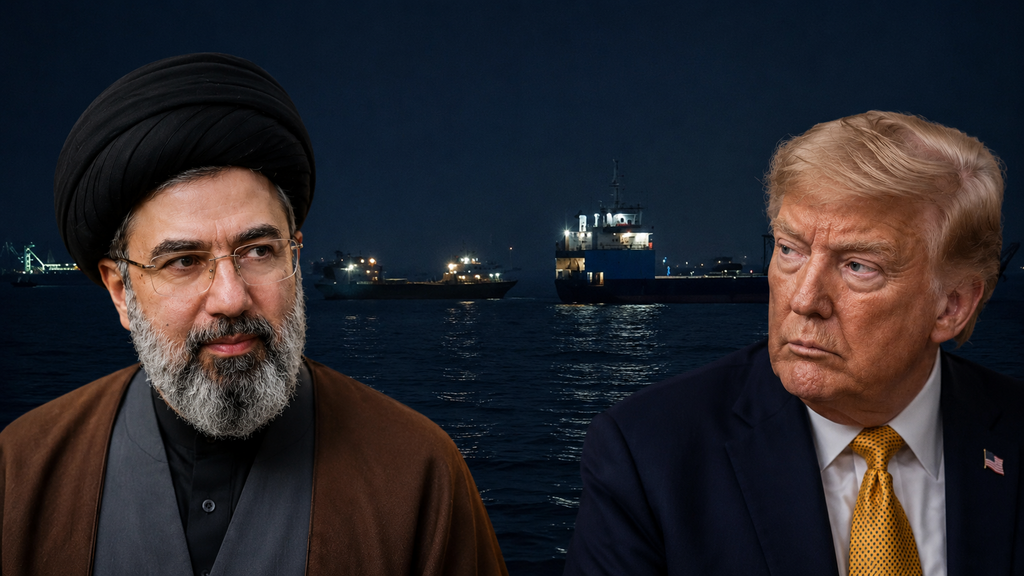
President Trump has spoken of “good talks” and “friendly negotiations.” Iranian officials say they will stay quiet as long as America does
(Photo: Win McNamee/Getty Images, Majid Asgaripour/WANA (West Asia News Agency) via Reuters)
Iran does not need dramatic single-night spectacles. Its real method is steady, grinding pressure. In recent days, air defenses over Erbil have again been forced into action. On July 24, coalition forces shot down five or six explosive-laden drones over the city. Explosions were heard near the airport. On July 27, Iranian drones struck bases belonging to Iranian Kurdish opposition groups in the Erbil area, with reports of impacts near Koya and other sites. Sirens sounded. Coalition systems intercepted many of the incoming threats.
This is not new. For months, Iran and its Iraqi militia partners have kept up a campaign of drone and rocket attacks on Erbil International Airport, the American consulate, and nearby military facilities. The same groups have also hit Iranian Kurdish opposition camps. When Tehran wants a clearer signal, it launches direct strikes of its own against those camps.
The militias involved operate under different names: Kata’ib Hezbollah, Asa’ib Ahl al-Haq, Harakat Hezbollah al-Nujaba, and others. Sometimes they appear under the loose banner of the “Islamic Resistance in Iraq.” They are not one single army. They are a network that receives direction, weapons, and funding from Tehran. This structure gives Iran useful distance. When attacks succeed, Tehran can claim influence. When they draw too much attention, Tehran can deny direct involvement.
Last November, the campaign showed what it can do to ordinary life. A drone strike hit the Khor Mor gas field, one of the region’s most important energy sites. A major fire broke out. Gas production stopped. Electricity across large parts of the Kurdistan Region dropped by about 80 percent. People sat in the dark. The attack required no ground invasion. A relatively cheap drone was enough to disrupt an entire regional economy.
Why pauses help Iran
From Israel’s point of view, treating these diplomatic pauses as real breathing room is a mistake. History shows what Tehran does with quiet periods. It rebuilds stockpiles. It moves weapons to its proxies. It studies what worked and what failed. The factories that build Shahed-type drones do not shut down because diplomats are talking. The smuggling routes into Iraq, Syria, Lebanon and Yemen keep running.
While America and Iran pause direct strikes on each other, the proxy network continues operating in the space between peace and open war. The attacks stay just below the level that would force a major response, yet remain frequent enough to keep pressure on. This is the Iranian way: fight through others, deny responsibility when convenient, and use every lull to prepare for the next round.
Israeli officials have seen this cycle before. Temporary calm is presented as progress. Then the pressure returns, often in a more refined form. The current pause fits the same pattern. It may reduce the risk of direct American-Iranian clashes, but it does nothing to stop the underlying campaign Iran runs through its network of partners.
One system, many fronts
What happens in Erbil is not isolated. It is part of the same system that points rockets and drones at Israel.
In Yemen, the Houthis use Iranian-supplied missiles and drones to threaten shipping in the Red Sea and strike regional targets. Along Jordan’s border, Iranian-linked networks keep moving weapons and drugs while testing the area with drones. In Lebanon and Syria, Hezbollah and its partners hold large stockpiles of precision weapons and attack drones aimed at Israeli cities and bases.
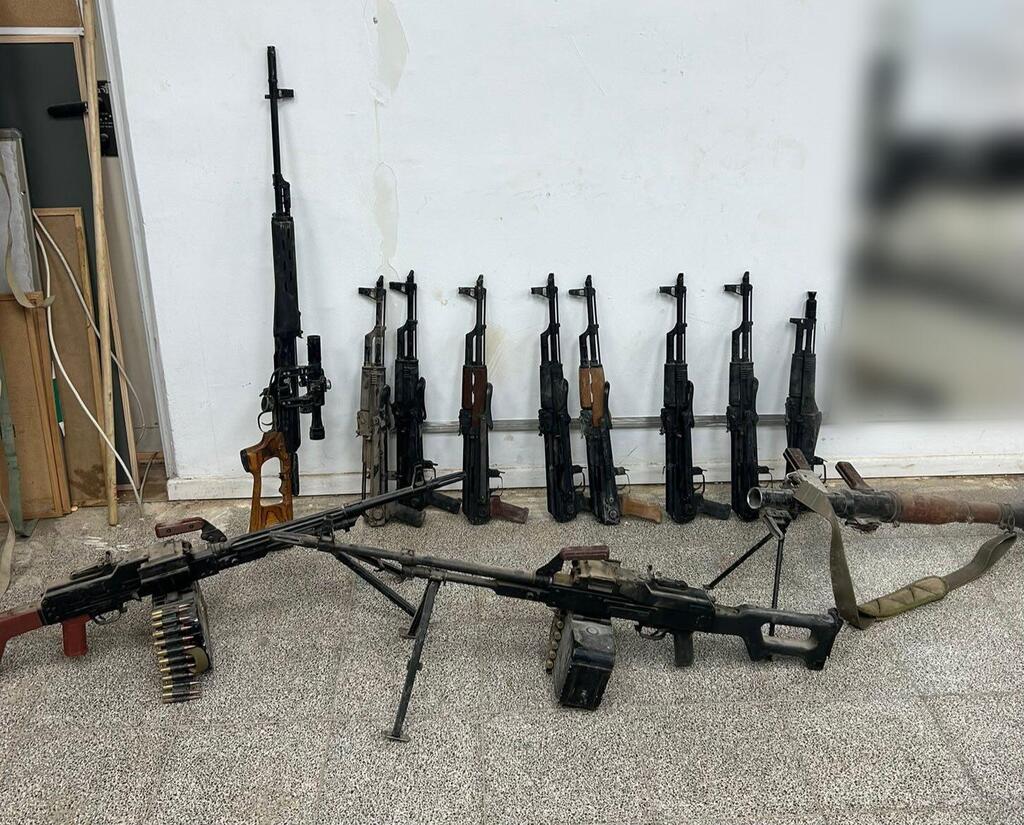
Weapons found in the village of Hadata, Lebanon
(Photo: IDF Spokesperson)
Tehran does not need to attack everywhere at once. The system is flexible. Pressure can be increased in one place while other fronts remain quiet but ready. The goal is the same: force enemies to stay on permanent defense, drain their resources, and create the sense that nowhere is safe.
For Israel, this is not theoretical. The weapons, the training, the funding, and the strategic direction all lead back to the same decision-makers in Tehran. An attack on an airport in Erbil and a future attack inside Israel differ only in location, not in origin or purpose.
What this means for Israel
The drones flying over Erbil are not foreign technology. They belong to the same family of systems that Hezbollah, the Houthis, and Iranian forces in Syria have used or stockpiled against Israel. Same designs. Same flight patterns. Same purpose.
Every time these drones are intercepted over northern Iraq, Iranian planners gain useful information. They see how detection systems perform, how interceptors are launched, and which routes work better. That knowledge returns to the people building the next versions of these weapons. Those improved systems will eventually face Israeli air defenses.
There is also a simple money problem. A cheap attack drone costs far less than the interceptor needed to destroy it. When this exchange is repeated across multiple fronts, the advantage begins to favor the attacker. Israel’s air defenses remain highly capable, but no system can absorb unlimited waves of relatively cheap munitions forever without strain.
The only real answer
The lesson from Erbil is clear. Shooting down drones is necessary, but it is not enough. Temporary diplomatic pauses may produce short-term calm, yet they do not stop the factories, the smuggling networks, or the command decisions that keep the campaign alive.
Israel cannot treat attacks on Kurdistan as someone else’s problem. The strategy is the same. The weapons are the same. The decision-makers in Tehran are the same. As long as those decision-makers believe they can keep applying pressure through proxies without paying a direct price, the campaign will continue.
Deterrence does not come from interceptors alone. It comes from making the source of the aggression feel the cost. That means holding the leadership in Tehran accountable for the weapons it designs, funds, and distributes, whether those weapons land in Erbil, the Red Sea, or inside Israel. The drones over northern Iraq are already delivering that warning. The only question is whether it will be heard in time.
Amine Ayoub, a fellow at the Middle East Forum, is a policy analyst and writer based in Morocco. Follow him on X: @amineayoub