

The collapse of truth and morality: Last week I spoke with my daughter’s school principal. She has just entered fourth grade, and for a long time has suffered from bullying by another girl in her class. We repeatedly raised the issue, asking for intervention, but the situation did not improve. Ahead of the new school year, my daughter confided in me her genuine fear of returning. I promised her I would write a letter to the principal.
The principal called. “I cannot force the girl who is hurting her to switch classes,” he explained. “Maybe your daughter should consider switching herself?” That evening, we asked our daughter carefully what she thought.
She, a 9-year-old girl, answered with a simplicity adults often forget: “I don’t want to switch classes. I didn’t do anything wrong. Why should I be punished for what someone else is doing wrong?” In one sentence, she expressed a basic moral principle: you don’t punish the victim.
When convenience overrules justice
Instead of addressing the wrongdoing, the system shifts the burden onto the victim. It is easy, technical, “administrative.” But this is exactly how morality erodes. Not in one dramatic moment, but in small steps that prefer convenience over truth and justice.
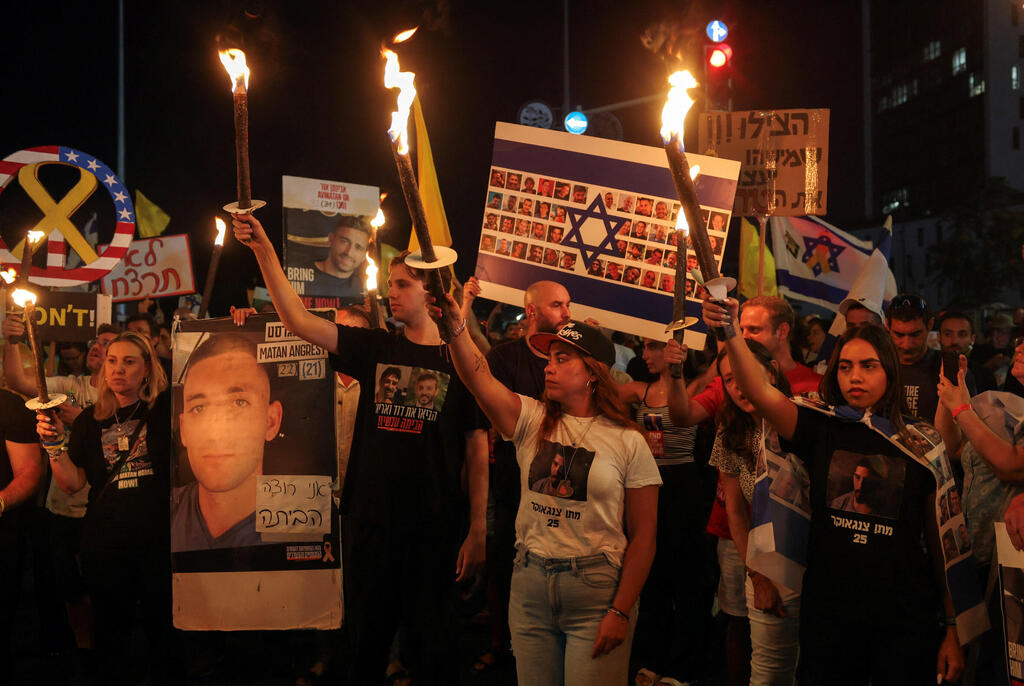
And it doesn’t happen only in schools. It happens in our workplaces, in our state institutions, in our government. It is easier to attack the Supreme Court than to confront political corruption. Easier to blame the families of hostages and the demonstrators in the streets than to acknowledge leadership failures. Easier to treat the law as a suggestion—than to uphold it when it is inconvenient. In the same way, it is easier to accuse the “other side” of shirking responsibility than to deal with the ethical, social and religious complexity of the issue.
And, as in the schoolyard, the victim is the one who pays the price.
When truth collapses, anything goes
The greatest threat to Israel is not Iran, Hamas or Hezbollah. The real threat is already here: the collapse of truth and morality. Once there is no shared truth, and everything is measured by “sides,” then anything is permitted—and nothing is permitted.
Harming civilians can be seen as either a war crime or a necessity for survival, depending on who commits it. Israel’s heroes can be branded “traitors,” while unqualified ministers are hailed as saviors—simply because of the camp they represent.
In her words, she held up a mirror to the whole society: if she could recognize a simple truth, why is it so hard for us to see it?
Working with a foreign agent can be seen as either betrayal or patriotism—not according to the act itself, but according to the story we choose to tell. I am not arguing that everything is black and white, or that morality exists in a vacuum. But when truth is replaced by partisan distortion, everything becomes permissible in the name of “justice” for one’s own side. And when leaders exploit this to ignore the law, the public quickly learns there are no rules. And when there are no rules, it is not the strong who suffer, but the weak. Us, the citizens.
Division as collective punishment
Israel’s division is no longer just left versus right. It is two camps clinging so tightly to their own righteousness that they sacrifice truth and morality, not realizing that without them we have no common ground. Each side entrenches itself, sees the other as a threat, and feels like a “victim” punished merely for existing.

(Photo: IDF Spokesperson's Unit)
It is the same pattern: instead of confronting the aggressor, we choose what is convenient and punish the victim. That is how a society loses itself—by glorifying the perpetrators, punishing the victims and crumbling from within.
My daughter was not trying to make a political statement. She simply refused to accept a twisted logic in which truth and lies have been inverted. In her words, she held up a mirror to the whole society: if she could recognize a simple truth, why is it so hard for us to see it?
But there is also hope. In rejecting injustice, she reminded me that it is still possible to speak the truth simply—without manipulation, without politics. And the truth is clear: if we continue arguing only over who is right instead of recognizing where we too are wrong, we all lose.
Both right and wrong
This story ties to a deeper life lesson: sometimes both sides are right and wrong at the same time. History shows that solutions rarely come when each side digs in, but when both sides are willing to truly understand the other. Right and left, secular and religious, Jews and Arabs.
In other words, we don’t need to prove our side is 100% right and the other 100% wrong. We need to recover the simple art of dialogue—seeing the justice in the other’s position, acknowledging our own weaknesses, and taking a half-step forward. Only then can “together we will win” become more than an empty slogan.
Our test as a society is not whether we can “defeat” one another. The real test is whether we can confront those who cause harm, rather than ignoring those harmed in the name of our “camp.”
My daughter sees this clearly at age nine. The question is whether we adults are still capable of understanding it. Unlike a fourth-grade classroom, Israeli society no longer has the privilege of continuing to get it wrong.
The writer is an expert in behavioral economics and decision-making, and a faculty member at the Baruch Ivcher School of Psychology at Reichman University.