

We are living through what may be the most consequential war Israel has fought in decades, perhaps even in its entire history. And yet I already hear voices around me asking why.
Why is this war happening? Why do we have to run to shelters several times a night? What exactly are we achieving?
Israel is in the most critical war in decades
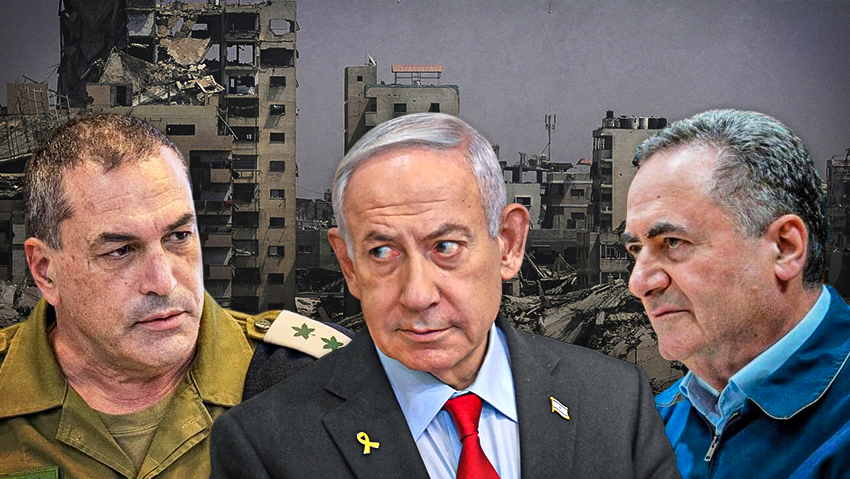
(Photo: Yair Sagi, IDF, Ariel Hermoni/Ministry of Defense, AP Photo/Jehad Alshrafi)
The answer is simple. This war is happening because the greatest enemy Israel faces today had almost reached the point where it could inflict catastrophic damage on us. Iran rebuilt its ballistic missile capabilities to a level that poses a real and growing threat to Israel.
Add to that the fact that Iran possesses enriched uranium in quantities sufficient for more than 10 nuclear bombs. When those two projects converge, there is no room left for hesitation. Israel cannot afford to wait.
Only days ago, while many of us were sitting in protected spaces during air raid sirens, the weekly Torah portion reminded us: “Remember what Amalek did to you.”
For me, Iran represents the Amalek of our time.
Historically, Amalek was a people with whom Israel had no real connection or dispute. Yet they attacked out of pure hatred, targeting the weak simply because they could. The hostility came not from a territorial conflict or a historical grievance, but from a deep and irrational animosity.
In many ways, the relationship between Israel and the Iranian regime resembles that pattern. Our conflict with Iran has nothing to do with the Palestinian issue. Iran’s rulers are Shiites, while most Palestinians are Sunni. There is no shared border, no territorial dispute and no negotiations over lines on a map.
The ayatollah regime simply wants to destroy Israel. That goal has been openly declared again and again.
They are willing to endure crushing sanctions, economic collapse and growing isolation if that is the price required to pursue their vision. When a regime builds its identity around eliminating your country, the threat becomes existential. Israel must confront it.
At the same time, I hear complaints from people who say it is difficult to run to shelters again and again during missile alerts.
So let’s put things in perspective.
During World War II, the German Blitz against Britain lasted more than eight months. Nearly 200,000 London residents lived in subway stations throughout the bombing campaign. More than 40,000 British civilians were killed, and about a million buildings were severely damaged.
Many families were left homeless for years. Britain needed nearly four decades to fully rebuild.
Yet the British were proud of their resilience. They called it the “Blitz spirit.”
Look at where we are today. Businesses in Israel are still open. People are still working. Sports activities continue. Many can work remotely. The government has already announced support plans for working parents.
And still people complain.
What about the achievements of this war so far?
We have severely damaged Iran’s missile-launch capabilities. Hezbollah continues to be struck relentlessly. Iran’s outdated air force has effectively been neutralized. The United States is dismantling large parts of Iran’s naval capabilities.
All of this followed an opening blow that targeted dozens of senior figures, including the Iranian supreme leader.
 Amihai Attali
Every few hours, another development emerges that sounds almost unbelievable. While writing these lines, reports appeared that Qatar may expel Hamas leaders after senior figures in the organization refused to condemn the Iranian attacks.
For years, Israeli intelligence followed Hamas leaders living comfortably in Doha. Even after the October 7 massacre, their lives continued almost unchanged. Even after the Israeli airstrike against Hamas officials in Doha in September 2025, the architects of terror continued to enjoy luxury and protection.
Now, suddenly, this war may be creating a rupture between Qatar and Hamas.
Events of enormous historical scale are unfolding around us.
We must understand the magnitude of this moment. What Israel needs now is faith and patience.
And in the end, we will prevail.
First published: 14:41, 03.09.26