


U.S. President Donald Trump has apparently had enough of the strange game being played with him by the two factions inside Iran’s regime: the militant faction, led by Iran’s Islamic Revolutionary Guard Corps (IRGC) and also using the authority of Supreme Leader Mojtaba Khamenei; and the moderate faction, headed by President Masoud Pezeshkian and Foreign Minister Abbas Araghchi, which apparently wants to continue the ceasefire under the memorandum of understanding signed by the sides several weeks ago.
Trump has evidently realized that the faction actually running things on the ground is the extremist camp led by the IRGC. Evidence of this can be seen in the repeated Iranian attacks on oil tankers and cargo ships in the Strait of Hormuz, the counterstrikes carried out by U.S. Central Command in response and then the renewed Iranian attacks on American bases in the Gulf states.
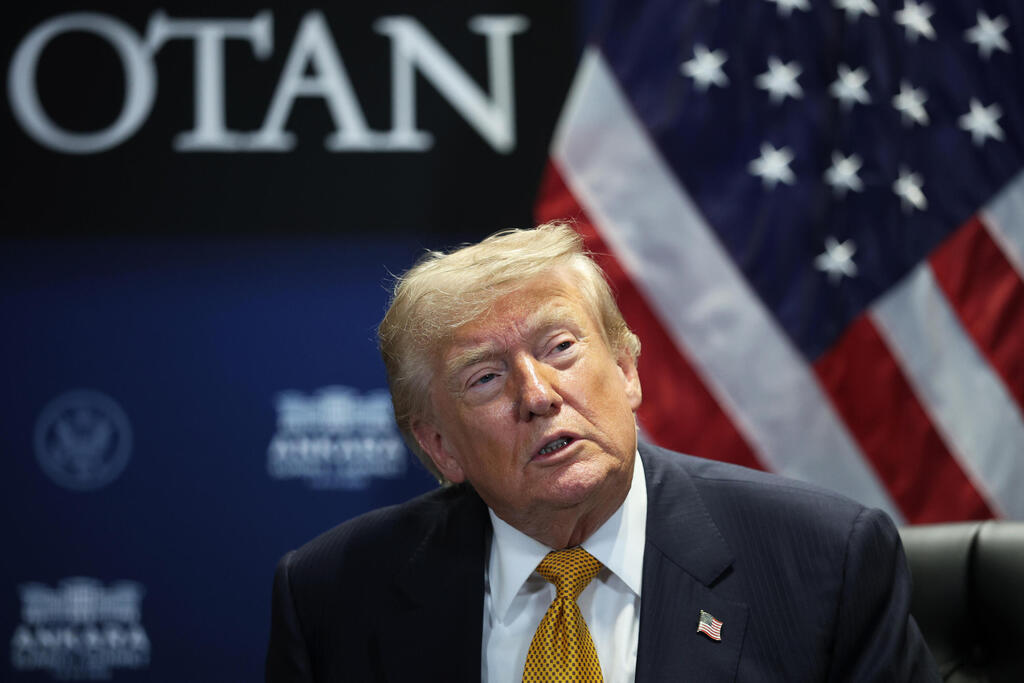
This ritual, it seems, has worn out the American president. That is clear not only from what he writes on his social media platform, but also from the interview he gave to Fox News. Trump therefore decided to kill two birds with one stone: he is hitting the IRGC, and Iran in general, by renewing the blockade on Iranian ports, not only those inside the Persian Gulf, but also the Iranian ports on the Indian Ocean coast.
The second goal Trump is trying to achieve is to hit NATO countries and China, which refused to help him pressure Iran to open the strait. In effect, Trump is imposing a kind of 20% transit tax on every cargo shipment that moves through the strait under the air and naval cover provided by U.S. forces, in order to allow ships to pass safely.
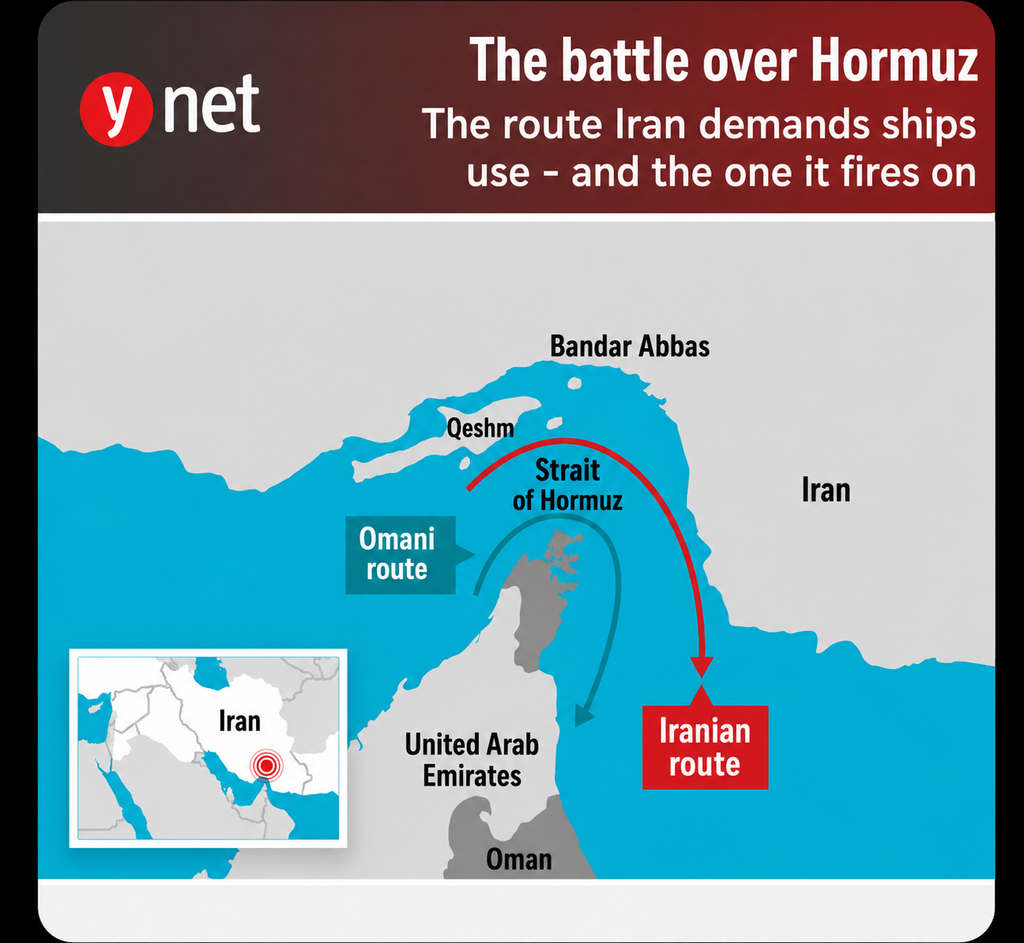
This transit fee is certainly expected to raise oil prices in China, other Asian countries and Europe. That is supposed to be the penalty for these countries shunning the United States. Beyond that, imposing the tax on cargo ships and oil tankers passing through the Strait of Hormuz will help the U.S. cover the considerable costs it will likely incur as a result of the need to provide increased escort and protection for commercial shipping along the southern route, near the coast of Oman.
The U.S. is capable of providing such cover with the naval and air power it has in the region, but the costs are beginning to weigh on the American administration. That is why it is asking to roll those costs onto the oil consumers who, as noted, are not willing to come to America’s aid, pressure Iran and take part in securing the Strait of Hormuz as an international shipping route.
As far as is known, the Iranians sent representatives on behalf of the IRGC, and the Americans sent officers and diplomats who apparently discussed the transit arrangements until Sunday evening. According to Trump’s account, the sides almost reached an agreement, but then the Iranians demanded changes and the negotiations collapsed. As a result, the sides have been trading blows in the Gulf.
It is possible that the IRGC representatives, who are now negotiating directly with the U.S., will return to the negotiating table following Trump’s move, and then we will experience another change. In principle, what we are seeing now is a war of attrition in which Israel is not involved for the time being, but one that is developing in a pattern that actually serves Israeli interests and prevents the removal of sanctions and the end of American military and diplomatic pressure on Iran.
US strikes in Iran’s Khuzestan province


The only problem is that recently the Iranians have been acting in a way that looks like an attempt to restore the nuclear facilities that were damaged, while refusing to allow the International Atomic Energy Agency to monitor what is happening inside them.
According to published satellite images, it appears that the Iranians are not, for now, renewing uranium enrichment or other activity in the field of nuclear weapons production, but only fortifying the nuclear facilities and “hardening” them, in order to prevent another hit or minimize the damage of another strike if the Americans or Israel attack them when the fighting resumes.
This war of attrition is, in effect, a war over two things: control of the Strait of Hormuz and the PR win that senior IRGC officials want.
On the one hand, the militant faction in the Iranian regime wants to hold the Strait of Hormuz as an economic asset for Iran and as a strategic lever for applying pressure, not only on the Gulf oil-producing states, but on the entire global economy.
On the other hand, the U.S. is not prepared to allow senior IRGC officials to claim, and from their point of view rightly so, that they won the war: not only because they did not lose it, but because they acquired for themselves a profitable economic asset and a global strategic lever as a result of the strike that, according to President Trump, was meant to subdue them.