

Countless interpretations of the Trump-Netanyahu meeting have focused almost entirely on the policy and security issues at hand, from the expected challenges of the second phase in Gaza to a possible strike on Iran. But the Netanyahu-Trump meeting, through the American president, offers a different kind of interpretation, one about the Israeli public and its outlook as the country heads toward a stormy election campaign.
It is enough to focus on Trump’s dramatic and unequivocal statement, by his own account, that “without Netanyahu, Israel would not exist.” The raised eyebrows among many Israelis are understandable. After all, with all due respect, the State of Israel and the Zionist story are larger than Netanyahu and larger than any leader who has come before or will come after. But had commentators analyzed Trump properly, they would also have drawn conclusions from his words about Israeli public opinion.
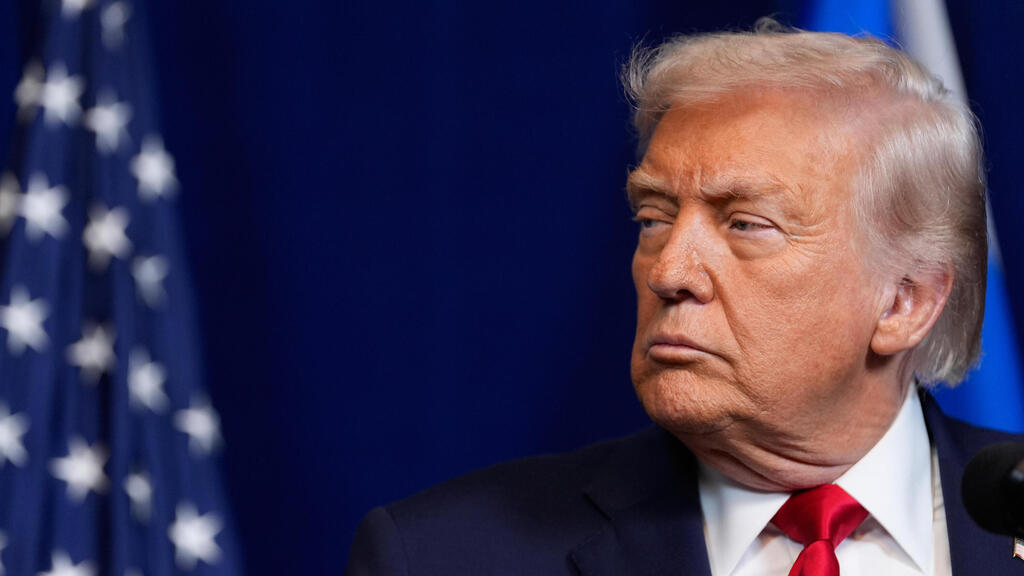
US president Donald Trump
(Photo: AP Photo/Alex Brandon)
Trump has always said things no one else dared to say. Political correctness is foreign to him, and more than once he has lacked the filter that moves thoughts from the brain to the tongue. In the case of Netanyahu, Trump is saying what many Israelis think but do not dare say, and what some pollsters fail to grasp: Netanyahu was the right leader in the right place.
Yes, Israelis are angry with Netanyahu for being part of the prevailing concept that failed, for not challenging the security establishment and for not criticizing it sufficiently. But they believe he corrected his flawed habits after the massacre, as reflected in his insistence opposite Herzi Halevi on the Philadelphi Corridor and Rafah, his refusal to open a northern front at the start of the war, the appointment of Zini, an appointment the pre-massacre Netanyahu would almost certainly have abandoned, and the appointment of Gofman as head of the Mossad.
They also believe that had someone else been leading the country the war would have ended with the Palestinian Authority in Gaza, Assad firmly in Damascus, no Israeli forces in Syria or Lebanon and Turkish meddling in the background. Yes, many Israelis on the right are disappointed with the Netanyahu of before October 7 and satisfied with the way he has managed the military and diplomatic campaign of the war. Trump simply said it out loud.
 Naveh DromiPhoto: Ilya Mylnikov
In saying this, he also conveyed other messages that receive disproportionate attention in Israel. For example, that Israelis do not believe the so-called Qatargate affair, like the submarine affair before it, reflects on Netanyahu, and that it is not something that would cause a classic right-wing voter to abandon the camp. Confirmation came, ironically, from the Israeli journalists who questioned Trump, as none of their questions dealt with Qatar or other Israeli political controversies. Far from home, their newsrooms and the Kaplan Street protest spirit that animates some of them, Israeli journalists, too, know how to distinguish between what is essential and what is marginal.
After all, had Obama been in the White House, they would have pounced with questions such as: “What is your view of the ties between Netanyahu’s office and Qatar?” or “What do you think about the government’s refusal to establish a state commission of inquiry?” Obama would have leaned back in his chair and said something like, “We trust the Israeli judicial system to conduct an objective investigation.”
On Monday, Trump offered Israeli commentators, pollsters and politicians a glimpse into what matters to Israelis and what they think in their hearts but will not say publicly. It is worth listening to him. It would make studio discussions closer to reality, at least the reality of many Israelis.