

On Friday, U.S. President Donald Trump was asked about the possibility of expanding the Abraham Accords and bringing Saudi Arabia into the circle of peace with Israel. His answer was clear: The issue is very much back on the table.
Before examining how Trump intends to turn this vision into reality, we must first break down how he operates and makes decisions, and try to understand why the Saudi issue is so critical to him. Broadly speaking, Trump's approach can be understood through three major factors, each of which is a cornerstone of his worldview.
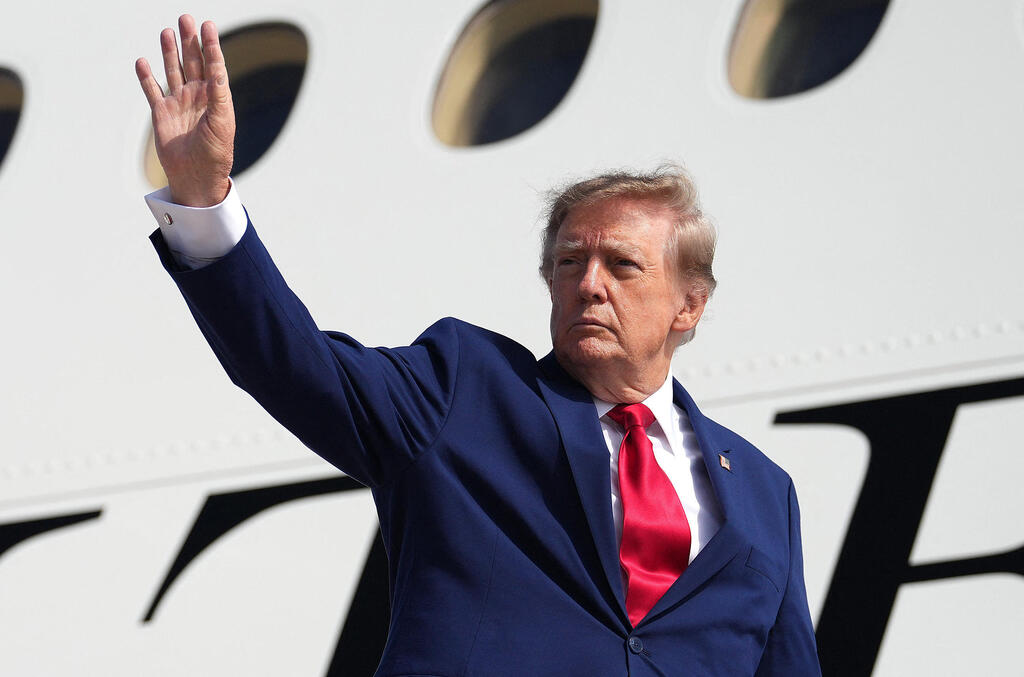
US President Donald Trump discusses the Abraham Accords
(Photo: Eric Lee / GETTY IMAGES NORTH AMERICA / AFP)
But first, some historical context. It is worth remembering that Trump is only the third president in American history to be elected without previously holding political office. His only predecessors in that regard were George Washington, who was elected when the presidency itself was being established and came to the role as a celebrated military commander in the rebellion against the British, as well as a landowner and businessman who later founded America's largest whiskey distillery at his Mount Vernon estate in Virginia, and Dwight Eisenhower.
Eisenhower, widely known as "Ike," had also never been elected to political office, but he was a general who oversaw the largest reconstruction effort in history as Europe was rebuilt after World War II. His oversight extended to details as specific as the number of calories each refugee would receive daily. In practice, he served as a governor with powers exceeding those of any governor in the United States, during an extraordinarily complex period of reconstruction and recovery.
Why is this so important? Because Trump entered office with an exclusively business background, having had no prior experience in diplomatic, military or political institutions. This has two implications. On the one hand, he owes nothing to anyone. On the other, he lacks the institutional knowledge that comes from working within those systems.
Now, in the era of "Trump 2.0," he has stopped listening to party professionals or the establishment altogether, surrounding himself instead with people whose primary role is to obey his instructions and carry out his ideas.
To understand his decision-making process, we must examine the three main factors driving him, ranked from most to least important.
The first factor: The GOAT and his historical legacy
Trump has an intense, almost obsessive desire to be regarded as the greatest of all time, or GOAT. He is constantly preoccupied with how history will remember him, continually comparing himself to the greatest American presidents while harboring a deep fear of being remembered as one of the worst.
That, for example, is why he signed the widely discussed memorandum of understanding (MOU) with Iran on June 17, 2026, to end the military campaign, fearing that he might otherwise meet the same historical fate as President Herbert Hoover, who is remembered as having been responsible for the Great Depression.
At the same time, Trump enjoys publishing presidential rankings in which he, naturally, places himself at the very top.
The second factor: The race against China and artificial intelligence
The struggle for global dominance against China keeps Trump awake at night. Some experts estimate that the "singularity," the moment when artificial intelligence surpasses even the best human programmer could arrive around October 2027, well into Trump's second term.
China has managed to maintain control over approximately 70% of the elements and minerals used to manufacture the world's computer chips. Meanwhile, the energy crisis created by the enormous electricity demands of data centers is forcing Trump to consider creative solutions.
He must find ways to ease the strain on America's energy infrastructure while ensuring that the United States maintains its lead over China in this technological race.
The third factor: What's in it for me?
To understand Trump's second term, it is essential to examine the Supreme Court's July 2024 ruling. In a 6-3 decision, the court ruled that presidents have absolute immunity from criminal prosecution for actions within their core constitutional powers and presumptive immunity for other official acts. The ruling also reinforced the distinction between political accountability through impeachment and criminal prosecution.
This ruling gave Trump a form of constitutional armor. In his second term, he has been making far more open use of that protection, extracting the greatest possible personal and family benefit from his position in the White House. The line between public duty and private interests has never been more blurred.
For example, early in his current term, Trump posted a recommendation urging Americans to buy Dell products, sending the company's stock soaring after he had personally purchased millions of dollars' worth of its shares without disclosing his holdings.
I would not be at all surprised to see Trump summon the leading candidates for prime minister — Bennett, Eisenkot and Netanyahu — to Washington. He would bring them into a room, apply his trademark pressure and demand that they reach some form of political arrangement that would allow him to advance his vision, which he has a window of no more than two years to realize.
Similarly, he launched World Liberty Financial, a cryptocurrency venture largely owned by his family, and introduced a gold-colored Trump-branded cellphone. His two eldest sons are also deeply involved in investments, including a real estate fund focused on artificial intelligence infrastructure.
Now, let's bring these three factors together in the Saudi story.
As for the first factor, when Donald Trump speaks of a peace agreement ending "3,000-year-old," conflict have you ever stopped to consider what he means?
The underlying idea is that only the "redhead with the key" can bring about historic, biblical peace between Abraham's two sons, Ishmael and Isaac.
A peace agreement between the descendants of Ishmael — represented by Saudi Arabia, the birthplace of the Prophet Muhammad — and the descendants of Isaac, represented by modern Israel, would bring an end to a conflict spanning more than 3,000 years.
In Trump's view, such an agreement would not only secure him the long-coveted Nobel Peace Prize but also guarantee his place at the pinnacle of human history.
From the perspective of legacy-building, an achievement with such profound theological and geopolitical significance would cement his historical standing in an unprecedented way, giving his presidency a timeless legacy.
As for the second factor, this is where the India-Middle East-Europe Economic Corridor (IMEC) comes into play. The project is intended to connect India through the United Arab Emirates and Saudi Arabia to Jordan, Israel and ultimately Greece.
For Trump, who sees himself first and foremost as an entrepreneur, real estate developer and builder, this represents an opportunity to lead one of the most ambitious and extensive infrastructure and engineering projects in human history.
Such a massive undertaking would not only provide an alternative and counterweight to China's Belt and Road Initiative (BRI) but also draw in a significant share of the AI infrastructure that Saudi Crown Prince Mohammed bin Salman hopes to develop under his Vision 2030 program.
This would make it possible to shift enormous computing capacity to the crossroads of Asia and Europe through Saudi Arabia, keeping control of that capacity in Western hands while easing the strain on existing infrastructure.
As for the third factor, this is where we see Jared Kushner working behind the scenes to advance deals along this corridor.
Hundreds of billions of dollars are expected to flow into this enormous project, and at the other end of those transactions, there could also be substantial business profits and financial gains for the family.
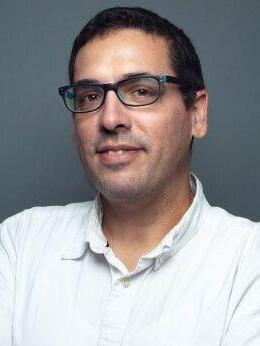 Dr. Kobby Barda Photo: Tal Givony
So where do we go from here, and what might the deal look like?
My assessment, based in part on conversations with individuals close to the U.S. administration, is as follows:
The longer Israel's political system remains deadlocked, the more likely Trump is to intervene personally in Israeli domestic politics.
I would not be at all surprised to see him summon the leading candidates for prime minister — Naftali Bennett, Gadi Eisenkot and Benjamin Netanyahu — to Washington.
He would bring them into a room, apply his trademark pressure and demand that they reach some form of political arrangement that would allow him to advance his vision.
After all, he has a window of no more than two years to make it happen.
That vision is to expand the Abraham Accords into "Abraham Accords 2.0," with an agreement between Israel and Saudi Arabia as the crowning achievement, exactly as he declared on Friday.
Dr. Kobby Barda is affiliated with the multidisciplinary HIT Holon Institute of Technology and is a senior researcher at the Jewish People Policy Institute (JPPI).