


In recent years, Prime Minister Benjamin Netanyahu has turned Israel’s foreign policy into a tool for his personal political survival, systematically ignoring warnings from senior security officials, cabinet ministers and even international allies.
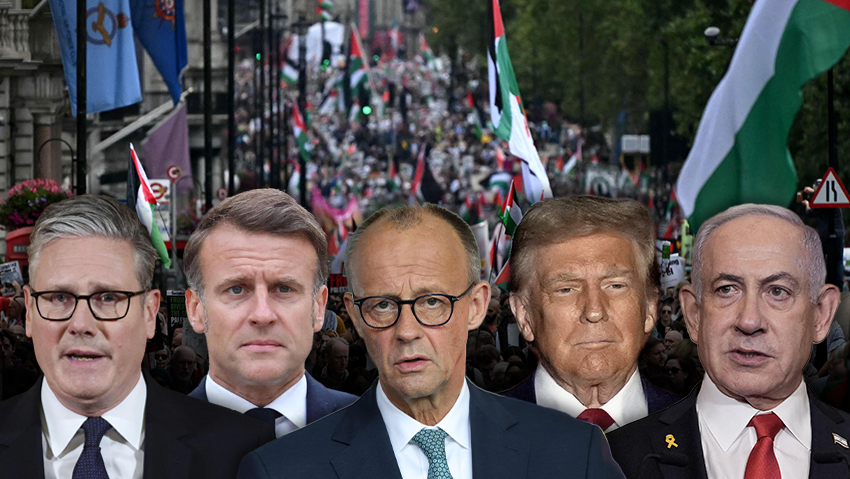
While he continues to emphasize Israel’s economic strength and declares the country will withstand any boycott or sanctions, reality on the ground tells a troubling story: IDF operations in Gaza, lacking broad international backing, are driving Israel into unprecedented isolation.
Gallery
(Photo: JUSTIN TALLIS / AFP, AP Carlos Osorio, Oliver CONTRERAS AFP, Sarah Meyssonnier / POOL / AFP, Toby Melville, Pool Photo via AP, Sean Gallup/Getty Images)
Foreign Minister Gideon Sa’ar, for example, warns at every opportunity of the heavy price Israel is paying internationally. But he is only one voice in a growing chorus of critics. Still, Netanyahu appears to listen only to his most hardline partners, National Security Minister Itamar Ben-Gvir and Finance Minister Bezalel Smotrich.
Fears of military rule in Gaza
The most striking example is the botched assassination attempt against Hamas leadership in Doha. Reliable reports revealed that top security officials, including Mossad chief David Barnea, strongly opposed the timing. They repeatedly warned of diplomatic risks and chain reactions that could damage Israel’s ties with Gulf states, which serve as key mediators in negotiations with Hamas. Netanyahu, however, focused only on his political survival, ignoring the warnings. The result has been growing tensions with Qatar and other states, making hostage negotiations increasingly difficult.

IDF Chief of Staff Lt. Gen. Eyal Zamir
(Photo: IDF Spokesperson's Unit)
Even before the Doha operation, disagreements between Netanyahu and the defense establishment deepened over the decision to fully capture Gaza City. IDF Chief of Staff Lt. Gen. Eyal Zamir urged Netanyahu in a cabinet meeting to halt the offensive and pursue a deal. Zamir expressed fears of military rule in the Strip, supported by Sa’ar, Barnea and National Security Council head Tzachi Hanegbi, who themselves criticized Netanyahu.
Zamir presented Netanyahu with a detailed comparison of two options: siege and targeted raids in the city versus full occupation. He weighed risks to soldiers and hostages, humanitarian fallout, manpower limits and international legitimacy. In every parameter, Zamir’s plan outperformed full occupation — yet Netanyahu rejected it outright. “The chief of staff did everything to convince him otherwise, but made clear he would carry out the plan,” senior ministers said.
Smotrich: Turn Gaza into a ‘real estate bonanza’
The reason for Netanyahu’s dismissals is simple: he depends on Ben Gvir and Smotrich, who push for a hardline policy in Gaza and reject any compromise. For them, the war is an opportunity to expand Israeli territorial control. For Netanyahu, it is the way to preserve his coalition. As a result, Israel risks long-term damage.
Just Wednesday, Smotrich addressed the “day after” in Gaza, saying it should be turned into a “real estate bonanza.” Speaking at an urban renewal conference, he said he had already opened talks with the Americans on investing in reconstruction as real estate projects. “I’m not joking, it pays for itself,” he said.
Peace agreements at risk
Some of Israel’s most valuable assets are its peace agreements with Egypt and Jordan, as well as the Abraham Accords with Gulf states. These are not just diplomatic deals but also a strategic safety net for intelligence, security and economic cooperation. The ongoing war in Gaza now puts them at risk. If suspended or canceled, it could take years to rebuild ties.
Already, the United Arab Emirates and Bahrain — Abraham Accords signatories — are voicing growing discomfort with Israel’s actions. Public pressure in those states could force leaders to freeze relations. The UAE has warned Israel against annexing territory in the West Bank, saying it would harm the peace deal. Similar warnings have come from Bahrain, Jordan, Egypt and Morocco.

Aftermath of the strike in Doha
(Photo: Ibraheem Abu Mustafa/Reuters)
Europe presents further challenges. Israel currently has no ambassadors in Spain, Norway or Ireland. Jerusalem now threatens to close the French consulate over Paris’ recognition of a Palestinian state. Other punitive steps have not stopped European countries from hardening positions. In France, officials are even considering limiting Mossad’s presence, which has long cooperated with local authorities in thwarting terror attacks.
Eroding support in Washington
The situation is no better in the United States, Israel’s closest ally. Support among Democrats has long eroded, but now Republicans are showing cracks as well. Former President Donald Trump and his allies still back Israel, but many in the party are calling to distance themselves from Netanyahu. Some MAGA supporters are urging an end to the military aid Israel has received since the peace with Egypt, which underpins its border and homeland security.
Diplomatic projects have already been frozen, with Israeli envoys worldwide told this is “not the right time.” Officials suggest such projects may only resume once the war ends.
Losing the battle for public opinion
Since October 7, global media and social networks have portrayed Israel as the aggressor, while Hamas has gained unexpected international sympathy. Israel has suffered a major defeat in the battle for global opinion, particularly among younger generations. The wave of antisemitism that followed the October massacre in Israeli border communities has only grown. Jewish communities in the U.S., Canada, Australia and across Europe now face daily harassment. The world no longer distinguishes between Israel and Jews — both are targets.
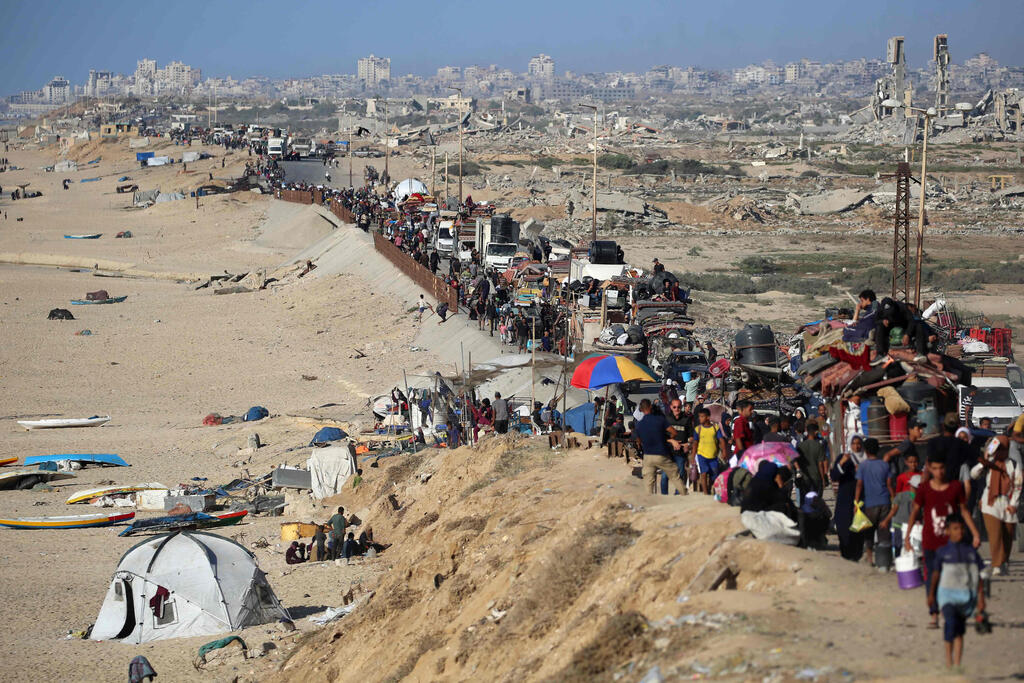
People fleeign Gaza City south
(Photo: Eyad BABA / AFP)
Sa’ar’s remarks in the cabinet were a wake-up call. He said that “to restore our standing we need a cease-fire. Only then can we show the normal sides of the Israeli story. As long as the war continues, the flames will not be extinguished. The consequences will be economic as well. Israelis and Jews abroad are already feeling it.” But his warnings went unheeded. Netanyahu dismissed calls for a cease-fire, insisting only on Hamas’ “total surrender,” while security chiefs continue to warn that military rule in Gaza would create a dangerous vacuum and fuel further escalation.
A new ‘axis of evil’?
Meanwhile, Diaspora Affairs Minister Amichai Chikli argued that Israel must fight back against sanctions and international campaigns. He said Qatar, Turkey and Syria form a new “axis of evil,” accusing Qatar of buying influence in London and harboring Hamas leaders. “This is a diplomatic battlefront,” he said, “and Qatar has become a pariah state.”
Now the question remains: Can Israel afford to continue this path? However strong its economy, prolonged international isolation would hurt its security, global image and ultimately the economy itself. If Netanyahu does not change course, isolation may soon become reality.