

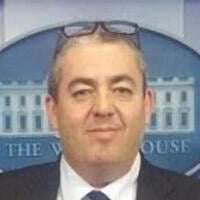
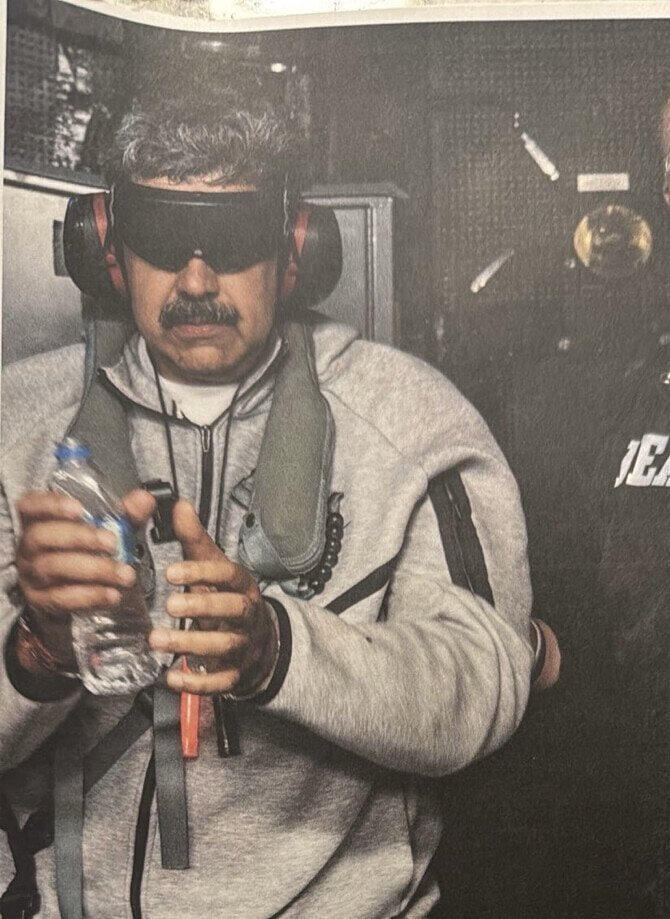
The dramatic arrest of Venezuelan President Nicolás Maduro by the Trump administration is a far‑reaching move whose reverberations will undoubtedly be felt not only in Iran but also in Russia and China — countries that have been all too happy to operate in the United States’ backyard — and, of course, in Cuba, where there are fears it could be next.
There is no doubt that the American action against Maduro’s regime was intended to change the reality not just in Venezuela itself, but across the U.S. sphere of influence. It is a signal of strength, U.S. engagement and an attempt to reshape the stance of countries that are geographically close to the United States, as well as those that are aligned in values and shared interests.
It is no coincidence that President Donald Trump reacted strongly when he did not receive the Nobel Peace Prize last October, despite his efforts and the intense pressure he applied. The reason was that the prize went to Venezuelan opposition leader María Corina Machado, his ally. In Trump’s view, she is destined to be Venezuela’s president and to replace Maduro. He has placed all his cards on her and on a long‑term cooperative relationship between Venezuela and the United States.
Venezuela has oil, gold and virtually limitless resources. These oil reserves alone could last 200 years — a fact with far‑reaching implications. Today, Venezuela barely exports what it has, but its national oil company once functioned very effectively. Once infrastructure is transferred into Machado’s hands, the situation in the country could stabilize quickly, and prosperity, wealth and abundant resources could return, much like Venezuela enjoyed decades ago.
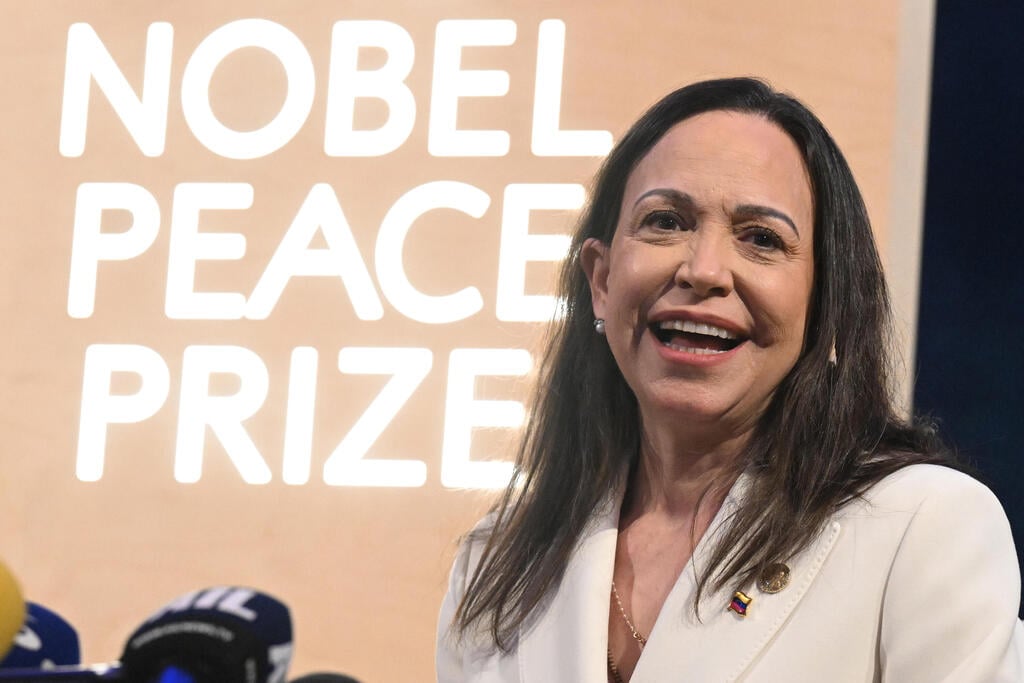
María Corina Machado
(Photo: Rune Hellestad/Getty Images)
The move is also expected to affect Cuba, which was part of the Bolivarian Alliance forged by former Venezuelan president Hugo Chávez with Ecuador and Bolivia. Since Ecuador and Bolivia have since shifted to right‑wing governments, the Cubans now find themselves completely alone.
The US has shown it’s not playing games
Of course, this is also a message to the Iranians: from Tehran’s perspective, Venezuela was part of its broader strategy — a country where Iran operated through the Islamic Revolutionary Guard Corps (IRGC), terror groups, weapons and drone sales and a large Lebanese expatriate population that included Hezbollah operatives. All of that has now vanished.
The move also signals American resolve, and that should alarm the Islamic Republic. Few would have believed the U.S. capable of deploying aircraft and 15,000 troops to snatch Maduro and his wife and bring them to the United States — but the Americans are more determined than ever and have proven they are not playing games. It is a very strong signal to Iran that they could be next.
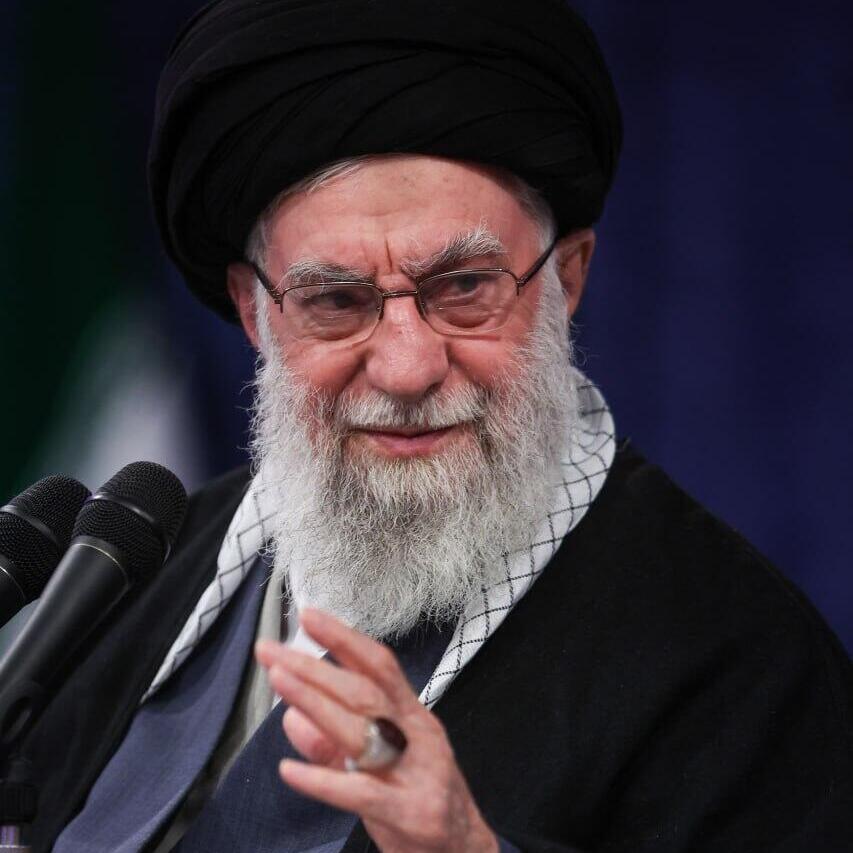
Iranian Supreme Leader Ayatollah Ali Khamenei
For Israel, there are several dimensions worth watching. There is a small Jewish community in Caracas with considerable property holdings. This could be an opportunity for Jews to return to Venezuela, something of importance to Israel given its location in the U.S. sphere of influence. There were also numerous security contracts and business deals between Israel and Venezuela that were cut short in the past.
Now it will be possible to examine how Iran and Hezbollah operated in Venezuela, since there was a direct flight route between Caracas and Tehran, and Iran assisted Venezuela with oil smuggling and supplied it with drones.
The quicker a stable government is established in Caracas, the stronger the signal to both the Iranians and the opposition in Tehran. If opposition leader Machado succeeds in assuming power swiftly, it could embolden thousands of protesters and the opposition in Iran, showing them that change is possible. With American backing, and perhaps even Israeli support, they could overthrow the rule of the mullahs and move toward a brighter future.
Trump shows he doesn’t care about the world or international law
What happened in Venezuela signals to the world that Trump sees himself as the world’s sheriff and that the United States under his leadership disregards international norms and law. Americans are snatching leaders and imposing order — using the flimsy excuse of drugs — but ultimately it is about a new world order, and a powerful message to Iran.
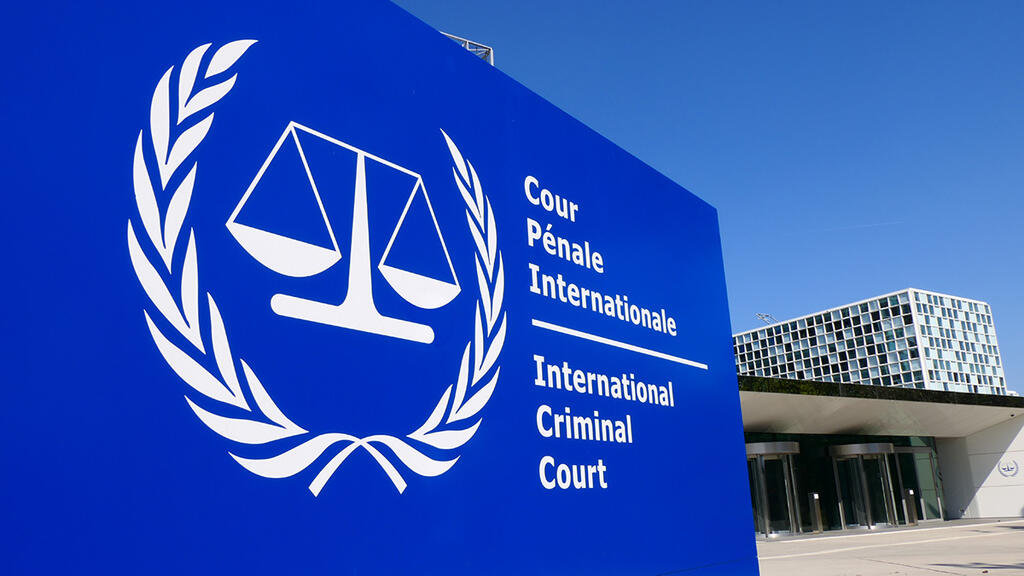
The International Criminal Court in The Hague
(Photo: Shutterstock)
It is also a significant signal to the International Criminal Court in The Hague (ICC) that Trump views himself as the new global cop and doesn’t much need the court. More than that: the move could pressure the ICC to yield to U.S. sanctions, scale back investigations into the United States — and perhaps even withdraw arrest warrants against Prime Minister Benjamin Netanyahu and former defense minister Yoav Gallant.
Back to Israel: during June's 12‑day war with Iran, Israel considered assassinating Supreme Leader Ayatollah Ali Khamenei, but Trump vetoed the idea. That short conflict, which ended with Trump authorizing B‑2 bombers to destroy the Fordow nuclear facility, strengthened the president by once and for all silencing claims that he was a “chicken.”
This may also explain the embrace Trump gave Netanyahu at Mar‑a‑Lago this week, because ultimately the U.S. president came to see that Israel’s post‑October 7 approach is the right one. Perhaps next time Israel seeks to strike Iran, Trump will give the green light and no longer hesitate about the possibility of toppling the dictator Khamenei.
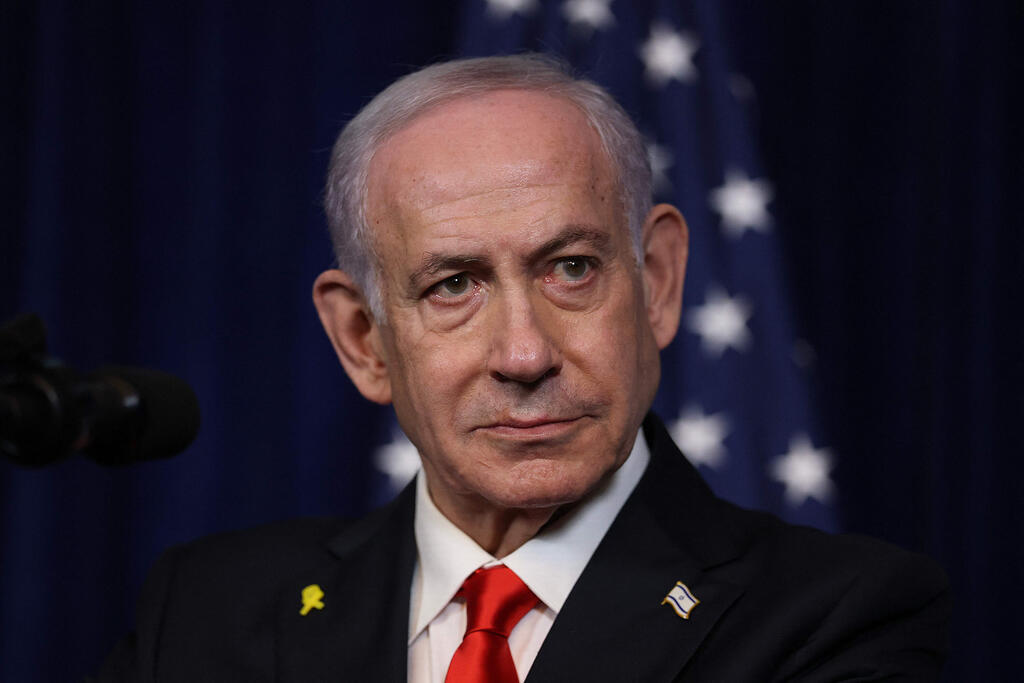
Prime Minister Benjamin Netanyahu
(Photo: JOE RAEDLE / GETTY IMAGES NORTH AMERICA / AFP)
Trump’s latest threat to intervene if innocent protesters are killed, combined with Maduro’s arrest and capture, sends a clear message to the clerical regime: Trump is unstoppable, and they have two choices — immediately agree to zero uranium enrichment and curb their ballistic missile program, or face a short timeline as U.S. and Israeli‑backed opposition forces continue to undermine them in their own backyard.
The Venezuela operation will undoubtedly intensify the Iranian regime’s dilemma about which direction to take, with far‑reaching implications for Israel. If Trump develops an appetite and brings about the fall of the Iranian regime, it would transform Israel’s strategic environment for decades. And even if Tehran capitulates and agrees to Trump’s terms, it would be enormous news for Israel. In any case, a strong, deterrent Trump is good for Israel.
But there is also a less favorable implication for Netanyahu: he has been reminded that when Trump is determined, you cannot say “no” to him. For now, they appear aligned, but that won’t last forever. The prime minister needs to know how to work with Trump and do more or less what he wants, or risk clashing with him, which currently seems unlikely, but not impossible.