

I want you to visualize something for a moment. Imagine living in a country where antisemitism is no longer fringe, but normalized. Where vandalism of Jewish institutions is routine, Jews are attacked in the streets, and perpetrators walk free while victims are questioned, arrested or silenced. Where local leaders offer hollow condemnations while refusing to enforce the law. Where publicly defending Israel during an existential war is treated as provocation rather than principle, while open support for terrorist organizations and the call for annihilation of the Jews is an expression of “free speech” and a testament to democracy.
Now pause for a second, because this isn’t hypothetical. For many Jews around the world today, this is daily reality. And now take that thought one step further. Imagine governments beginning to sanction Jewish individuals or Jewish-owned businesses for their support of Israel or the IDF. Imagine financial institutions freezing assets, professional licenses being questioned or people being placed under scrutiny based on the claim, however false, that supporting Israel equates to supporting “genocide.”
Gallery
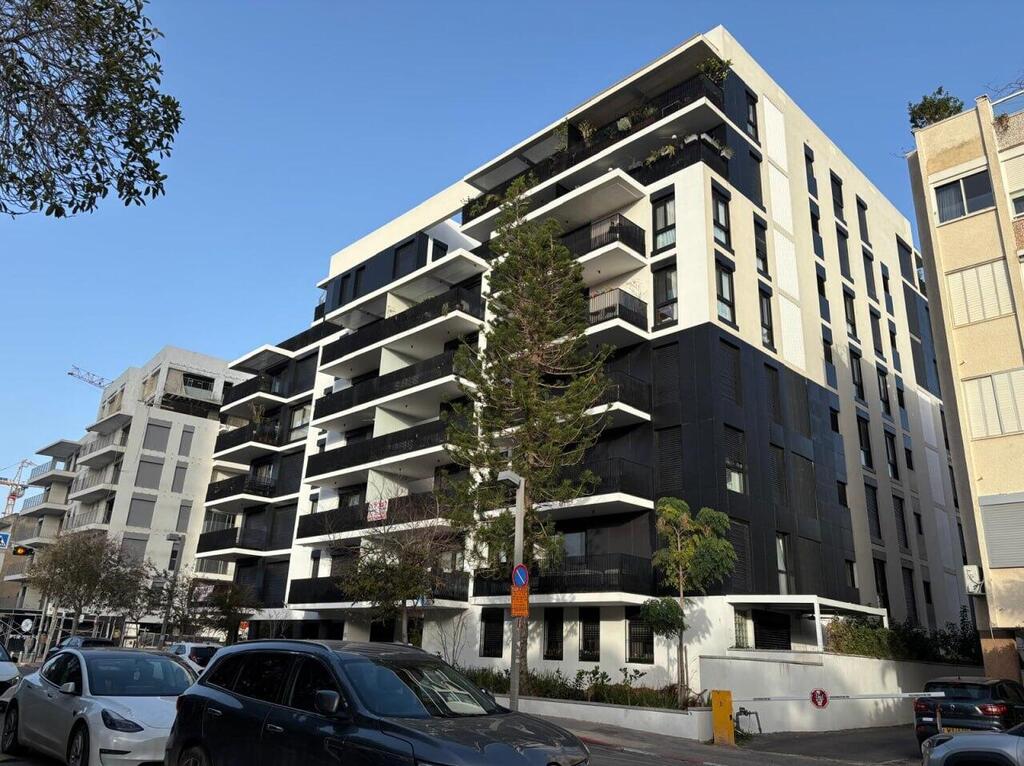
Outside the narrow lens of Tel Aviv and environs, the argument that Israel lacks space for housing quickly falls apart.
(Photo: Courtesy)
This is not fear-mongering. It is a sober look at the direction parts of the Western world are heading. History doesn’t repeat itself exactly, but it often rhymes, and the idea of states singling out Jews economically or legally under moral pretexts is uncomfortably familiar. We are already living in a reality that, just a decade ago, would have seemed unrecognizable.
And so the question inevitably comes up, often said casually, almost dismissively: “Israel couldn’t possibly absorb everyone if millions of Jews decided to come tomorrow, right?”
While it is a tall task, in this article, I want to challenge that assumption head-on and break down the myths that suggest Israel could not rise to that moment.
We’ve absorbed mass aliyah before - with far less
Israel’s modern history is defined by waves of mass immigration. In the early years of the state, hundreds of thousands arrived from Europe and the Arab world into a country with scarce infrastructure, minimal housing and a struggling economy. Later came the massive aliyah from the former Soviet Union in the 1990s, which added over one million people in less than a decade.

Yemenite Jews arriving on Operation Magic Carpet,which took place between June 1949 and September 1950
(Photo: From family album)
Each time, skeptics warned of collapse. Each time, Israel adapted. Temporary housing became permanent neighborhoods. New cities emerged. Infrastructure expanded. The country didn’t just survive, it grew stronger. Today, Israel is not that fragile young state with limited resources. It is a global economic and military powerhouse, a technology leader, and a country with deep institutional experience in rapid population absorption. To suggest that Israel now lacks the capacity it once had, under far worse circumstances, is to misunderstand both history and reality.
The housing myth: 'There isn’t enough space'
One of the most common arguments raised against the possibility of mass aliyah is housing. The assumption is that Israel is simply “full.” It isn’t. There is no denying that Israel has a growing population and an ongoing need for more housing, but the idea that the country lacks the capacity to absorb large numbers of newcomers does not hold up when you look at the data.
According to current market figures, there are roughly 100,000 new construction units currently available for sale across the country. This does not include tens of thousands of second-hand apartments already on the market. Even before accounting for additional projects coming online, Israel already has a meaningful level of housing inventory. Could it be better? Of course. But the notion that there is “nowhere to live” is simply inaccurate.
It also ignores the enormous pipeline of approved projects that have yet to break ground. In practical terms, Israel is in the midst of a nationwide urban renewal process. Entire neighborhoods are being rebuilt, densified and modernized simultaneously. This is not a stagnant market, it is an evolving one.
The construction industry itself has also been forced to adapt rapidly since October 7. Labor shortages led to a sharp increase in demand for foreign workers, and while the transition has not been seamless, there are already signs of stabilization. This is what resilience looks like in practice: adjustment under pressure, not paralysis.
Beyond existing inventory and future supply, geography matters. Anyone who has traveled north or south of the center can attest to the vast stretches of undeveloped land, particularly in the Negev, northern Israel and around secondary urban centers. Once you step outside the narrow lens of Tel Aviv and its immediate surroundings, the argument that Israel lacks space for housing quickly falls apart. Entire new cities, not just neighborhoods, can and will emerge in these areas when national priorities demand it.
Putting Israel’s capacity into perspective
To truly understand Israel’s absorption potential, it helps to step outside the emotional debate and look at basic comparisons. The Greater Tokyo metropolitan area, often cited as the most populous urban region in the world, is home to roughly 37 million people spread across approximately 13,500 square kilometers. That is nearly four times Israel’s population, living on a landmass that is significantly smaller.

Olim arrive in Ben Gurion Airport
Even closer to home, New York City proper has a population of about 8.5 million people, not far from Israel’s entire population today, which stands just under 10 million. Yet Israel’s total land area is approximately 20,770 square kilometers, making it nearly 30 times larger than New York City proper.
Put simply, land is not Israel’s limiting factor when it comes to absorbing mass numbers of immigrants. The real variables are planning pace, infrastructure deployment and policy choices, and how quickly the country chooses to mobilize the tools it already has at its disposal.
Some final thoughts
Can Israel absorb million in a mass aliyah? In my view: absolutely. Not overnight without friction, and not without temporary strain, but unquestionably yes.
Large-scale aliyah has never been seamless. Temporary housing solutions would naturally be part of any significant absorption effort, just as they were during previous waves. But temporary does not mean chaotic; it means transitional. New neighborhoods, new cities and new economic centers would emerge, particularly in regions that have yet to reach their full potential. Existing cities would dramatically accelerate construction and urban renewal. Israel has the land, the economic capacity and the institutional memory to do this. Most importantly, it has a population that understands collective responsibility in a way few societies still do.
The real question is not whether Israel can absorb millions, but whether it chooses to plan properly for it. While construction levels today are higher than ever, there is still significant work ahead. Paradoxically, when mass aliyah on this scale becomes a tangible reality, real solutions tend to follow. If I had to read the direction of the wind, I would argue that moment is not far off, and that the necessary groundwork must begin now. But the notion that Israel would somehow “collapse” under mass aliyah says far more about a misunderstanding of the country than about Israel’s actual capabilities.
This is not an article intended to stir panic or fear. It is a reality check. Jews across the world are reassessing their futures. Some are already making moves; others are thinking quietly. The question of whether Israel could absorb them is not theoretical - it is practical.
Israel is not merely capable of rising to that moment. It was built for it. And if that moment comes, it will not be an anomaly, it will be history unfolding exactly as it was always meant to: Jews coming home, and a country growing stronger because of it.
Noah Sander is a Canadian-born real estate agent based in Tel Aviv, specializing in helping international buyers and new olim navigate the Israeli property market. For inquiries: [email protected], his brokerage: Daon Group Real Estate