


The gas export agreement between Israel and Egypt, announced Wednesday by Prime Minister Benjamin Netanyahu and Energy Minister Eli Cohen, if finalized, would create a vital economic interest shared by both countries. The deal promises practical cooperation on gas transportation and related aspects, forming a long-term interdependence between Jerusalem and Cairo.
Israel has previously signed gas agreements with both Egypt and Jordan, though pipelines running through the Sinai Peninsula were repeatedly targeted and blown up by ISIS.
Gallery
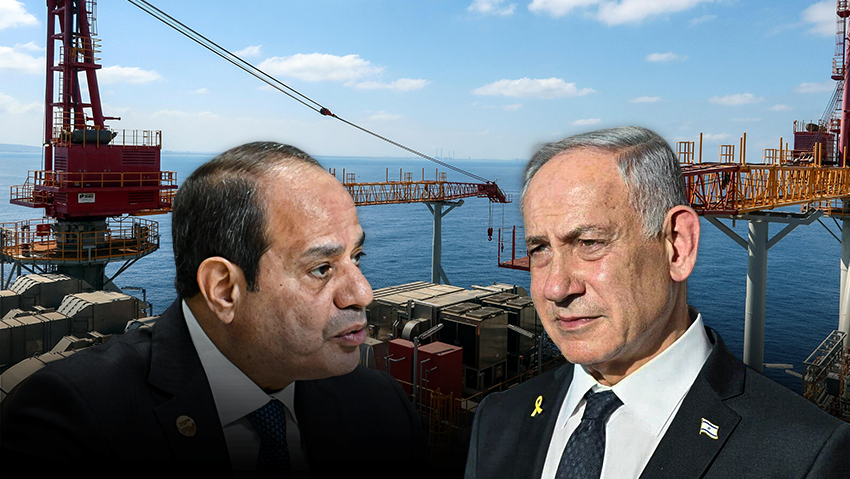
Egyptian President Abdel Fattah el-Sissi, Prime Minister Benjamin Netanyahu
(Photo: Reuters/Ari Rabinovitch, Alexander Nemenov AP, GPO)
The significance of the new deal — particularly due to the vast export volume — lies in Egypt’s heightened incentive to accommodate Israeli interests, including in areas beyond energy. With Israel likely to engage with Egypt in managing postwar Gaza as early as next year, the agreement is seen as fostering a favorable atmosphere for broader cooperation.
The route of the gas infrastructure will be key. Given past experiences, it is expected that the pipeline will run undersea rather than through Sinai. This comes amid growing concerns in Israel over Egypt’s military buildup in the peninsula — a move that violates the peace treaty between the two countries.
Under the pretext of fighting ISIS, Egypt has in recent years deployed large numbers of troops and tanks in Sinai and built military facilities well beyond what the peace agreement allows. Israel has so far turned a blind eye, especially as it actively assisted Egypt in its fight against ISIS. However, with that threat now largely subdued, Jerusalem is increasingly concerned about the expanded Egyptian military presence, particularly in relation to Gaza.
The current Egyptian buildup lacks any clear purpose other than pose a potential threat to Israel. As Cairo's dependence on Israeli intelligence and cooperation against ISIS diminishes, the heightened military presence should be viewed as a potential strategic risk.
The gas export agreement is also a strategic guarantee — a stabilizing factor that could temper anti-Israel sentiment within Egypt’s military establishment, which President Abdel Fattah el-Sissi relies on for political support. The Egyptian army is also a major economic player that depends on energy to operate its infrastructure. From Israel’s perspective, however, one key concern is the volume of gas reserves it will retain and how long those reserves will last.
Beyond its economic and security dimensions, the gas deal enhances Israel’s regional standing and strengthens its alliances with friendly Mediterranean states such as Greece, Cyprus and Egypt. It also reinforces ties with moderate Arab countries. Israel is already a member of the East Mediterranean Gas Forum, a bloc that includes Egypt, Cyprus and Greece and serves as a counterweight to Turkey and Turkish-controlled northern Cyprus and their own energy expansionist ambitions.
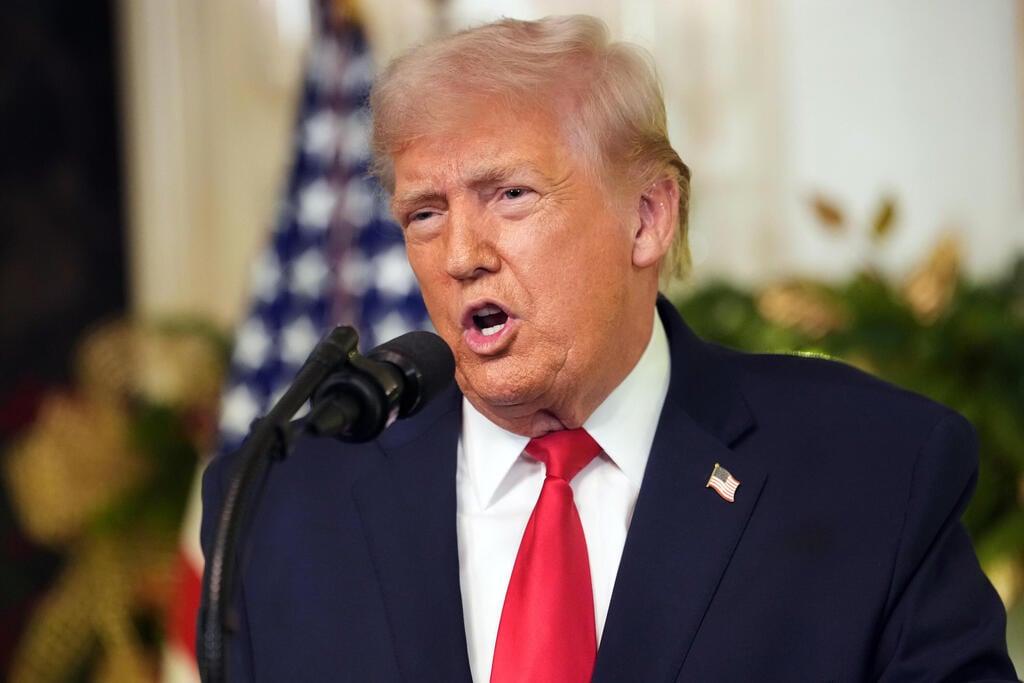
US President Donald Trump
(Photo: Doug Mills/The New York Times via AP, Pool)
Strategically, the most significant aspect of the agreement may be its role in advancing U.S. President Donald Trump’s broader peace initiative for the Middle East and that is why Washington has been pressing Israel to finalize the deal quickly.
As is often his style, Prime Minister Netanyahu announced the deal publicly before it was officially finalized — partly to demonstrate his alignment with Trump’s policy goals, partly as a goodwill gesture toward el-Sissi and also to claim a major economic achievement ahead of an election year. According to Netanyahu, the agreement will generate 58 billion shekels in revenue for state coffers through taxes and royalties.
If signed, the deal to export natural gas from Israel’s Leviathan field to Egypt would be the largest export agreement in Israel’s history — involving approximately 131 billion cubic meters (BCM) of gas over 18 years, with an estimated total value of 112 billion shekels.
Approval of the deal is expected to pave the way for a high-profile trilateral summit between Netanyahu, Trump and el-Sissi, likely to be held at Trump’s Mar-a-Lago estate in Florida. Cairo has reportedly made the agreement’s finalization a condition for el-Sissi’s attendance.